
Clown Triggerfish
Balistoides conspicillum




Special Features
Like all triggerfish, the clown triggerfish has a clever "safety mechanism" on its back: It can erect its first dorsal spine and lock it with a smaller "trigger spine." This way, it wedged itself firmly in crevices or corals; a brilliant method to protect itself from predators. However, this distinctive triangle on its back serves not only for defense but also as a warning signal. When the fish feels threatened, it dramatically raises the spine: a clear message to intruders: "This far and no further!"
Despite its clownish appearance, this fish is anything but harmless. Especially during the breeding season, the males guard their territory extremely aggressively and do not shy away from attacking divers. Their strong jaws and teeth are perfectly designed to crush hard shells and coral pieces, leaving a lasting impression even on careless swimmers.
And here's another exciting detail: clown triggerfish can actually produce sounds! They "grunt" or "croak" by vibrating muscles around the swim bladder, presumably to warn their kind or defend their territory.
Appearance
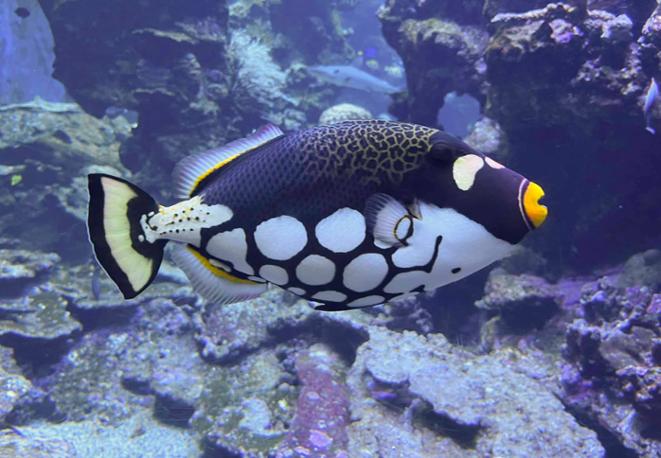
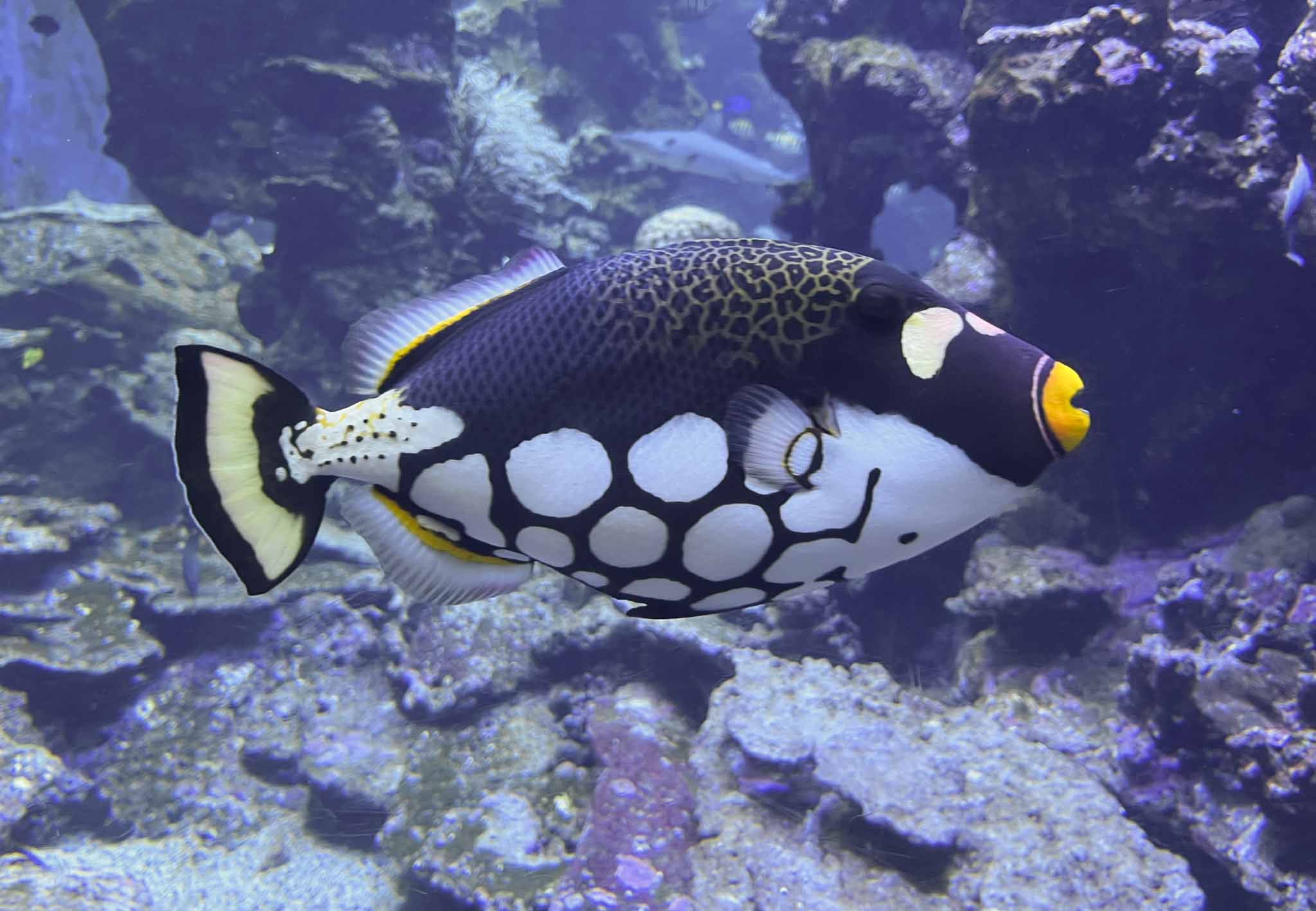
If there were a fashion show in the coral reef, the clown triggerfish would definitely take first place. With its black body, large white spots on the underside, and gold-yellow honeycomb pattern on the back, it looks as if someone has artistically painted it. The white lips and bright yellow mouth are the finishing touches to its striking styling.
But the striking pattern is not just for show: it serves for camouflage and communication. The strong contrasts visually break up the body shape, making it harder for predators to spot it in the shimmering light of the reef.
Natural Enemies
Larger reef predators like sharks and grouper
Dangerous/Poisons
Not poisonous, but very territorial and equipped with strong teeth
Pro Tips
If you encounter a clown triggerfish while diving or snorkeling, you are facing true reef nobility. They usually travel alone, calm, but confident. However, if you get too close, it can quickly turn into a "face-off," especially during the mating season (spring to early summer).
Photography tip: Move slowly, stay calm, and keep your distance: This fish has no problem staring you down directly. And that results in fantastic underwater portraits!