
Yellow-striped sweetlip
Plectorhinchus chrysotaenia




Special Features
Although the Yellow-striped sweetlip impresses at first glance with its striking striped pattern, there is much more behind its appearance. Like all grunt fish, it has a small acoustic talent: it can produce audible sounds using specialized pharyngeal teeth and its swim bladder. These grunt sounds are not loud, but can be perceived underwater, especially when the animal feels disturbed. Researchers suspect that these noises serve for intraspecies communication or for deterring predators.
An interesting detail is also its behavior in danger: Instead of swimming away, it often remains motionless in the reef and relies on its camouflage: The yellow stripes break up the body shape and make it difficult for predators to recognize it clearly. This "stripe camouflage" is particularly effective in dim light, such as at dusk.
Appearance
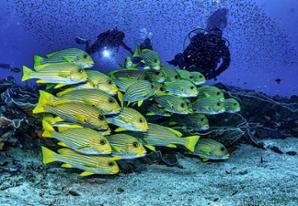
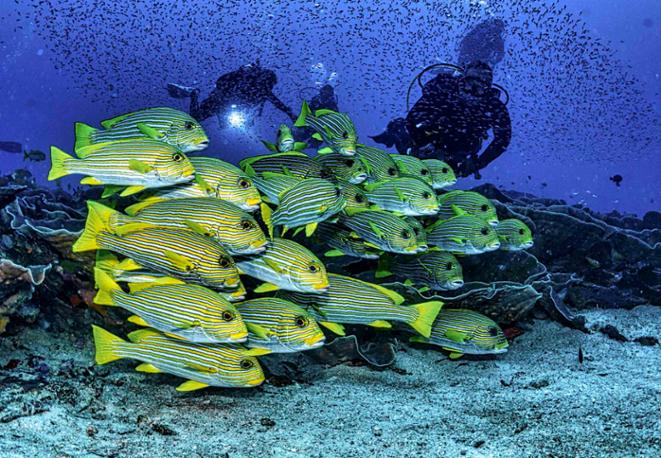
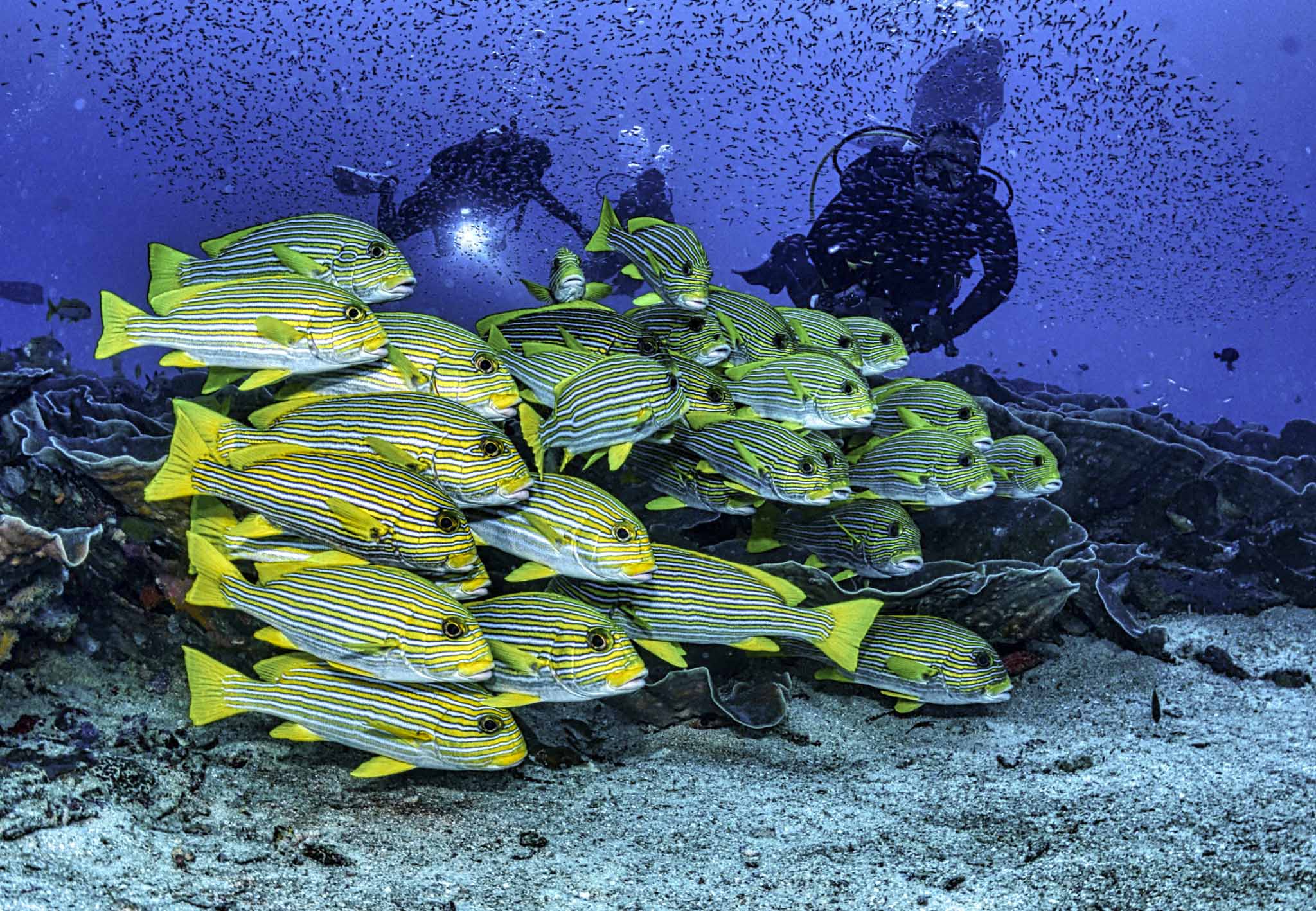
The Yellow-striped sweetlip is an elegant reef dweller with a slender, laterally compressed body. Its most striking features are: a silvery-gray base color and several bright yellow longitudinal stripes that extend from the snout to the tail fin. The fins are usually yellow to orange, making them even more noticeable.
Typical are the fleshy lips that give the fish its name, which are particularly pronounced in adults. Juvenile fish display a similar but simpler striped pattern: their lines are bolder and drawn more clearly.
Natural Enemies
Groupers, moray eels, sharks, birds of prey
Dangerous/Poisons
The Yellow-striped sweetlip is neither dangerous nor poisonous.
Pro Tips
The Yellow-striped sweetlip is primarily nocturnal and usually found quietly in small groups in protected areas of the reef during the day. If you want to spot them while snorkeling or diving, it's best to look during dusk or at night.