
Speckled sandperch
Parapercis millepunctata




Special features
Males of the Speckled sandperch can be recognized by the distinctive stripes on their cheeks, while the females are decorated with small, delicate dots.
Appearance
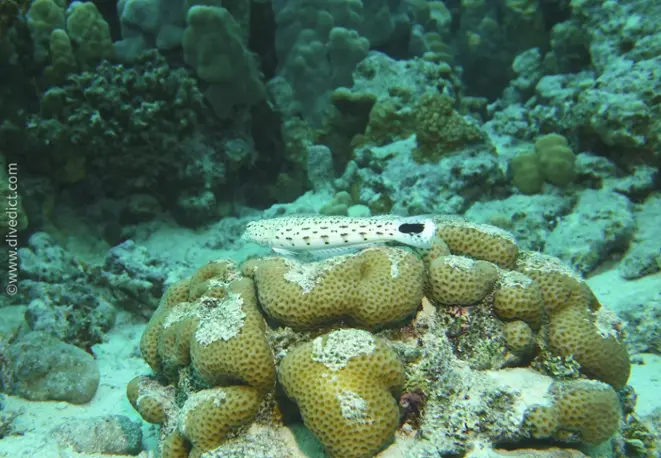
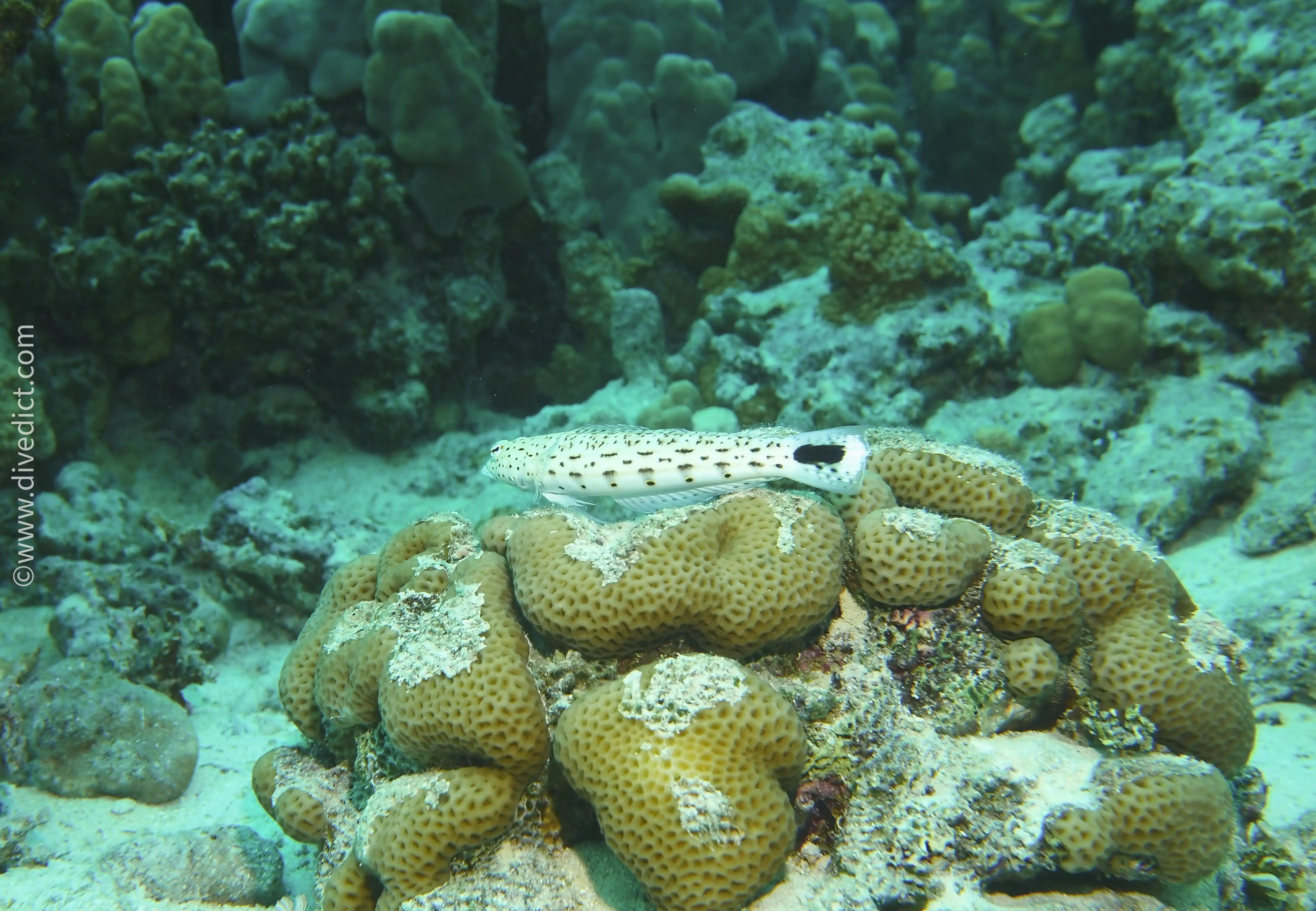
The Speckled sandperch has a sand-colored, marbled body with a distinctive black tail spot. Its elongated body is complemented by a head supported on the pectoral fins, which gives it an elegant appearance.
Natural enemies
Predatory fish
Dangerous/Venomous
The Speckled sandperch is neither dangerous nor venomous.
Sketch

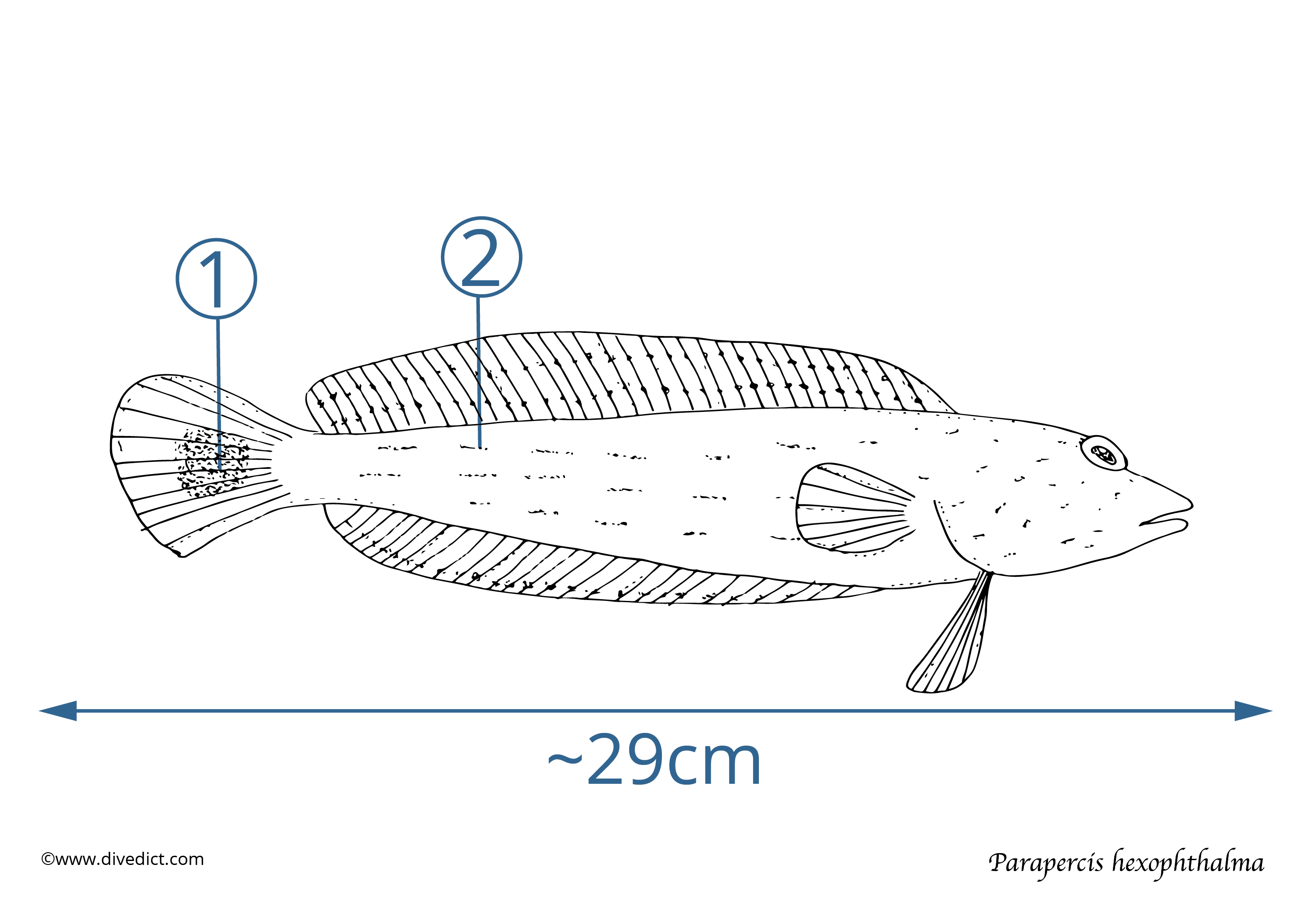
1. Black spot
2. Spotted pattern
Pro tips
Speckled sandperch are soil-dwelling hunters who like to rest on sand or rubble soils. If necessary, they also find shelter on dead coral structures. To better position themselves, they rest their bodies on their ventral fins, which allows them to slightly raise their heads — ideal for lurking for small fish or invertebrates, which they prey on with a lightning-fast advance.
Some types of sand perch change sex, turning from female to male. The males are territorial and guard their own territory, where they lead a small harem of several females. Their elongated body helps them move skillfully through the reefs and lurk for prey.
Text: Carolina Leiter
Pic: Felician Hosp
Illustration: Dive Dict