
Yellow-edged lyretail
Variola louti




Special Features
This species usually lives alone and actively hunts along reef edges and steeply sloping reef walls. Prey mainly consists of smaller fishes, less commonly crustaceans: The prey is surprised with sudden, swift lunges.
Although it tends to be rather shy towards divers, it is one of the dominant predators in the reef and helps maintain the balance in the ecosystem. Like many grouper species, it is a protandrous hermaphrodite: It starts its life as a female and can later become a male.
Appearance
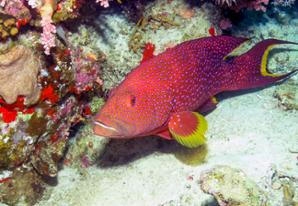
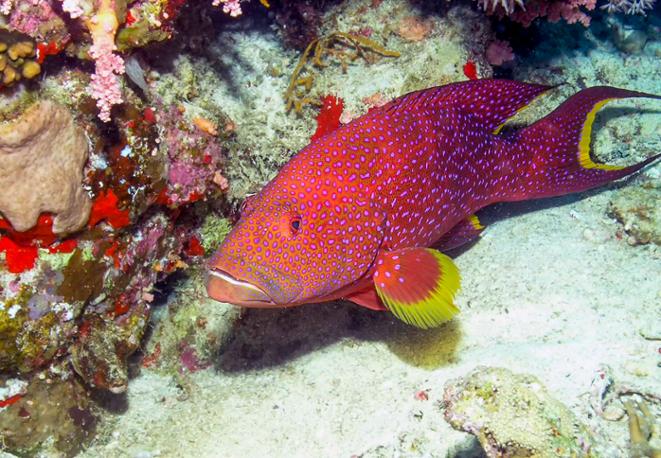
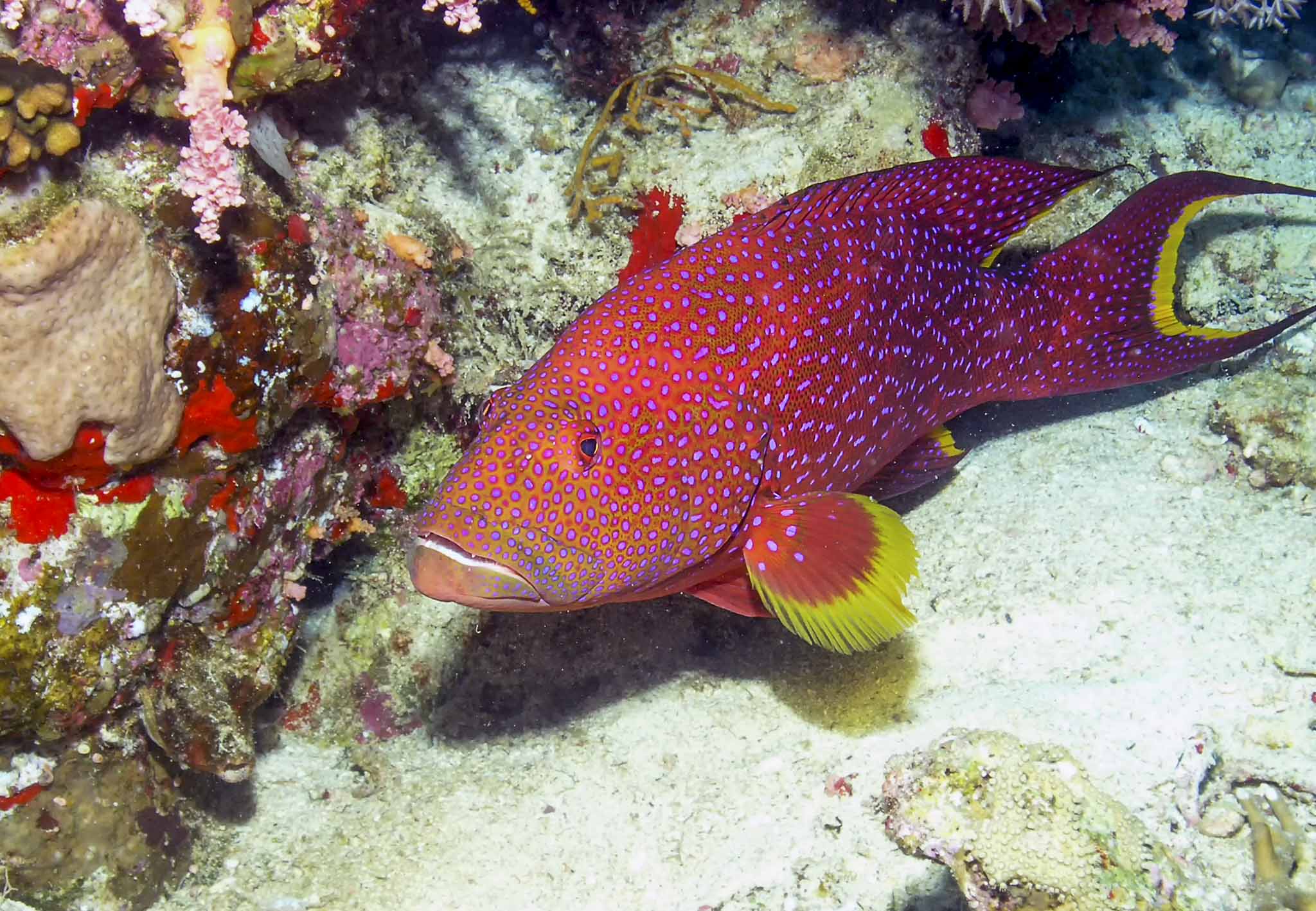
The Yellow-edged lyretail (Variola louti) is a striking reef predator that can grow up to 80 cm long, although most specimens remain smaller. Its body is elongated and muscular, usually reddish to pink-orange and densely dotted with small, bright blue spots, even on the fins. Especially noticeable is the deeply forked tail fin with extended ends that resemble a moon and give it its name. Overall, it appears well-suited for quick, targeted movements.
Natural Enemies
Sharks, Giant Groupers
Dangerous/Toxic
The Yellow-edged lyretail is not dangerous, but its consumption can be harmful to health.
Pro Tips
The colorful Yellow-edged lyretail may seem like a delicious table fish, but caution: In some tropical regions, it may contain ciguatoxin, a natural neurotoxin that can lead to ciguatera fish poisoning in humans.
The insidious part: The toxin is neither visible, nor detectable by smell, nor can it be destroyed by cooking or freezing.
So it's better to admire it only underwater and not on the plate!