
Camouflage Grouper
Epinephelus polyphekadion




Special Features
Studies show that some specimens can live over 40 years. This guy doesn't like to swim in schools. He claims his territory, usually a cave or a crevice in the reef, all to himself. Like many groupers, E. polyphekadion is also an ambush predator. He remains still and waits until prey like fish or crustaceans come close enough, then shoots forward in a flash.
This fish is a so-called protandrous hermaphrodite: This means he is born as a female and can later become a male. Why? Because this is simply more efficient for reproduction in his lifestyle. Reproduction often occurs during certain lunar phases, especially around the full moon when many animals gather for spawning. A fascinating spectacle that can also become a threat due to fishing.
Appearance
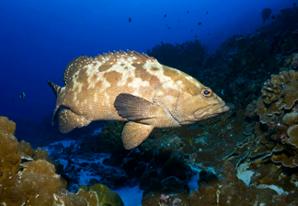
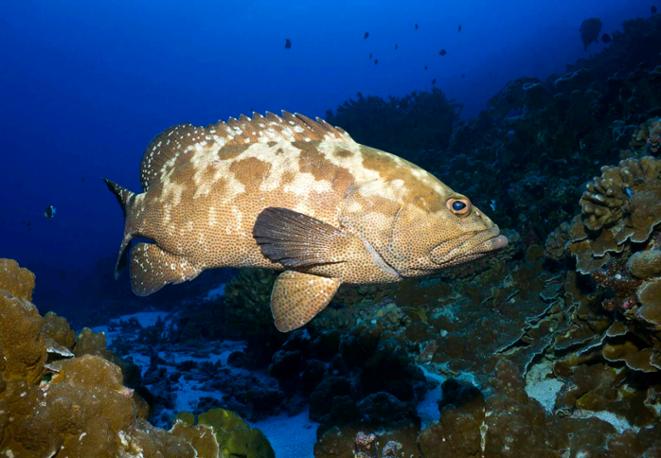
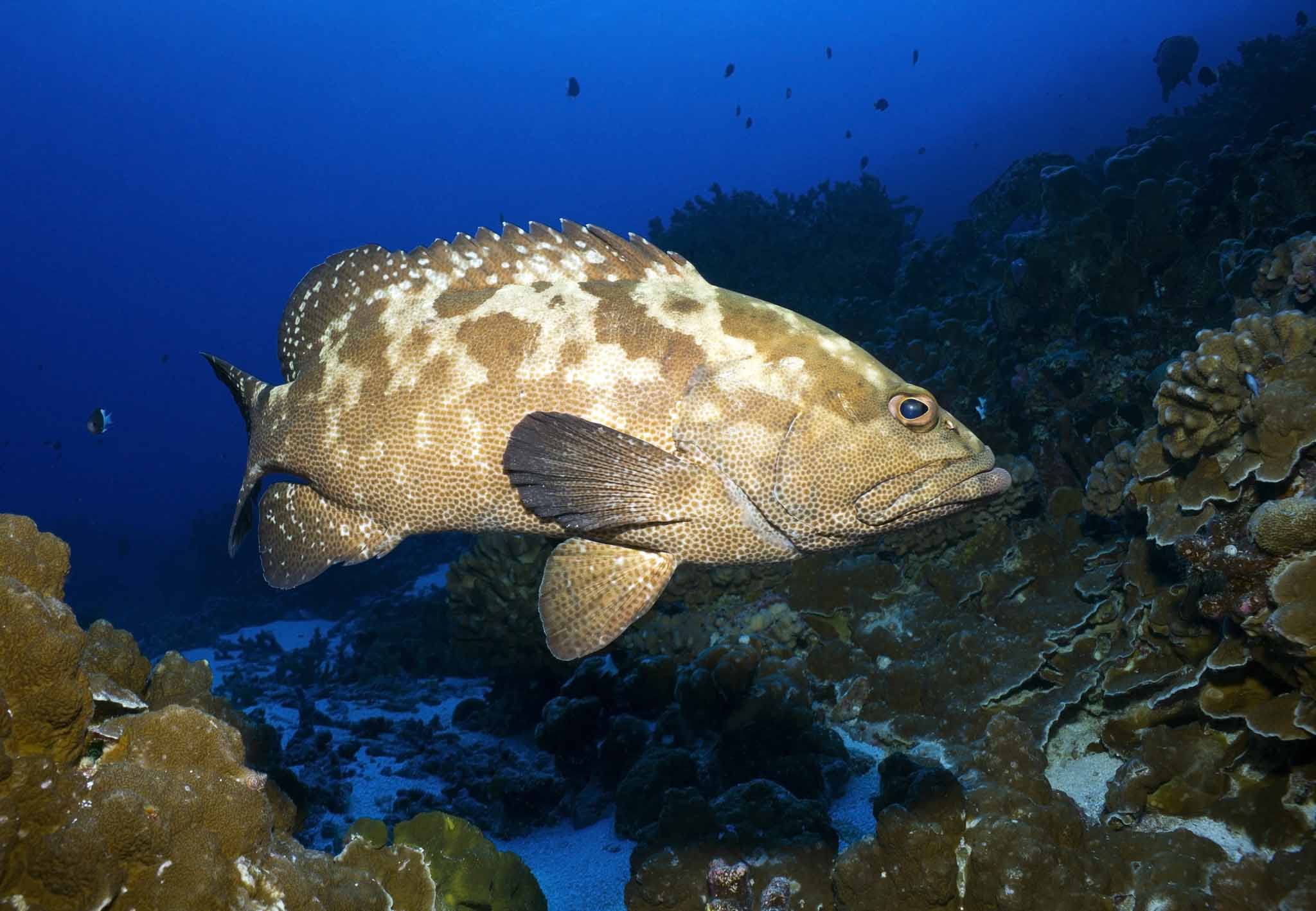
The Camouflage Grouper makes it clear at first glance: "I am not a fish for beginners." With its massive body structure, bull-like head, and large jaw tools, it not only looks impressive but also a bit like the bouncer among reef fish.
Its base color is brownish to olive gray, but the really striking feature is the marble pattern: a wild mix of dark, irregular spots that stretch across the entire body, from the dorsal fin to the tail tip. This camouflage pattern is no coincidence but perfectly adapted to the reef. Depending on the environment, the fish can slightly adjust its colors to better conceal itself. On the coral reef, it blends so skillfully with its surroundings that you almost overlook it until it moves.
Its dorsal fin is elongated, with eleven spiny rays and 14 to 15 soft rays, typical for many groupers. The pectoral fins are broad and rounded, while the tail fin is rather straight to slightly rounded.
Natural Enemies
larger groupers, sharks
Dangerous/Toxic
The Camouflage Grouper is not dangerous, but its consumption can be harmful to health.
Pro Tips
This grey Grouper may contain ciguatoxin, a natural neurotoxin that can cause ciguatera fish poisoning. The toxin is not destroyed by cooking or freezing and is neither visible nor detectable by taste.