
Lyretail anthias
Pseudanthias squamipinnis




Special features
Female power: the highest-ranking females convert into males and take responsibility for reproduction with up to 10 females.
Appearance
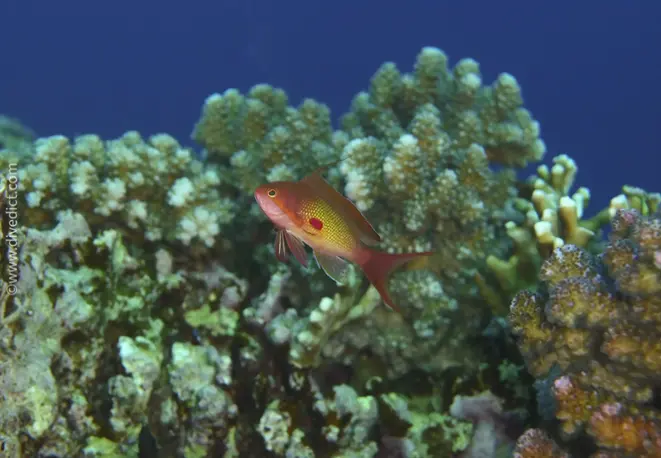
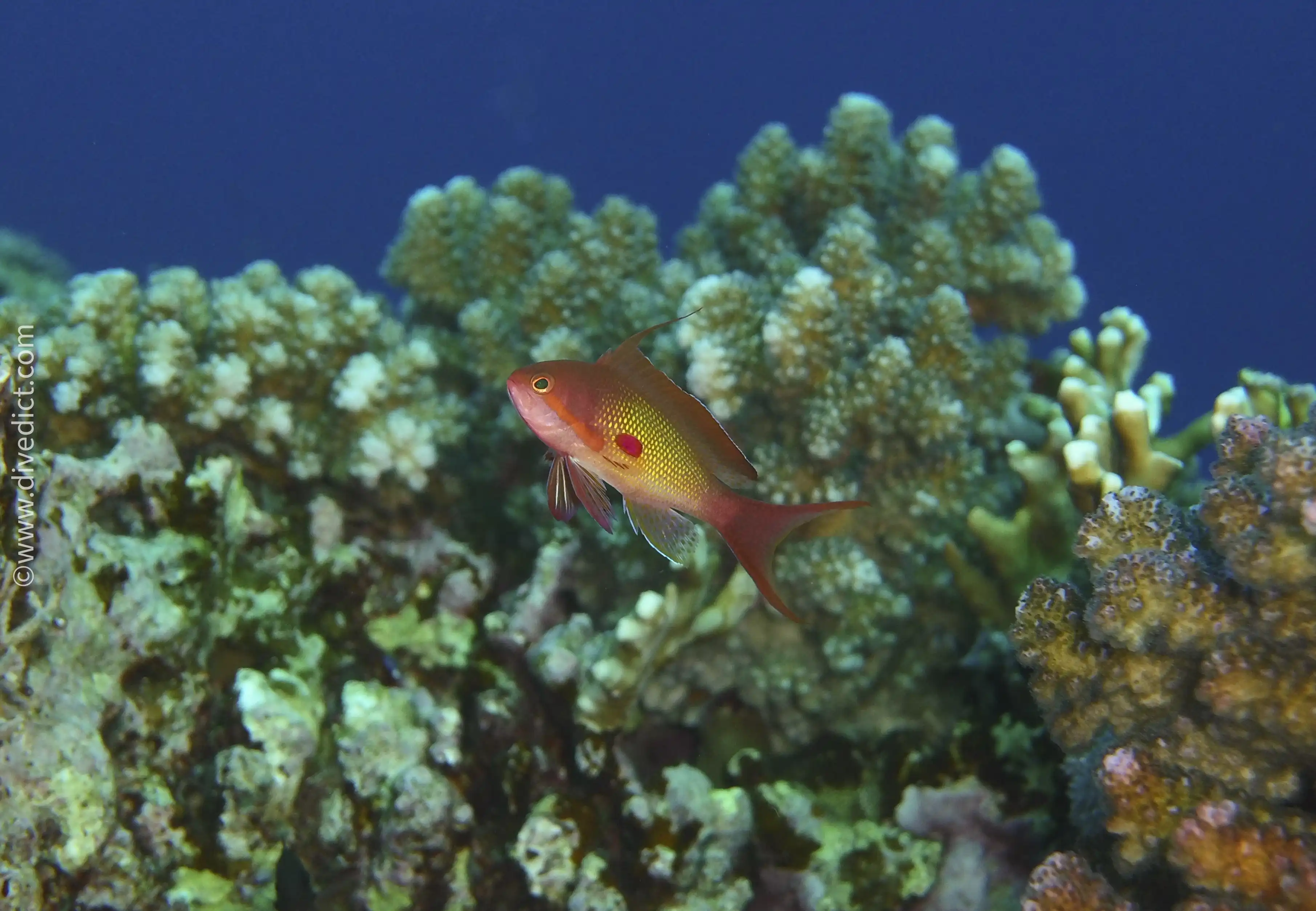
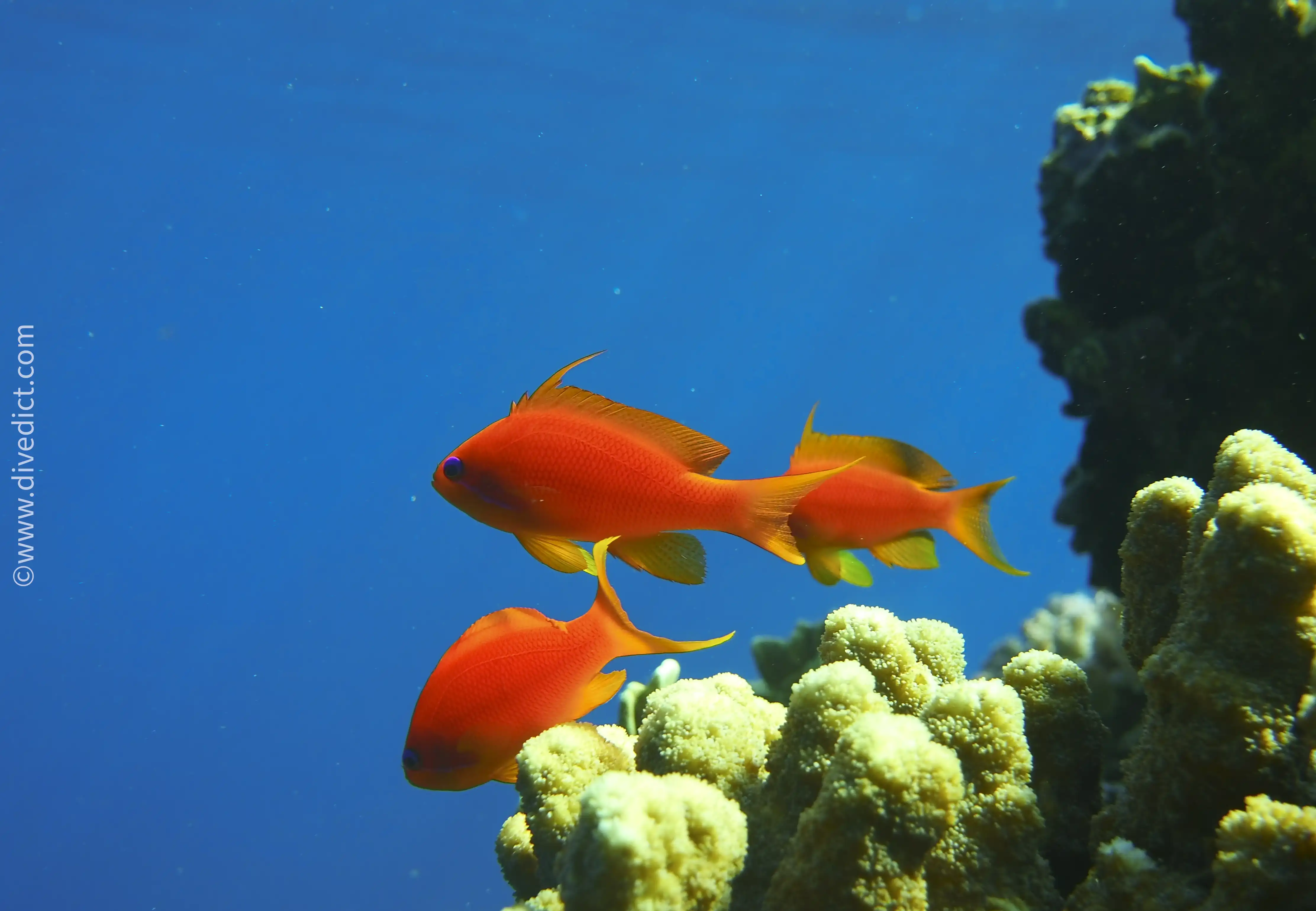
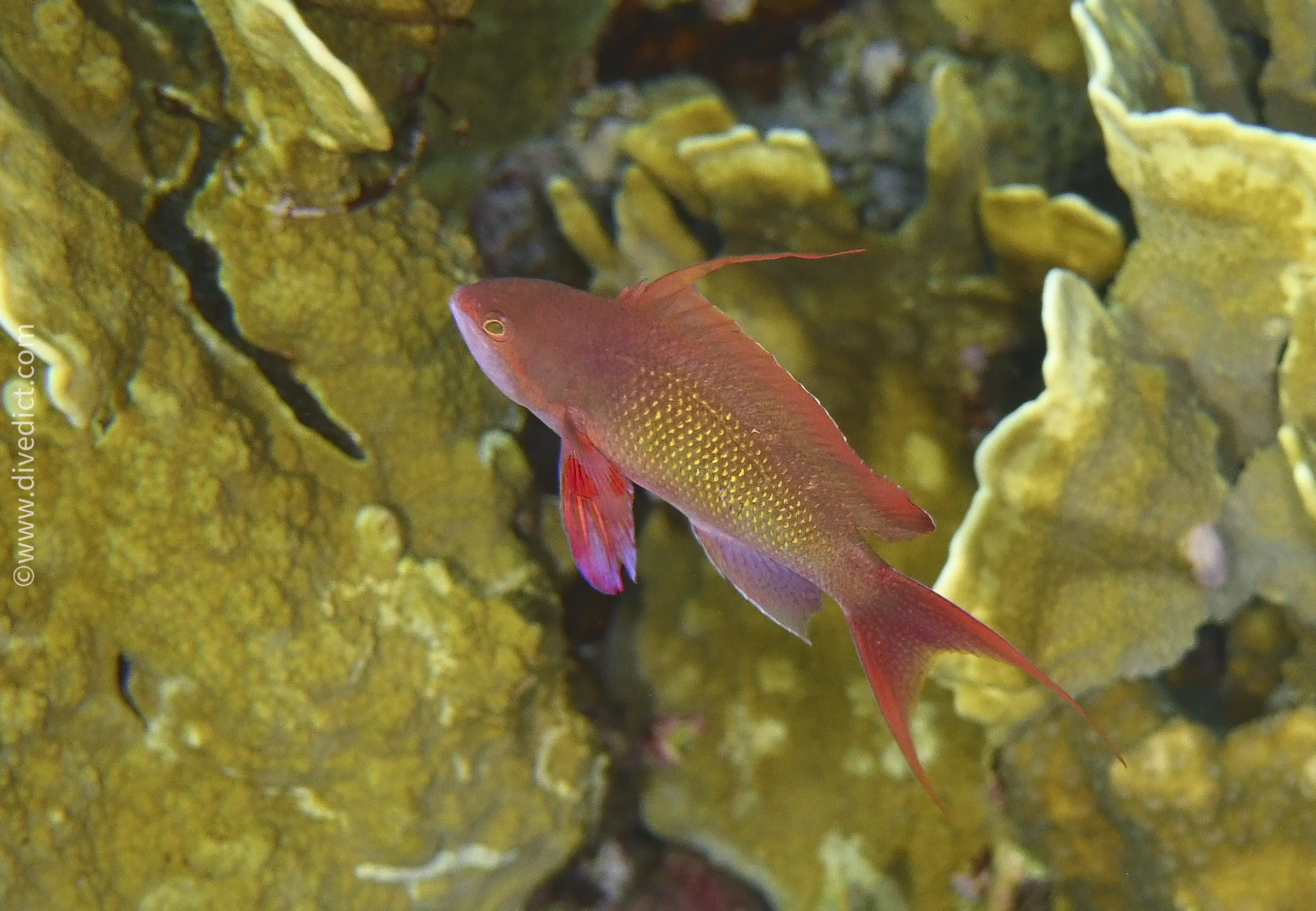
Small, colorful beauties – Lyretail anthis.
The males are bright orange with yellow spots on their body scales and a purple spot on the pectoral fin.
The females are light orange with two violet cheek stripes.
Both have an elongated dorsal fin ray.
Natural enemies
Predatory fish
Dangerous/Venomous
Lyretail anthias is neither dangerous nor venomous.
Sketch

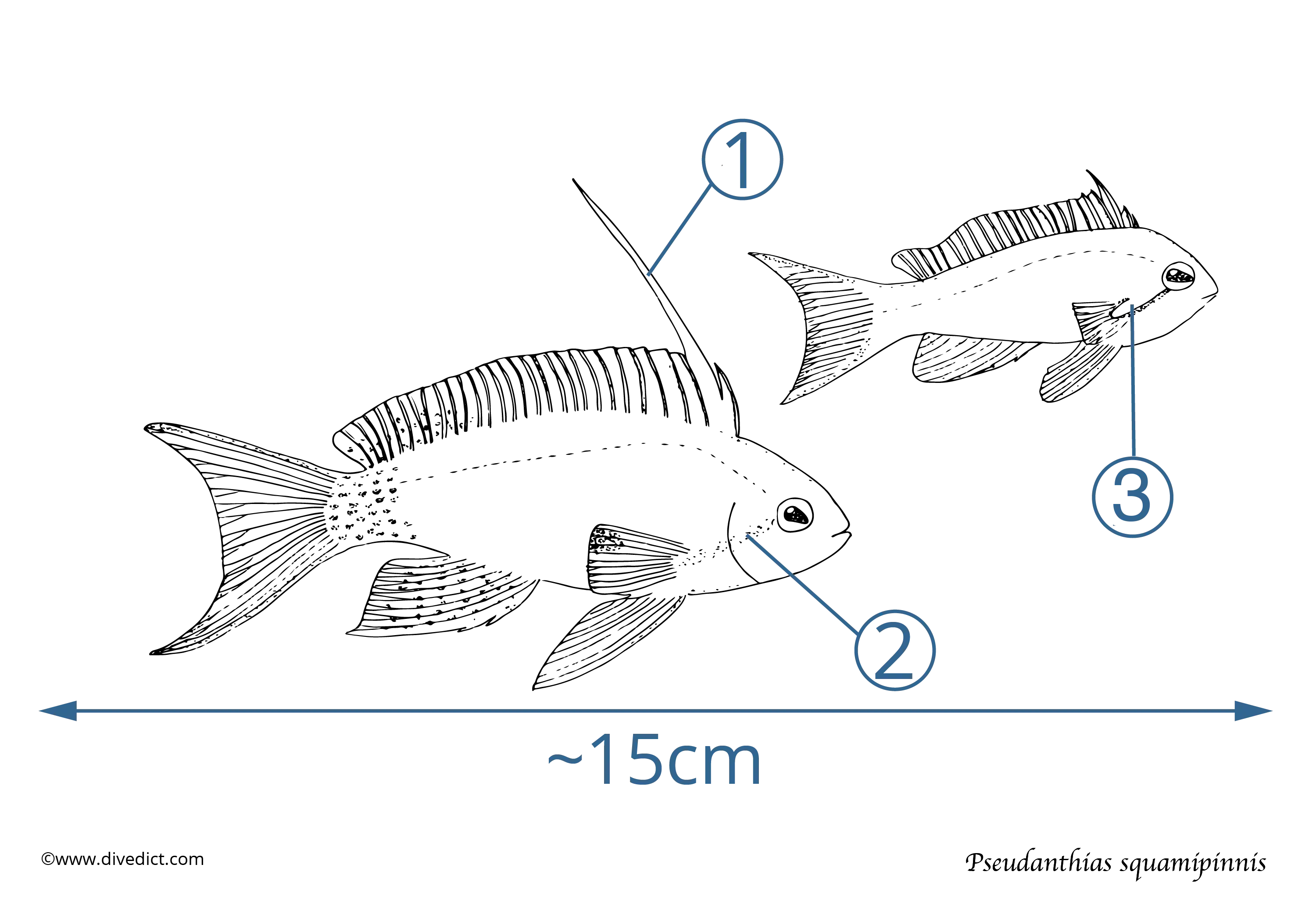
1. Single long fin ray
2. Male: yellow dots
3. Female: purple stripes
Pro tips
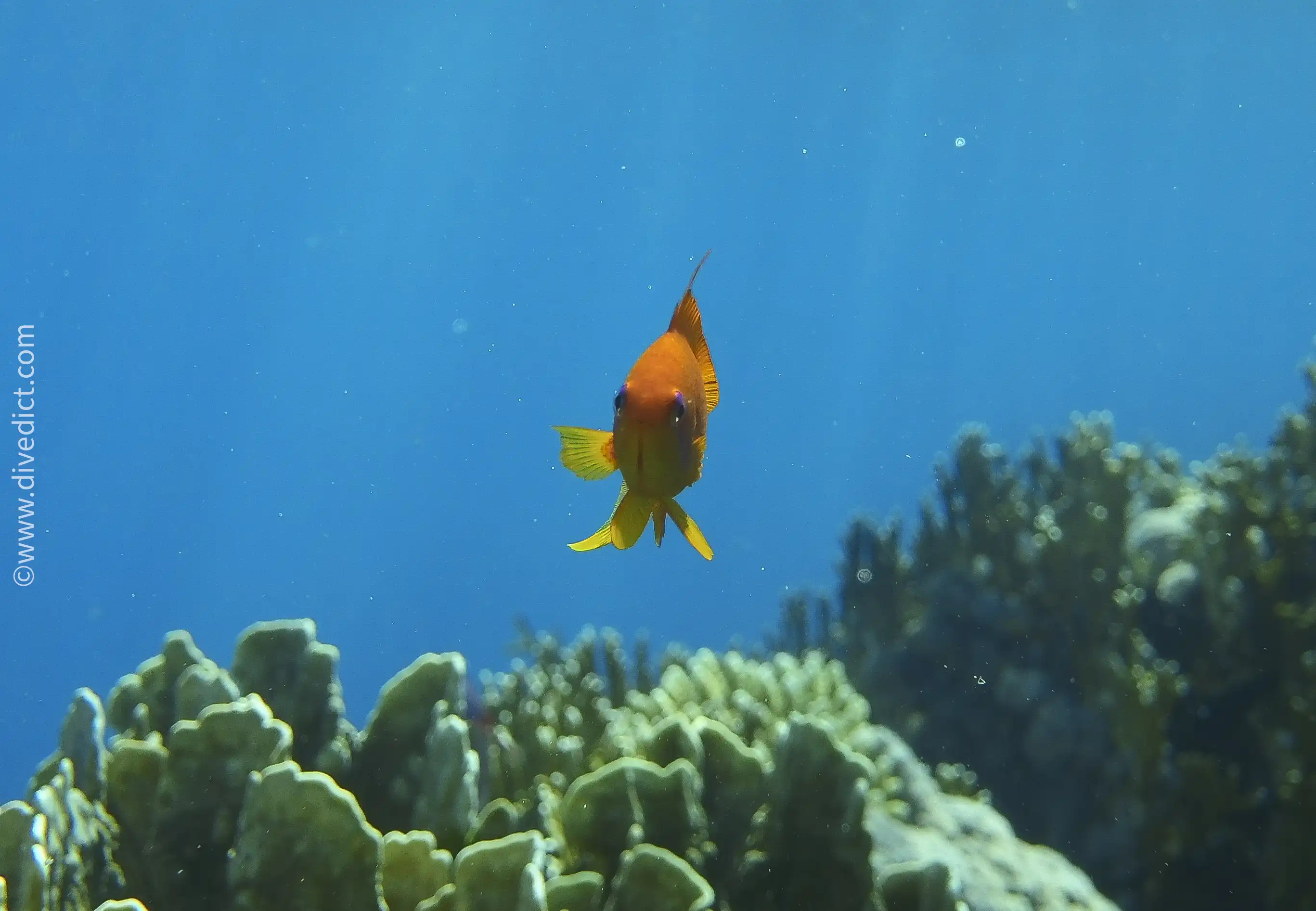
It makes itself especially comfortable in clear lagoons and on outer reef slopes.
A male cares for a harem of 5 to 10 females.
They gather in impressive schools, especially on reef crests.
Anthiases are a subfamily of the grouper family. They are diurnal, incredibly agile, and colorful fish that divers love to observe as they explore the coral reefs. At night, these fish seek shelter in rock crevices or between coral trees, while during the day, they feed on plankton (planktivores).
In schools of Anthiases, the females call the shots: for each school, there are usually only one or two males, many females, and even more juveniles. Interestingly, the males are sex-reversed females – they “emerge” through sex change from the highest-ranking females. With this change, their color pattern also shifts, and they become responsible for fertilizing up to 30 females.
Text: Carolina Leiter
Pic: Dive Dict
Illustration: Dive Dict