
Giant moray
Gymnothorax javanicus



Special features
She can proudly call herself the largest moray of all.
Appearance
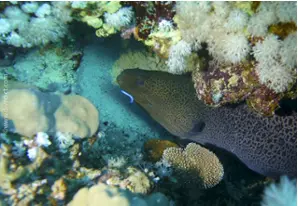
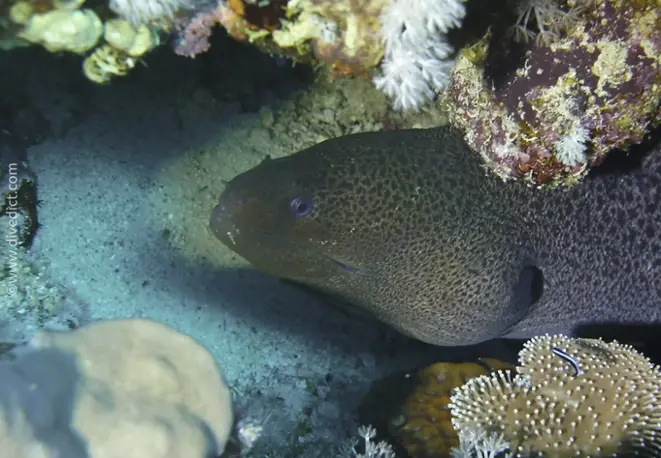
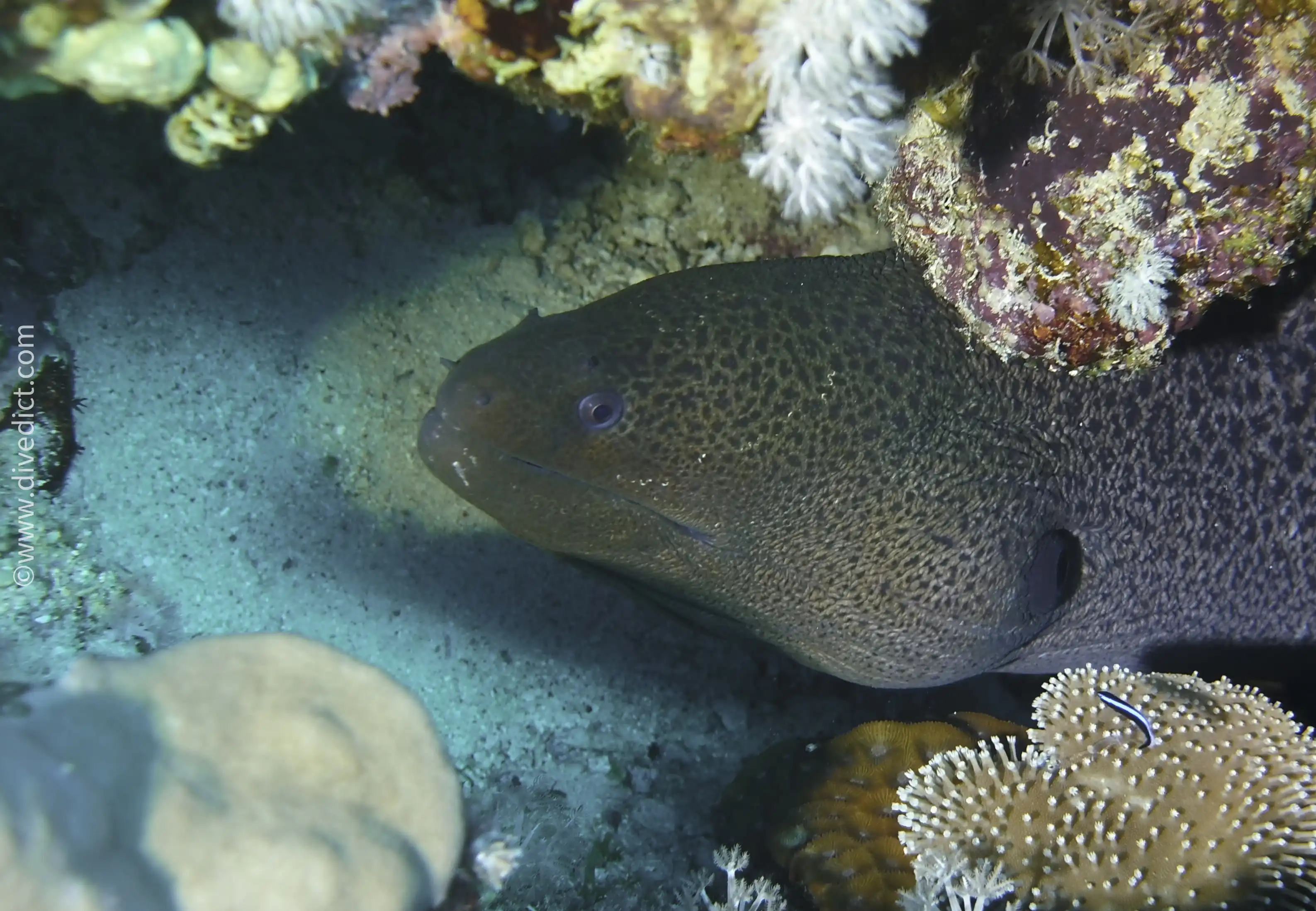
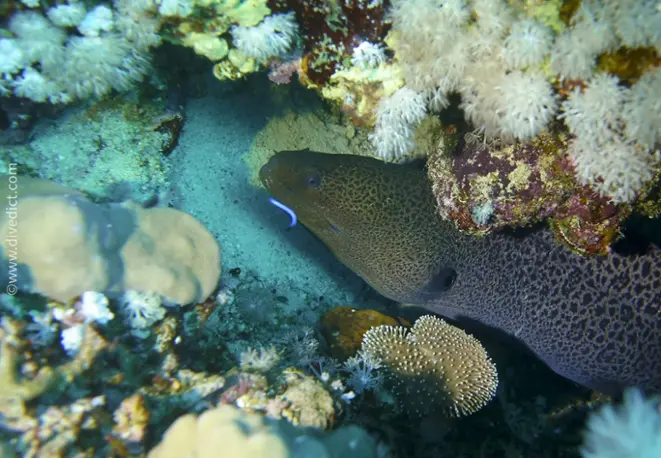
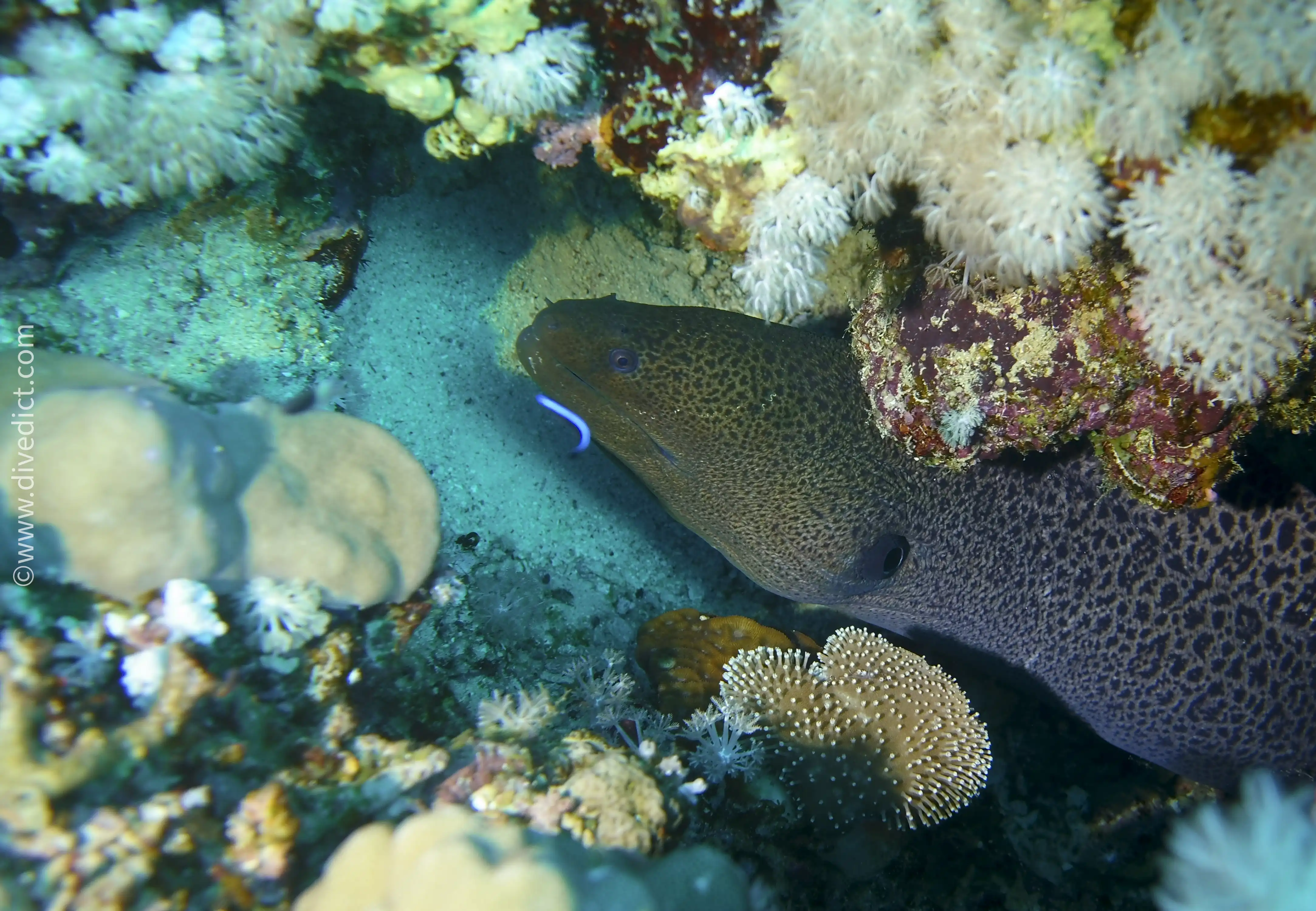
Her base color is dark brown with black flecks, those on her body and tail forming leopard-like spots. Her gill covers are always entirely black.
Natural enemies
Sharks
Dangerous/Venomous
If it feels threatened, it reacts aggressively and defensively. Its flesh is often contaminated with Ciguatoxin, which is why consuming it is strongly discouraged. Otherwise, it is not venomous. However, its bites cause severe injuries that require medical treatment.
Sketch
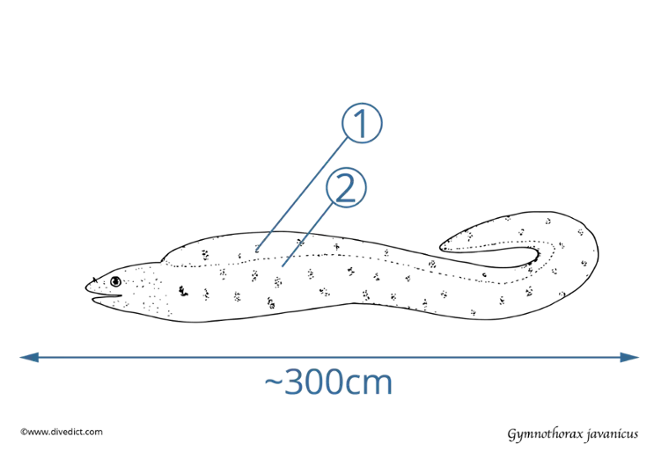
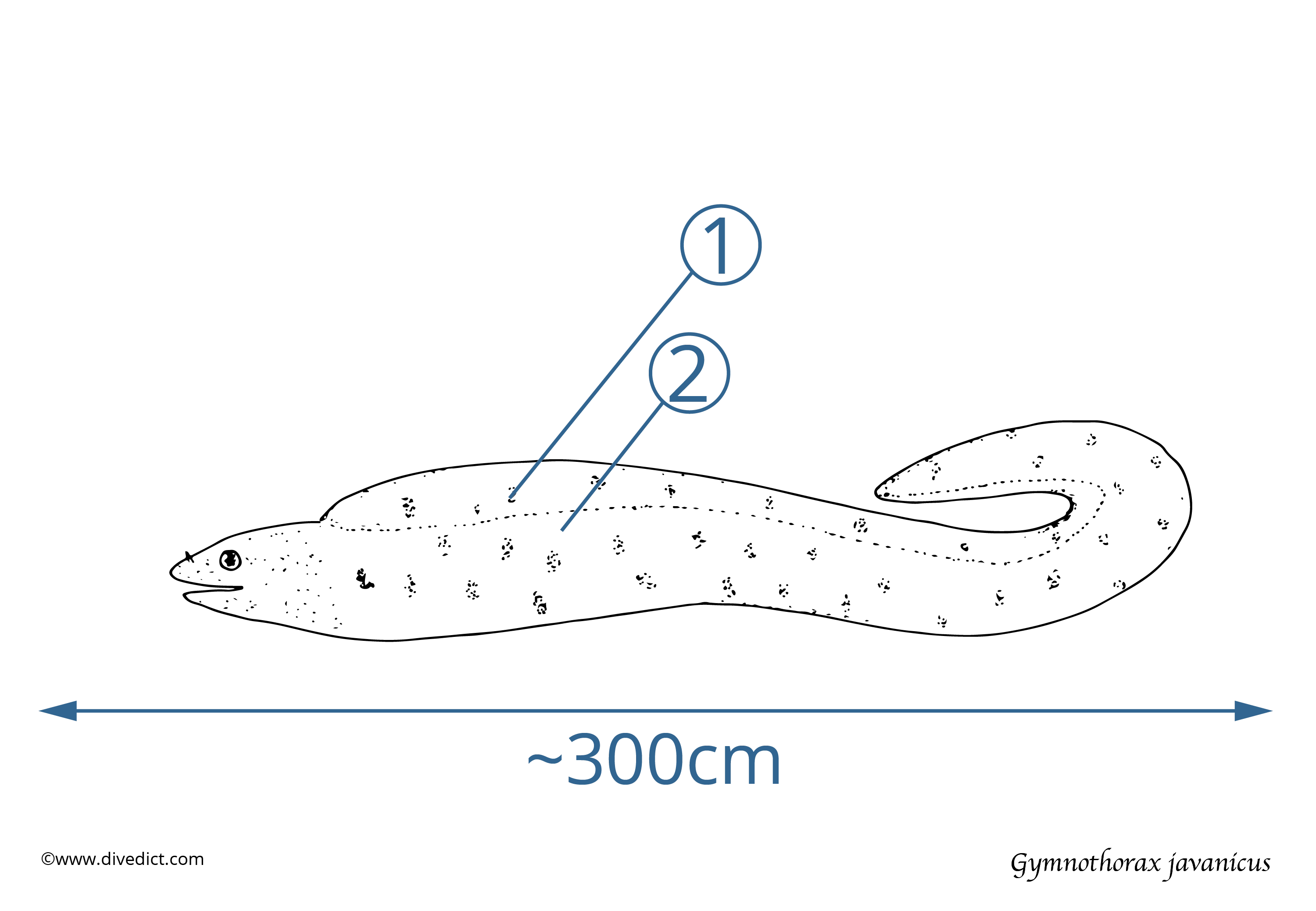
1. Long dorsal fin
2. Leopard-like spots
Pro tips
It feeds primarily on fish, but occasionally treats itself to octopuses or crabs.
It is primarily nocturnal, going on its hunting trips in the darkness, but it can also sometimes be seen roaming the reef during the day.
Sometimes, dive guides attempt to "tame" these animals, but this is strongly discouraged. There have been reports of unprovoked attacks by these creatures, resulting in severe injuries.
Since it sits fairly high up in the marine food chain, its flesh is often contaminated with Ciguatoxin, which it accumulates from the fish it eats. The toxin does not affect the moray eel itself, but if humans consume a fish or even a moray eel that contains this toxin, it can cause fish poisoning (Ciguatera poisoning).
Text: Carolina Leiter
Pic: Felician Hosp
Illustration: Dive Dict