
Pale damselfish
Amblyglyphidodon indicus




Special features
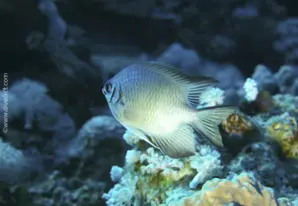
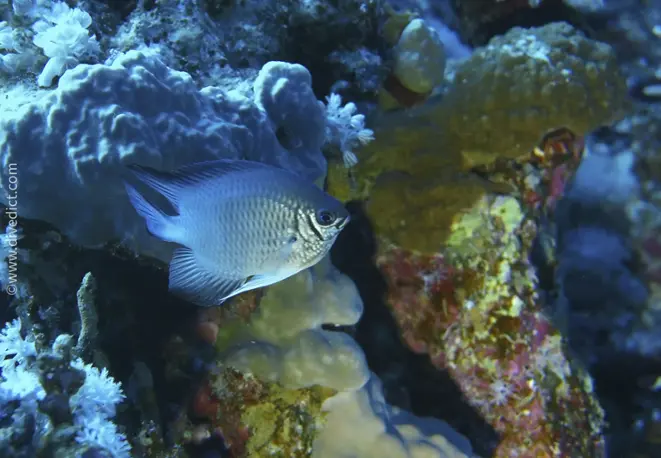
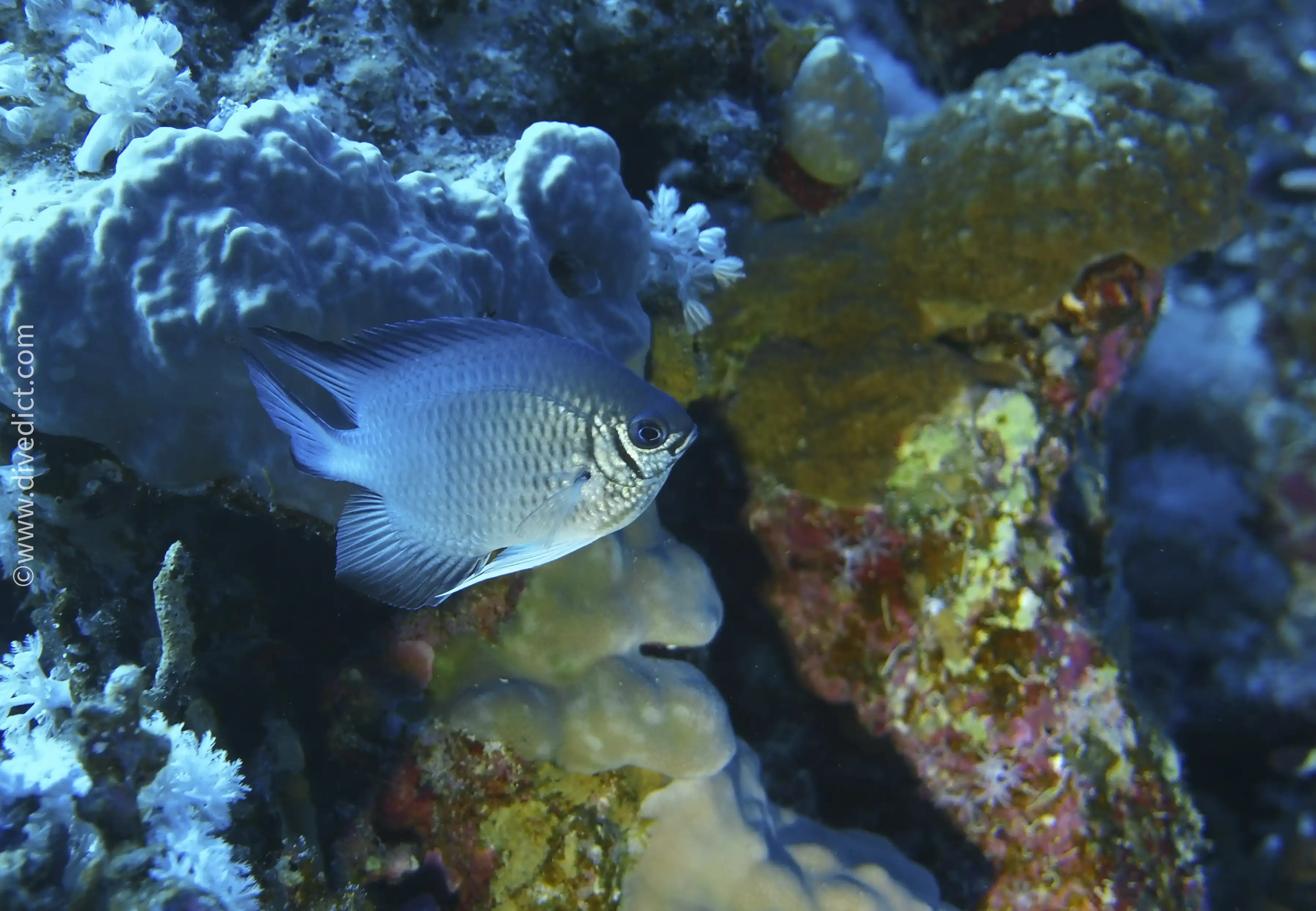
This species is the roundest of the damselfishes, giving it a particularly charming appearance.
Appearance
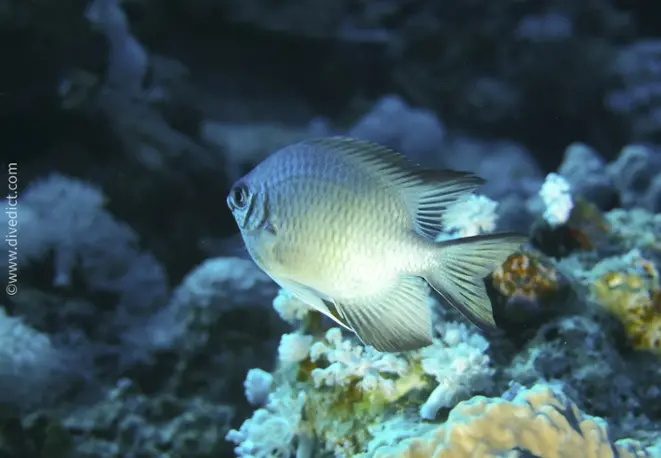
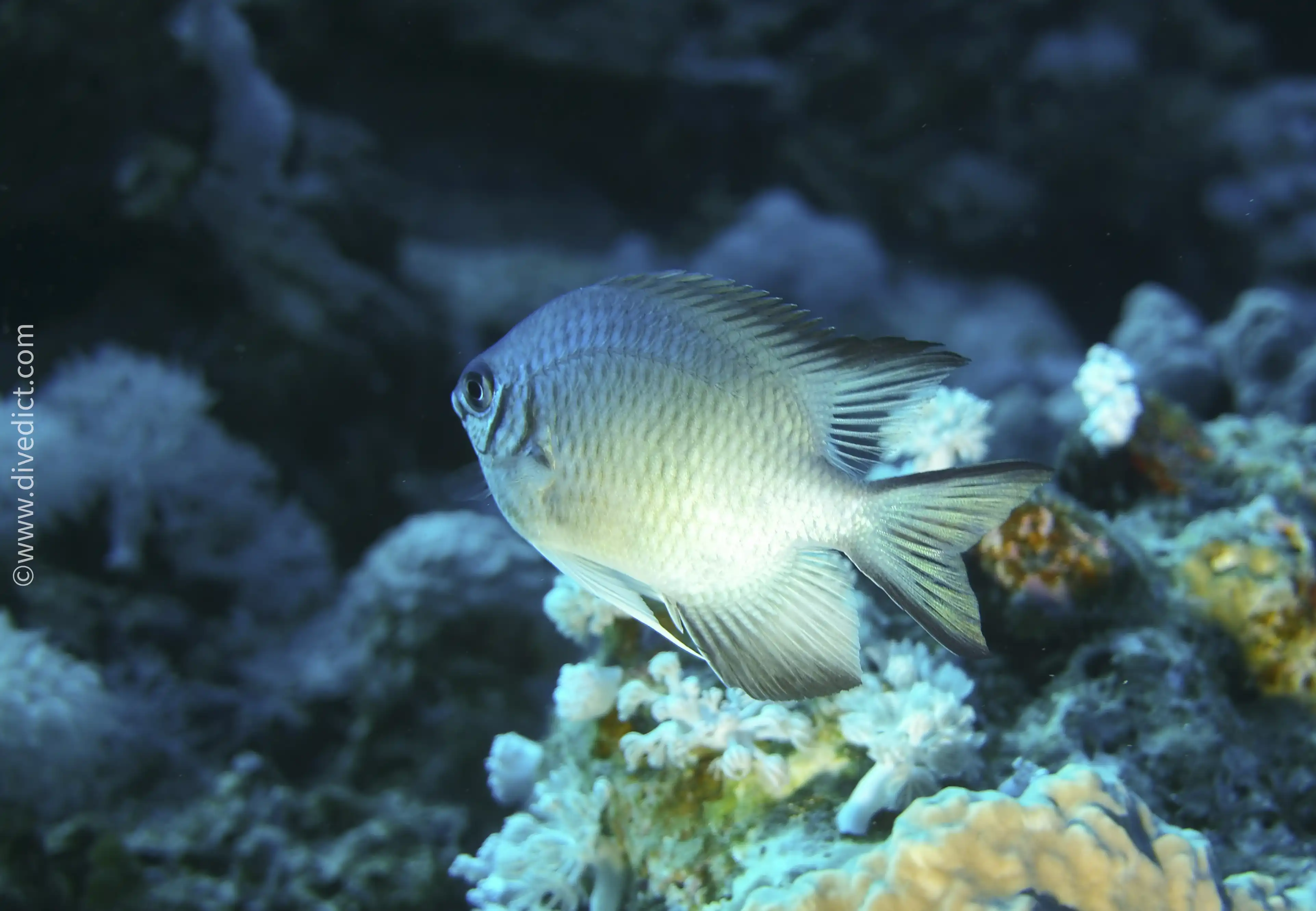
The upper body is a mix of blue and green tones, smoothly transitioning to a white belly – a harmonious coloration that blends well with the reef environment.
Natural enemies
Predatory fish
Dangerous/Venomous
The Pale damselfish is neither dangerous nor venomous.
Sketch

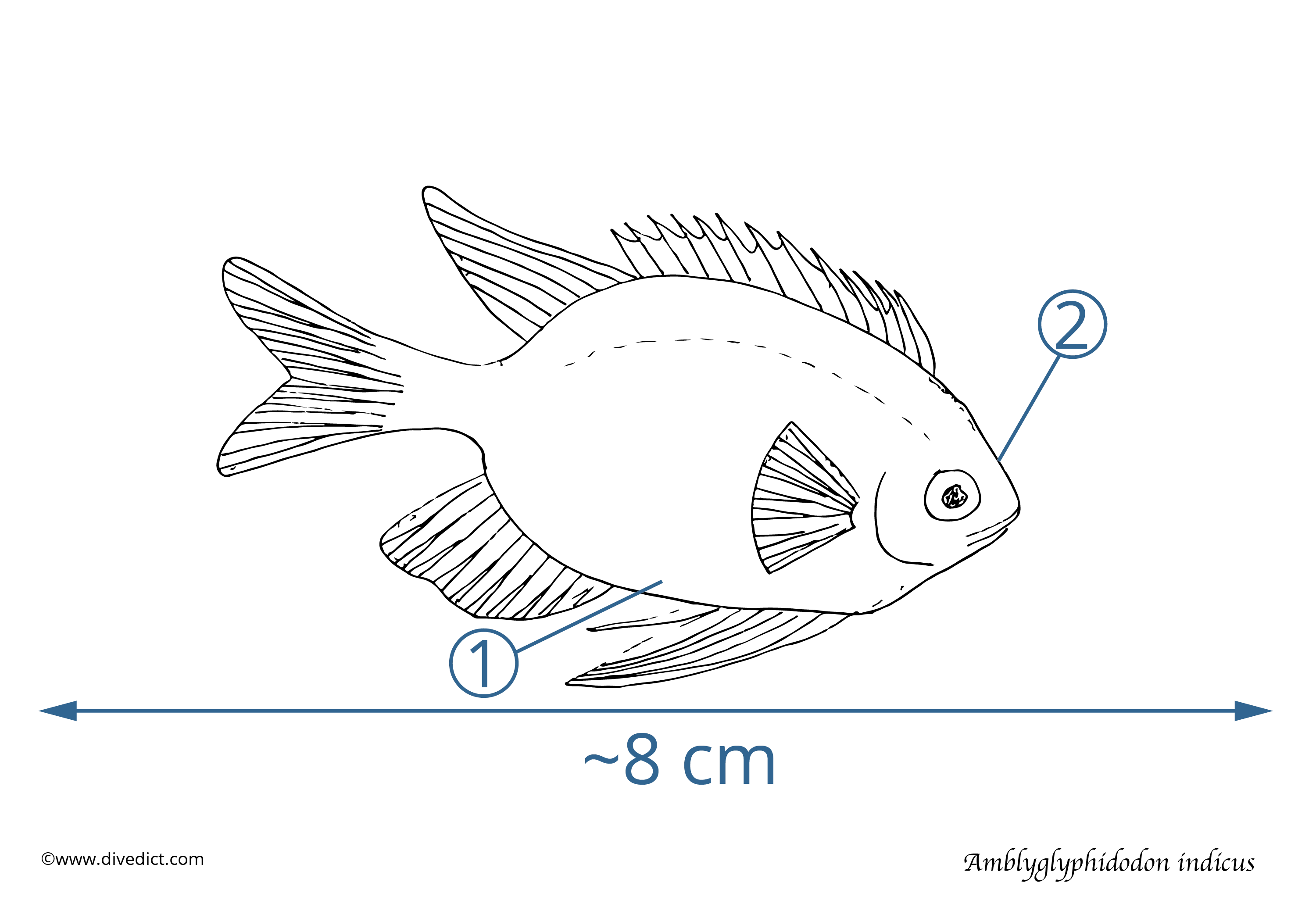
1. Round body
2. Pointed snout
Pro tips
You can commonly find this species in clear, coral-rich lagoons and protected outer reefs. It appears either singly or in small groups and is known for snapping at zooplankton and other drifting organic material. Despite its abundance, it’s quite approachable and not particularly shy around divers.
Damselfishes are a highly diverse family, with over 320 species worldwide. Due to their high individual density, they play an important role in reef communities. Depending on the species, damselfishes may feed on plankton, algae, or be omnivorous. Most species are smaller than 10 cm in length.
Damselfish mating behavior is often linked to the moon cycle. The males take on the responsibility of guarding the eggs: they clean a selected spot on a solid substrate and lay up to 1000 sticky eggs, which are then carefully guarded by the male and fanned with oxygen-rich water until they hatch.
Text: Carolina Leiter
Pic: Felician Hosp
Illustration: Dive Dict