
Monkfish
Chromis chromis
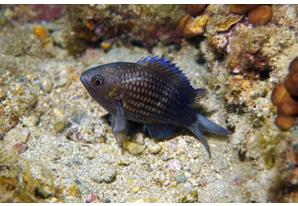




Special features
Monkfish is one of the most common fish species in the Mediterranean.
His extremely complex reproductive behavior is particularly interesting.
Appearance
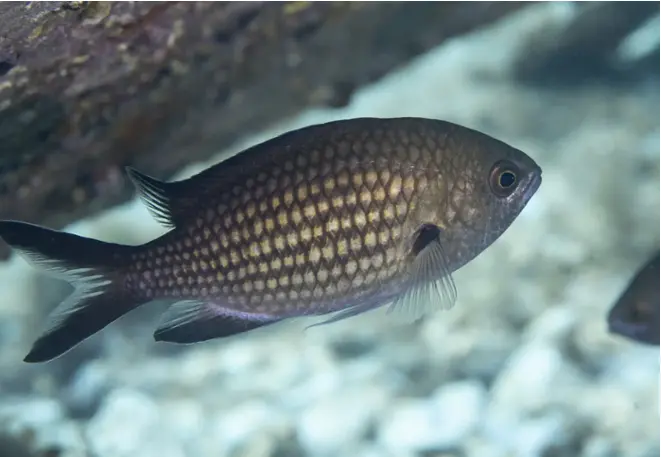
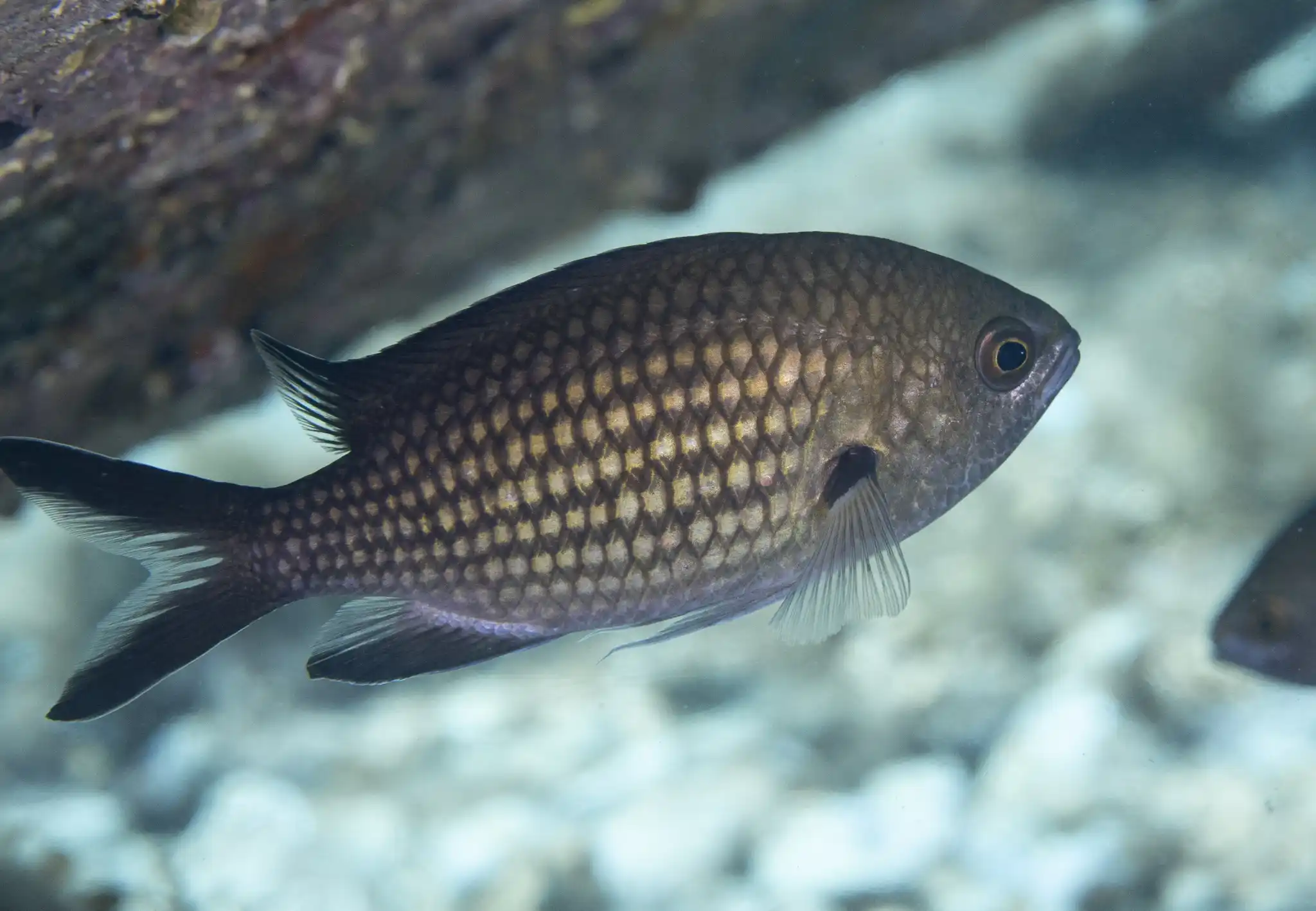
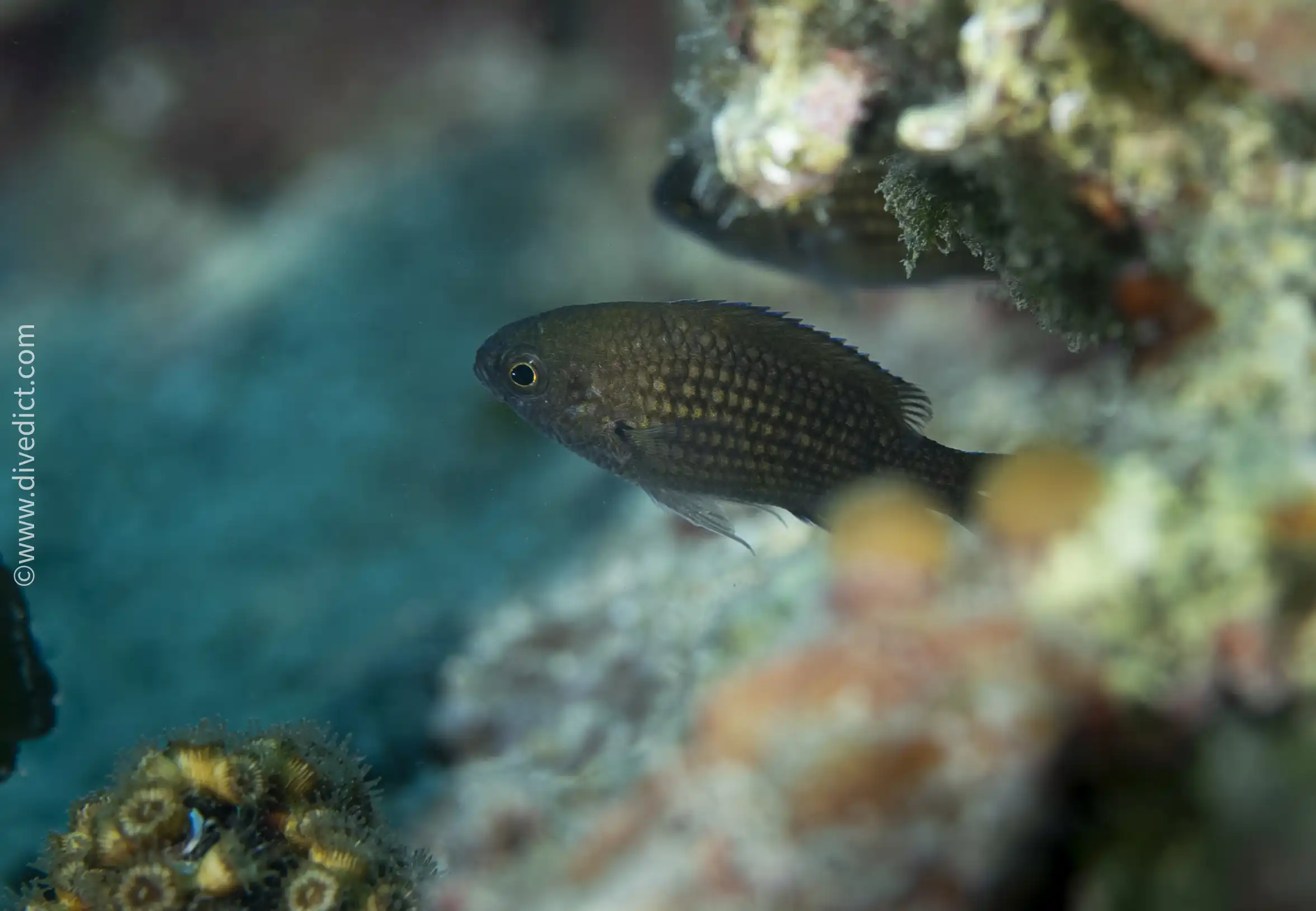
Monkfish have an oval, laterally flattened body with large scales that reflect golden.
From afar, you can easily recognize monkfish by their V-shaped tail fin.
Young fish that are up to 4 cm tall have a small black dot on their heads. Adult monkfish are dark brown to purple. Her pointed teeth are arranged in three rows.
Males and females look very similar, only the dorsal fins of males are a bit more intensely colored.
Natural enemies
seabirds, predatory fish such as: Brown grouper (Epinephelus marginatus) and cephalopods.
Dangerous/Venomous
Monkfish are neither dangerous nor venomous.
Sketch

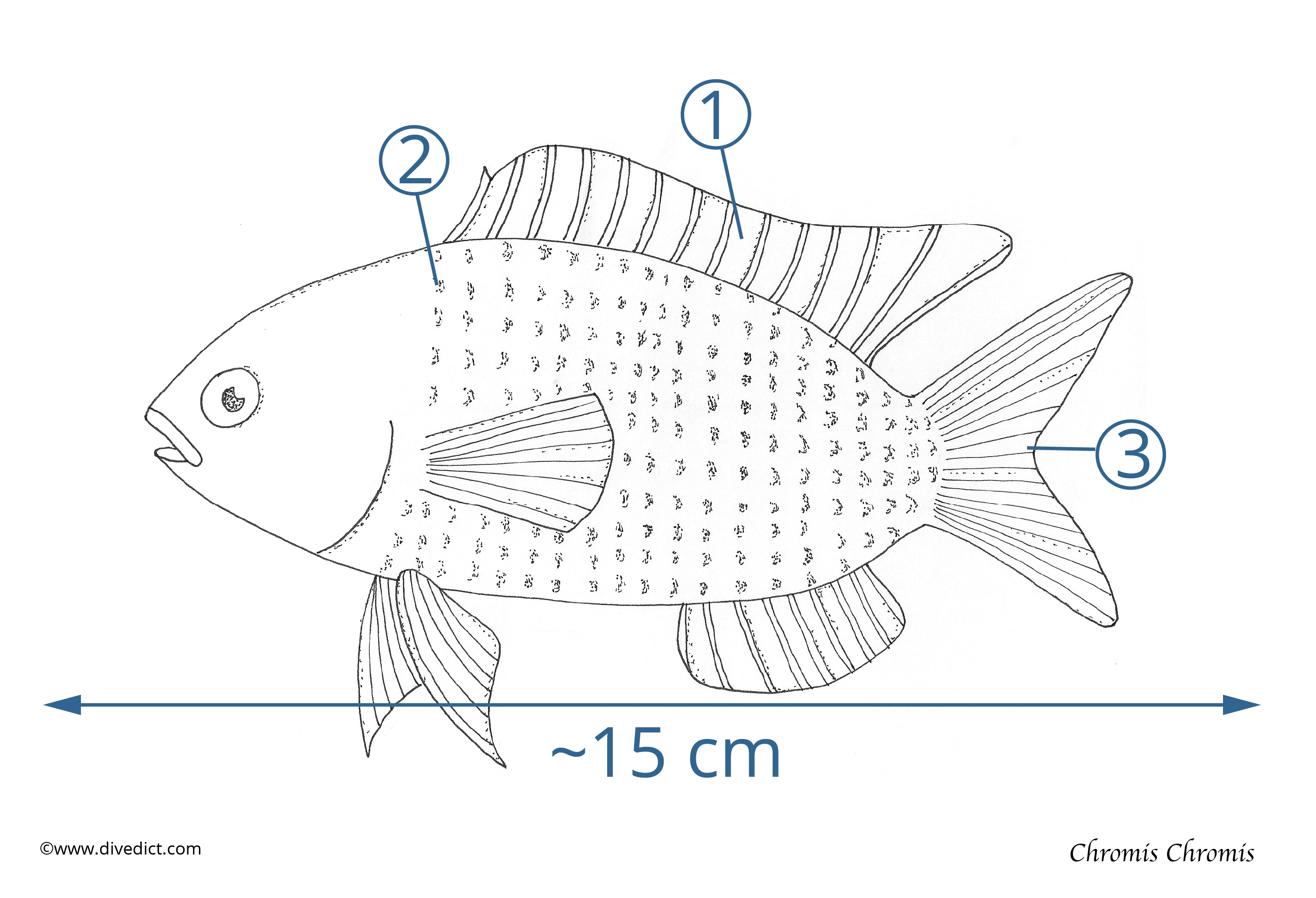
1. Long, continuous dorsal fin
2. Large scales, young animals bright blue
3. V-shaped tail fin
Pro tips
Monkfish prefer a habitat with plenty of shelter and current.
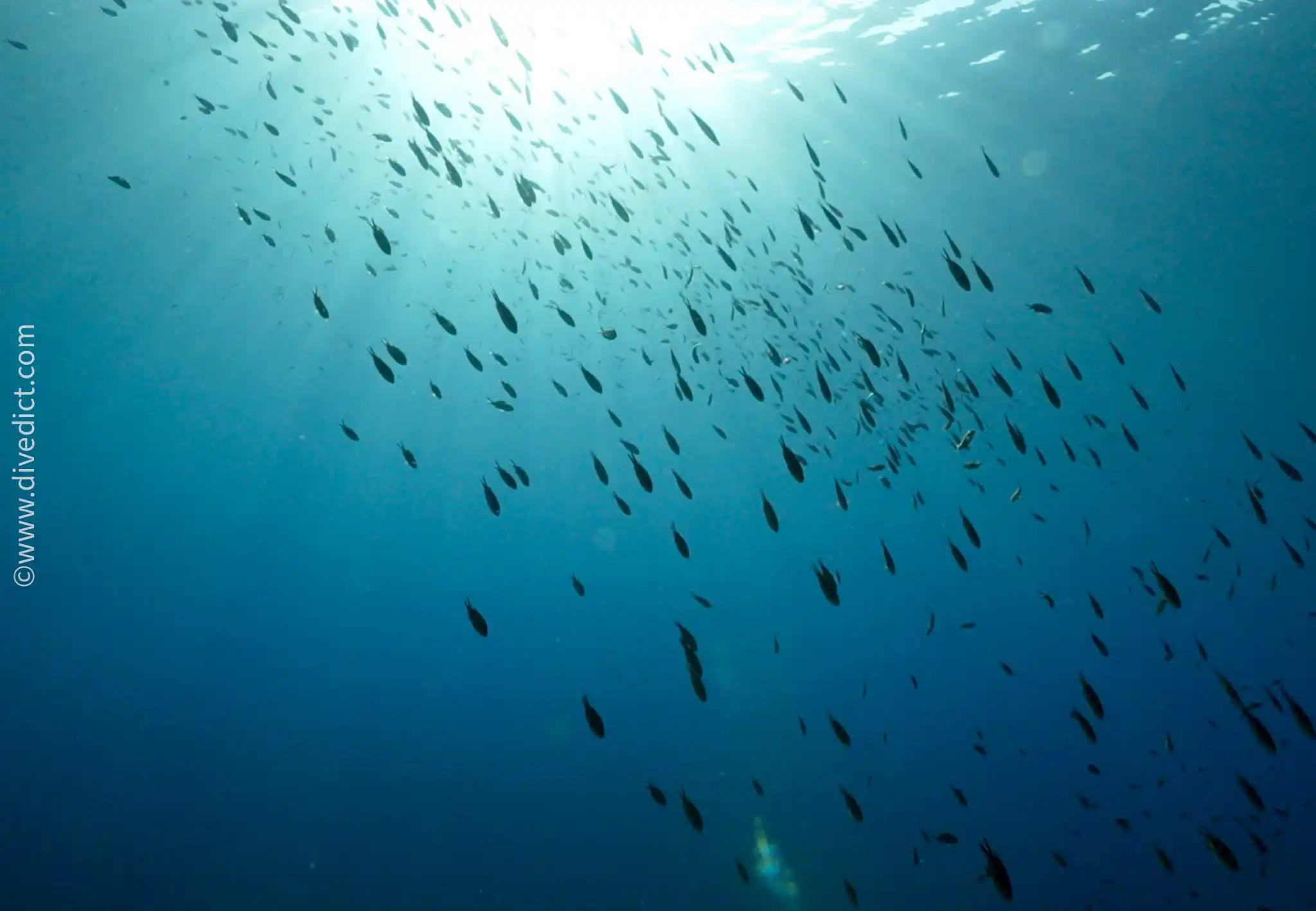
During the day, they swim out into the open sea in loose flocks and eat floating zooplankton. At sunset, they return to the rocky coast to sleep and supply this area with nutrients through their droppings.
In addition, they feed on fish eggs, which has an influence on the stocks of other fish species.
Monkfish are actually always a sign of clean water, because this species is very fussy and generally stays away from polluted waters. Too much noise underwater can also quickly drive them away.
Between June and September, monkfish engage in a complicated mating ritual that can last between 5 and 8 days.
The males attract the attention of the females by making so-called signal jumps. To do this, they jump downwards and thus produce a fluttering sound. The females then lay the eggs in the territories of large males, which then brush and care for them.
Since small males are barely distinguishable from females, they often sneak up to the eggs and secretly inseminate them. In winter, monkfish are more likely to stay close to the ground.
Text: Felician Hosp, Carolina Leiter, Pia Balaka
Pic: Dive Dict
Illustration: Dive Dict