
Indo-Pacific Sergeant
Abudefduf vaigiensis




Special Features
This species is known for its lively behavior and pronounced territoriality, especially during the breeding season. The Indo-Pacific Sergeant often lives in large groups over coral reefs, using the complexity of the reef structure as protection from predators. During the breeding season, the males are known for their intense parental care: they guard the spawn in shallow areas of the reef and actively ventilate the eggs by fin beats.
Abudefduf vaigiensis is an omnivore that primarily feeds on algae, small invertebrates, and plankton. This flexible diet makes it an important component of the coral reef ecosystem.
Appearance
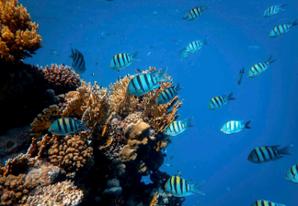
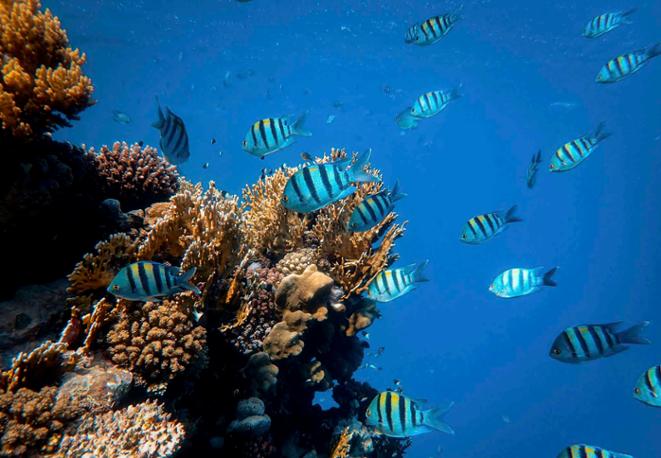
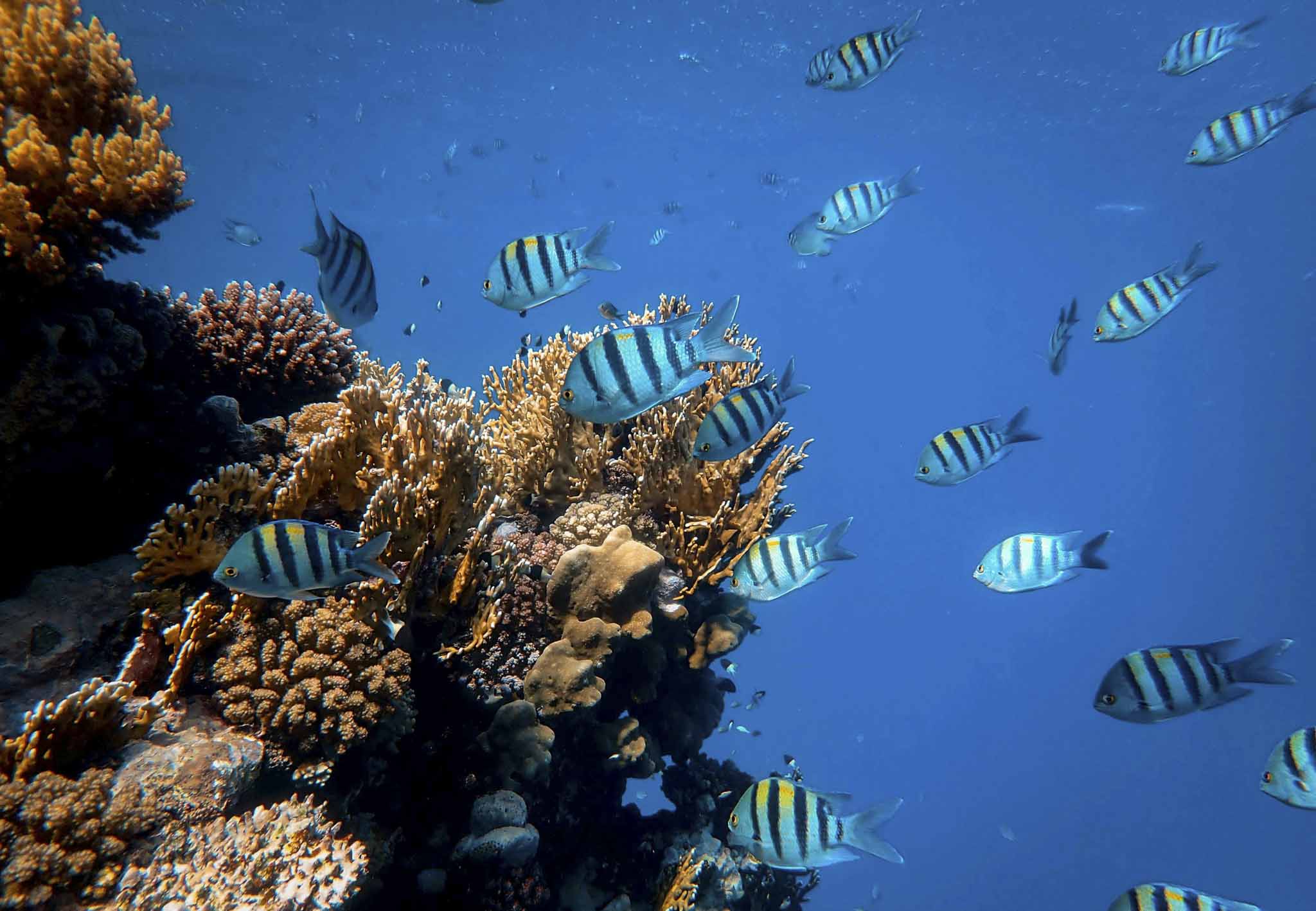
Abudefduf vaigiensis, also known as the Indo-Pacific Sergeant or Vaigiensis Sergeant, is a medium-sized, laterally compressed reef fish that can reach a maximum length of about 20 cm. The basic coloration of the body is silvery-white to bluish, with five to seven vertical black stripes running from the back to the belly. The fins are mostly yellowish, especially the tail and anal fins. The large eyes and relatively small mouth are typical of the genus Abudefduf and give the fish a keen appearance.
Natural Enemies
Predatory fish, seabirds
Dangerous/Toxic
The Indo-Pacific Sergeant is neither dangerous nor toxic.
Pro Tips
This striking reef inhabitant with its five black stripes is very active during the day and is usually seen in small schools near the water's surface, often in lagoons or over shallow reefs. When you go snorkeling, keep an eye out: Males guard their nests during the breeding season and can become quite brave!