
Clark's anemone fish
Amphiprion clarkii



Special features
Clark’s anemonefish has the widest distribution of all anemonefish species. It’s found throughout the Indo-Pacific, from the coast of East Africa all the way to Japan and northern Australia.
Appearance
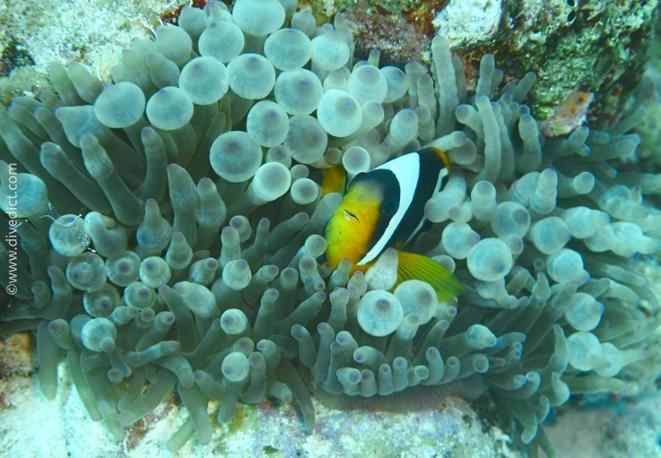
This species is known for its incredible variety of colors – individuals can be black, orange, yellow, or even white. But one feature is always the same: the distinctively forked tail fin. That’s a handy way to tell it apart from other anemonefish.
Natural enemies
Predatory fish
Dangerous/Venomous
The Clarks anemone fish is neither dangerous nor venomous.
Sketch

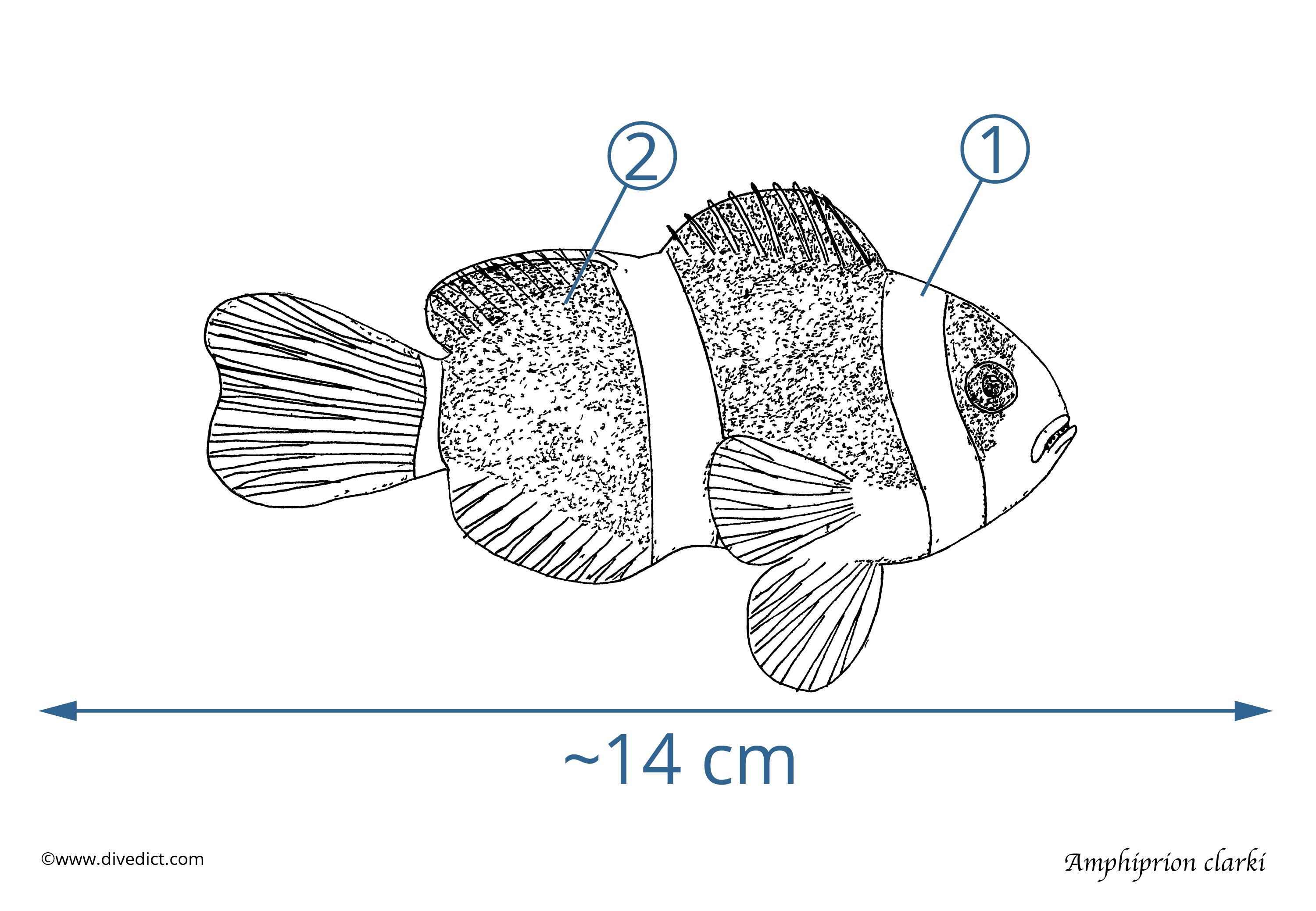
1. White stripes
2. Variable colors
Pro tips
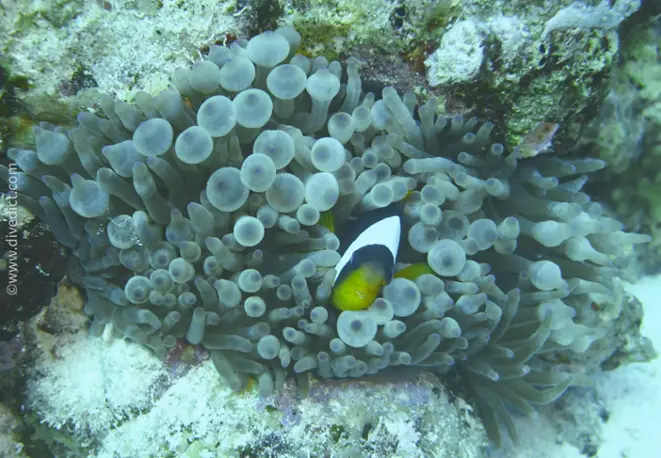
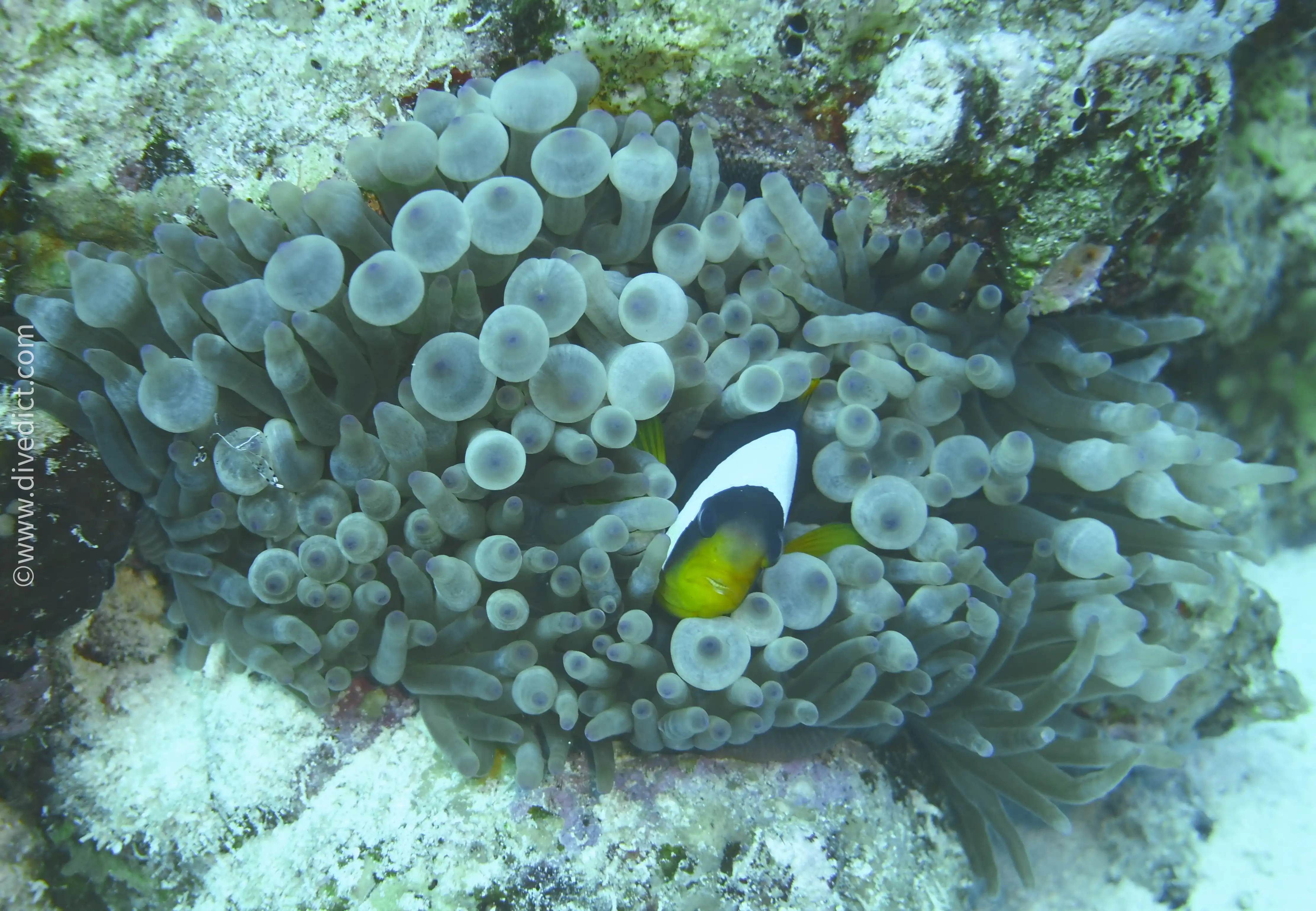
You’ll often find them in shallow reef zones. Clark’s anemonefish is especially adaptable and can form bonds with several different anemone species, which makes it a bit of a generalist among its kind.
Anemonefish belong to the damselfish family and are famous for their close, symbiotic relationship with certain sea anemones – usually around ten species. Each type of anemonefish tends to have one or two preferred anemone hosts.
As juveniles, they deliberately expose themselves to the stinging cells of their anemone to build up immunity – a process that allows them to live safely among the tentacles. In return, they defend their anemone from predators, and the anemone offers them shelter – a true underwater dream team!
Anemonefish feed primarily on zooplankton, and thanks to the current flowing past their anemone home, they often don’t even have to leave their cozy hideout to catch it.
In a mated pair, the female is always the larger and more dominant partner. If she dies, the highest-ranking male undergoes a complete sex change and becomes the new female – a fascinating natural adaptation.
Spawning usually happens around the full moon. In tropical regions, this can occur year-round, while in subtropical waters, it’s mostly limited to the warmer months. Females lay between 500 and 1,500 eggs near the base of the anemone, and the male takes on the full-time job of guarding and caring for them.
Text: Carolina Leiter
Pic: Felician Hosp
Illustration: Dive Dict