
Striped Eel Catfish
Plotosus lineatus




Special Features
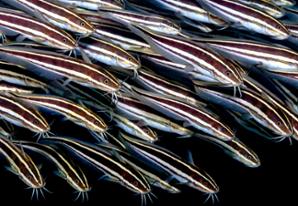
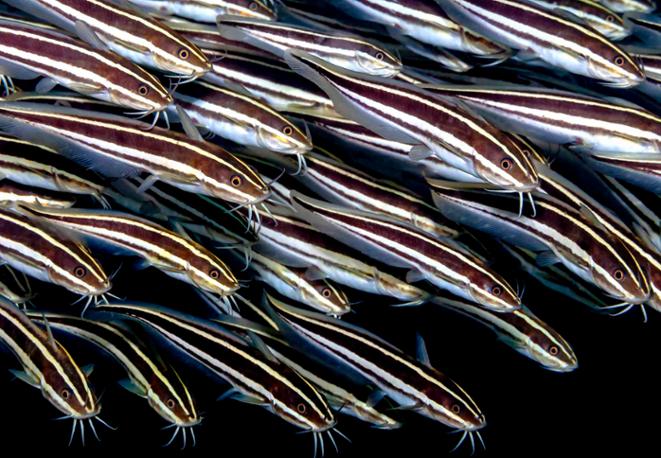
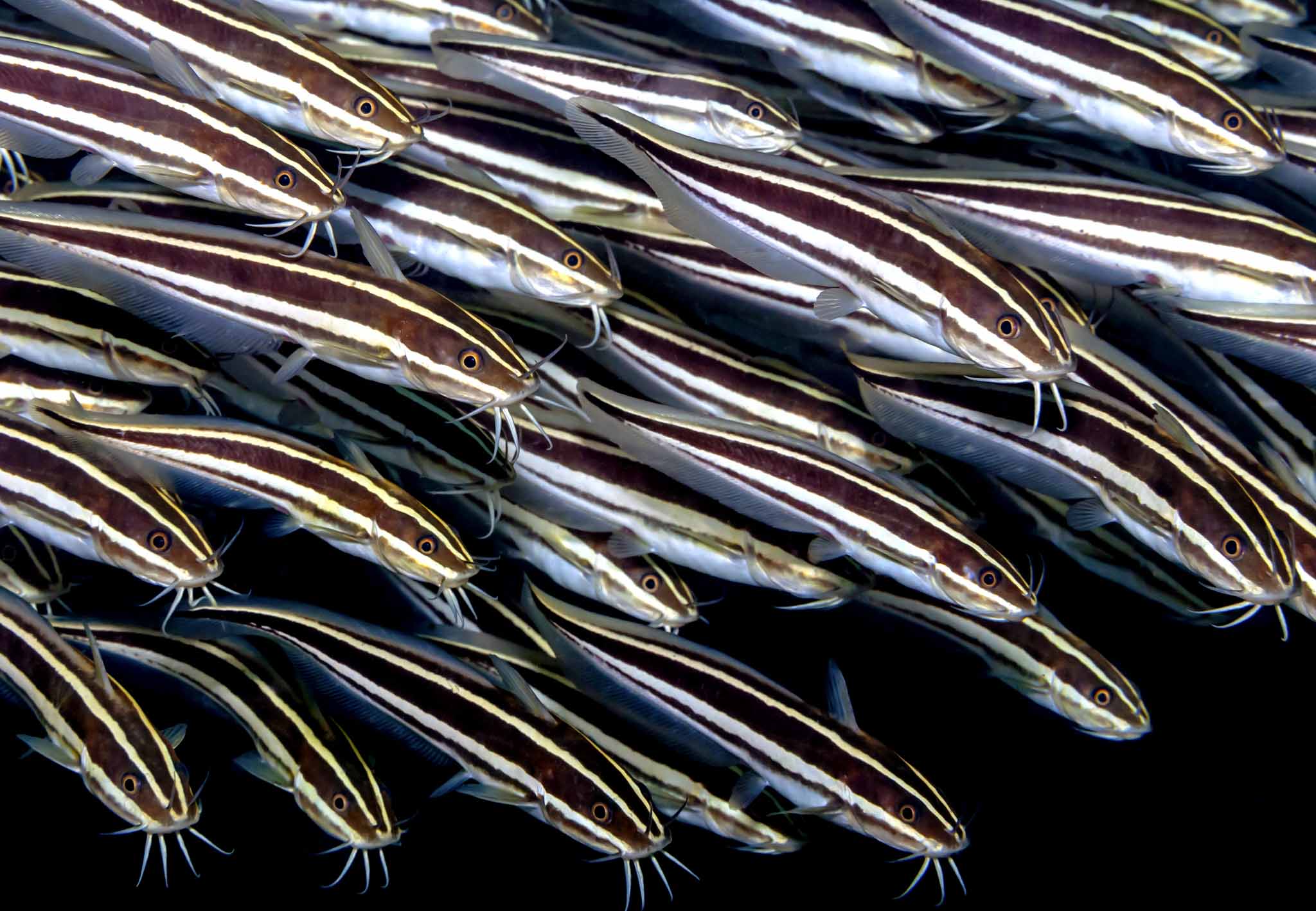
The Striped Eel Catfish not only has a striking appearance, but also a quite interesting social life. As juveniles, they are real team players: Often, one can see hundreds of them bustling in tightly packed schools over the ocean floor. This behavior provides protection from predators and helps in stirring up sand together to search for food. As they grow older, however, the animals become loners or only live in small groups that seek shelter in caves or under corals during the day. At night, they go on the hunt – preferably for small crustaceans, worms, or mollusks, which they locate in the sand with their sensitive barbels ("whiskers"). These barbels are highly sensitive tactile and olfactory organs, making the catfish a true specialist in nocturnal foraging.
Appearance
The Striped Eel Catfish (Plotosus lineatus) is a small but striking marine inhabitant, easily recognized from afar by its "zebra stripe look". Its slender, eel-like body is dark brown to black and is crossed by two to three snow-white longitudinal stripes; a design that makes it both elegant and distinctive. Particularly cute (and a bit bustling) are the juveniles, which move in dense schools over the ocean floor, almost like a moving ball of stripes. Adult animals, on the other hand, usually live alone or in small groups and can grow up to 30 centimeters long.
Natural Enemies
Due to its venom, this fish has few natural enemies. Only occasionally is an individual preyed upon by sharks or large morays.
Dangerous/Poisons
Striped Eel Catfish possess a spine with venom glands before their first abdominal and dorsal fins. A sting can cause severe pain in humans.
Pro Tips
It is best to observe Plotosus lineatus at night or during twilight, when the catfish come out of their hiding places under corals, while juveniles are often seen in dense schools. For photos, close-ups with low light work well.
Text: Zettel Carina