
Indian glass fish
Parapriacanthus guentheri




Special features
Alongside Parapriacanthus sharm, this species is one of only two members of its family found in the Red Sea. They’re actually a pretty recent discovery — first identified in 2016!
Appearance
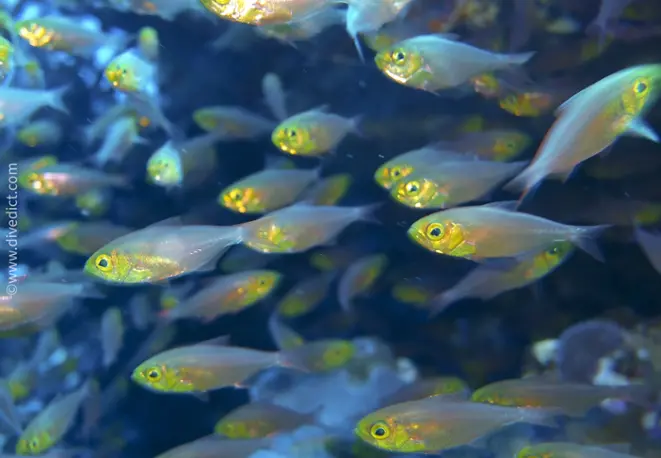
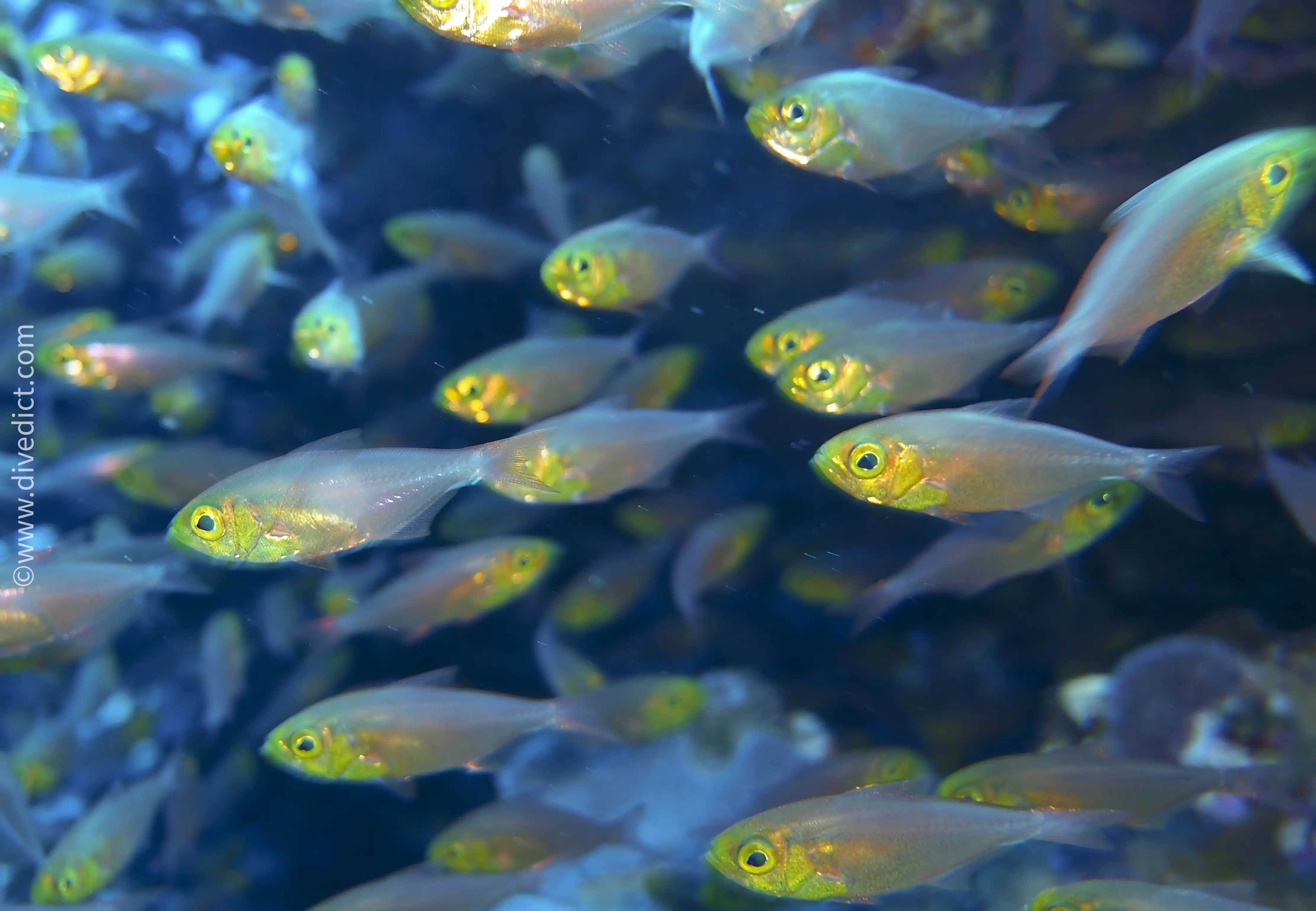
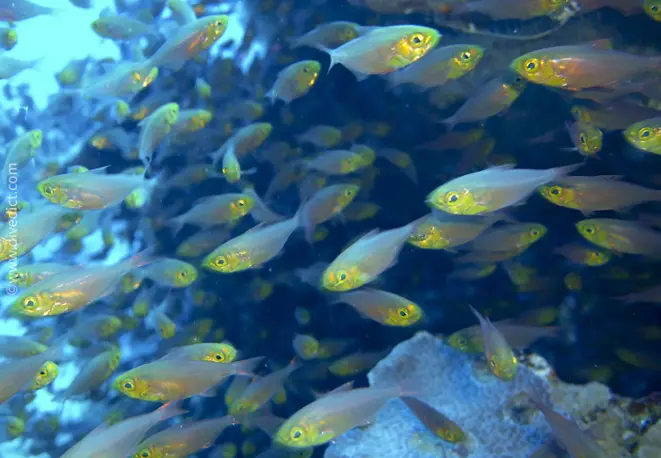
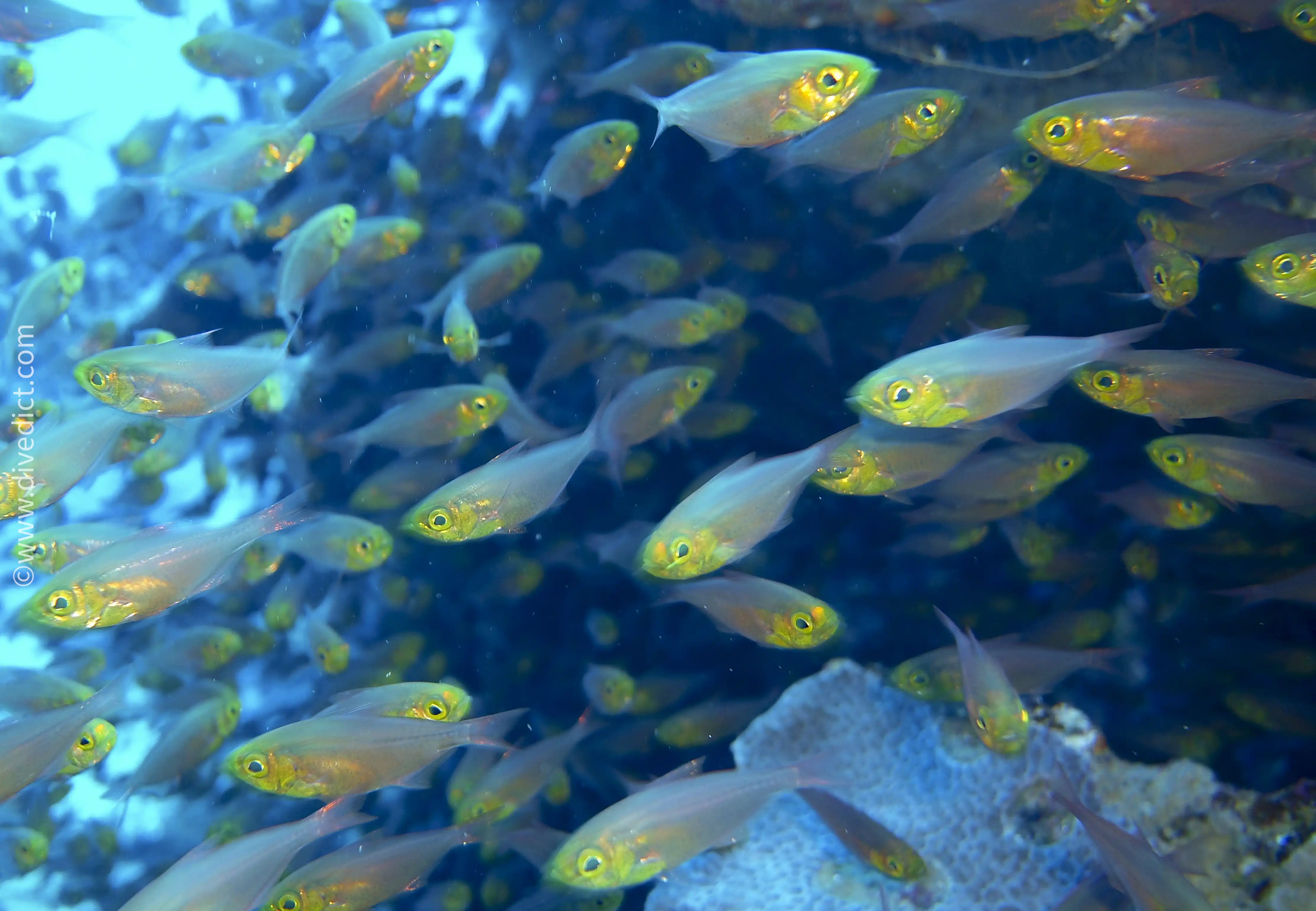
These fish have a yellowish-green head, and their body is semi-transparent with a light brownish-grey tint. Delicate and subtle, but beautiful!
Natural enemies
Predatory fish
Dangerous/Venomous
Golden sweeper are neither dangerous nor venomous.
Sketch
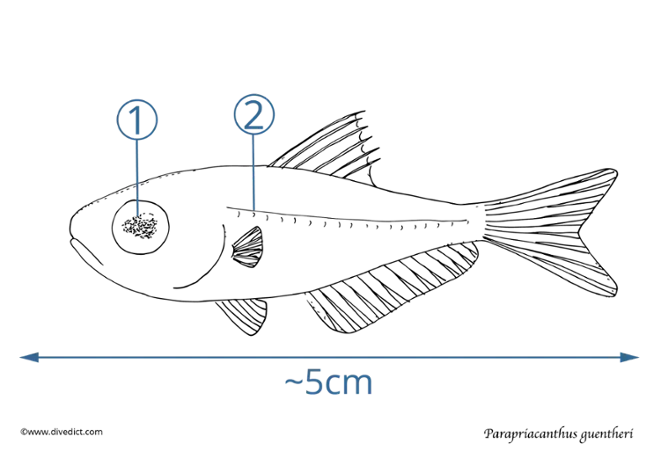
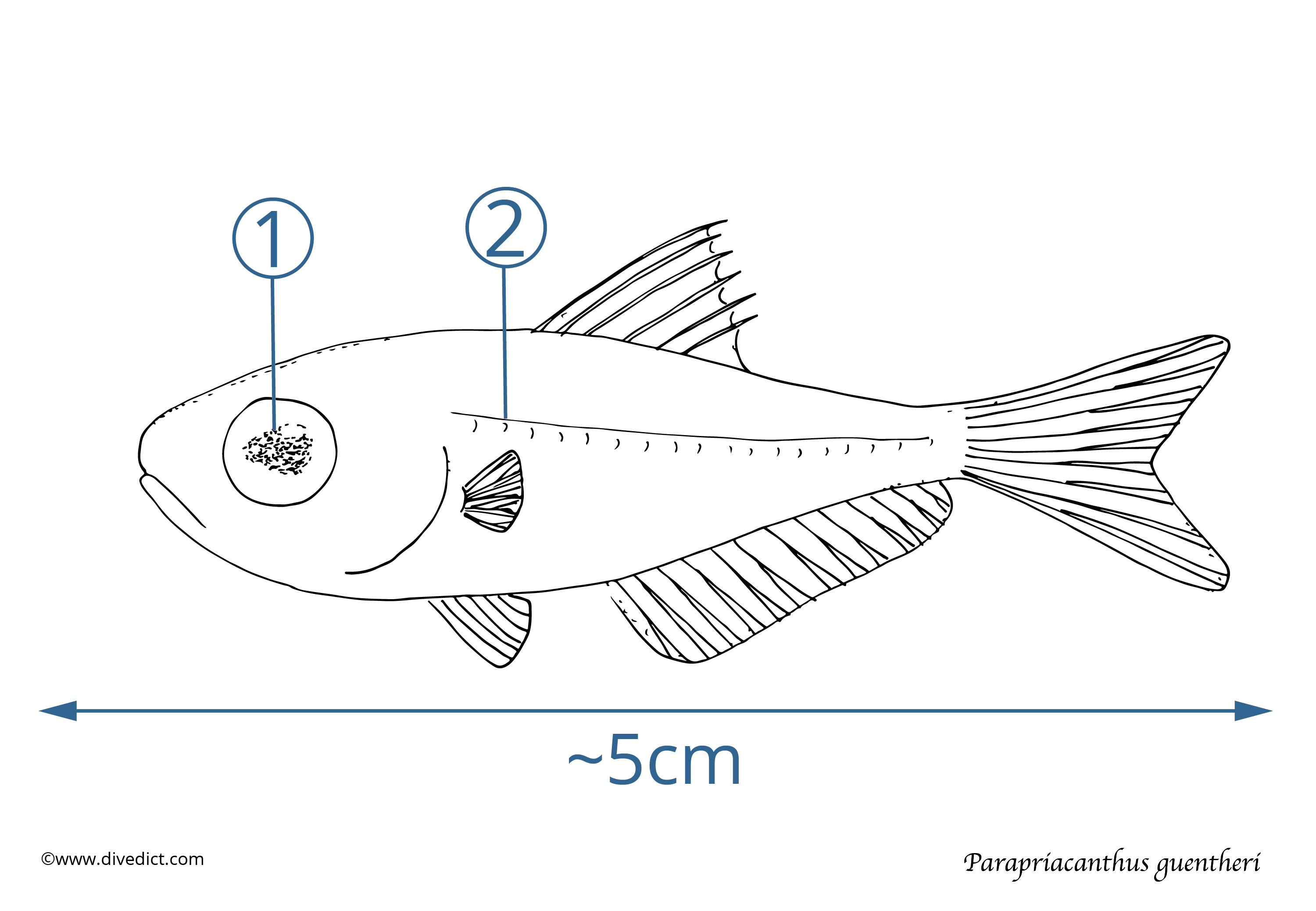
1. Enormous eyes
2. Shinethrough body; visible skeleton
Pro tips
You’ll have the best luck finding them in lagoons, bays, and sheltered areas along outer reefs.
During the day, they hang out in tight, stationary schools — often tucked away under ledges, in caves, or within crevices.
At night, they venture out on their own to feed on plankton.
Interestingly, the two species found in the Red Sea look a bit different from other sweepers — instead of the typical downward-bulging belly, their bodies are more elongated and streamlined.
Text: Carolina Leiter
Pic: Felician Hosp
Illustration: Dive Dict