
European barracuda
Sphyraena sphyraena




Special features
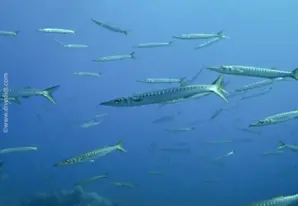
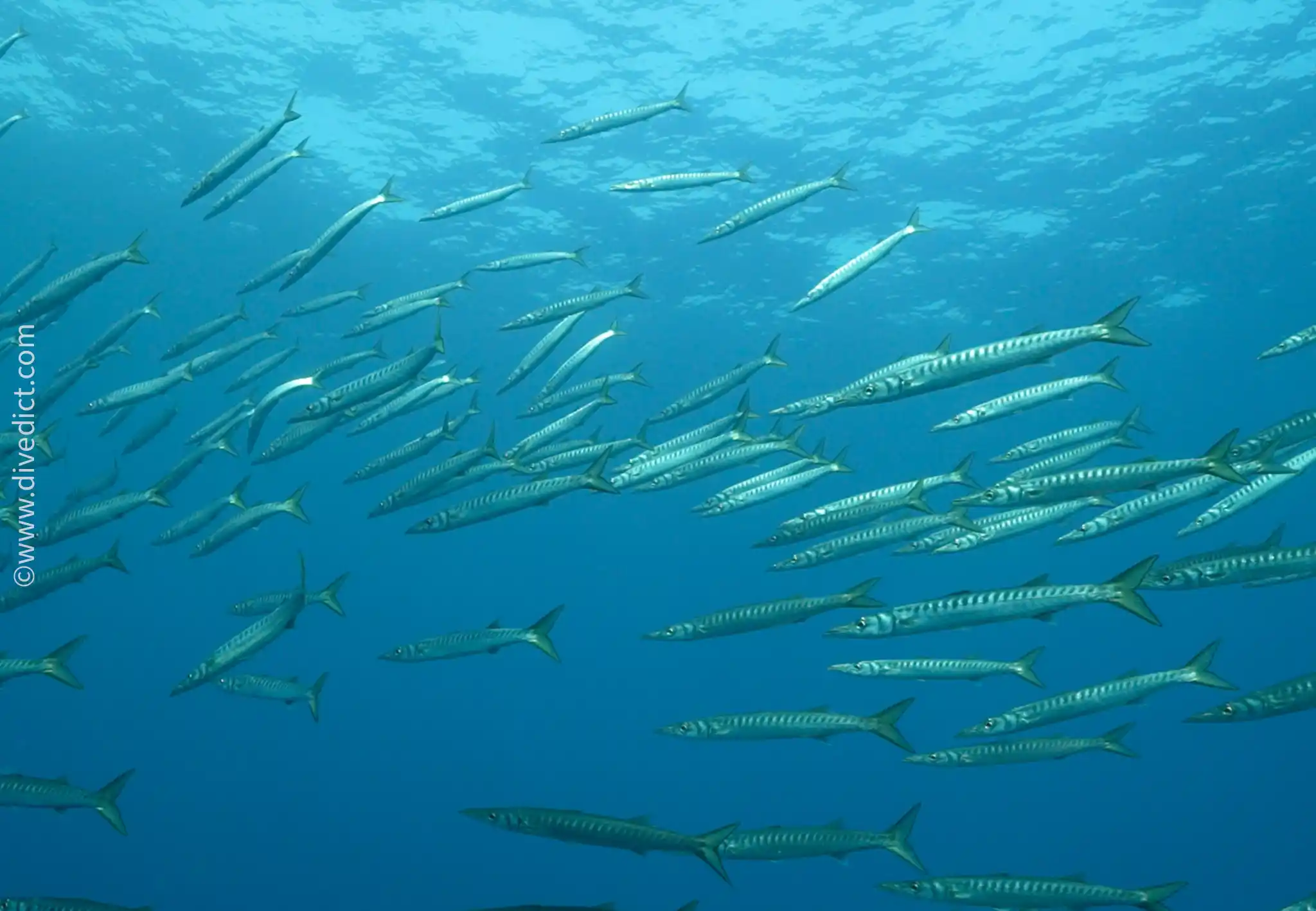
The kings of hunting are met in swarms of hundreds of animals.
Their arrow-like appearance and swarm behavior reveal their predatory dynamics.
They are active hunters who can accelerate at lightning speed and bite with razor-sharp teeth.
Appearance
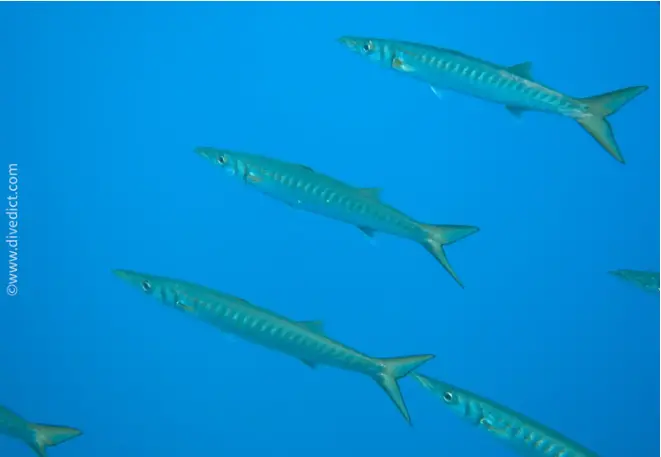
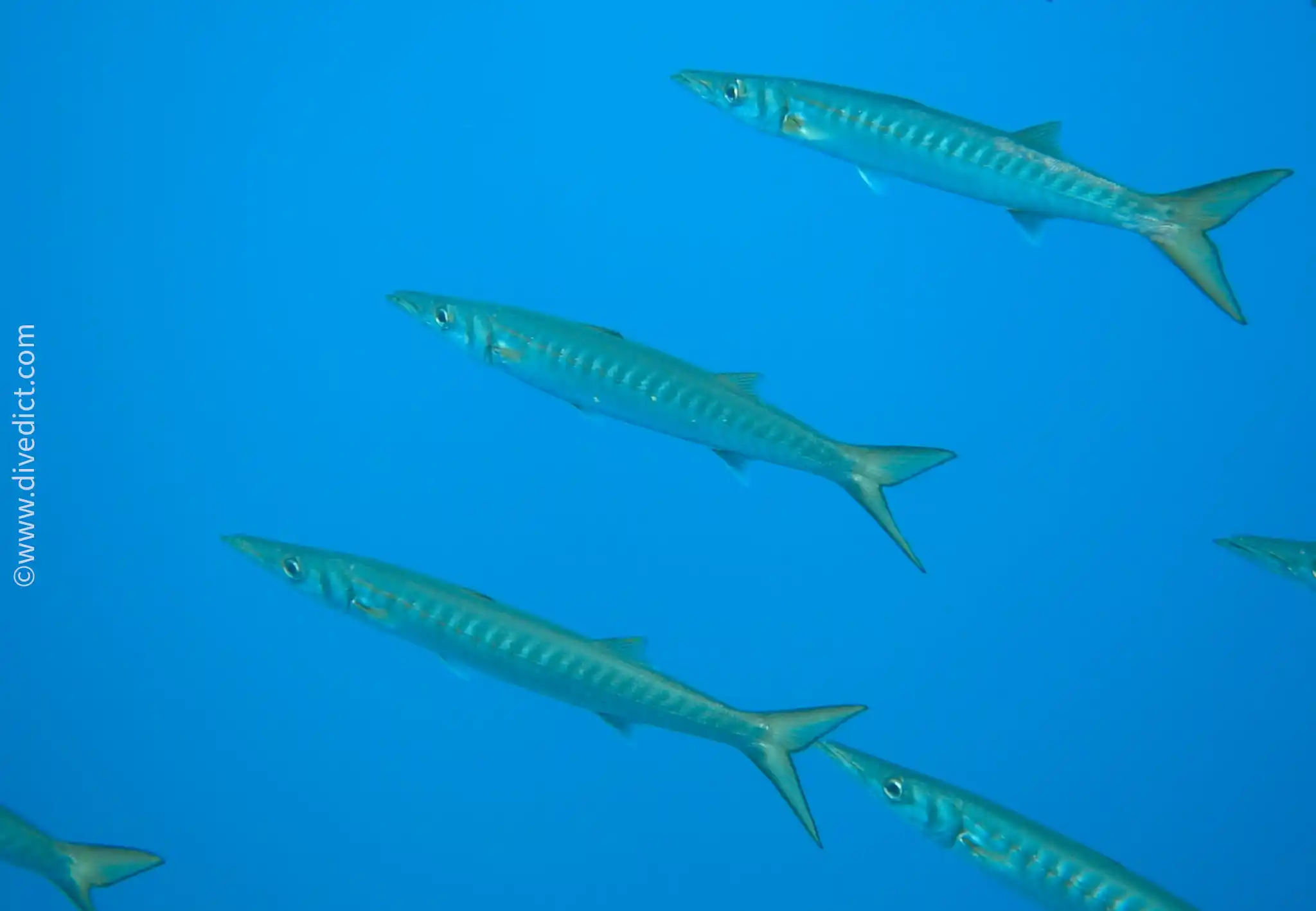
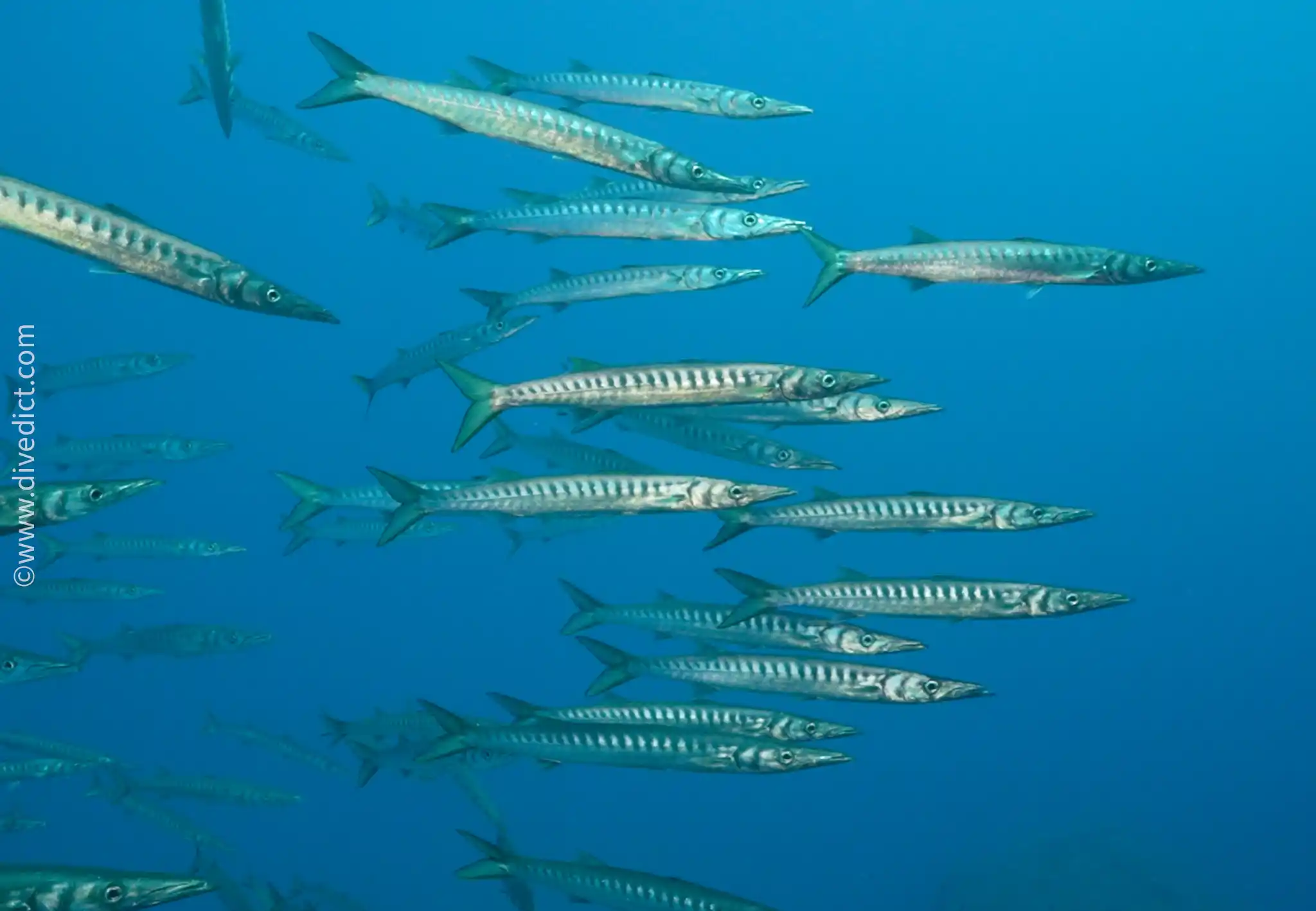
You can immediately recognize them by their elongated, spear-like body, with which they move quickly through the dark blue.
Its scales shine silvery, on the back they are dark green to black. Starting from there, dark bands stretch down to the side line.
The pointed head ends in a large mouth with a projecting lower jaw, which suggests their strength.
The V-shaped caudal fin is dark at the edges, bluish transparent in the middle.
Both the dorsal fin and the anal fin rest prominently far back and at the same height on the body.
Most individuals are 40-60cm long, but 2m characters are said to have already been sighted.
Natural enemies
Sharks
Dangerous/Venomous
Their speed and sharp bites can be extremely dangerous, though, they are not venomous.
Usually, they don't behave aggressively towards humans, but it is better to keep your distance
Sketch

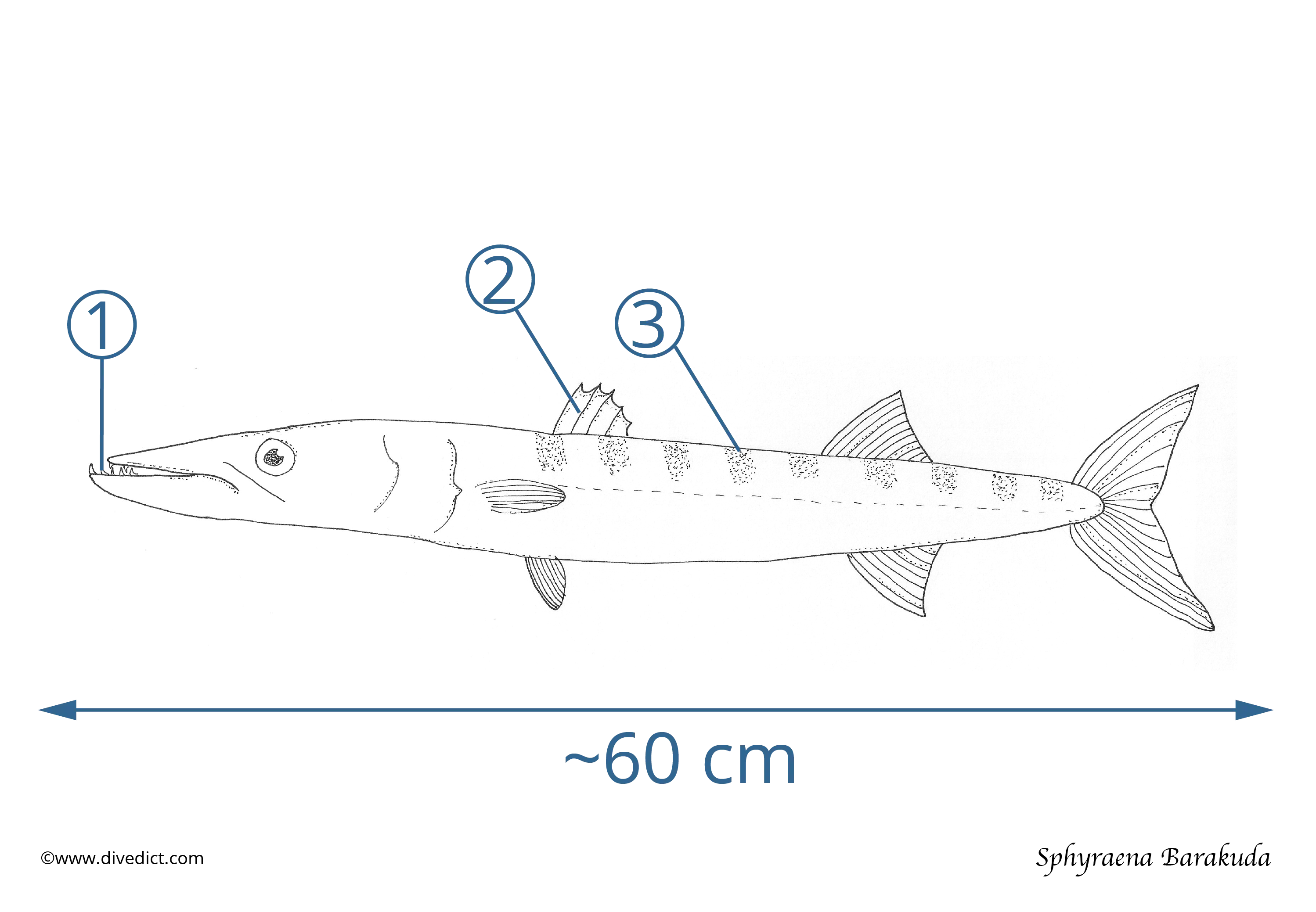
1. Protruding lower jaw
2. Movable dorsal fin
3. Dark bands
Pro tips
These predators are also known colloquially as "pikes".
If you want to distinguish between the different barracuda species, it is best to look at the pre-gill covers, which are clearly wider in the Sphyraena sphyraena than in the other species present in the Mediterranean.
Barracudas are free spawners, which means that they release their eggs into the open water.
For the spawning process, they form even larger swarms than usual at the edges of rock or coral reefs and then spawn in full moon nights.
They are the apex predators of the Mediterranean.
Even when they target prey of their size, they effortlessly divide the prey in half: They shoot forward as fast as an arrow and use their sharp teeth to bite in one smooth movement.
They hunt smaller fish such as Picarel and young Tuna; young animals usually prey on gobies and mullets. But in fact, they don't shy away from anything in the Mediterranean and are always ready to defeat their attackers.
Attacks on people are generally rare. Harpoon hunters can be attacked by the harpooned but not dead yet fish.
However, you should be careful in cloudy waters, where barracudas are attracted to shiny objects and mistake them for prey fish.
Text: Carolina Leiter, Felician Hosp
Pic: Felician Hosp
Illustration: Dive Dict