
Rosy feather-star
Antedon mediterranea
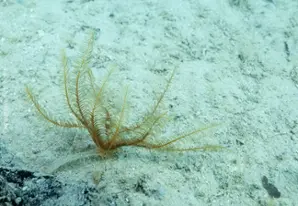




Special features
The Rosy feather-star looks particularly fragile, as if it does not belong in the sometimes stormy and dark world of the sea.
Its swimming movements are almost reminiscent of a snowflake floating in the wind.
Although you might not believe it right away, in some areas this feathery moth is actually found in large numbers.
Appearance
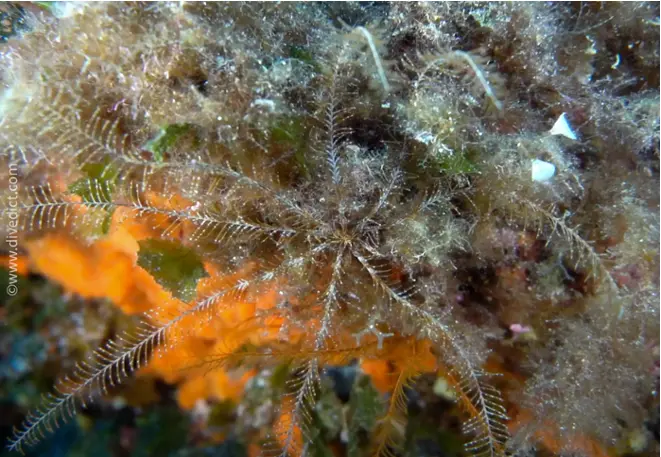
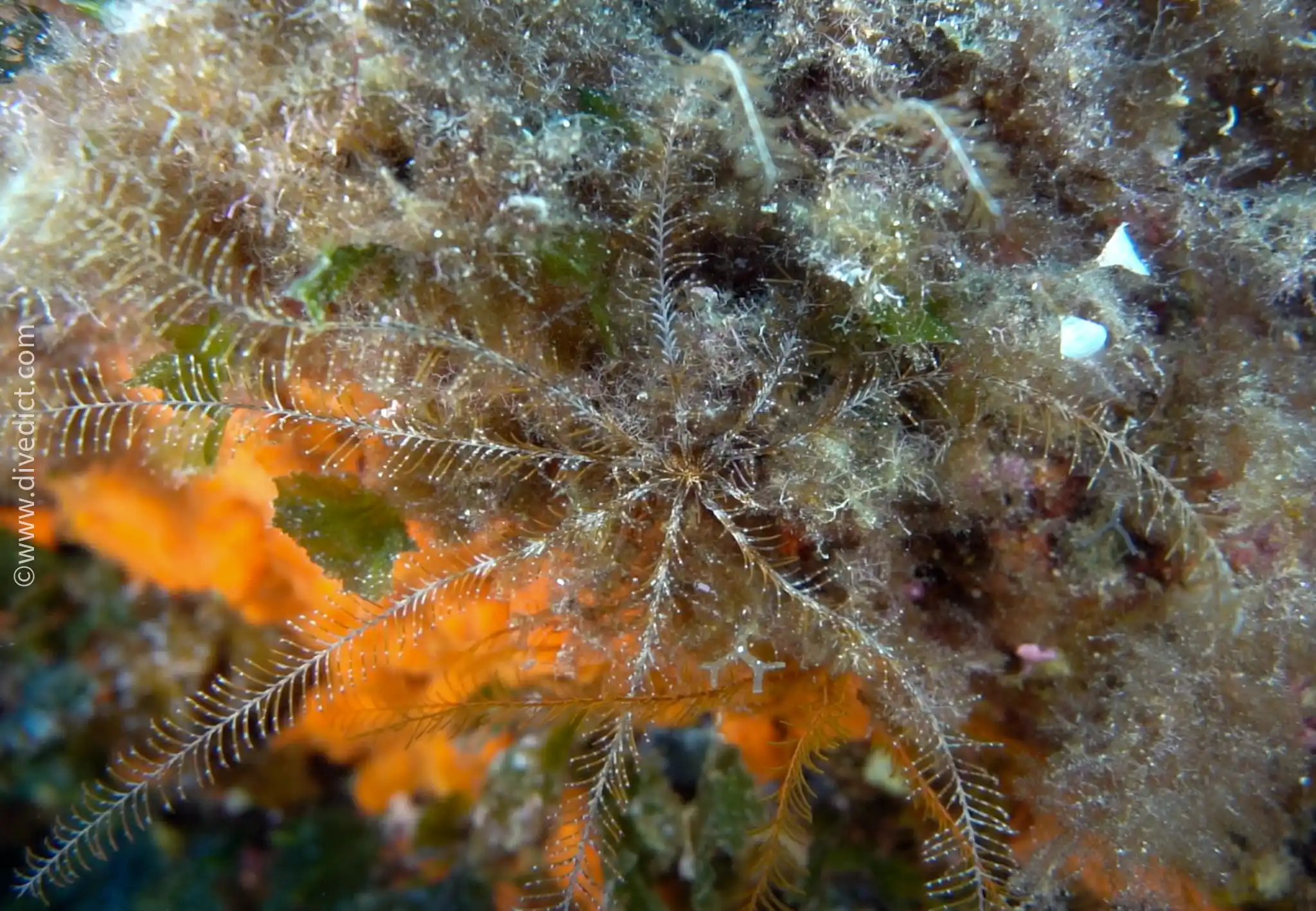
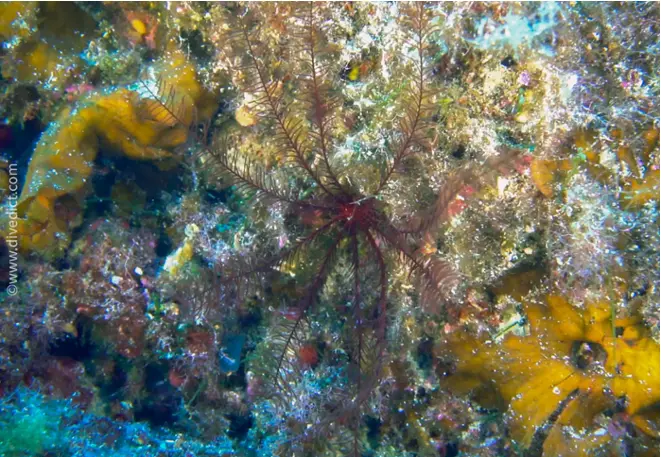
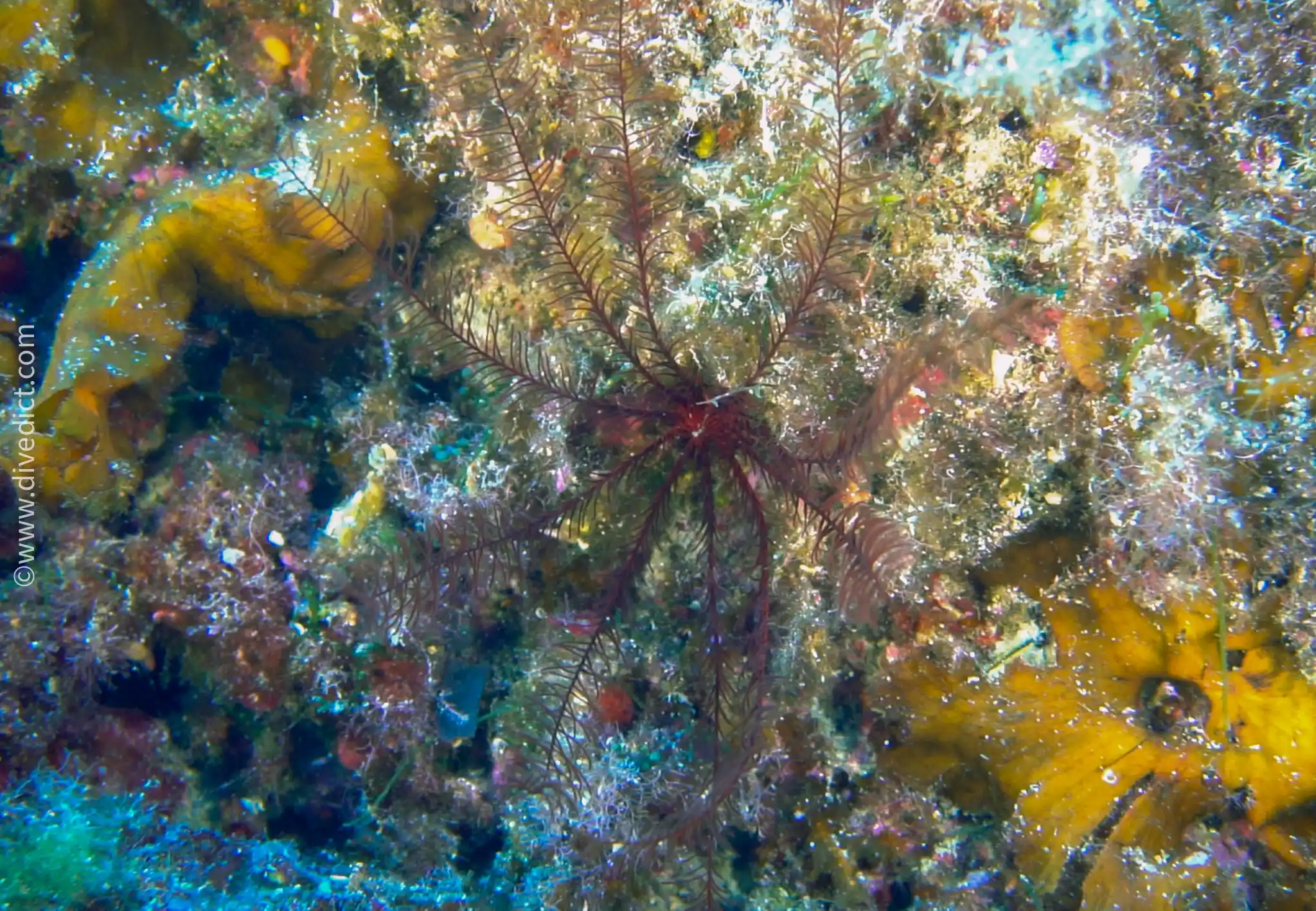
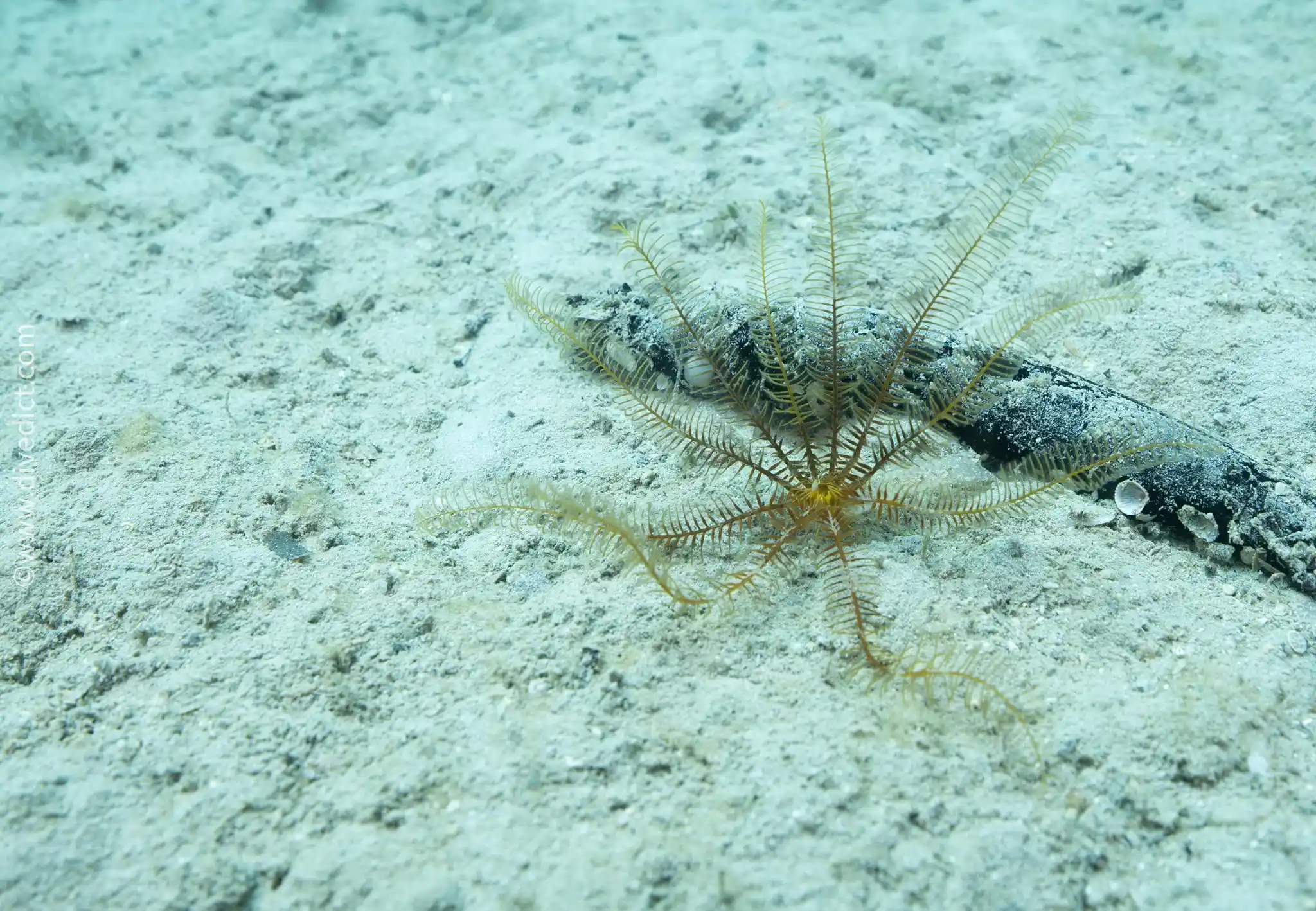
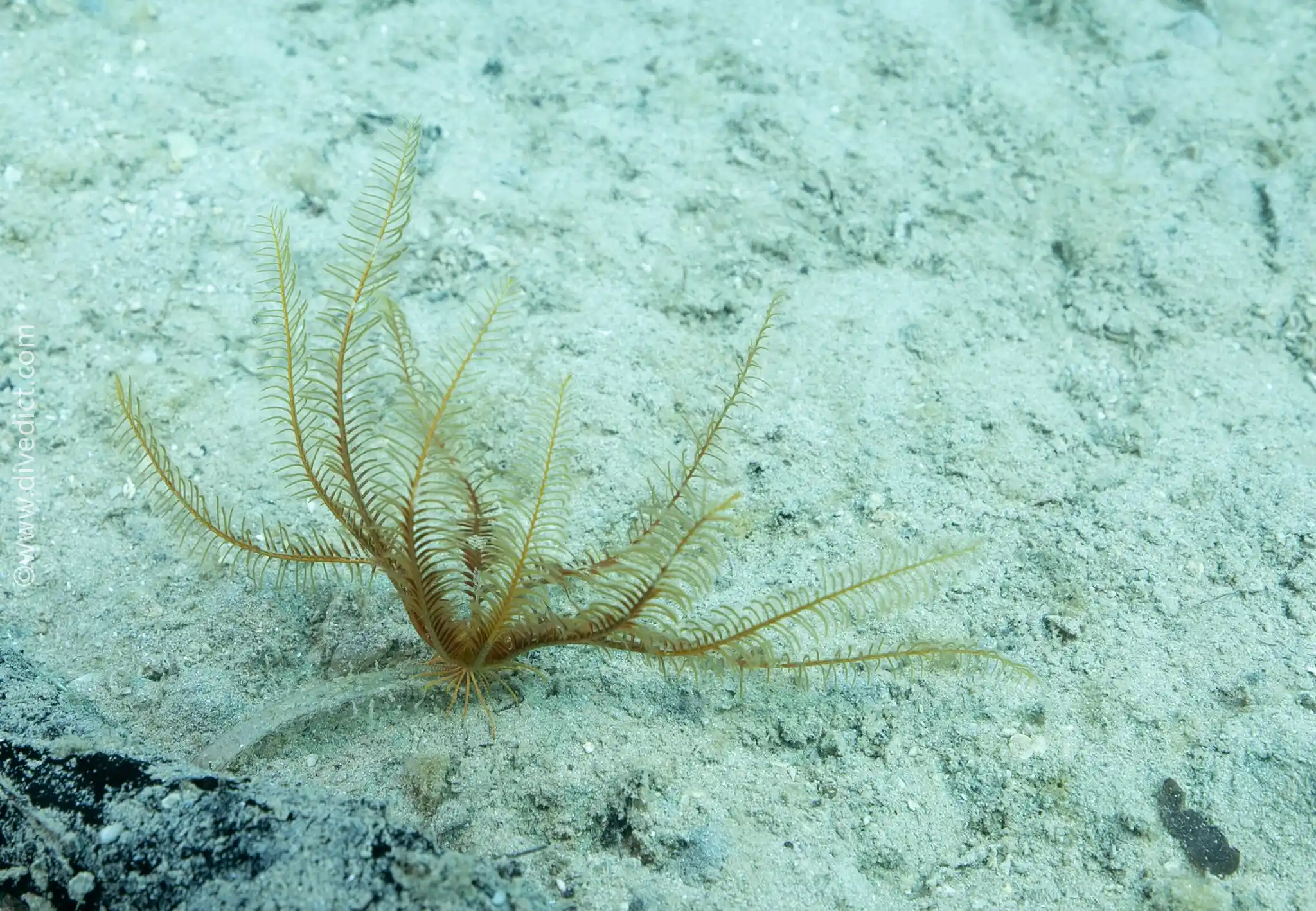
Starting from a small body disc, the Mediterranean hairy starling forms 10 feather-like arms with 60 pairs of pinnules, which can be colored from yellow to orange to red or brown, sometimes they are even patterned or with a color gradient from dark in the middle to light tips.
On the underside of the small body disk, it has around 30 cirrus hairs to hold on to the ground or to move around.
It can reach a total diameter of up to 20cm.
Natural enemies
Fish, crabs, other starfish species
Dangerous/venomous
The Rosy feather-star is neither dangerous nor venomous.
Skizze
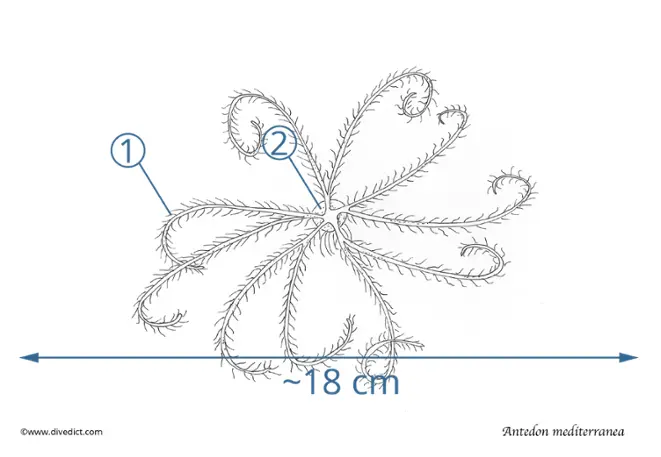
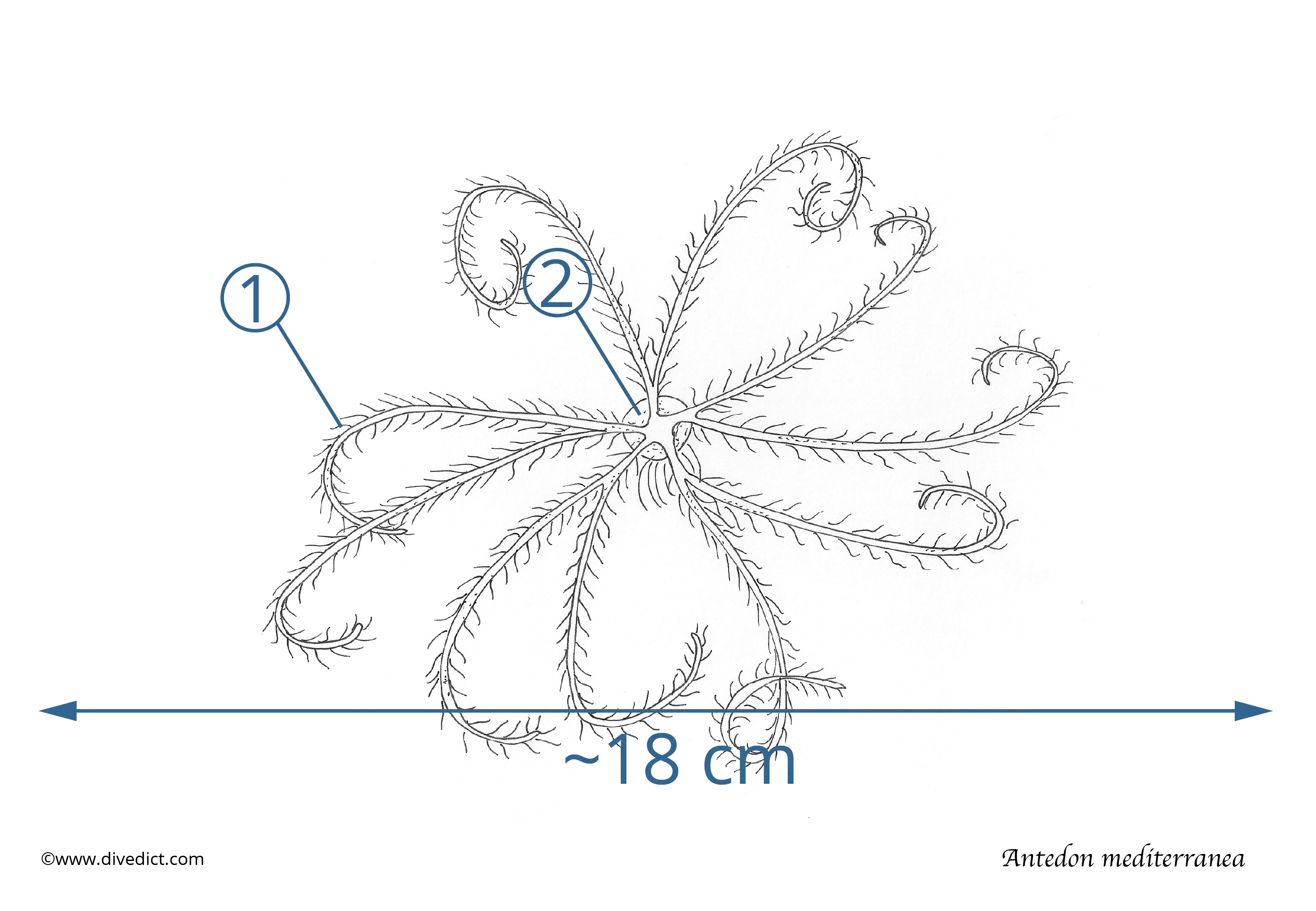
1. 60 pairs of pinnules
2. Tiny body disc
Pro tips
The Rosy feather-star is a real “filter animal”.
It clings to rocky outcrops or other elevations on the seabed, including gorgonians or sea squirts, and stretches its delicate little arms vertically upwards.
The current then drives the plankton directly into its feathers and it reaches the mouth opening via gutter-like channels.
The females produce eggs that adhere to the outermost ends of their feathers.
These are then inseminated by males and a planktonic larva develops.
For a few days, it lives attached to the soil.
A month later it becomes a free-swimming juvenile, which soon switches to bottom life again.
However, adult animals can also swim thanks to the flapping of their arms.
Text: Carolina Leiter
Illustration: Dive Dict
Pic: Dive Dict