
Black sea cucumber
Holothuria forskali




Special features
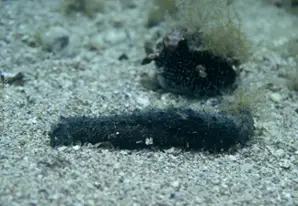
Very few people want to get too close to the black sea cucumber, because its versatile defense mechanisms make it almost invincible. It is therefore no wonder that it is the most common sea cucumber species in the Mediterranean.
You can always see the adult animals near the coast and on sand or gravel sediment; they literally romp around there en masse.
Appearance
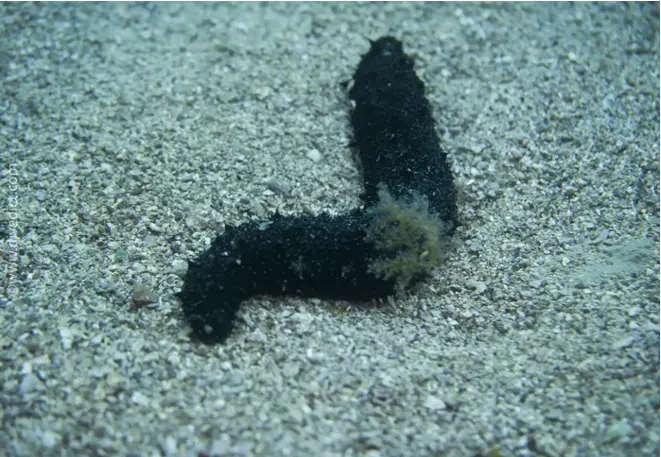
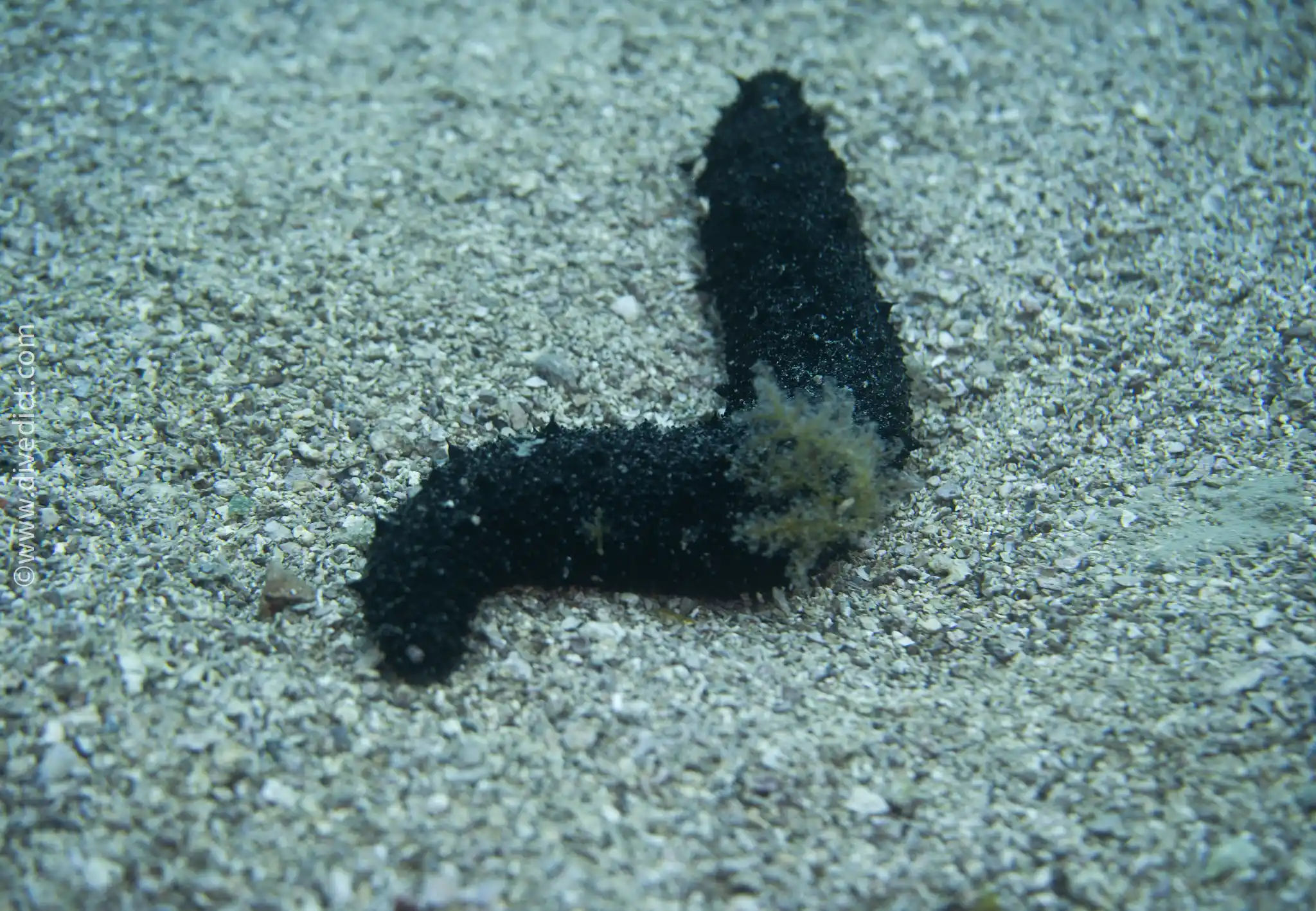
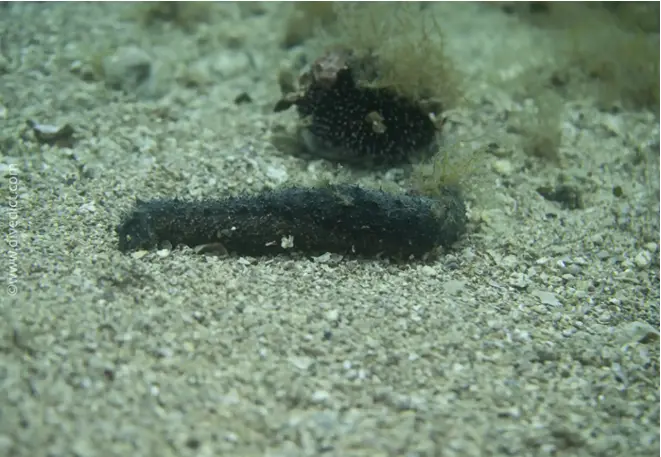
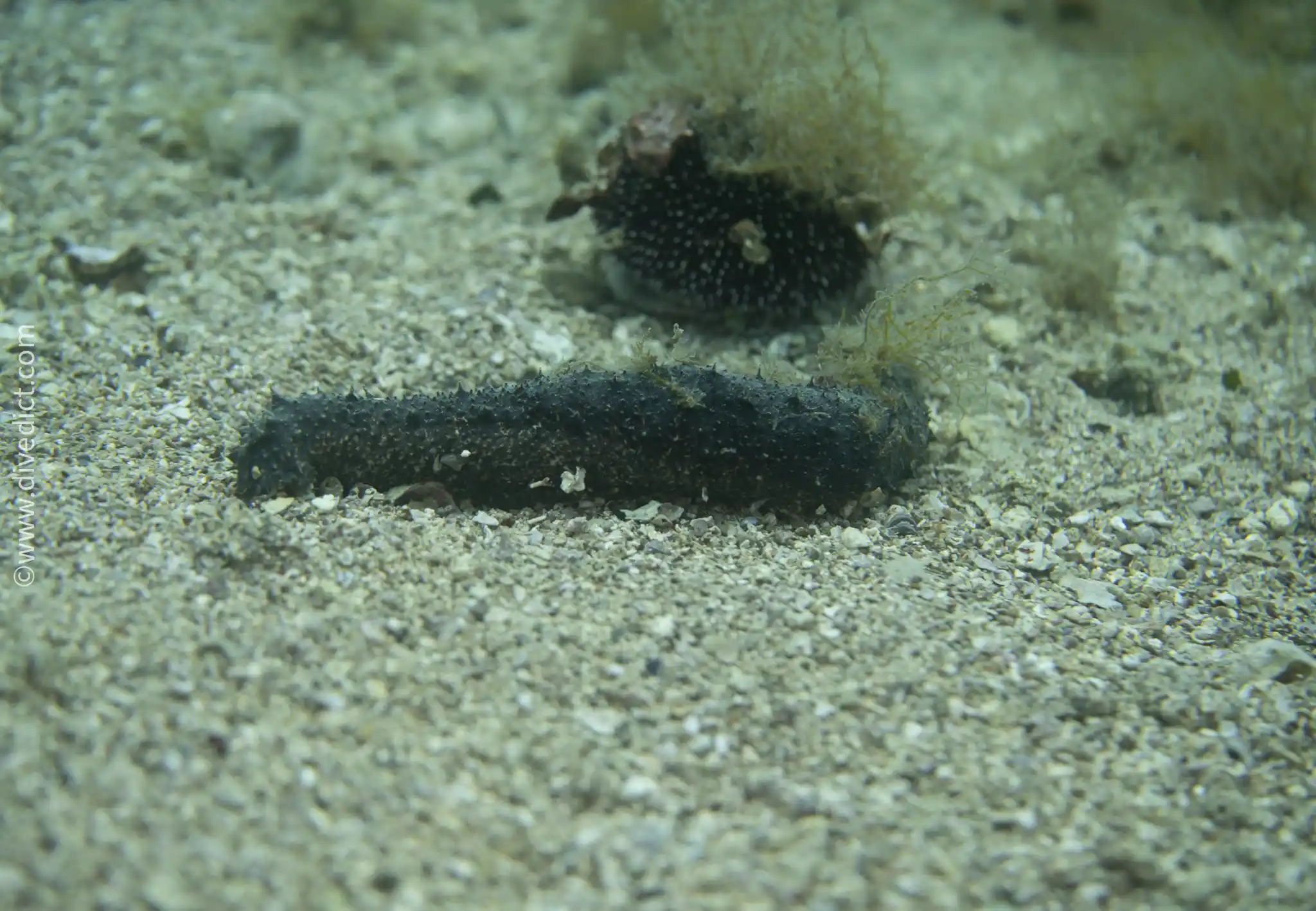
The black sea cucumber can actually look very variable: sometimes light brown, sometimes dark brown to almost black. However, each has the characteristic discs on the tentacle ends that look like asterisks.
By the way, the papillae on the back, which may have black, brown or white tips, serve as organs of smell.
Their underside is usually lighter in color and decorated with yellow spots. There are also three rows of white suction feet there.
Her mouth, which lies at one of the two ends of her body, is surrounded by 20 yellow tentacles.
Natural enemies
Crustaceans, sharks, coniferous fish (Carapus acus), copepods (Asterocheres boecki)
Dangerous/venomous
When the black sea cucumber feels stressed, it releases venomous saponins into the water, so it is better to let this species continue to “pickle” in peace.
Sketch
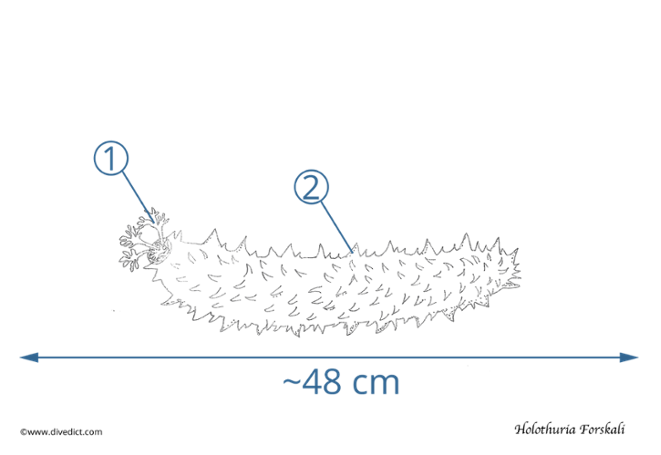
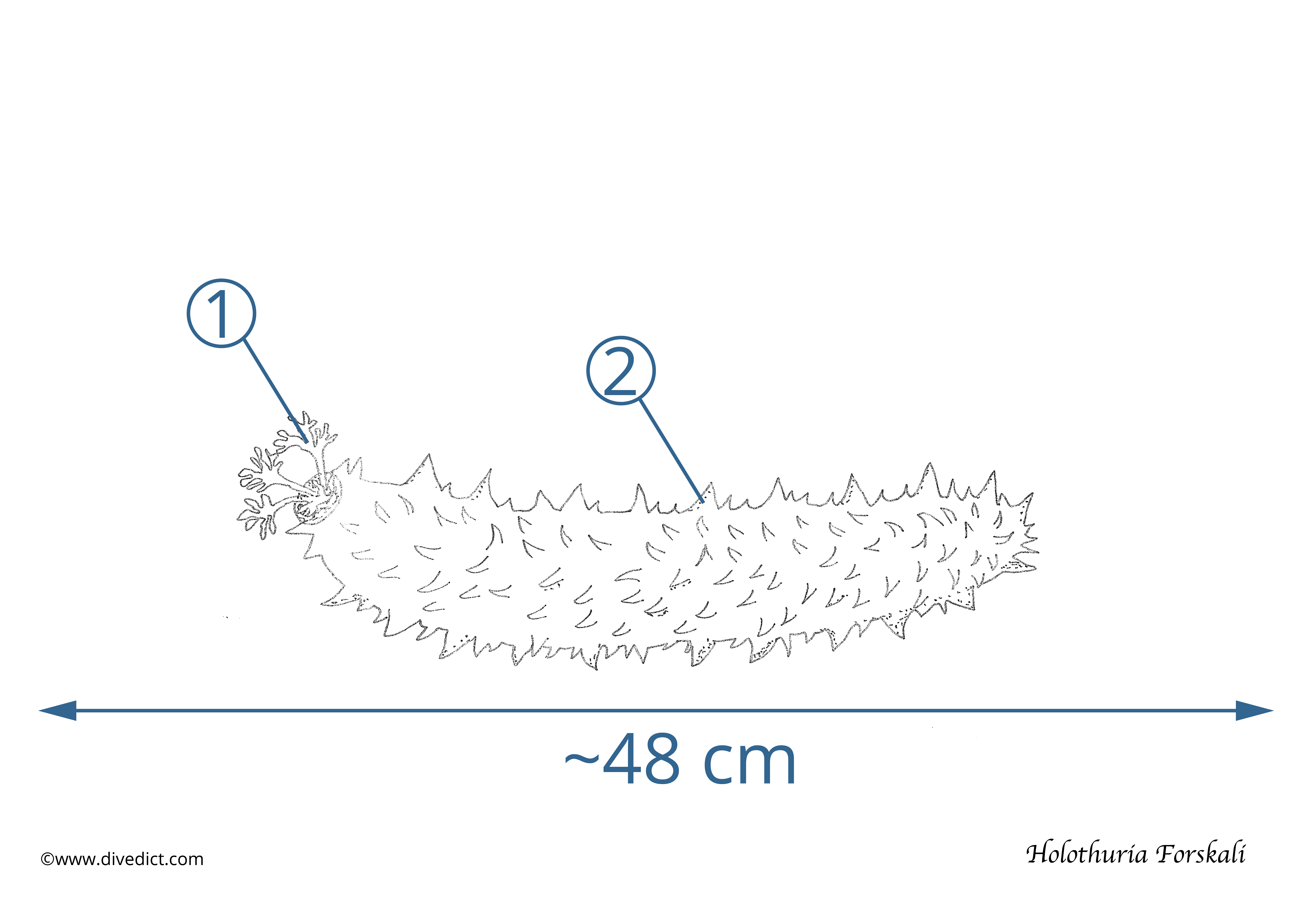
1. Mouth tentacles
2. Papillae
Pro tips
Like Spider-Man, the black sea cucumber also emits adhesive threads as a defense.
Or even its entire intestinal tract, which will be reproduced in a few weeks anyway.
So the next time you see white threads floating underwater and then find a sea cucumber nearby, it's better to change direction.
In addition, this little cucumber acts as a real vacuum cleaner:
It vacuums the soil with negative pressure, digests the few useful components, and excretes the rest as small sausages.
When it retracts her mouth tentacles, it's difficult to see which end is the mouth and which the after.
Text: Carolina Leiter, Felician Hosp, Pia Balaka
Pic: Dive Dict
Illustration: Dive Dict