
Marbled rock crab
Pachygrapsus marmoratus



Special features
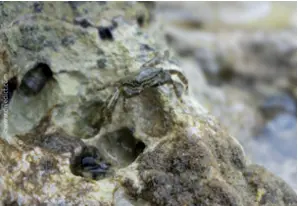
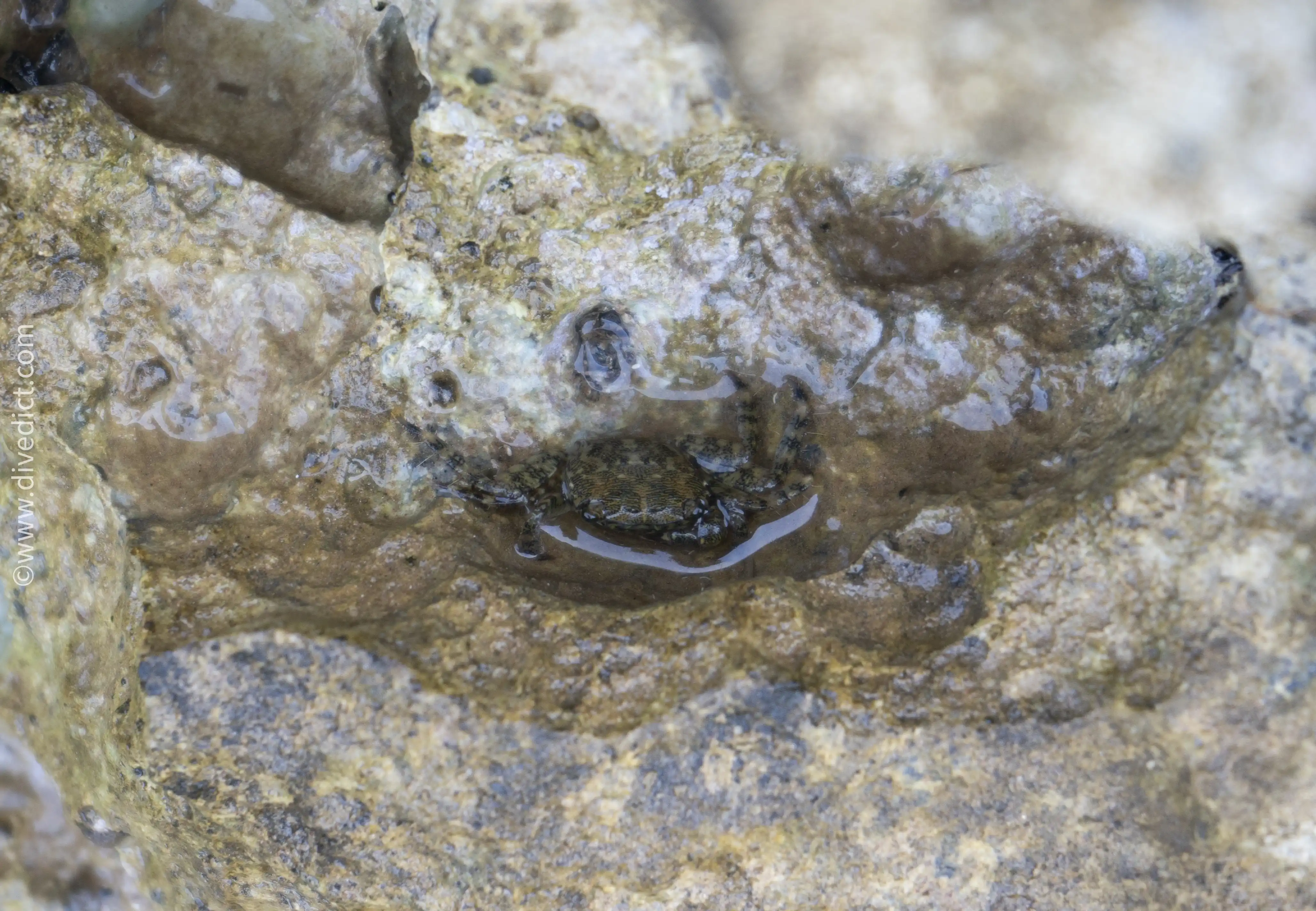
We all know this little rascal — she is the most common crab in the surf zones around the Mediterranean. Even though it is no longer surprising to most of us, it is actually very fascinating how long the marbled rock crab can survive outside the water.
appearance
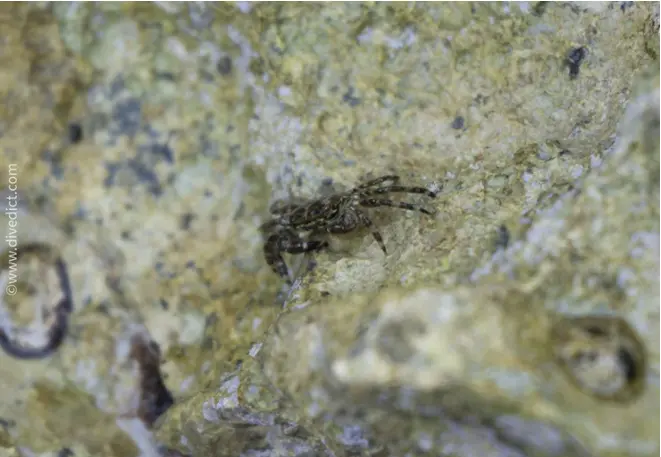
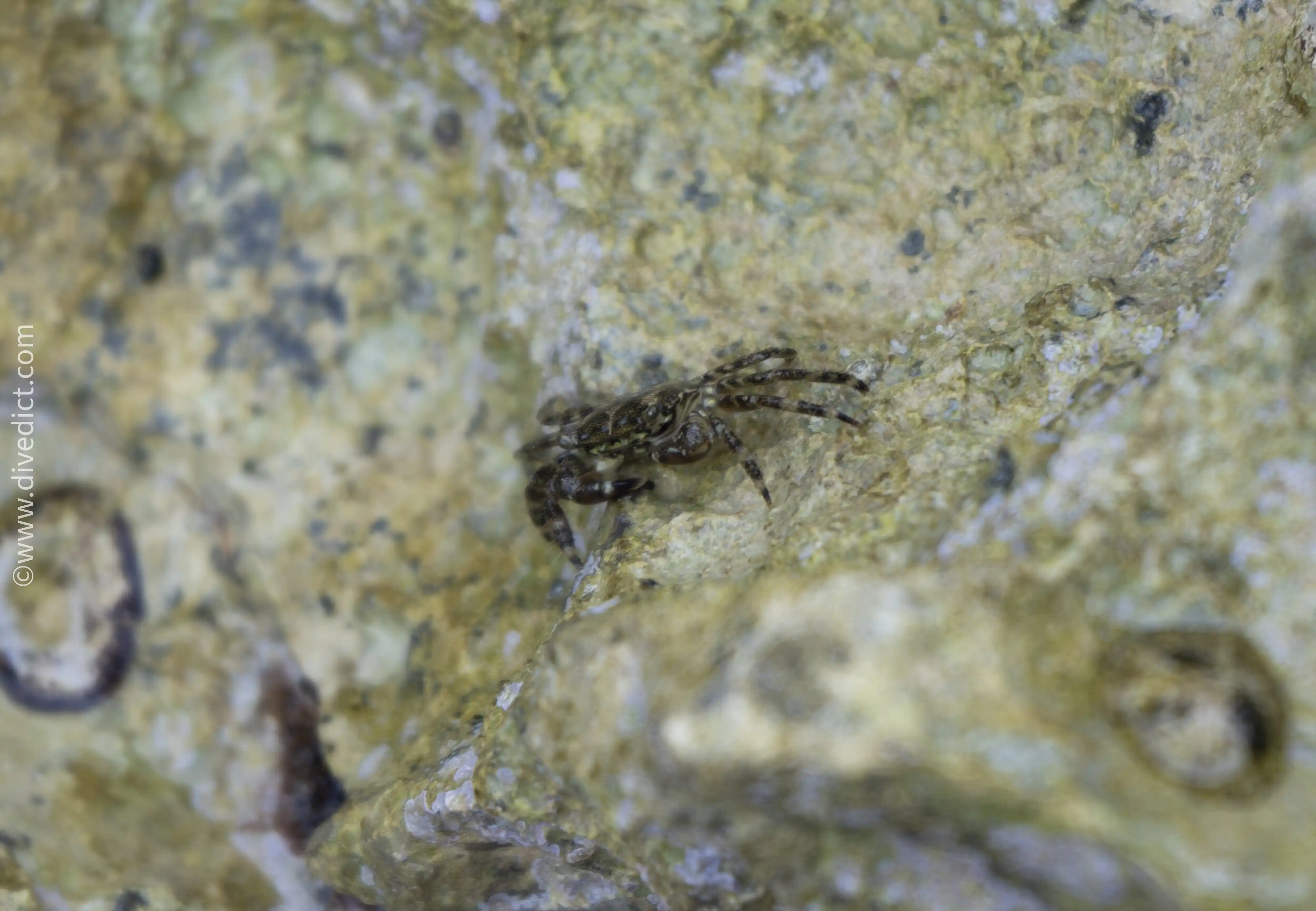
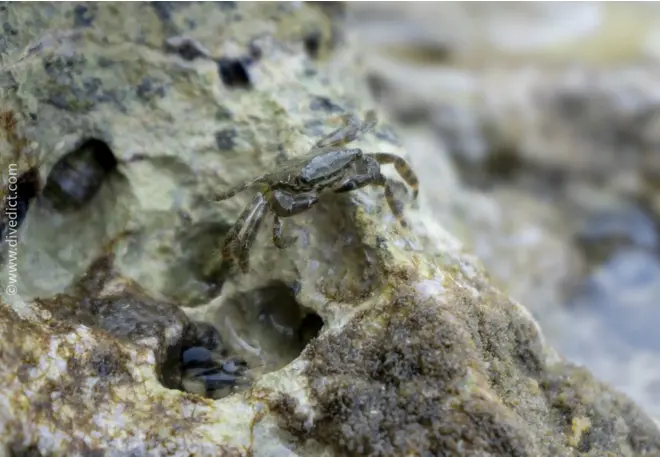
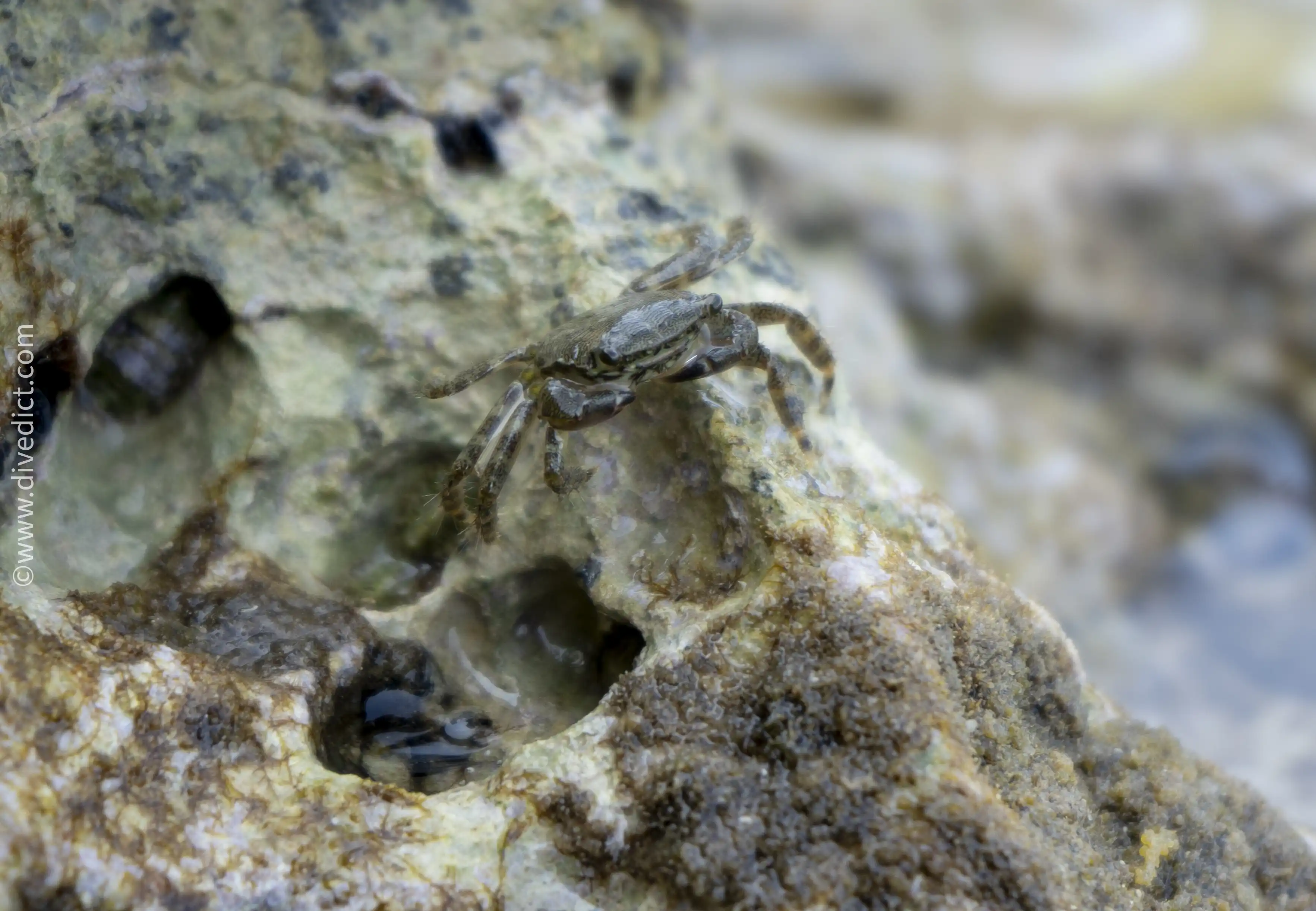
It is undoubtedly the small (2 - 3.5 cm) picture book crab. Compared to their carapax, their scissors are noticeable and not a bit bulky.
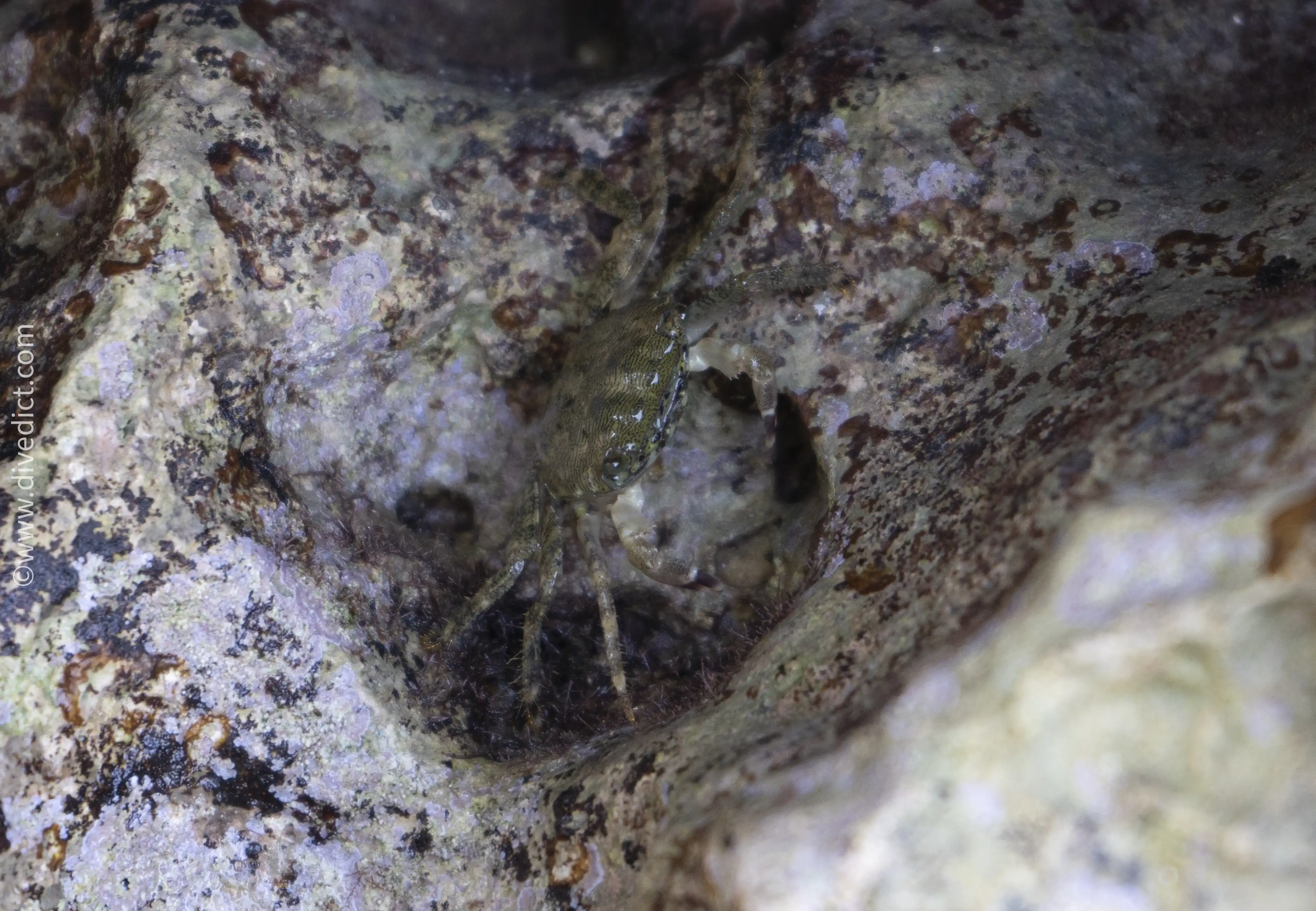
As its name suggests, it is decorated with a marble-like pattern. However, their color and pattern vary depending on the area.
On the upper Adriatic, it is often light to dark gray with rather difficult-to-see marbling and with wide stripes on the legs.
In southern Mediterranean regions, for example, Albania, it is rather light brown with dark brown marbling and the scissor ends may be painted orange.
In the Black Sea, their primary color is more beige and it is decorated with lots of thin almost black marbling, while the individuals on the eastern Atlantic coasts can shimmer pretty bluish.
Natural enemies
water birds, fish
Dangerous/Toxic
The marbled rock crab is not poisonous. Since she likes to be hunted and caught on the beach, especially by children, she pinches with her scissors to defend herself.
sketch
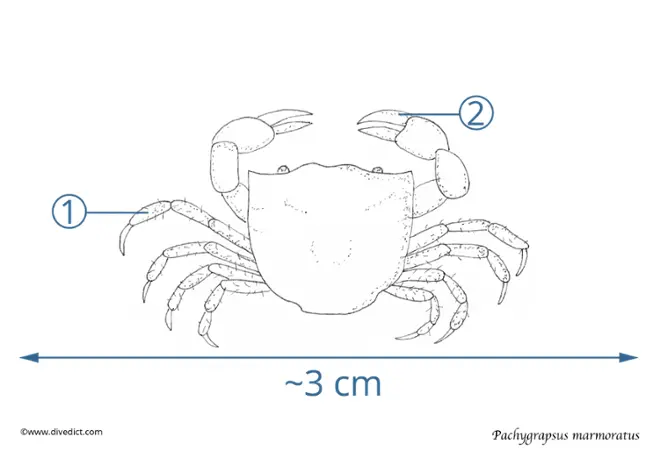
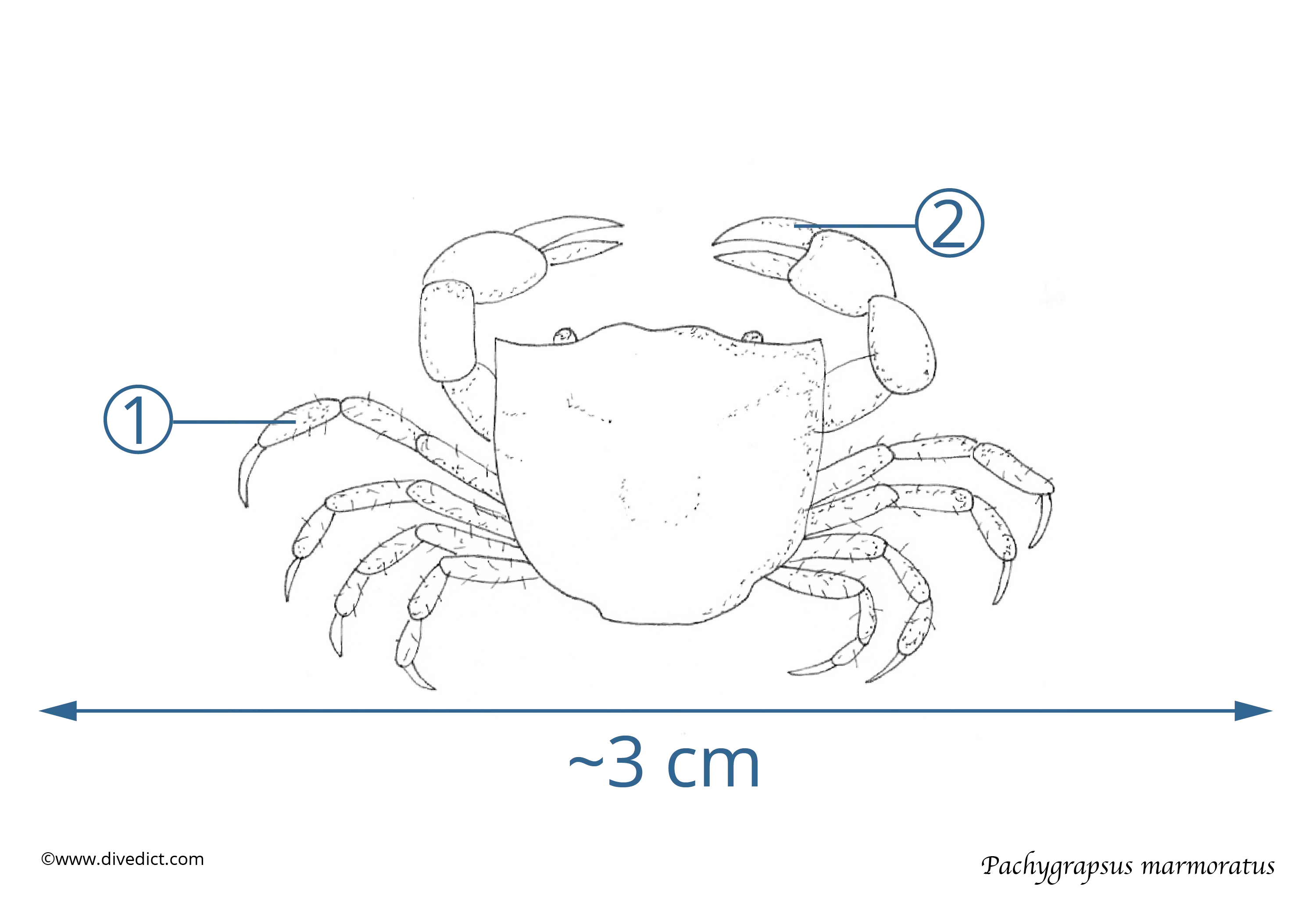
1. Four pairs of walking bones
2. Strong scissors
Pro Tips
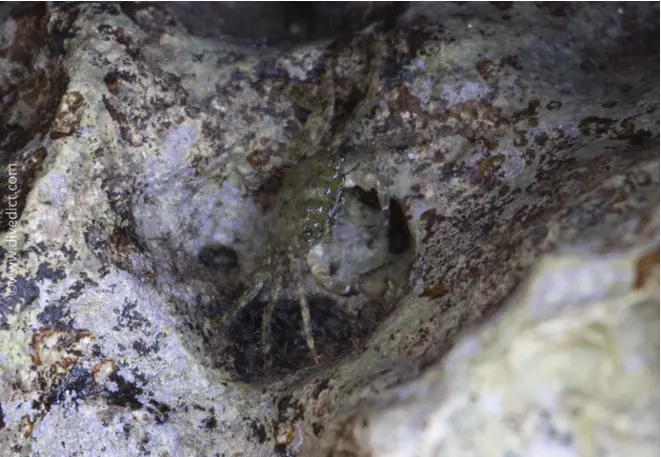
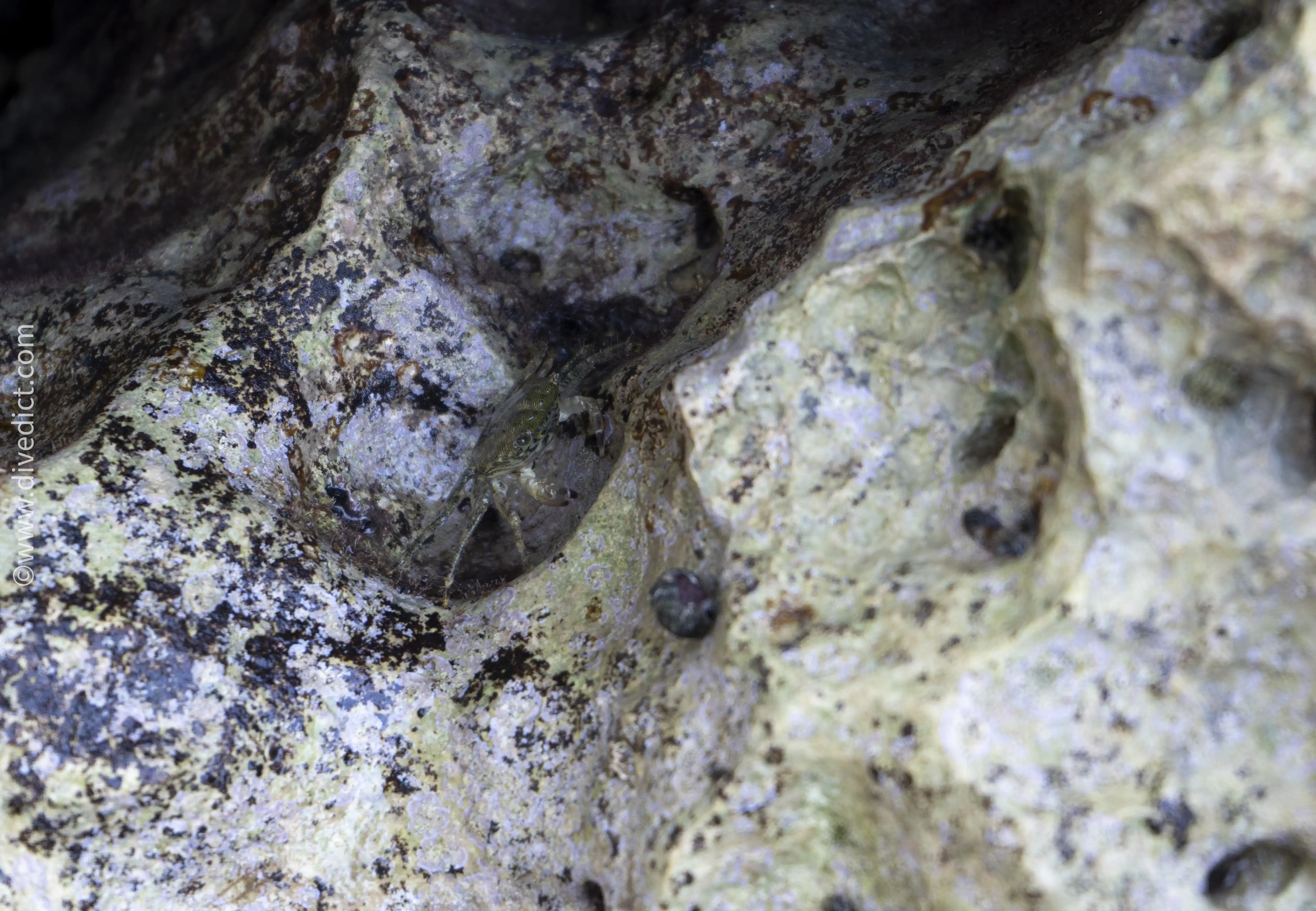
Although the marbled rock crab travels a lot out of the water (which is why it is casually called beach crab), it is still very shy.
At the slightest disturbance, she scurries to the nearest hiding place. If you approach it calmly, however, you can usually still observe it well for a short period.
With her four pairs of running legs, however, Nimble only moves sideways. She keeps her scissors pulled in close to her body.
It always grazes the growth of rocks in the tidal zone. She uses her scissors for this: She picks out her appetizers alternately with the left and right scissors and brings them to the chewing apparatus — she looks as if she is greedily trying to shovel everything in at the same time.
Text: Carolina Leiter
Pic: Felician Hosp, Sabine Probst
Illustration: Dive Dict