
Yellow shore crab
Eriphia verrucosa




Special features
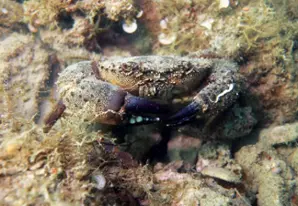
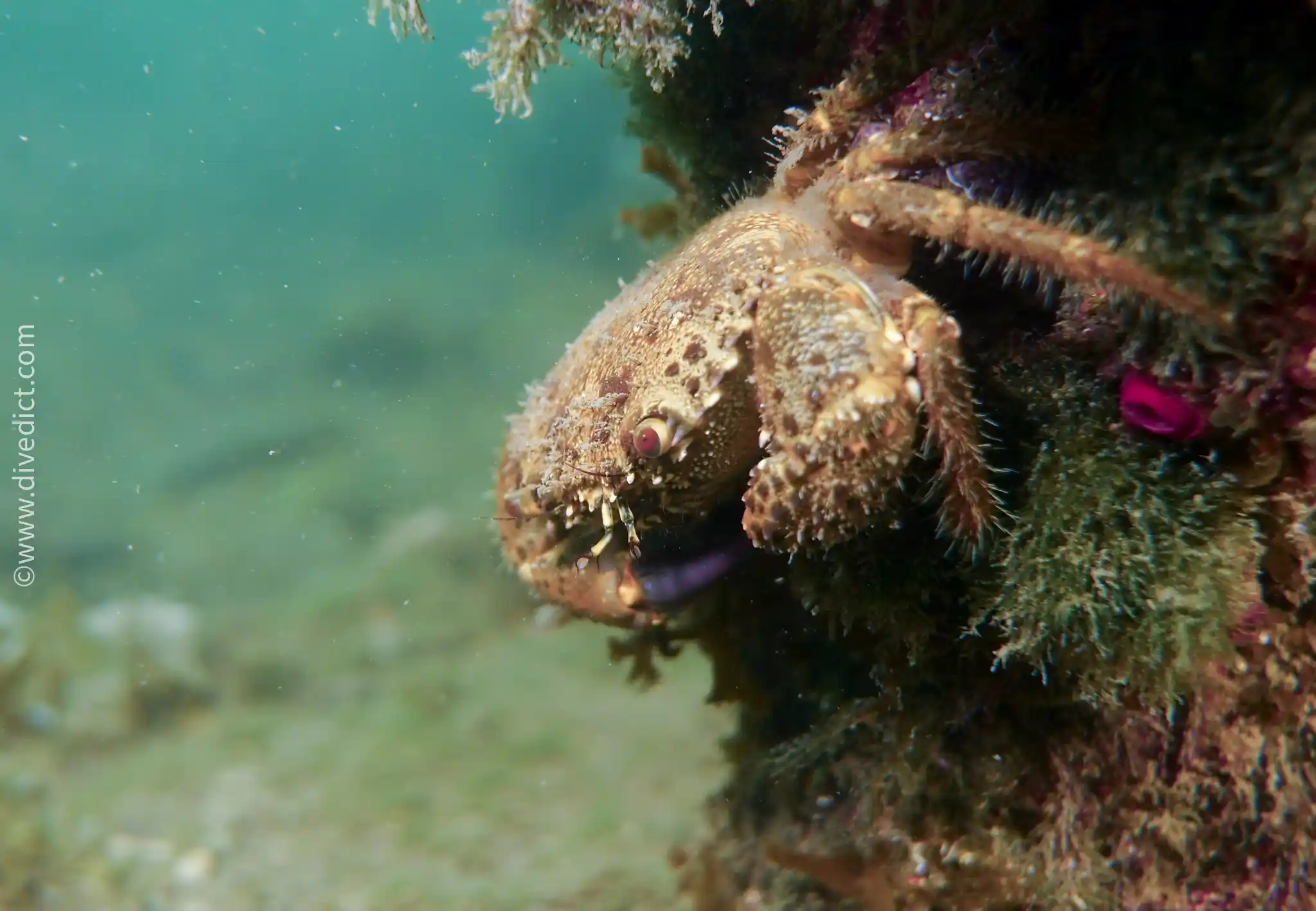
Yellow shore crab — the muscleman among the Mediterranean crabs.
With his two massive claws (one for cracking, one for cutting), he looks as if he is always ready for the next scuffle.
Appearance
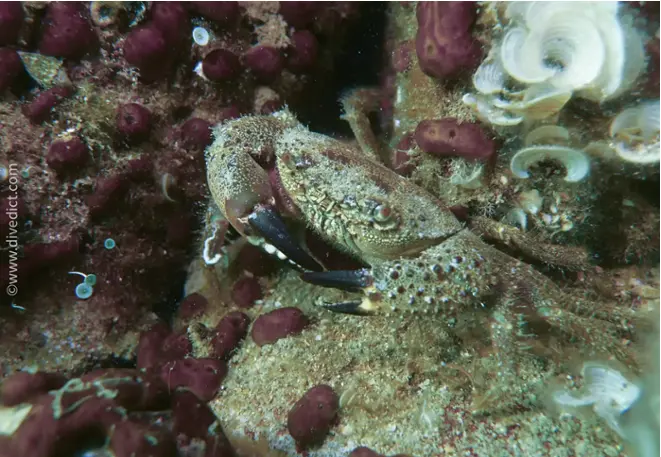
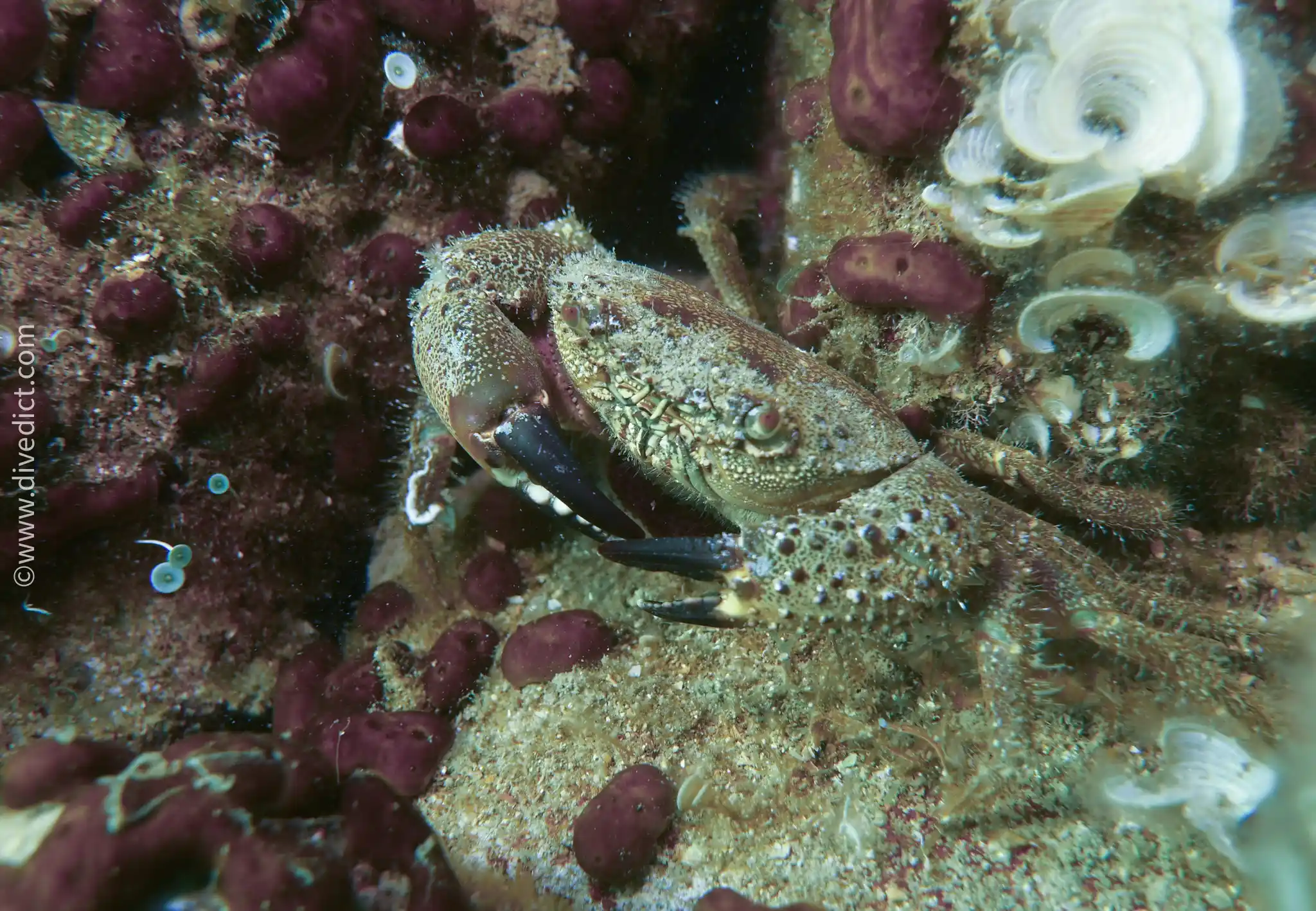
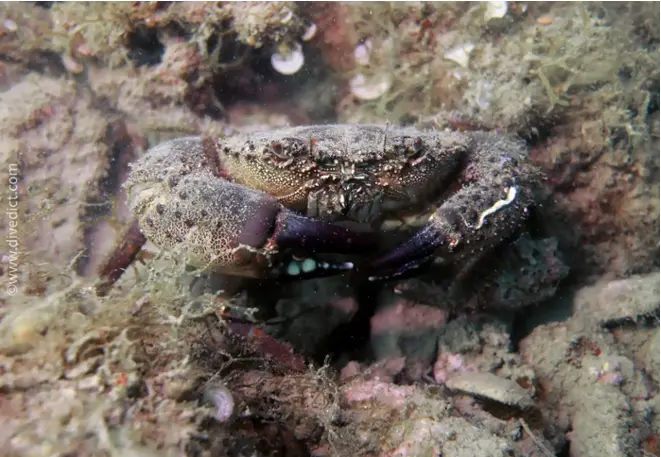
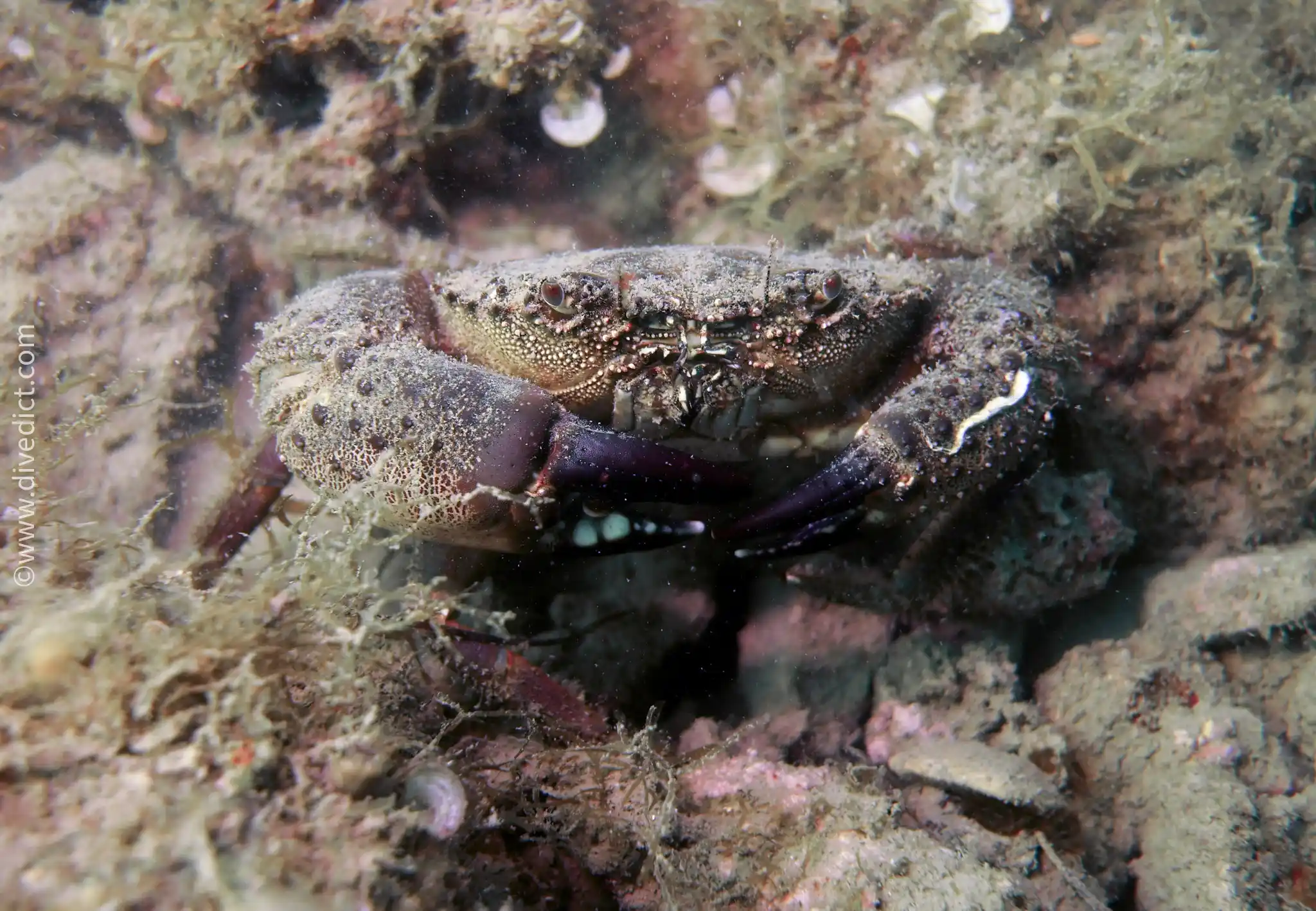
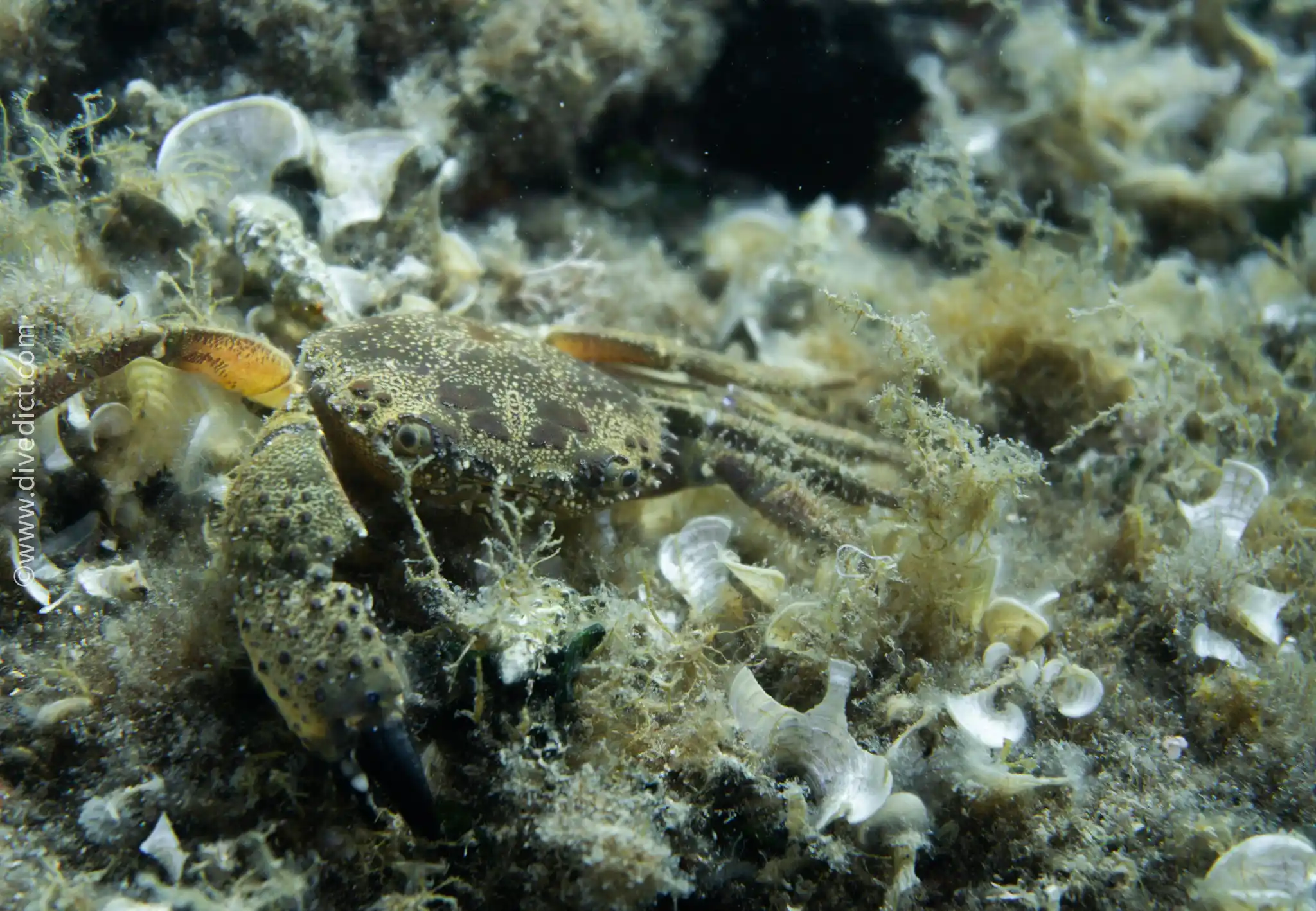
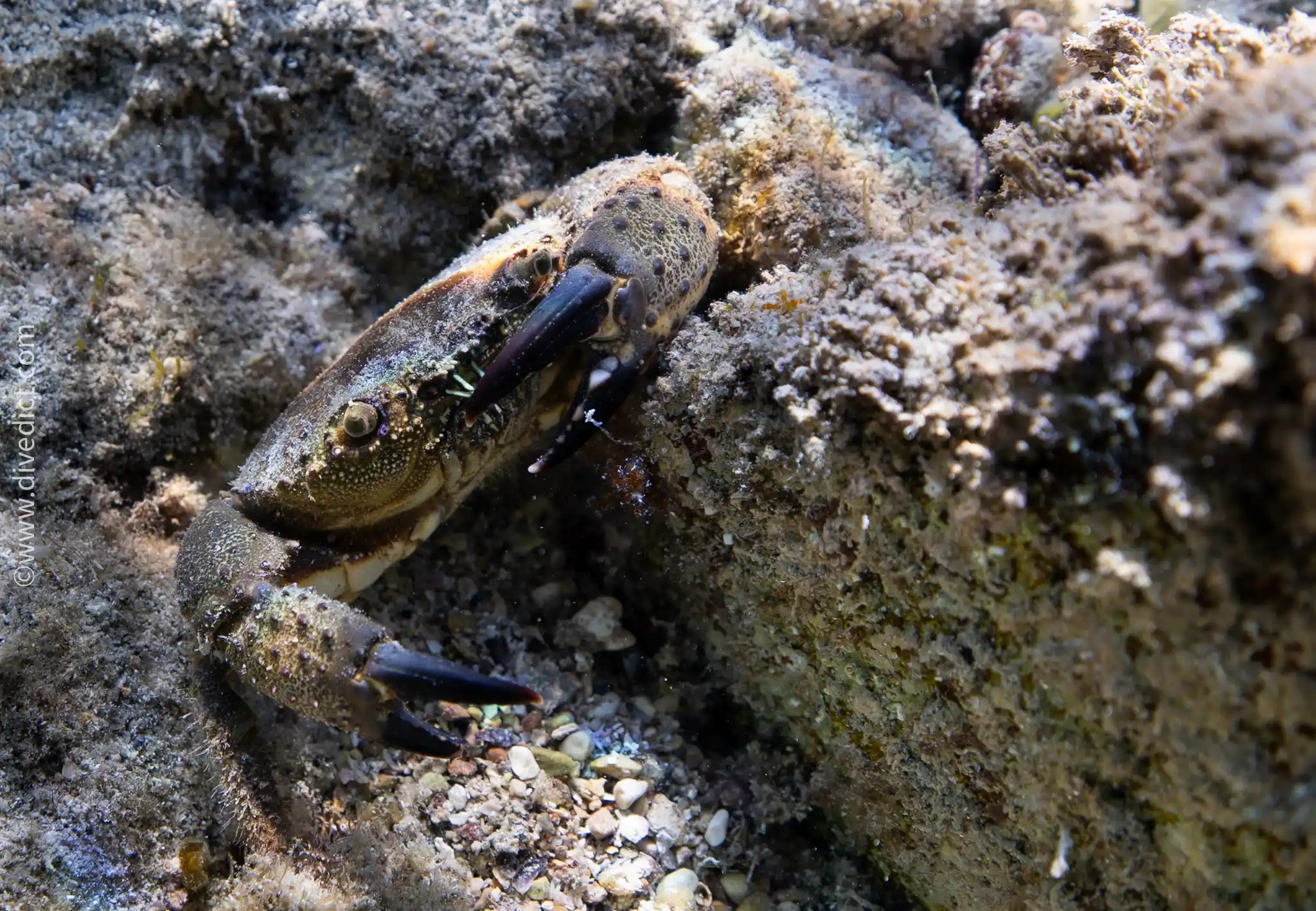
The Yellow shore crab is a huge, muscular, wide crab.
Heavily armored and covered with spikes, bristles, and humps, he is an opponent who plays in a high-weight class.
His strong back is red to green-brown with yellow ticks, and his claws are significantly darker than the body, sometimes even black.
This coloring is used for camouflage, only the yellow spots are used for communication and recognition between individuals.
Therefore, the crab pattern varies depending on sexual maturity, growth stage, and environmental conditions.
The best way to recognize this crab is that one pair of claws is significantly larger than the other.
Natural enemies
Waterfowl, fish
Dangerous/venomous
The Yellow shore crab doesn't hesitate to use his claws against us humans too, so it's better not to put him in your pockets (like the German name suggests)!
However, it is not poisonous.
Sketch
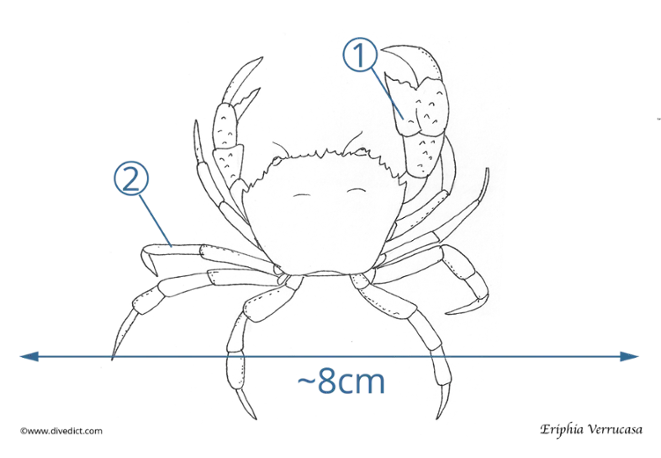
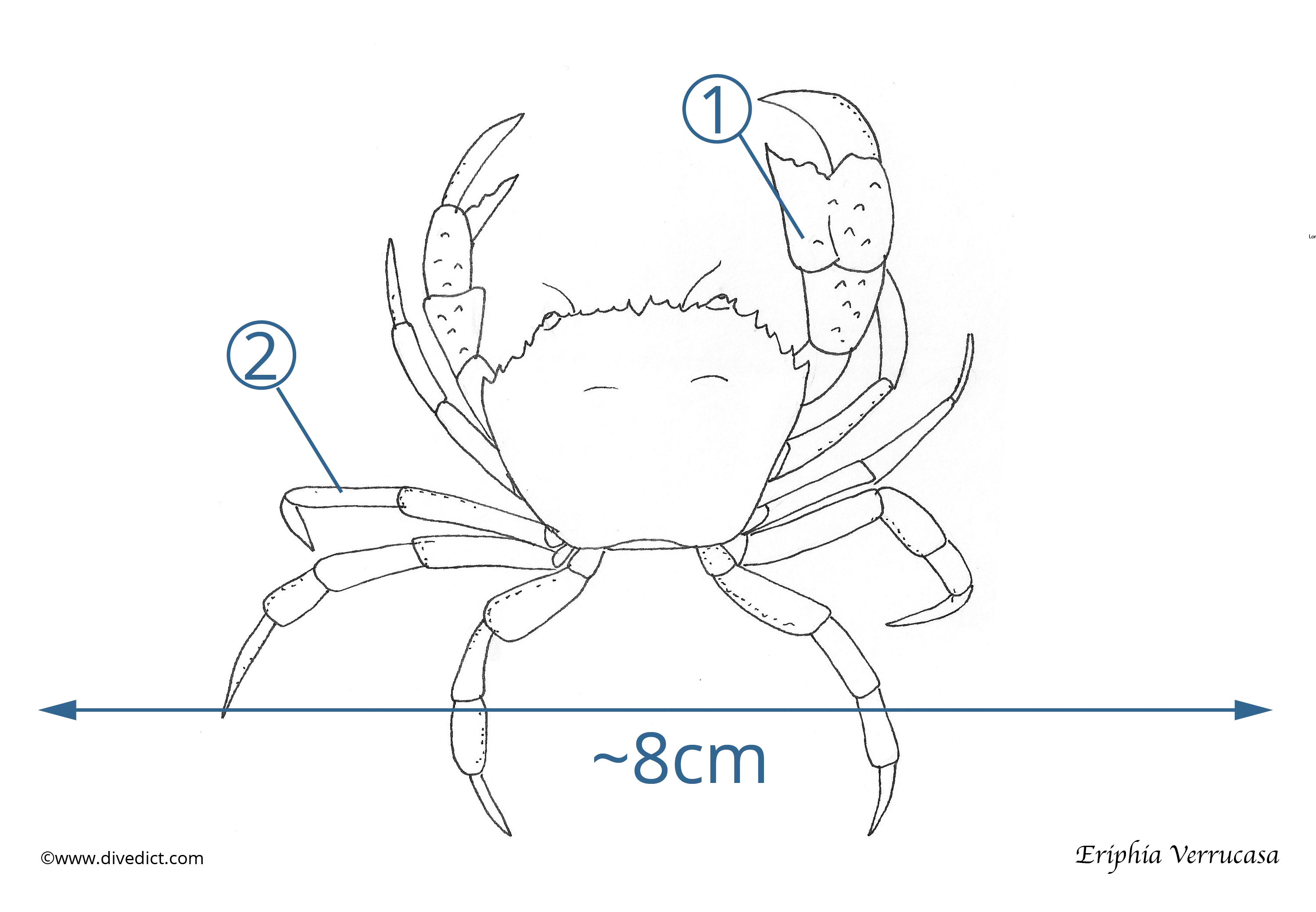
1. Significantly larger claw
2. Long walking legs
Pro tips
The intertidal zone in particular is teeming with this species.
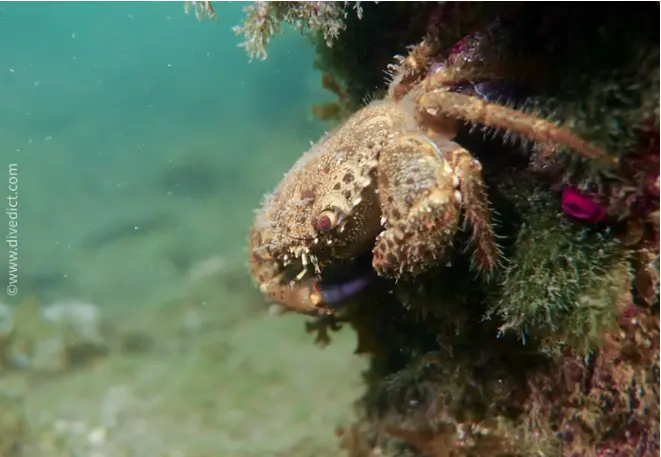
During the day, they shyly retreat into crevices, but at dusk, there is a big awakening and they all embark on raids.
They systematically crush and cut up mussels, snails, bristles, and other crabs to eat them.
After a successful hunt, they retreat back to the algae or other hiding places.
Every Yellow shore crab has its own burrow, into which it takes some of its prey as food.
These dwellings can be recognized by the fact that shell remains are piled around them, or algae have been cut away.
He certainly sets up his camps in man-made structures, such as piled-up rocks, walls, or even buildings by the sea.
Nothing and no one can stop this little muscleman.
Text: Carolina Leiter, Felician Hosp, Pia Balaka
Pic: Felician Hosp, Sabine Probst
Illustration: Dive Dict