
Hermit crab
Dardanus calidus



Special features
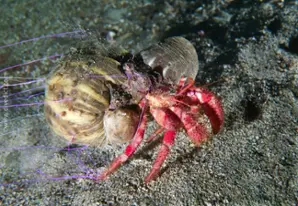
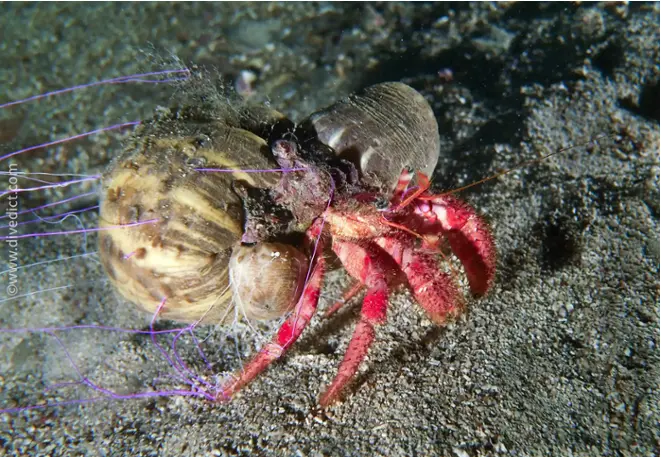
The Hermit Crab carries the title of the largest hermit crab in the Mediterranean.
Appearance
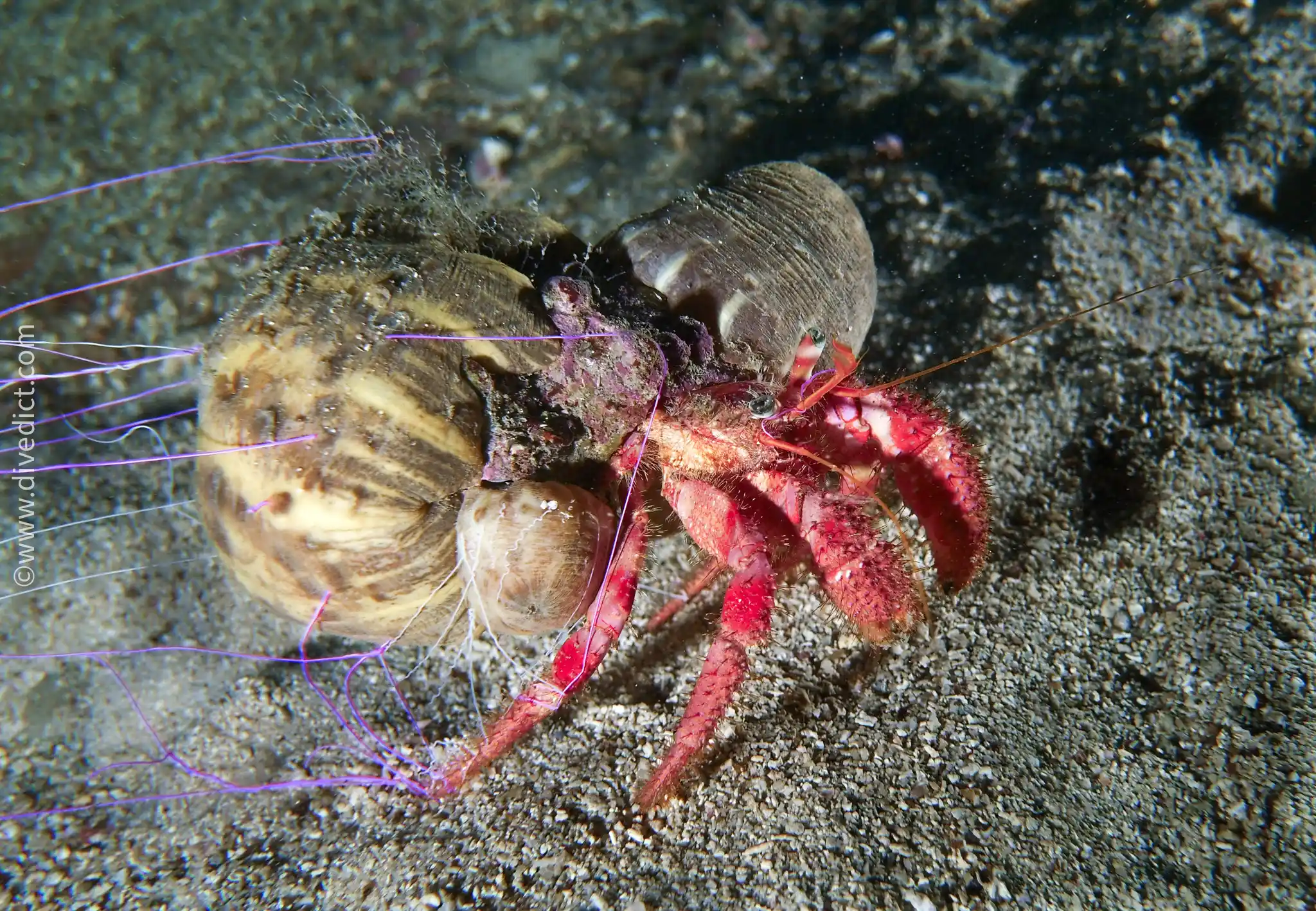
The Hermit Crab can grow up to 10cm tall and thus surmount all other hermit crabs in the Mediterranean.
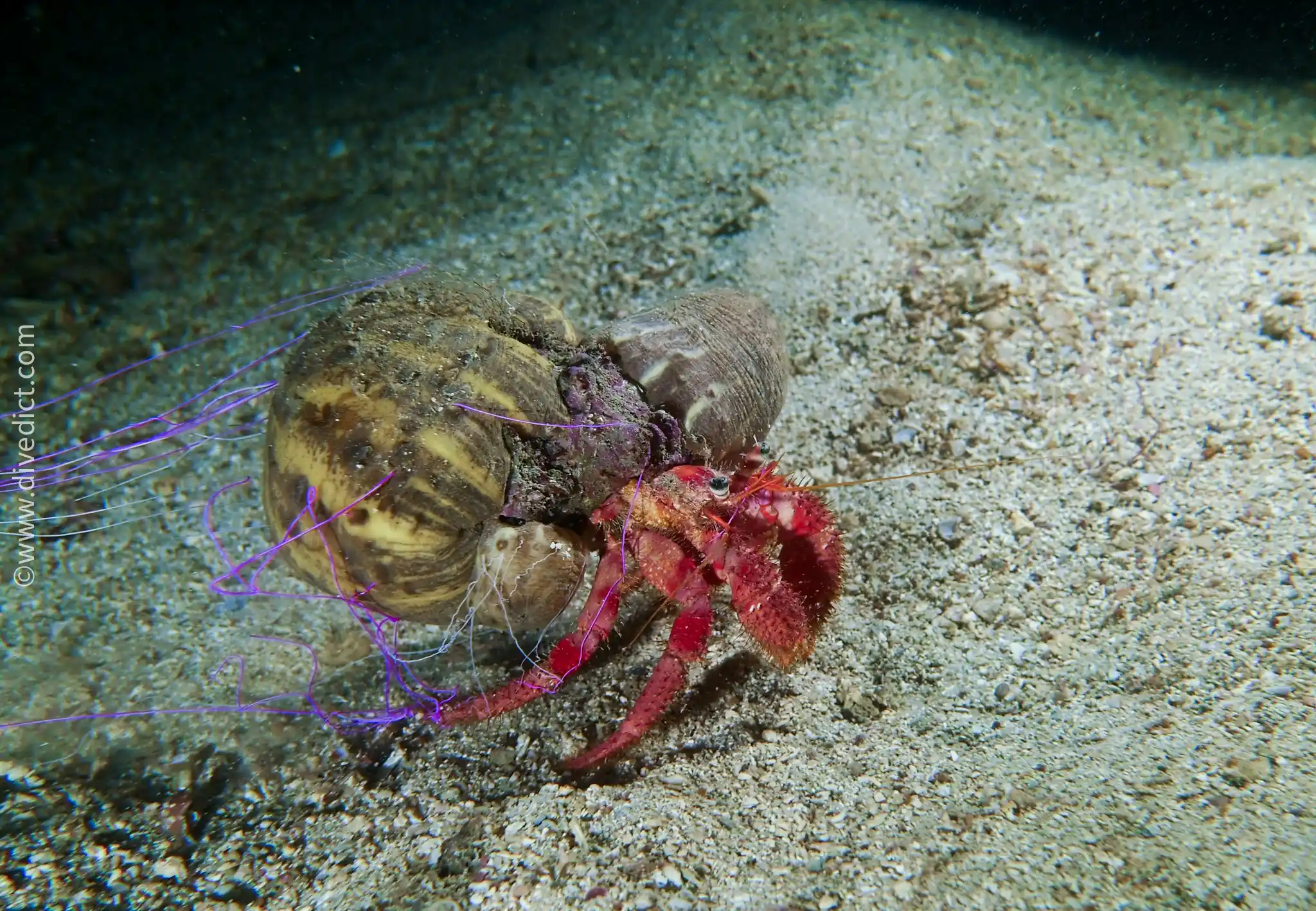
His claws are of different sizes, but both end in pointed, black-brown tips. They are also covered with clearly visible irregular humps.
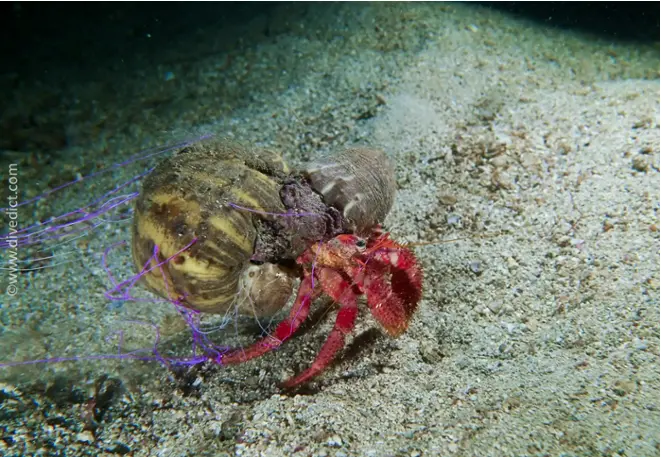
The base color of his legs and claws is red; they appear stripped, due to the humps which are often lighter in color. The antennae, on the other hand, are yellowish to orange and the eye stems are strikingly white and red.
Natural enemies
Octopus, fish
Dangerous/Venomous
The Great Red Hermit Crab is neither dangerous nor venomous. He can only tweak with his claws.
Sketch
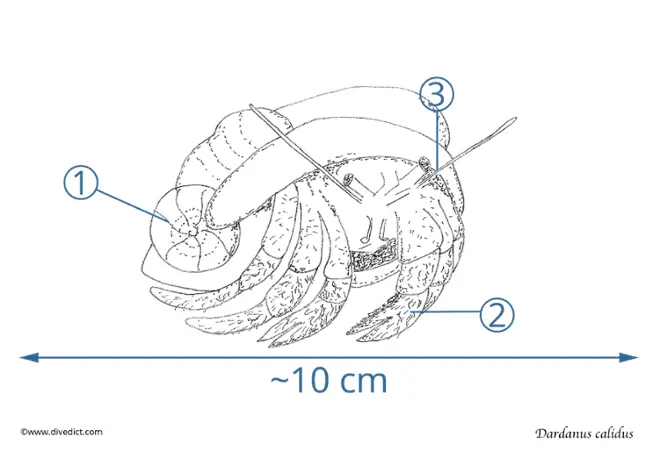
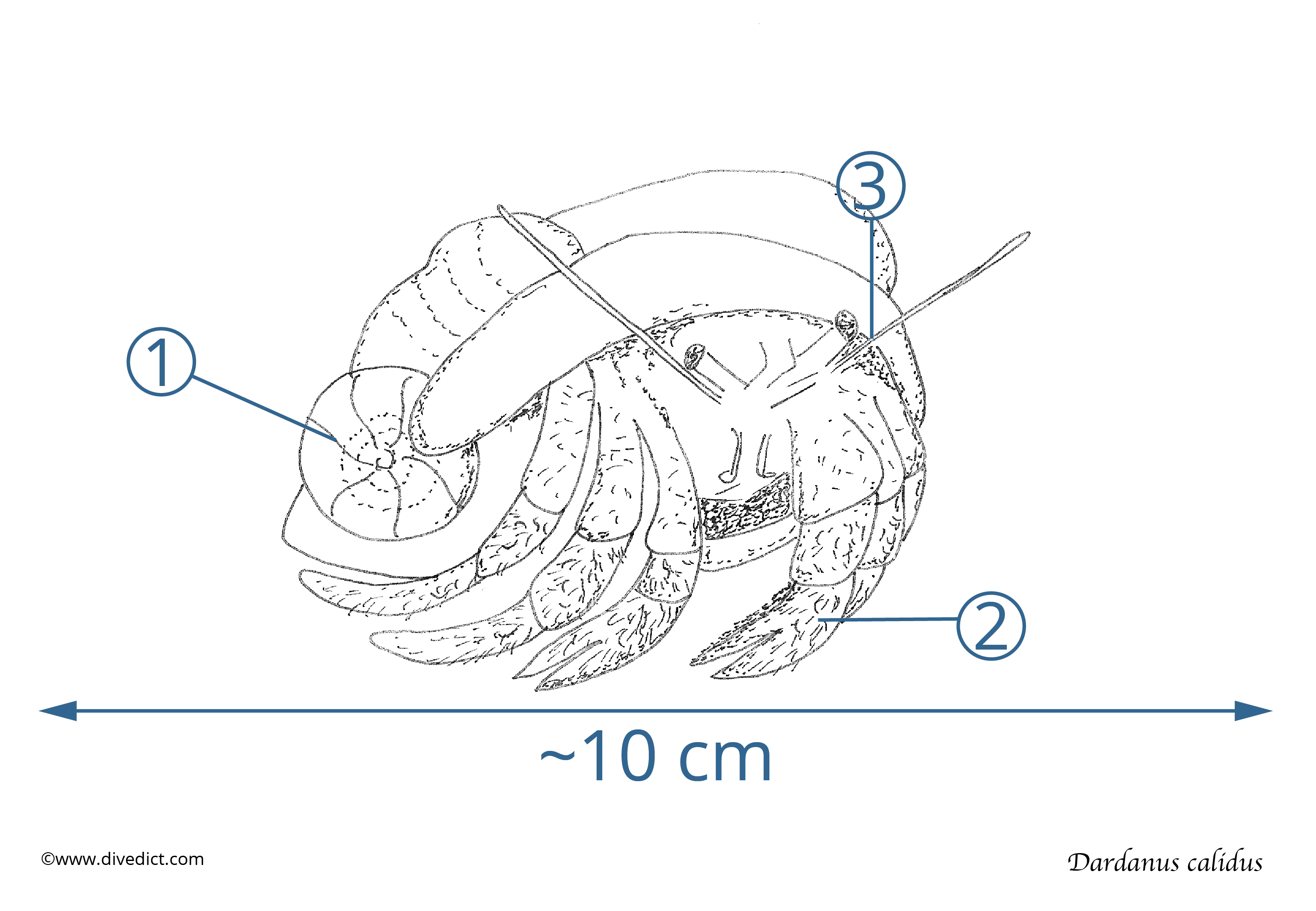
1. Asymmetric housing
2. Scissors of different sizes
3. Antennas
Pro tips
Like the Greater Hermit Crab, the Hermit Crab also likes to live in symbiosis with the Calliactis parasitica. This actinia protects the crab from enemies with its stings, as a thank you for being carried by the crab from one meal to the next.
Since snail shells are known to be spiral and asymmetrical, hermit crabs must also adapt themselves to these structures. This happens after their metamorphosis from planktic larvae to soil-dwelling animals. His asymmetry is also represented by its claws; one is larger than the other. With the larger claw, he can close the opening of his housing.
Text: Carolina Leiter
Pic: Felician Hosp, Sabine Probst
Illustration: Dive Dict