
Anemone hermit crab
Pagurus prideaux




Special features
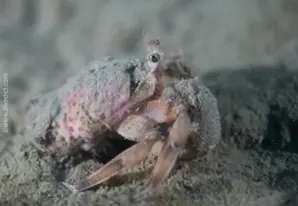
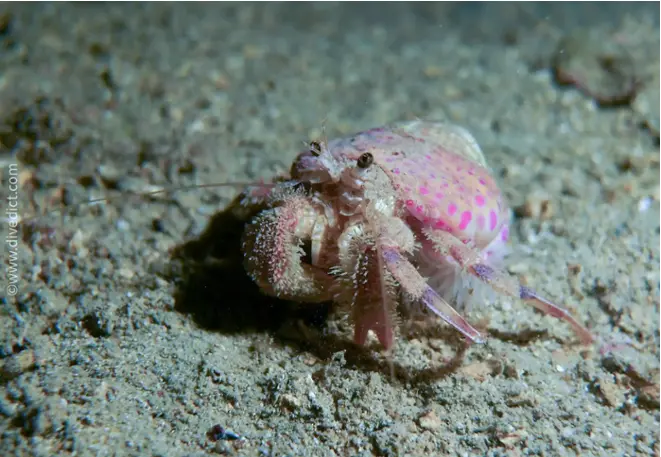
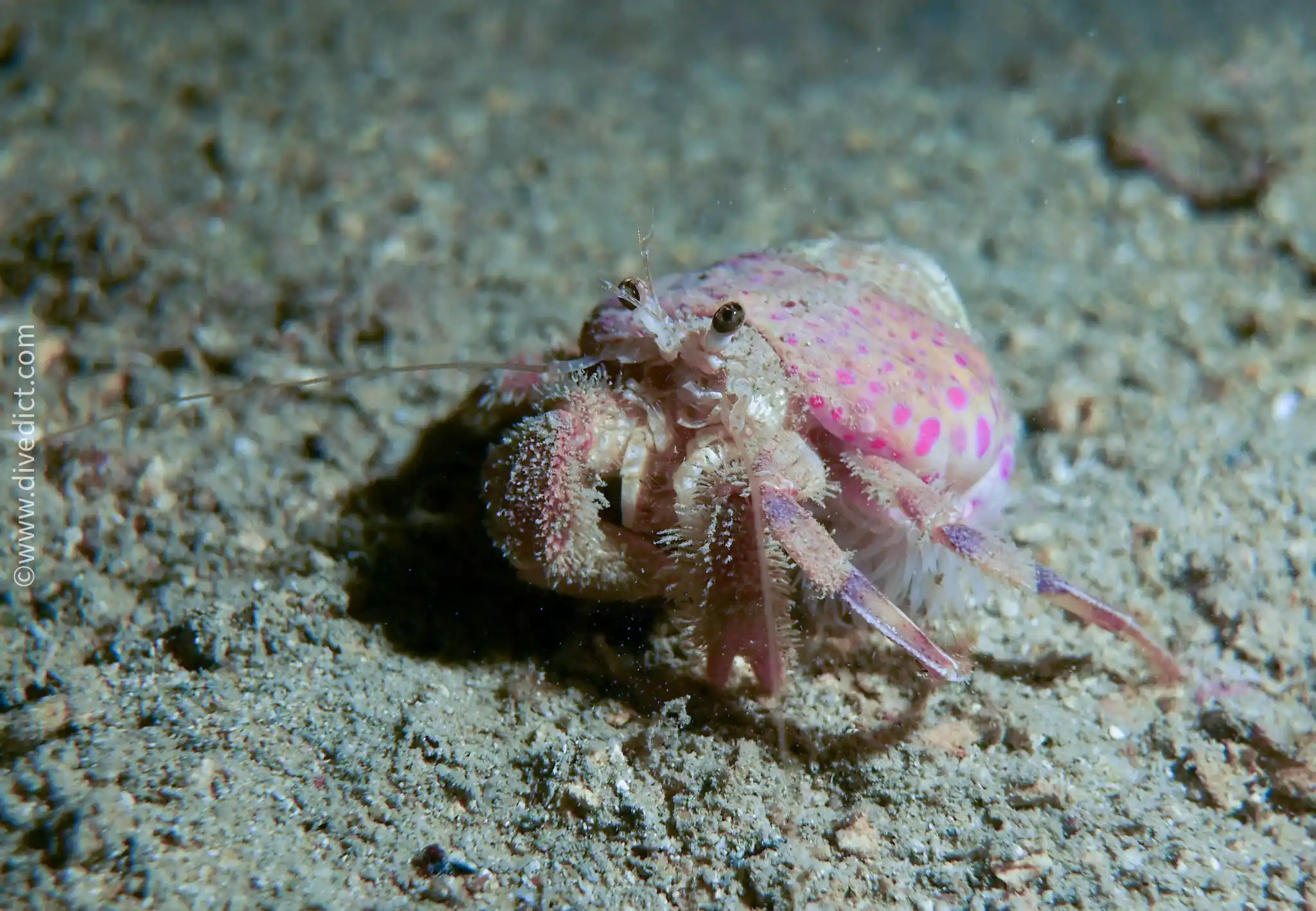
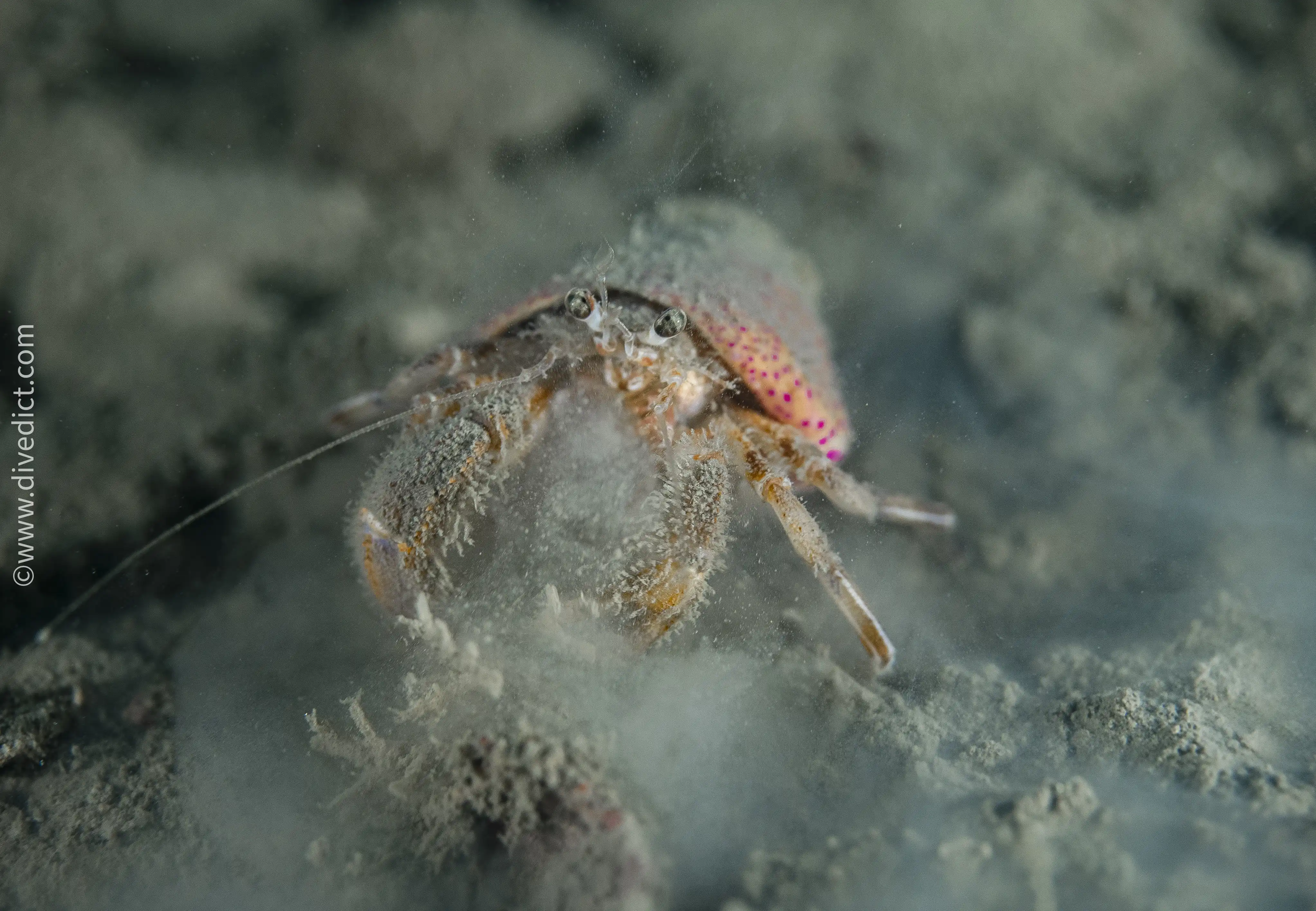
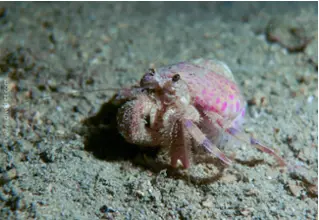
This Pagurus prideaux is always selected by exactly one cloak anemone (Adamsia palliata), which settles on its house and completely encases it.
If the crab grows, so does the anemone, so it no longer has to move to a new house for the rest of its life.
Appearance
Like all hermit crabs, this guy also has an asymmetrical, unarmored abdomen.
To protect it, the crab hides it in an empty gastropod (snail shell) and always carries it around with him.
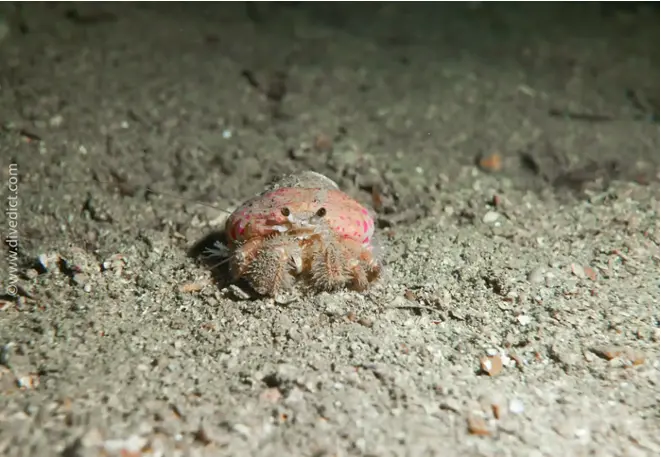
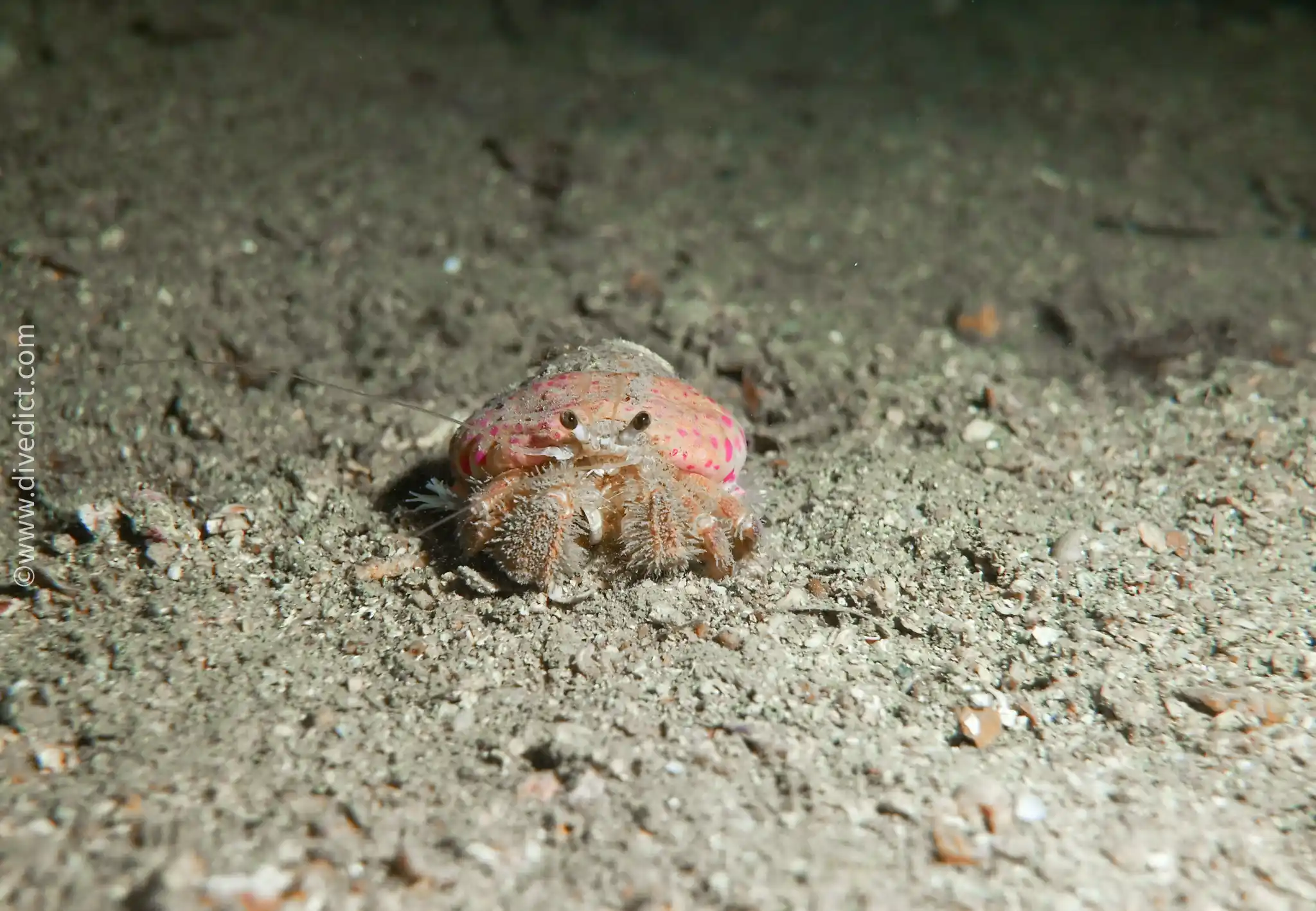
You can immediately recognize it by the pink dots on his light pink anemone house, making it look really cute.
In addition, its shell is wider than it is long, which makes it appear round and a bit clumsy.
Its brown eyes on the white, long stems also contribute to its cute appearance.
They usually grow up to 6cm tall and their right claw is clearly larger than the other one, with which he can apply a relatively large amount of force.
Natural enemies
Squids, predatory fish
Dangerous/venomous
The Pagurus prideaux is neither dangerous nor venomous.
Sketch
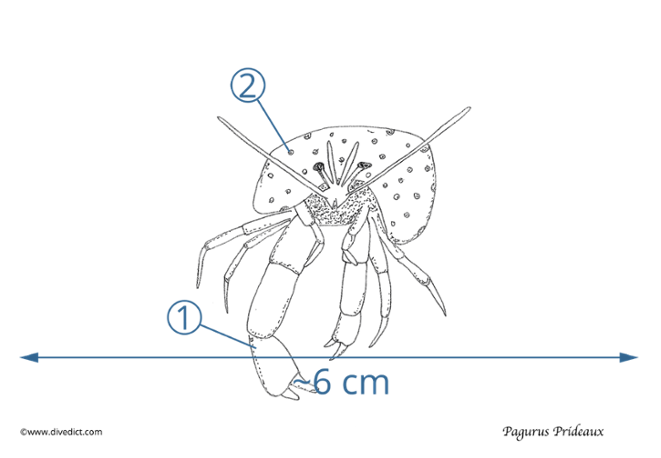
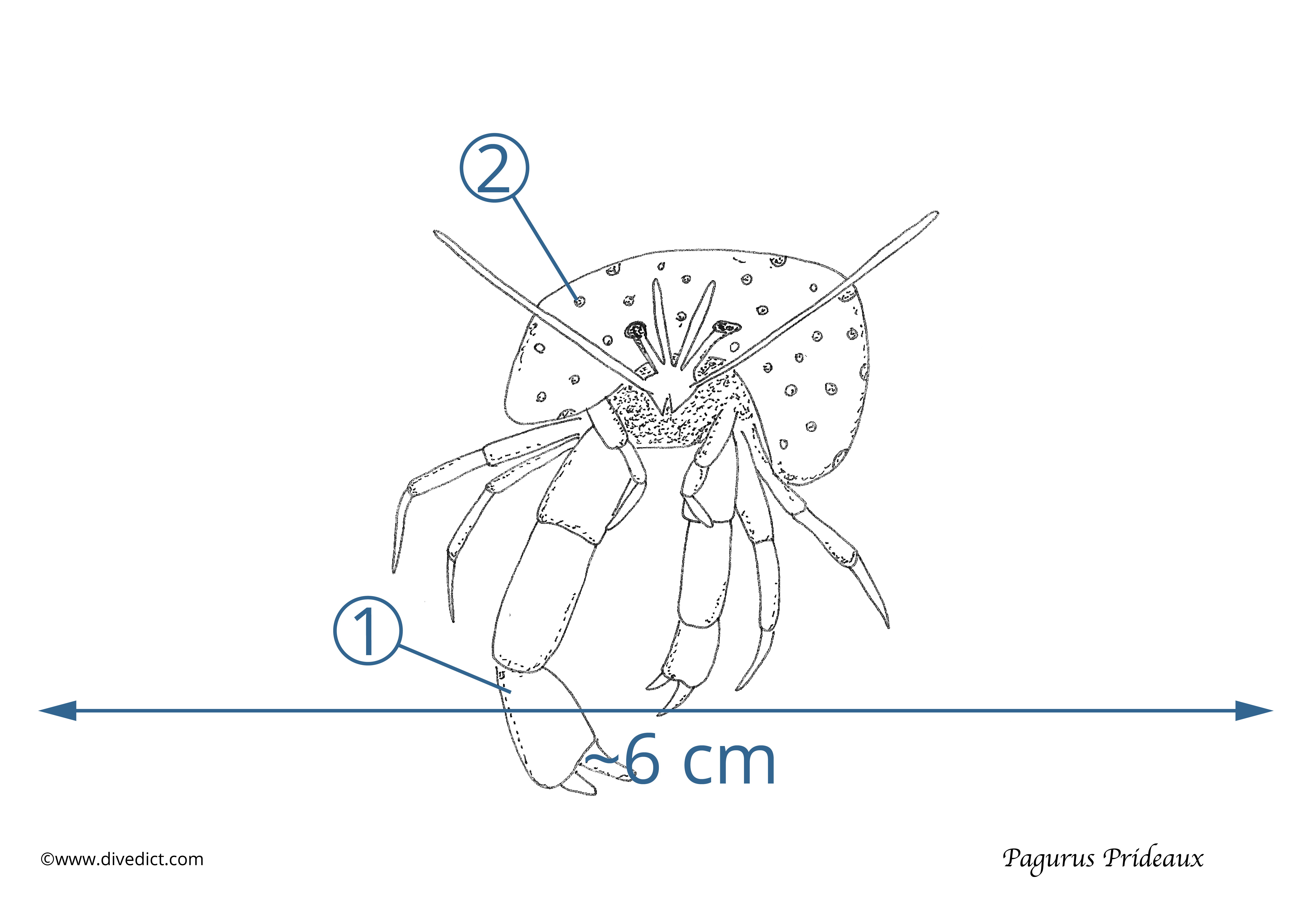
1. Very powerful claws
2. Dotted cloak anemone
Pro tips
The crab-anemone symbiosis here is characterized by a much stronger relationship than in other species.
The nettles protect him from enemies.
In return, the crab ensures that when it sweeps across the ground, like a broom, to absorb food a few particles fly up to the anemone.
Text: Carolina Leiter
Pic: Felician Hosp, Sabine Probst
Illustration: Dive Dict