
Sea Walnut
Mnemiopsis leidyi



Special Features
The sea walnut is actually not a "true" jellyfish, but belongs to the comb jellies (Ctenophora). It drifts through the sea, diligently eats zooplankton, fish larvae, and eggs, and can also survive on little food by literally shrinking its body and growing again as more food becomes available. This special adaptability makes it a sort of survival artist in the sea.
Appearance
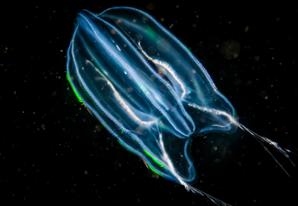
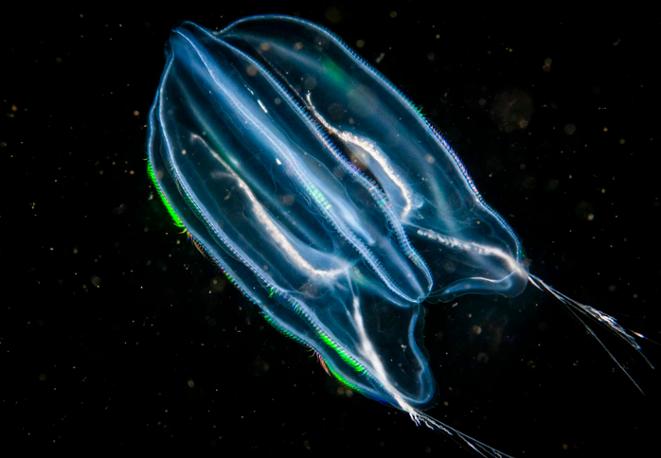
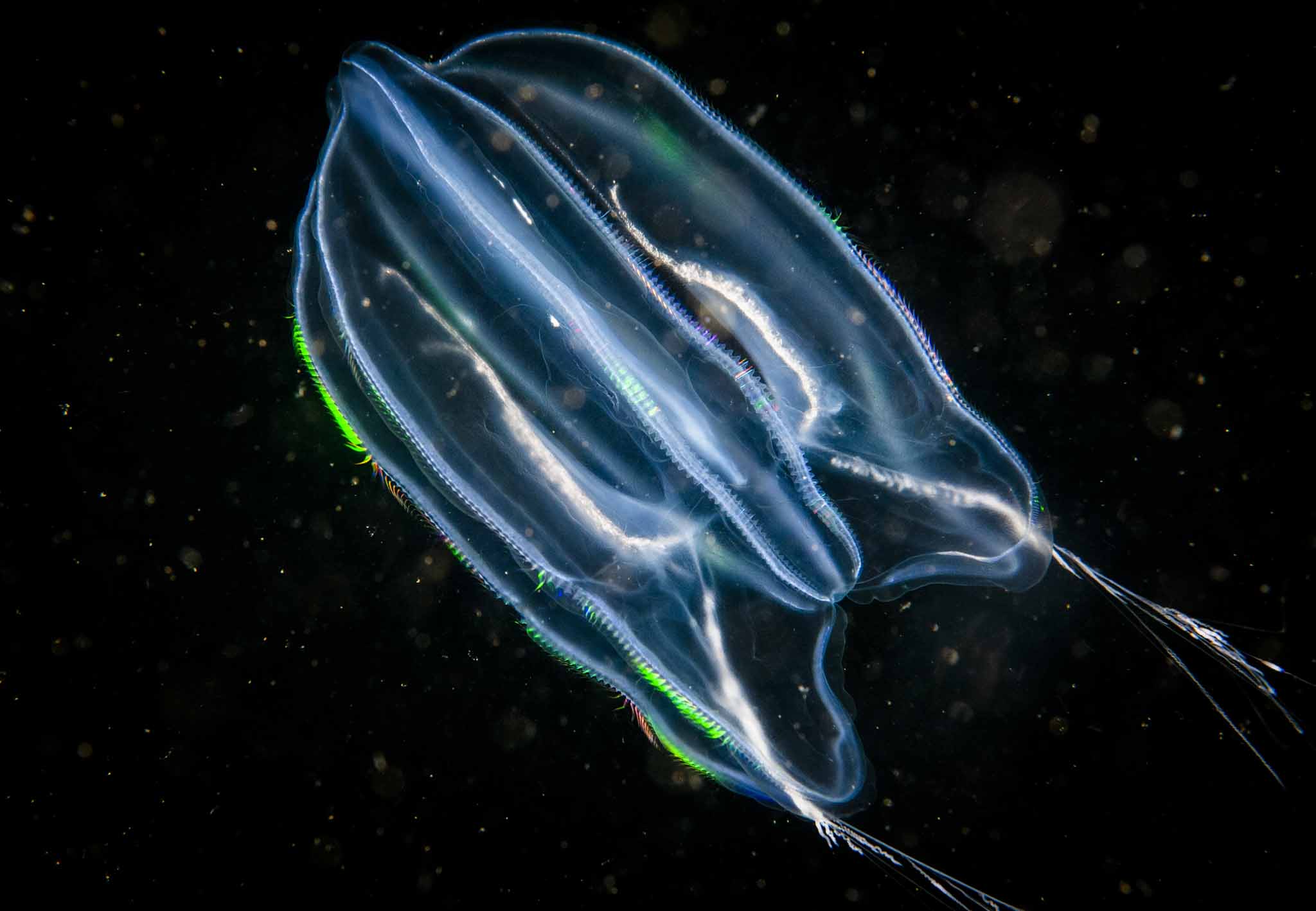
The sea walnut is transparent to milky and has a smooth, walnut-like shape of about 10 cm in length. From above, its body appears flattened, while from the side it is more rounded to pear-shaped. It has large mouth lobes and short appendages around the mouth, with which it "catches" food. Underwater, the rows of cilia often sparkle slightly in color because they refract light.
Natural Enemies
Beroidae, another species of comb jelly, primarily feeds on sea walnuts.
Dangerous/Toxic
The sea walnut does not pose a direct threat to humans, as it has no stinging cells. However, as an invasive species in the Mediterranean and the Baltic Sea, it is harmful to the local ecosystem.
Pro Tips
In many seas where it has been introduced, the sea walnut is now considered an invasive species. This means: It does not actually belong there, reproduces rapidly, and disrupts the local ecosystem, for example by eating fish spawns and plankton, thus disturbing food chains. Researchers even count it among the 100 most dangerous neobiota worldwide.
Text: Zettel Carina