
Dustbin-lid jellyfish
Rhizostoma pulmo




Special features
Dustbin-lid jellyfish rarely roam alone:
Young fish of the genus Trachurus, Boops, or Seriola like to hide under the jellyfish's bell.
However, it is not exactly known whether they live peacefully in symbiosis or parasitism.
On the one hand, it was observed how the fish help the jellyfish clean themselves, but also how they eat the gonads (i.e. the sexual organs) of the jellyfish.
But maybe they simply live in probiosis, i.e. one species benefits without harming the other.
Appearance
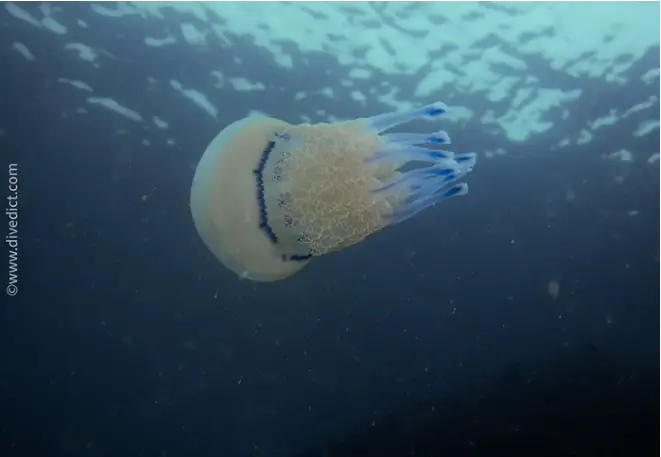
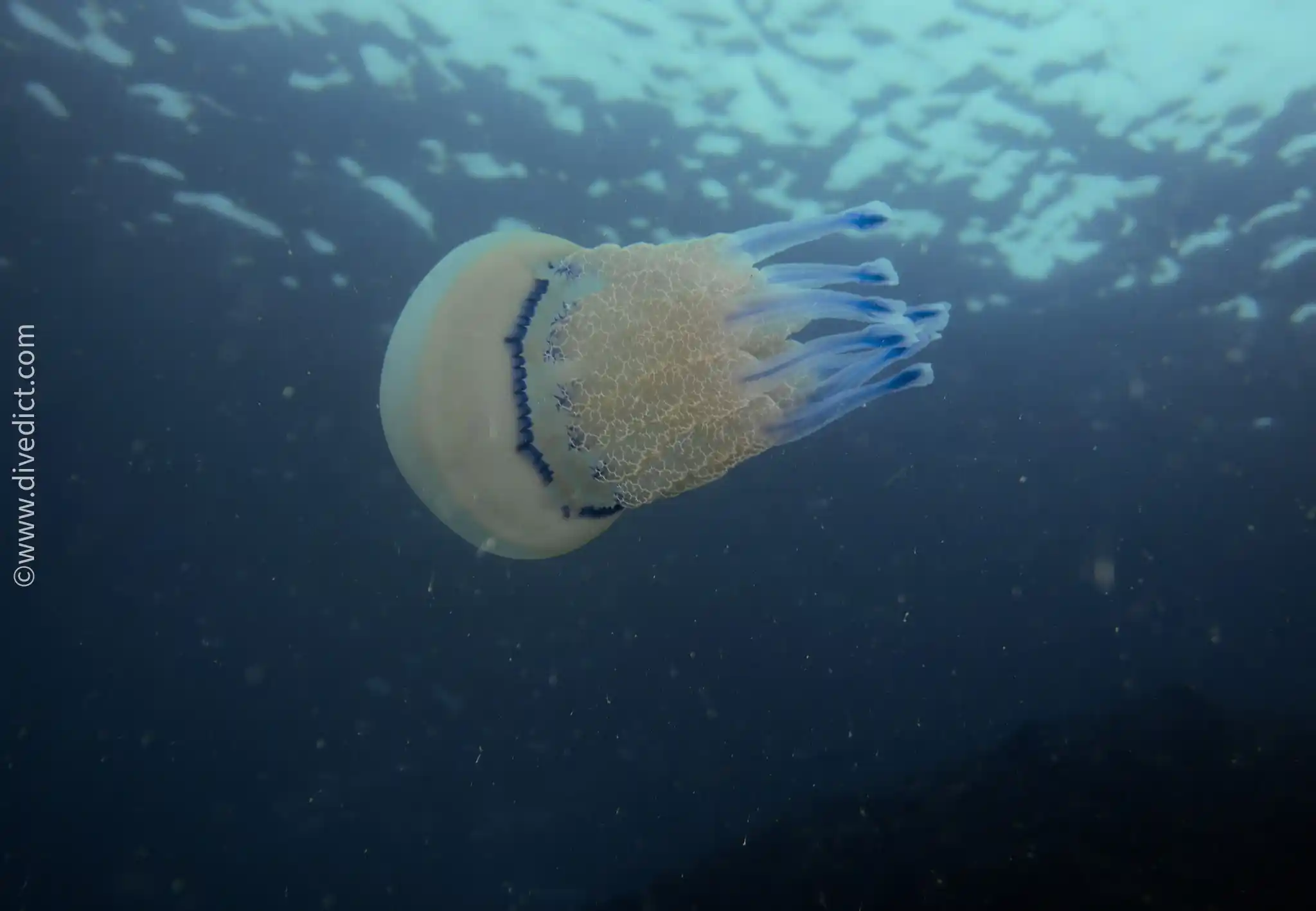
This slimy creature probably gets its German trivial name from the shape of its tentacles, which resemble the bronchi of a human lung. When moving, it also looks as if it were breathing.
Their bell is curved, their tentacles and their mouth arms are longer than for most other types of jellyfish.
Their base color is white and, depending on the individual, the edge of the bell and the ends of the tentacles are heavily or slightly dark blue.
By the way, she is the biggest - the queen - of all jellyfish in the Mediterranean.
Natural enemies
Turtles, fish, seabirds
Dangerous/Venomous
Considered harmless and can only cause allergies in very sensitive people due to nettles.
Sketch
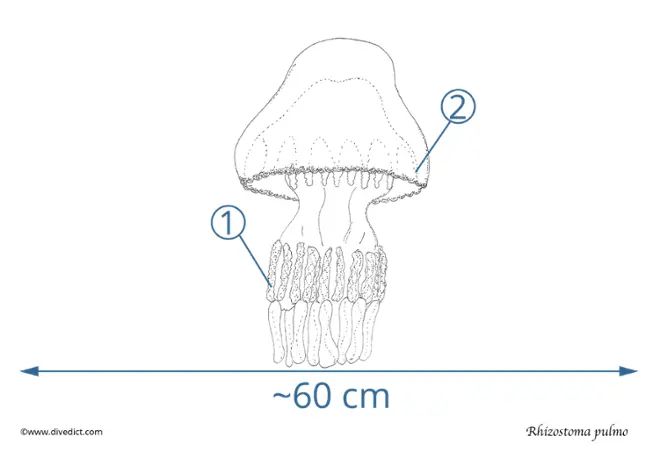
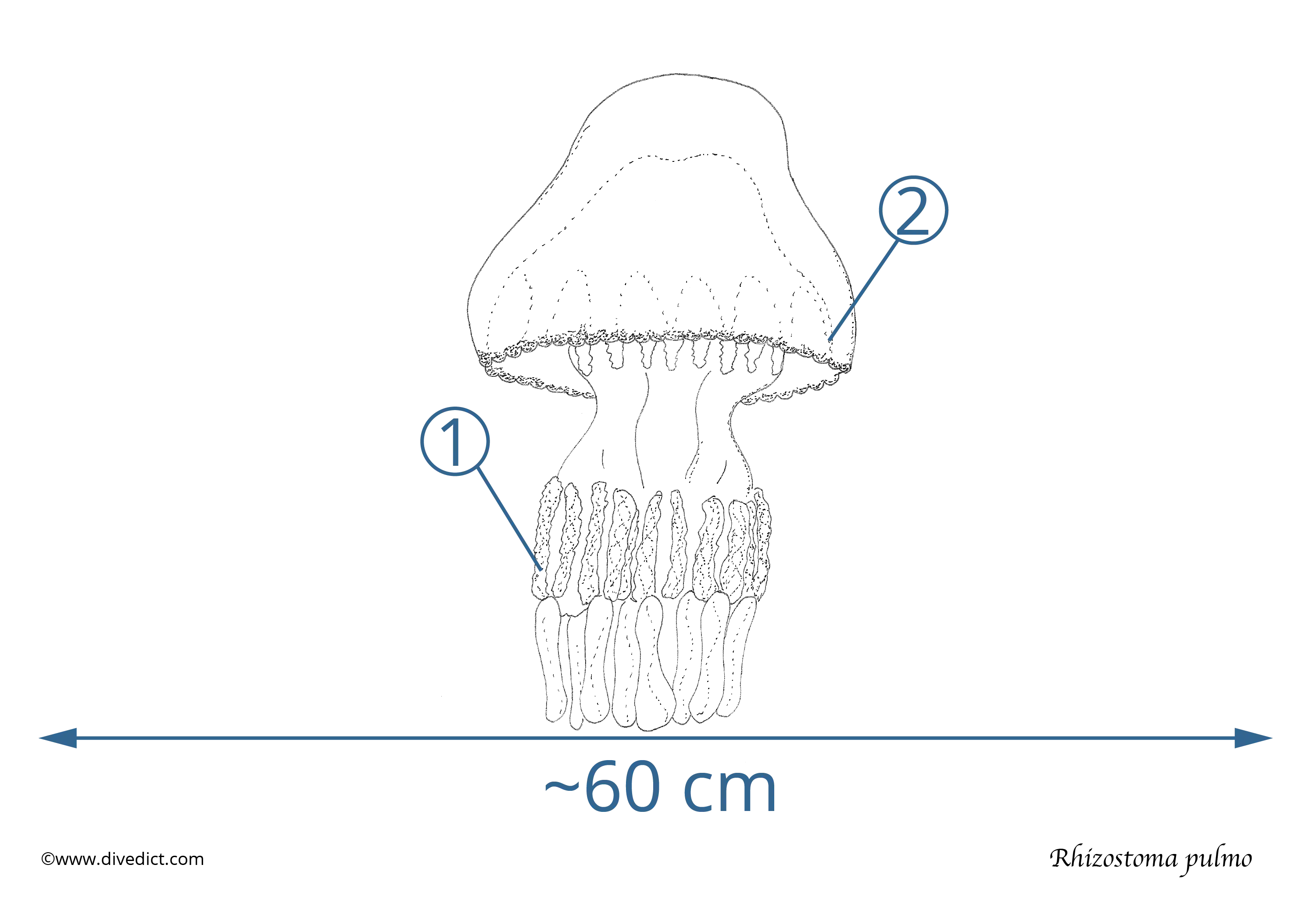
1. Mouth arms
2. Bell
Pro tips
As beautiful as the tentacles of Dustbin-lid Jellyfish may look, they are unfortunately not suitable for catching prey.
Instead, they absorb plankton with their eight mouth arms.
When the females have been fertilized, they release planula larva, which sink to the bottom of the sea (larval stage) and undergo metamorphosis to the polyp (polyp stage).
In spring, they become tiny, star-shaped ephyra larvae, which already have muscle cords and can move freely with the typical jellyfish movements (medusa stage).
Within a few weeks, they then grow into a finished jellyfish.
Sometimes they migrate through the oceans in huge swarms; in Trieste, North Adriatic, for example, a swarm of forty thousand individuals was spotted spread over an area of one square kilometer.
Text: Carolina Leiter, Pia Balaka
Pic: Felician Hosp, Sabine Probst
Illustration: Dive Dict