
Ctenophora
Ctenophora




Special features
Did you know that Ctenophora are the ancestors of all animal groups?
More than 700 million years ago, unicellular microorganisms in the oceans evolved into multicellular organisms (= animals).
For a long time, it has been mistakenly assumed that sponges were the first animals.
However, new research was conducted at the University of Vienna: They compared the sequence of genes on chromosomes of two types of sponge, two species of Ctenophora, and three single-celled organisms (which do not belong to the phylum of animals!).
The result? The arrangement of genes in Ctenophora is similar to that of protozoa. Sponges, on the other hand, and all other animal species, have rearrangements.
This suggests that Ctenophora is the most ancient animal species in the world.
However, since these are soft-bodied animals, there are no fossil findings that would further support this theory.
Appearance
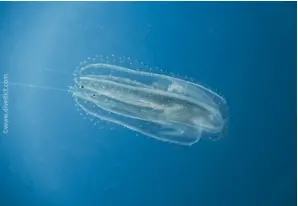
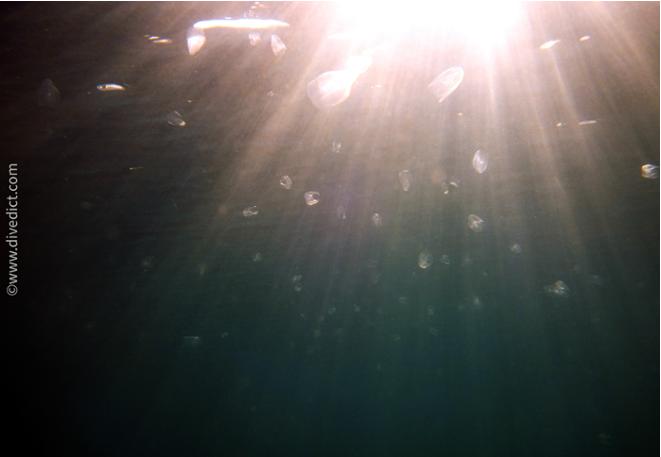
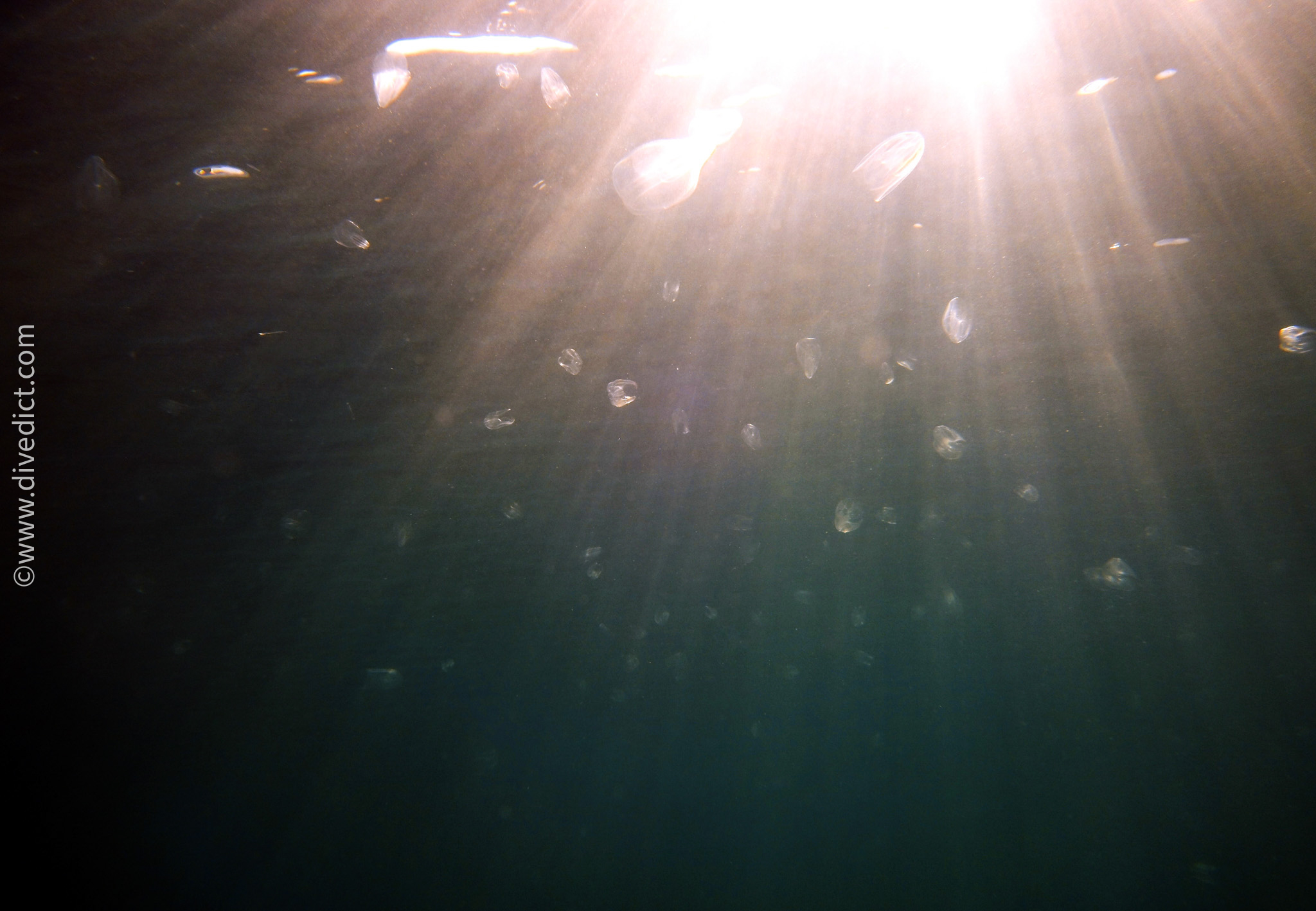
Ctenophora usually have a walnut-like shape with comb-like leaflets, which is why the German common name of this species translates to "rib jellyfish".
Due to bioluminescence, their "ribs" can even glow at night.
They have no stinging cells and are therefore, from a zoological point of view, not real jellyfish at all.
Depending on the subspecies, they grow to an average of 1-25cm.
Natural enemies
Turtles, fish, seabirds
Dangerous/Venomous
Rib jellyfish are neither dangerous nor venomous.
Sketch
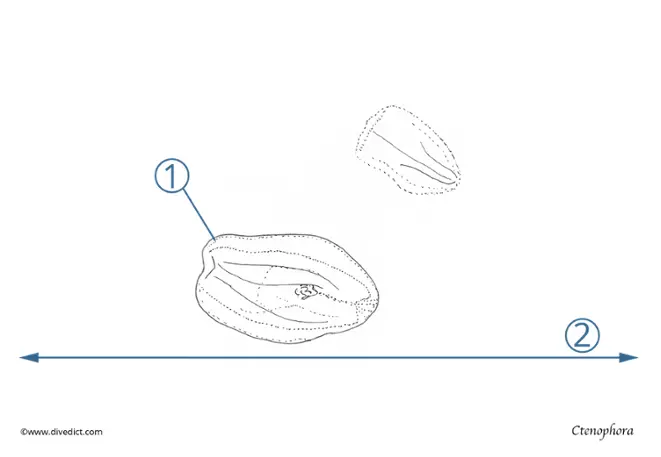
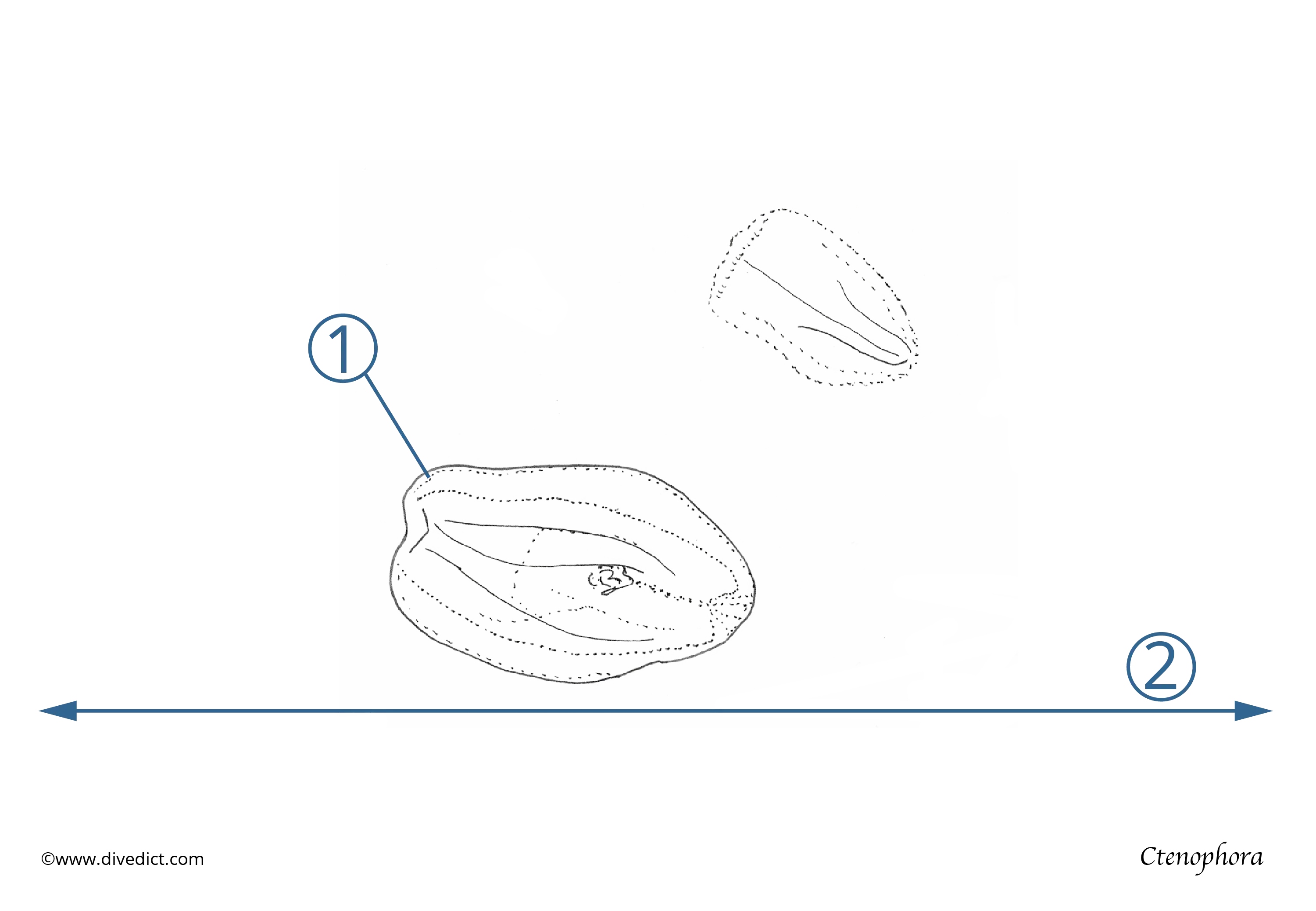
1. Comb-like leaflets
2. 1-25cm tall, depending on the subspecies
Pro tips
In total, there are over 100 species of Ctenophora in all oceans of the world. Therefore it does not happen that rarely that divers spot these beautiful remnants of the past.
They are hermaphrodites and lead a solitary life.
In the Mediterranean, Ctenophora are considered an invasive species, in particular the mnemiopsis leidyi, trivially also known as "sea walnut", is now spreading in Mediterranean waters and feels right at home.
Text: Carolina Leiter
Pic: Felician Hosp, Sabine Probst
Illustration: Dive Dict