
Common jellyfish
Aurelia aurita




Special features
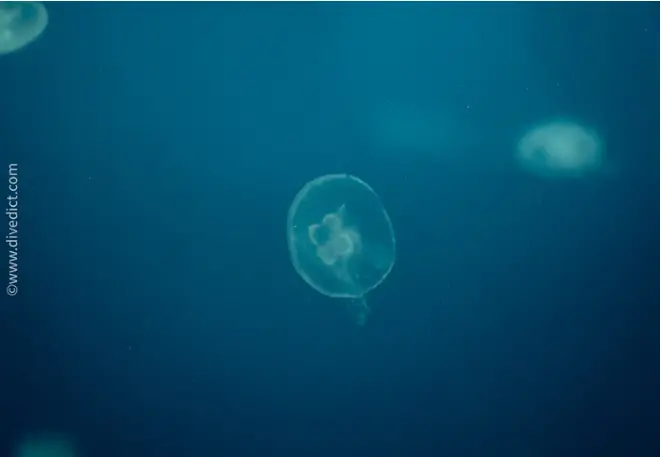
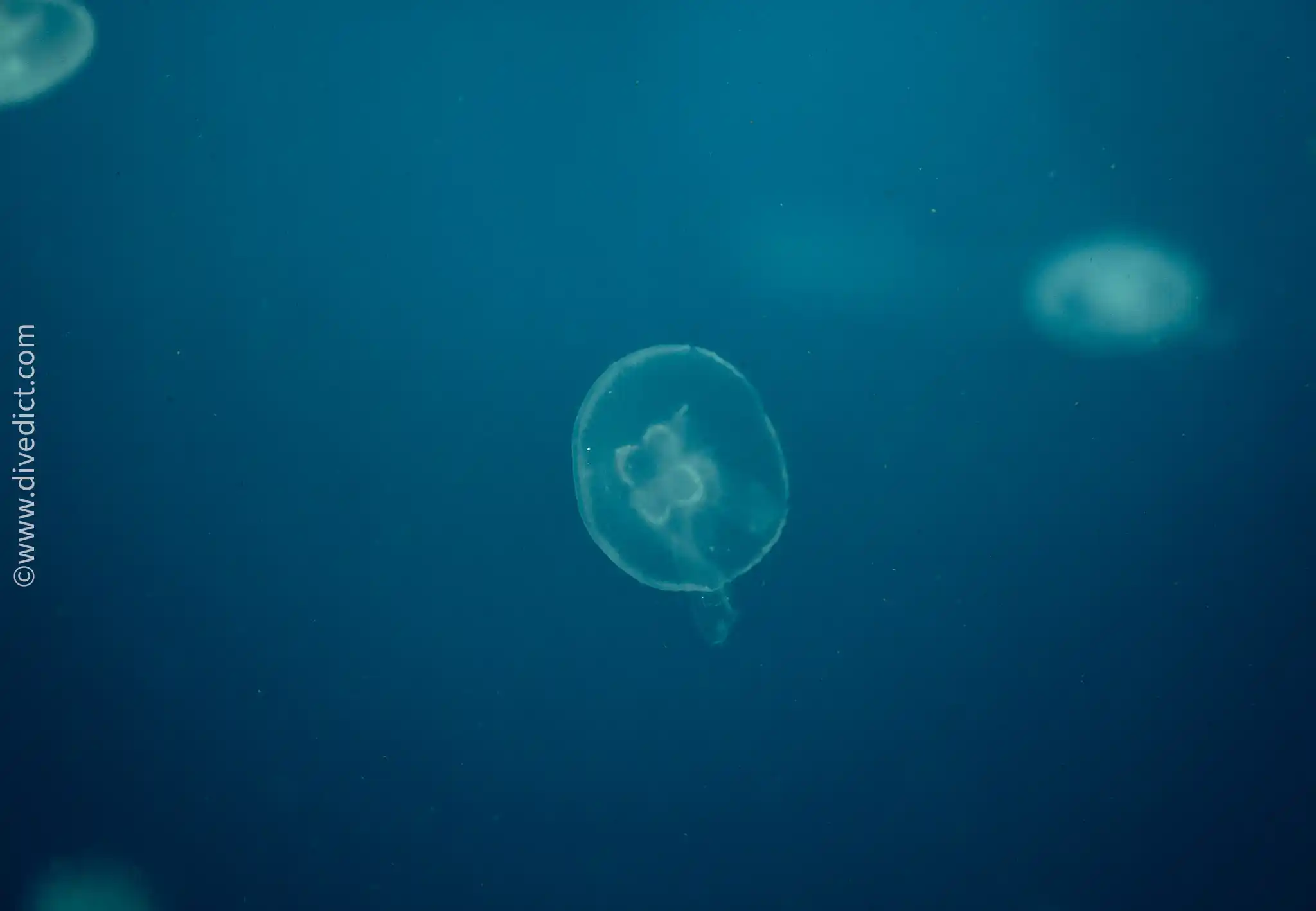
Most of you probably know this jellyfish from summer vacations at the sea, unfortunately, washed up on the beach: the transparent, wobbly jellyfish with the funny, ear-shaped, colorful structures in the center of the bell.
But very few know what these structures actually are: their genitals.
They are white to orange in males and purple in females.
Appearance
The Common jellyfish is easily distinguishable from other jellyfish. Their bell is clearly flatter, can reach a diameter of up to 40cm, and is almost completely transparent. There are 16 primary and several secondary peripheral tentakles attached to it.
Natural enemies
Sea turtles, fish, seabirds
Dangerous/Venomous
The Common jellyfish is neither dangerous nor poisonous and does not nettle.
Sketch
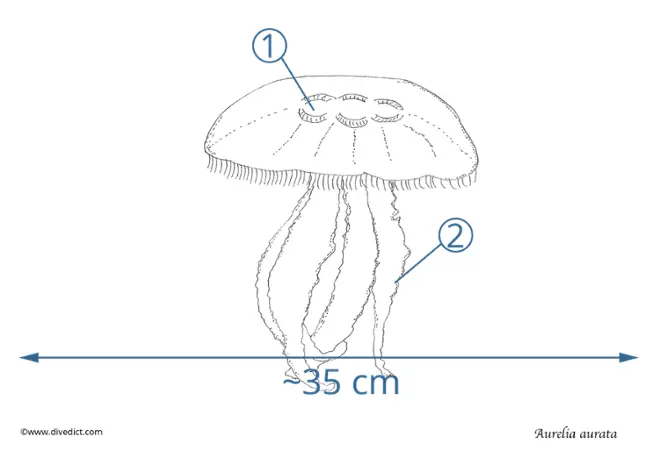
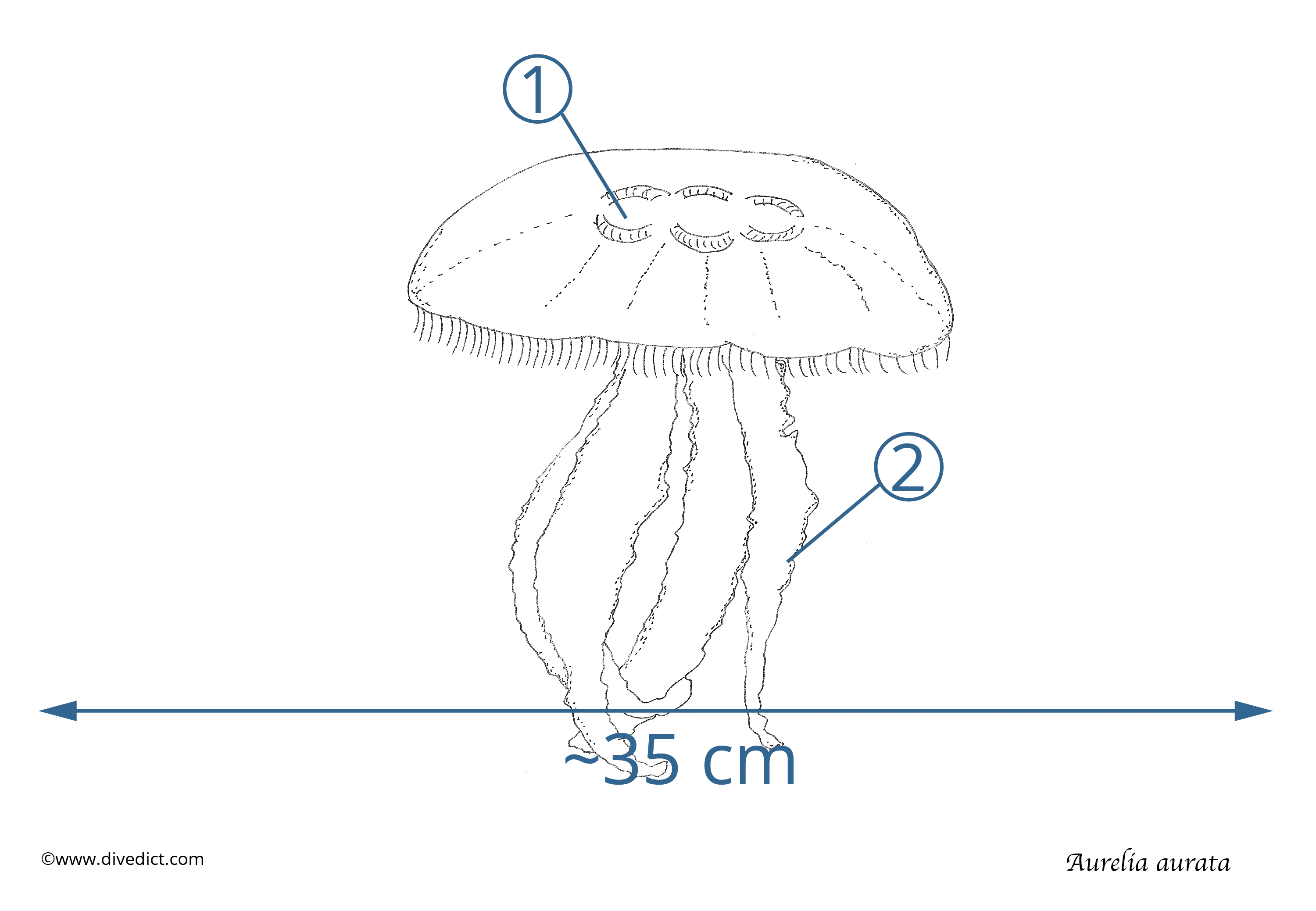
1. Genital organs
2. Mouth arms
Pro tips
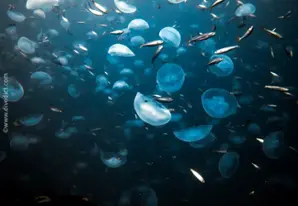
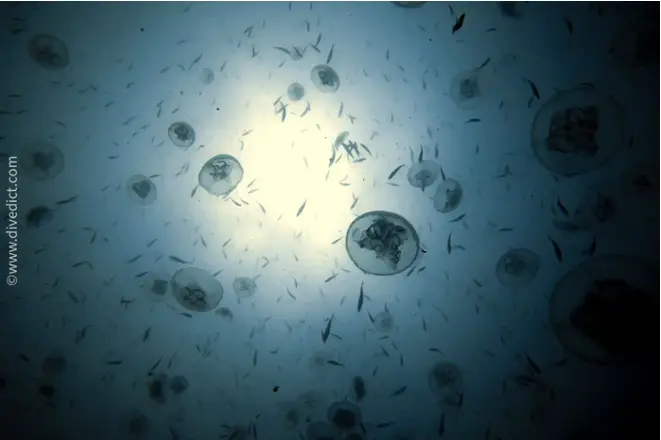
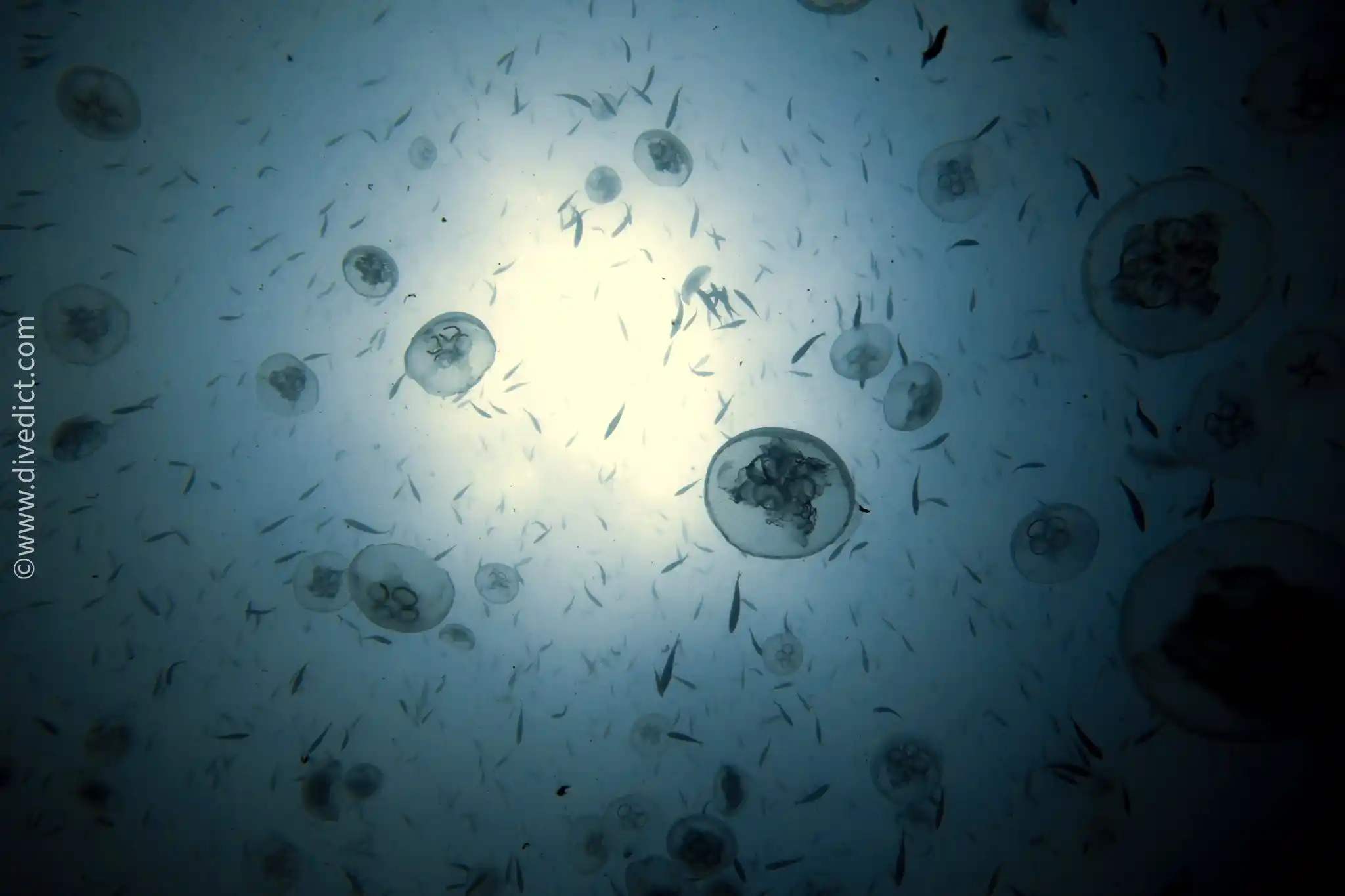
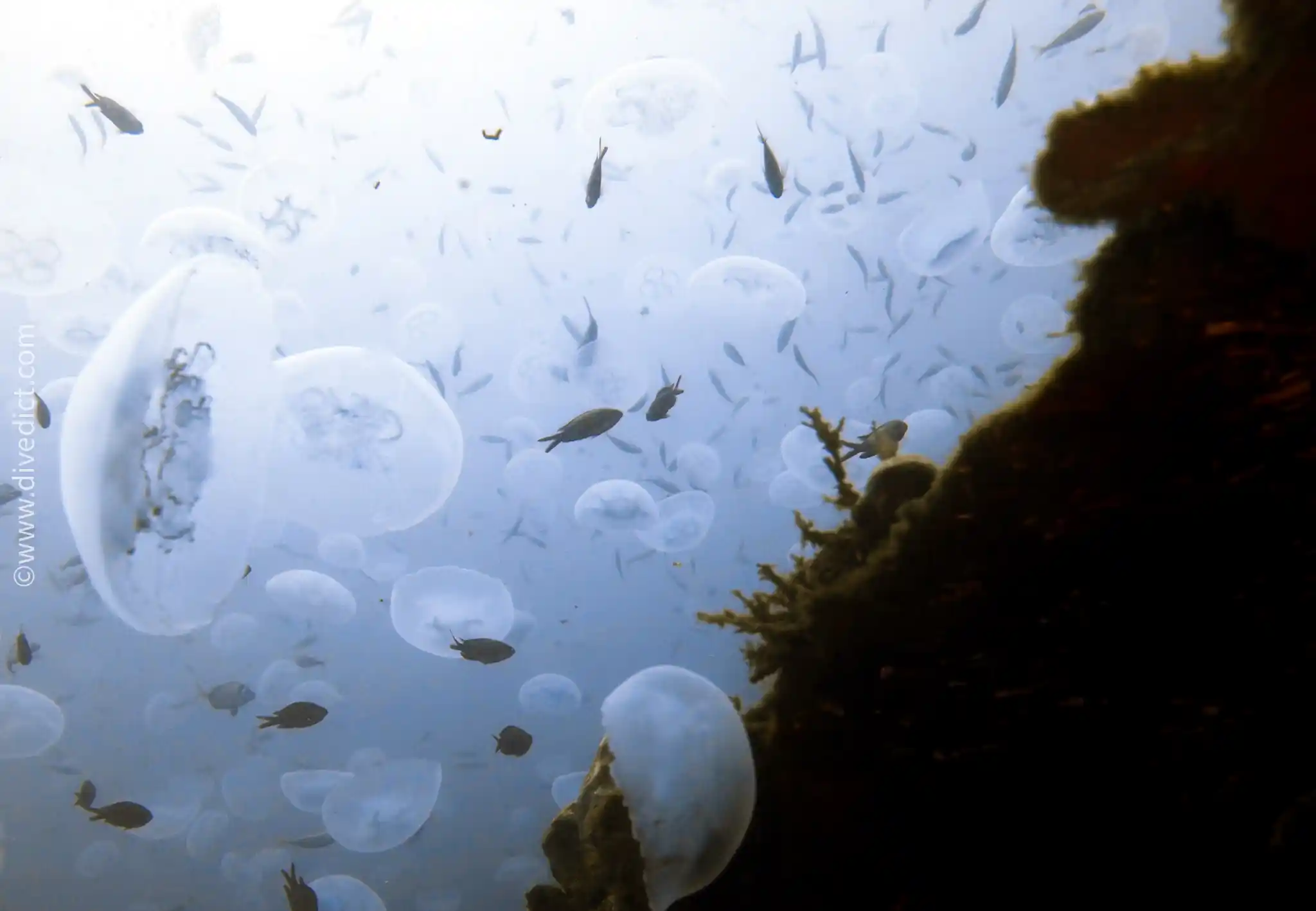
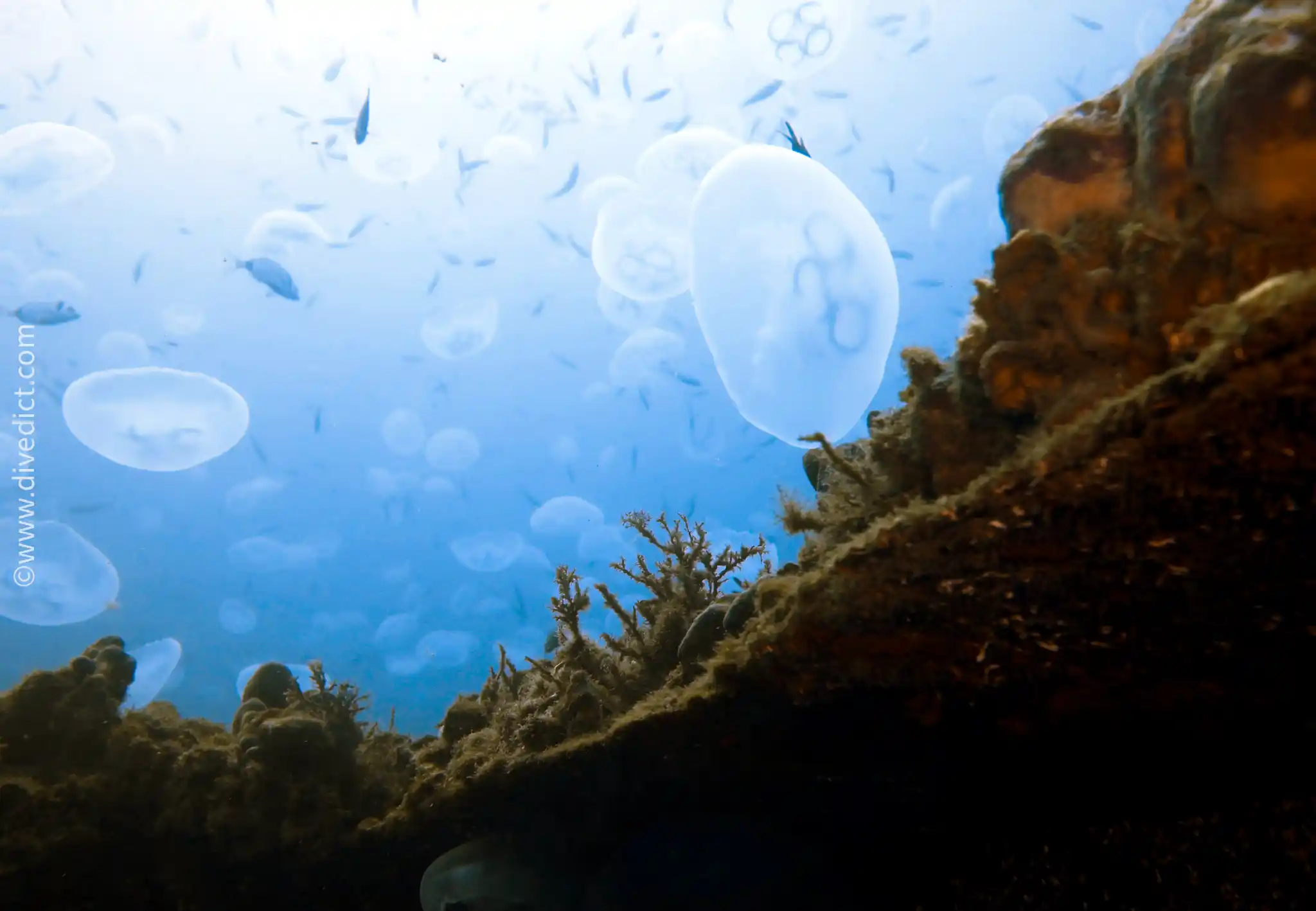
From April to October, Common jellyfish can be observed primarily in coastal regions, including lagoons and harbors. Sometimes they even linger around there in large schools.
Although they are almost invisible individuals, they have an enormous influence on the ecosystem.
They eat anything smaller than 1cm, which is zooplankton. Common jellyfish have such a high nutritional drive that in jellyfish-rich years, the population of zooplankton organisms decreases to 1/5 of the normal population numbers.
Common jellyfish are sometimes the favorite food of sea turtles. Unfortunately, they mistake plastic bags for jellyfish more and more often and, in the worst case, die from it.
Text: Carolina Leiter, Pia Balaka
Pic: Felician Hosp, Sabine Probst
Illustration: Dive Dict