
Narrow fork alga
Dictyota linearis



Special features
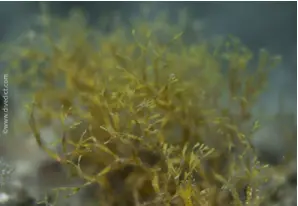
The Narrow Fork Algae is very sociable. In fact, it prefers to grow on other algae (this type of life is also called “epiphytic” in specific terms) or as mixed vegetation surrounded by different species.
Appearance
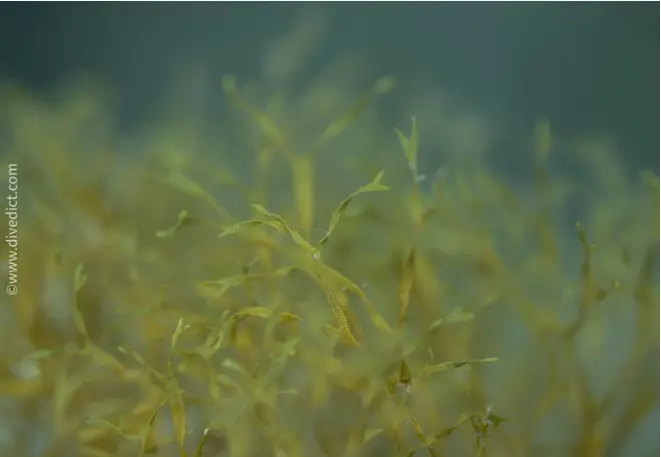
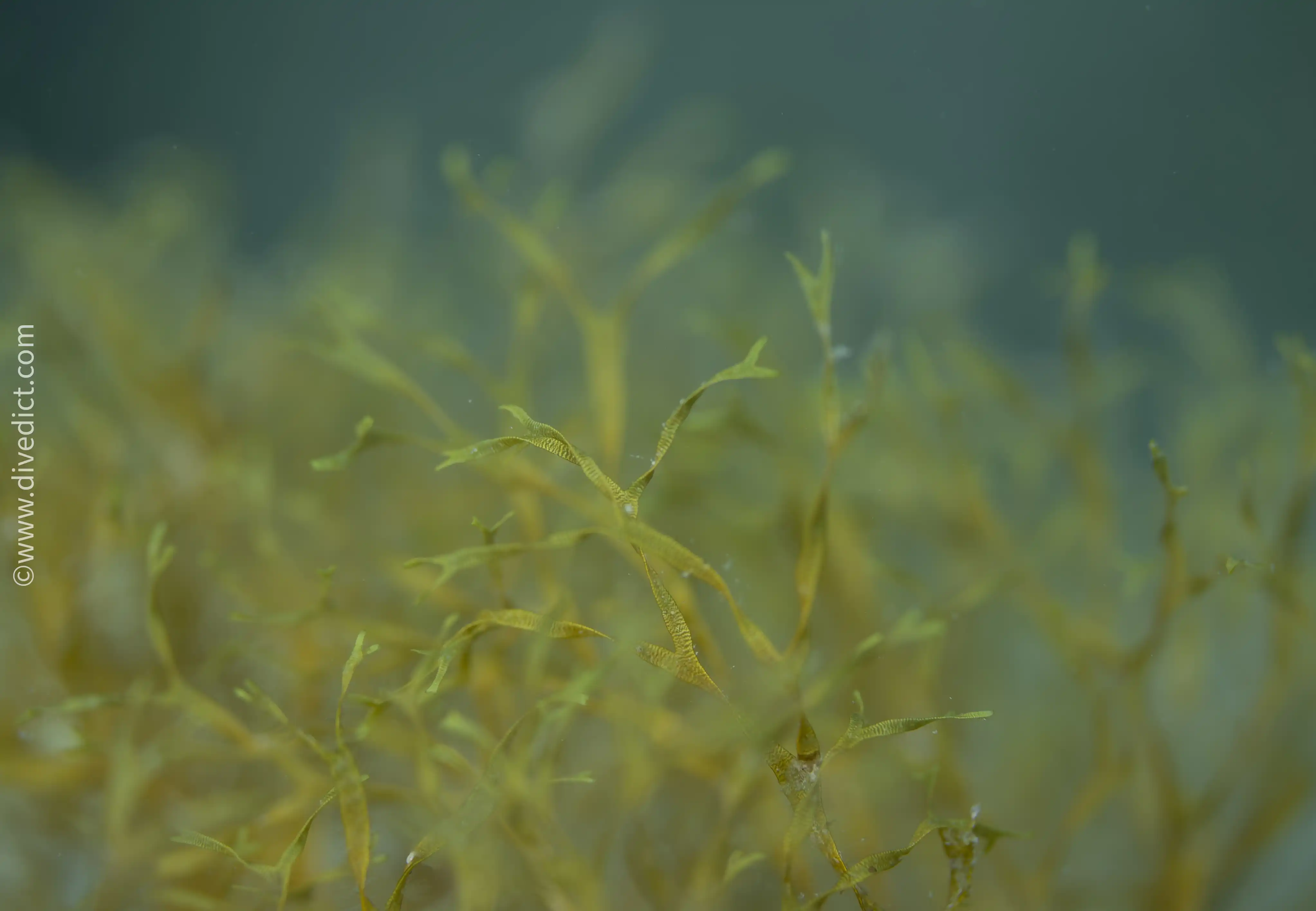
As their name suggests, their leaves are delicate, slender and bifurcated at the ends (also known as “dichotomous” in specific terms). They are also yellowish-brown in color, and the leaflets are usually irregularly branched and up to 20 cm long.
Natural enemies
Fish, crabs
Dangerous/Venomous
The narrow fork tongue is neither dangerous nor venomous.
Sketch
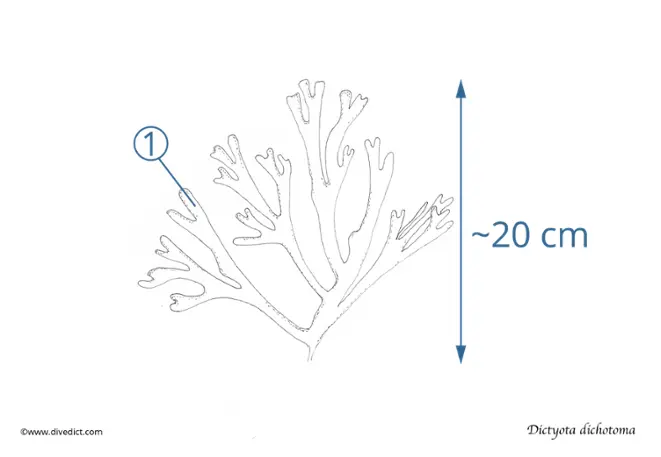
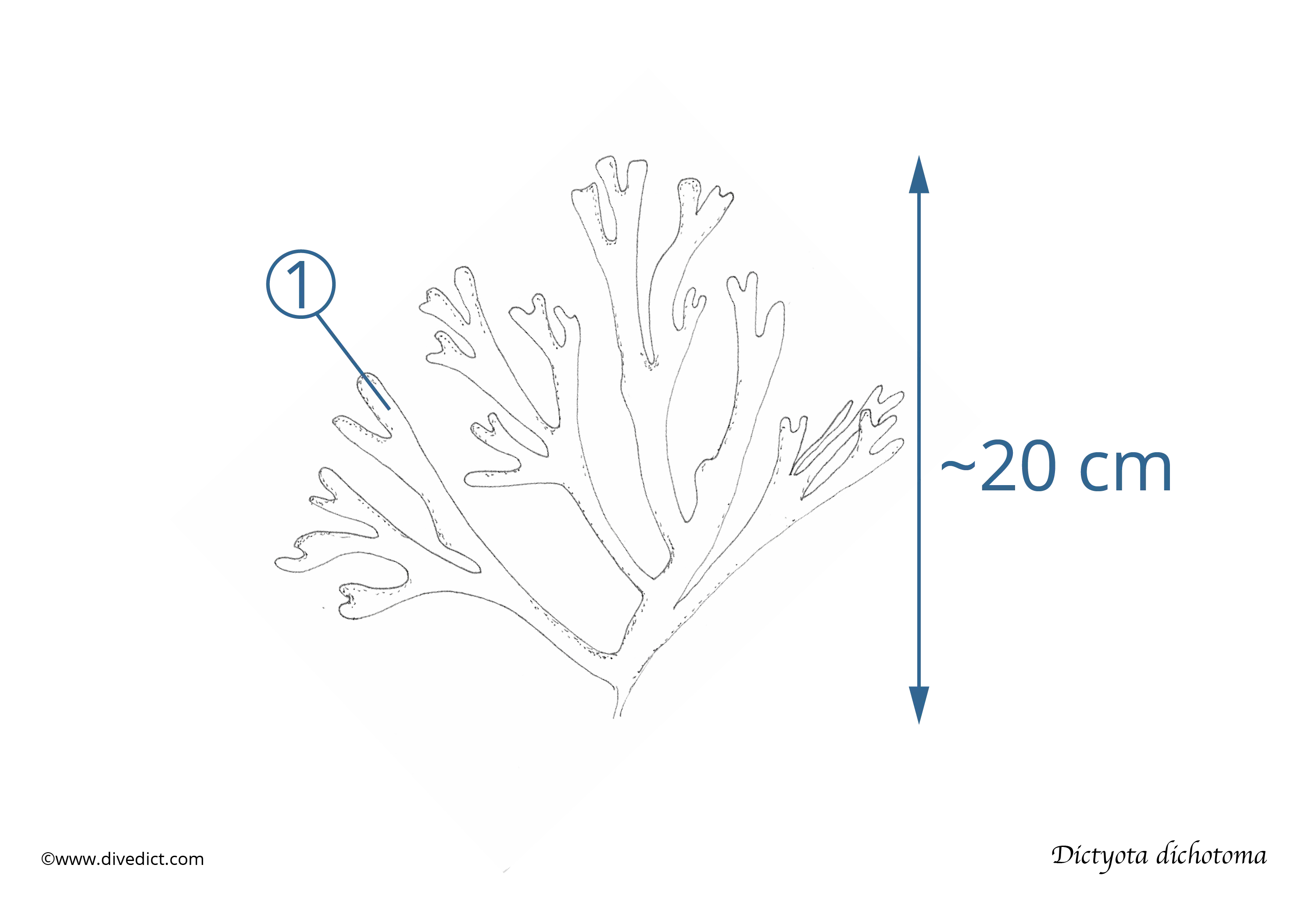
1. Slender leaves with bifurcated ends
Pro Tips
The Narrow Fork Algae loves sunlight, therefore you can find it close to the water's surface. She has the power to grow wherever she wants, no matter if it's a place protected from the current or not.
Of course, it grows fastest in summer, while it appears to be “sleeping” through the winter.
In Asia, it is often collected and eaten by humans and used for gaining colloids and antibiotic substances.
Text: Carolina Leiter
Pic: Felician Hosp, Sabine Probst
Illustration: Dive Dict