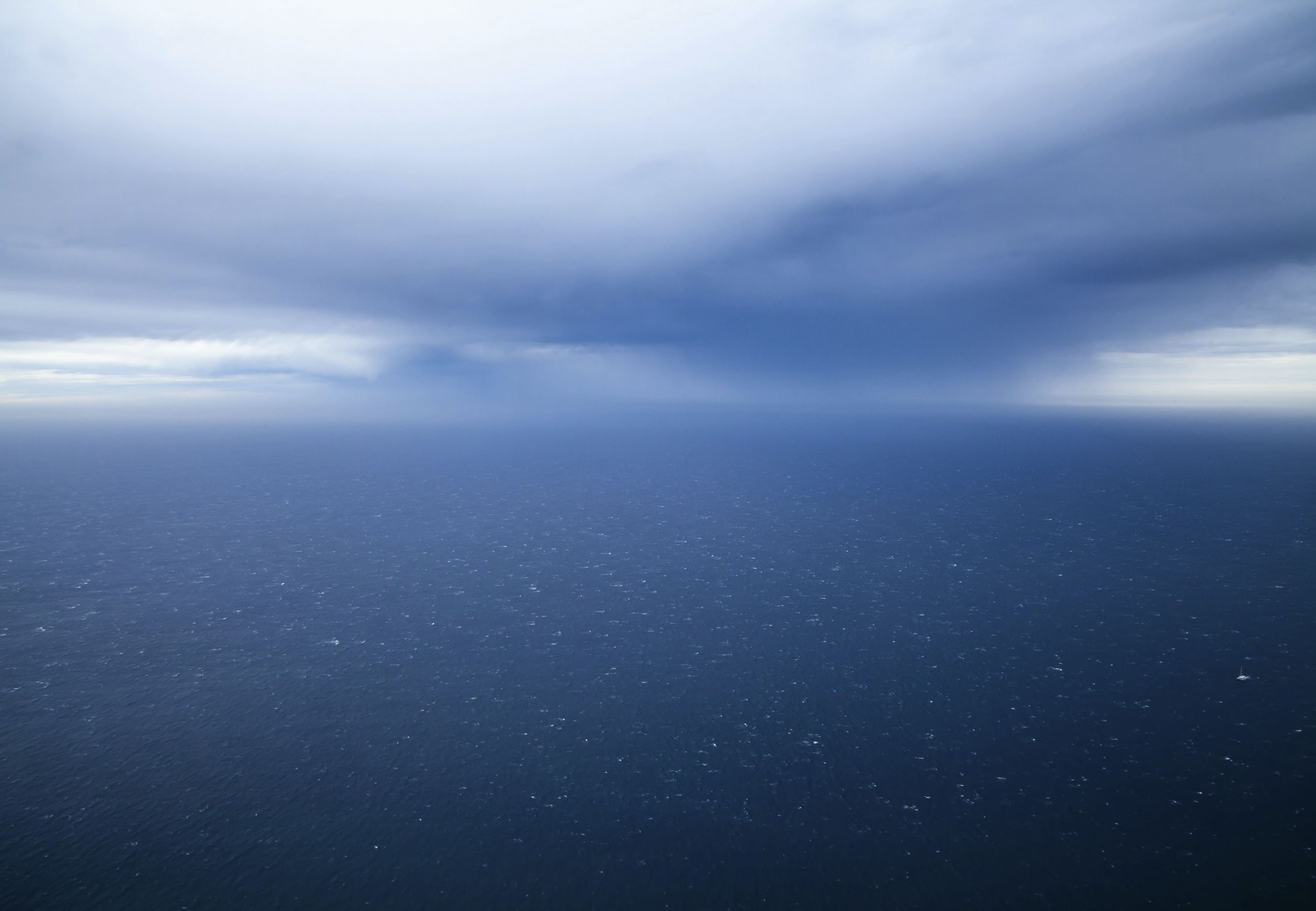
The open sea is the vast, breathing wilderness of our planet – far from the protective coasts, where the horizon merges with the sky. It begins beyond the continental shelf and extends over the largest part of the oceans – in the endless blue of the Pacific Ocean , in the depths of the Atlantic Ocean , in the warm Indian Ocean , in the storm-tossed Southern Ocean , and in the icy Arctic Ocean . At the surface,...
The open sea is the vast, breathing wilderness of our planet – far from the protective coasts, where the horizon merges with the sky.
It begins beyond the continental shelf and extends over the largest part of the oceans – in the endless blue of the Pacific Ocean, in the depths of the Atlantic Ocean, in the warm Indian Ocean, in the storm-tossed Southern Ocean, and in the icy Arctic Ocean.
At the surface, sunlight dances on the waves. But the deeper you go, the colder, darker, and more pressurized it becomes. Below about 200 meters, the twilight zone begins, and at several thousand meters depth, complete darkness prevails. The open sea covers about two-thirds of the Earth's surface – and remains largely unexplored.
The open sea is the heart of the global climate. It stores vast amounts of heat and absorbs large portions of the carbon dioxide emitted by humans.
At the same time, the inconspicuous phytoplankton at its surface produces about half of the world's oxygen – every second breath is thus also a gift from the open sea.
It regulates weather, ocean currents, and temperatures while connecting all continents. For millions of people, it is a source of food, a trade route, and an economic foundation.
Moreover, it is a significant research space: In its depths, new species are discovered, unknown life strategies are researched, and insights are gained that are important for medicine and technology.
Although the open sea may seem empty at first glance, it is full of life.
At the surface, tiny plankton organisms drift, forming the base of the marine food web. Schools of tuna and mackerel traverse the expanse while sharks silently carve their paths.
Sea turtles cross entire oceans, whales like the blue whale migrate thousands of kilometers through the open waters. In the depths, bizarre creatures live: anglerfish with glowing lures, giant squids, transparent jellyfish, and deep-sea crustaceans that withstand the immense pressure.
Many of these animals cover enormous distances – the open sea is their migratory corridor, their hunting ground, and their habitat at the same time.
The open sea consists not only of water – it is a complex system of physical and biological layers.
It is divided into various depth zones:
-
Epipelagic (Light Zone): The uppermost 200 meters, where sunlight enables photosynthesis.
-
Mesopelagic (Twilight Zone): About 200–1,000 meters deep, with only faint residual light.
-
Bathypelagic: 1,000–4,000 meters deep, complete darkness.
-
Abyssopelagic: 4,000–6,000 meters deep, extreme conditions.
-
Hadopelagic: Deepest ocean trenches below 6,000 meters.
Currents, salinity, temperature differences, and nutrient distributions shape this system. Together, they form a delicate balance that influences life across the entire Earth.
The open sea may seem boundless – yet it is a finely tuned network upon which we all depend.