
Submerged Baia Park





In the Footsteps of the Ancient Romans
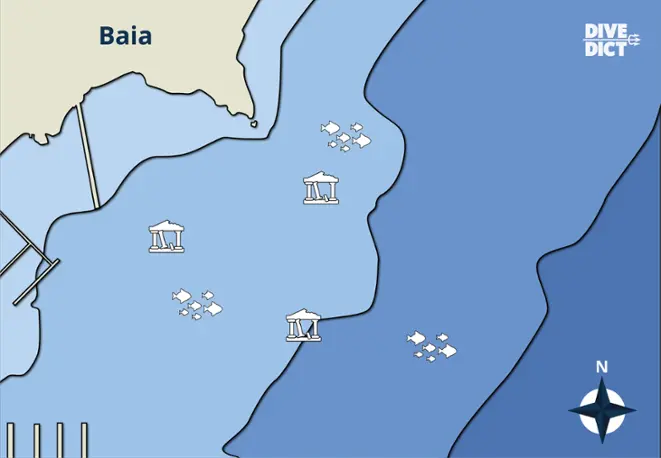
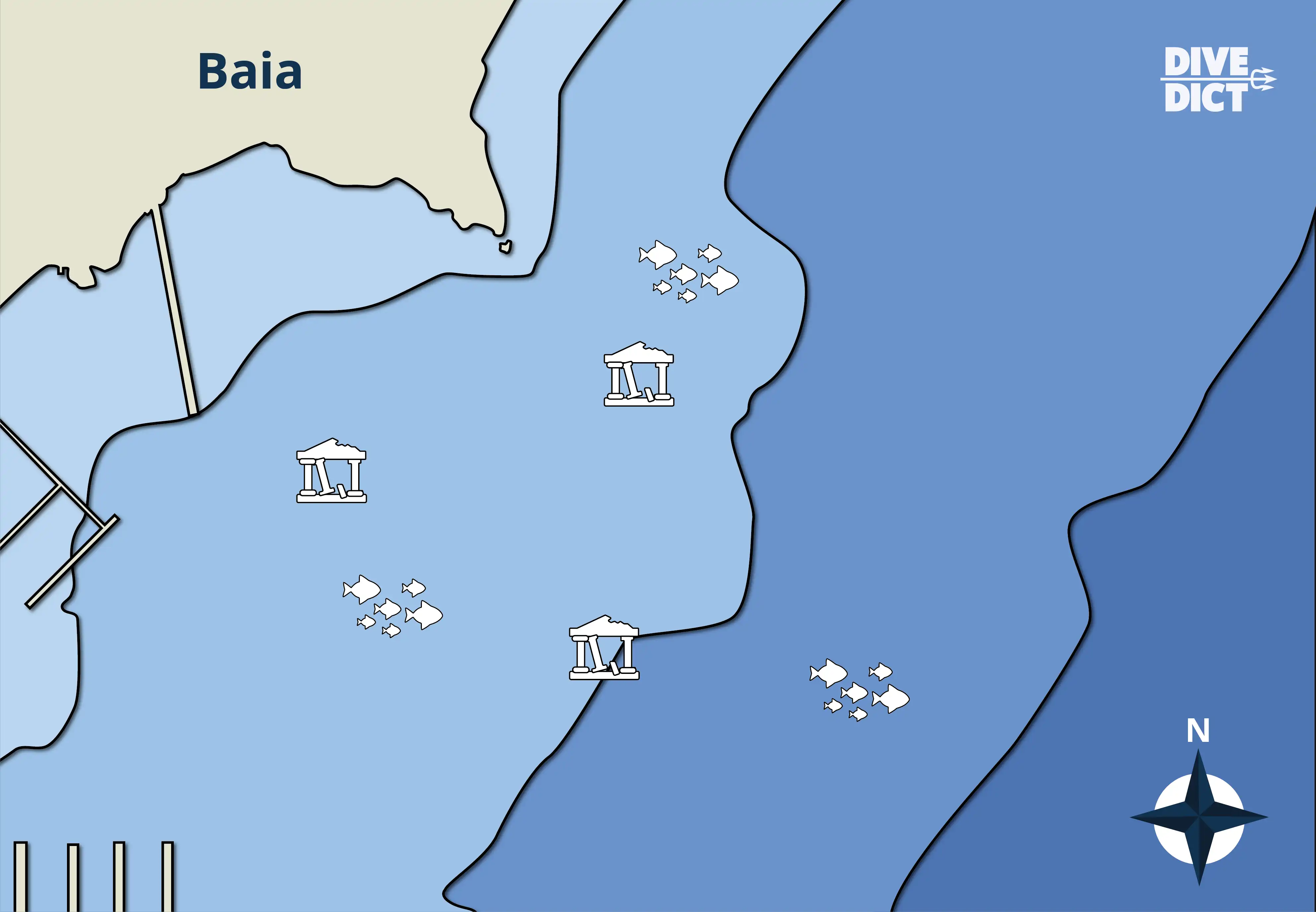
Dive Map


0m
3m
5m
10m
15m
20m
25m
30m
35m
40m
40m+
Entry
The dive site is accessible by boat.
Best Time to Dive
April-October
Recommended Equipment
Sport diving equipment, dive light essential
Features
History nerds, take note! 8 archaeological dive sites housing ancient Roman ruins – the Submerged Park of Baia offers a unique, historically rich diving experience.
The dive routes range from 3 m to a maximum depth of 13 m, making them suitable for both snorkelers and divers.
Claudio's Nymphaeum
Depth: 5 m
This dive route takes us to a gallery of statues representing the ruling figures of the Julio-Claudian dynasty.
Especially the fourth Roman emperor, Claudius, is represented multiple times.
Leaving the gallery behind, the dive leads to the Via Herculanea, which led to the former Portus Julius and the Roman baths.
Offshore Villa
Depth: 5 m
Here we are in the entrance canal of ancient Baia. In this part of the area, you can explore the ruins of an ancient villa with a prothyron entrance.
You should spend the most time on the impressive remains of marble, frescoes, and mosaics, all of which have been extremely well preserved.
Roman Baths of Lacus
Depth: 4 m
This is an ancient spa complex with remains of several polychrome mosaics and marble floors. The mosaics partially overlap and show the different levels of the floors.
In addition to the outlines of the various rooms and the baths, three apses are also visible.
Pisoni's Villa
Depth: 5 m
This dive site features the ruins of a villa belonging to the noble Pisoni family. You can clearly see the columns that once supported the roof of the building, as well as the private baths and structures that indicate an earlier fish farm.
For history lovers: After a failed assassination attempt on Emperor Nero, he retreated unnoticed to the villa.
Ortus Julius
Depth: 3m
The dive takes us to the ruins of a harbor building that once served as an arsenal for the Misenian fleet and was connected by a navigable canal to the lakes of Lucrino and Lago d’Averno. The remaining ruins of the harbor structure are still recognizable, including some mosaics.
Pisoni's Villa Pila
Depth: 10 m
The route takes us to 25 ancient columns, which were likely built in the 1st century BC and have since become home to various marine life forms.
They were part of the parallelepiped structures used to direct Pozzolana (volcanic rock) into the sea, as was once common along the Phlegraean coast.
Additionally, they simultaneously provided the Pisoni villa with protection against high water.
Baia, in the Phlegraean Fields in the province of Naples, became a thriving spa and vacation resort during the Roman Empire. In this area, the phenomenon of bradyseism, attributed to the volcanic activity of the region, caused part of the significant ruins to submerge.
Imperial baths, valuable mosaics, intricate statues, and marble floors now lie beneath water and sand.
Text: Carolina Leiter
Pic: Felician Hosp