
Scoglio del Medico
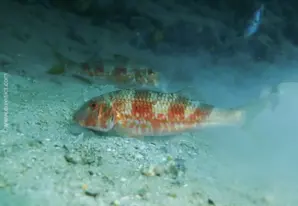





The Jewel of Nature Spots
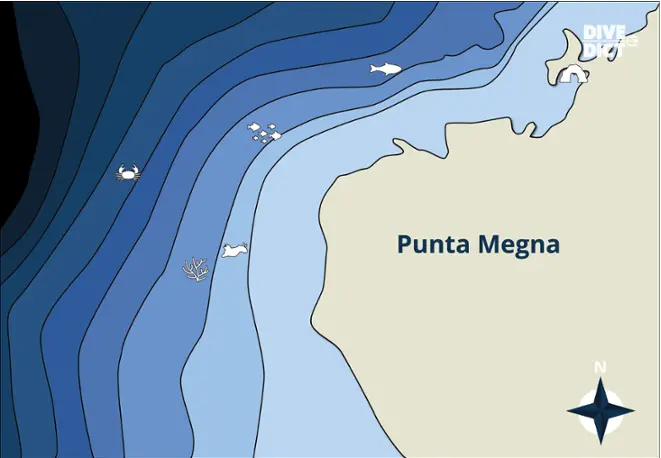
Dive Map

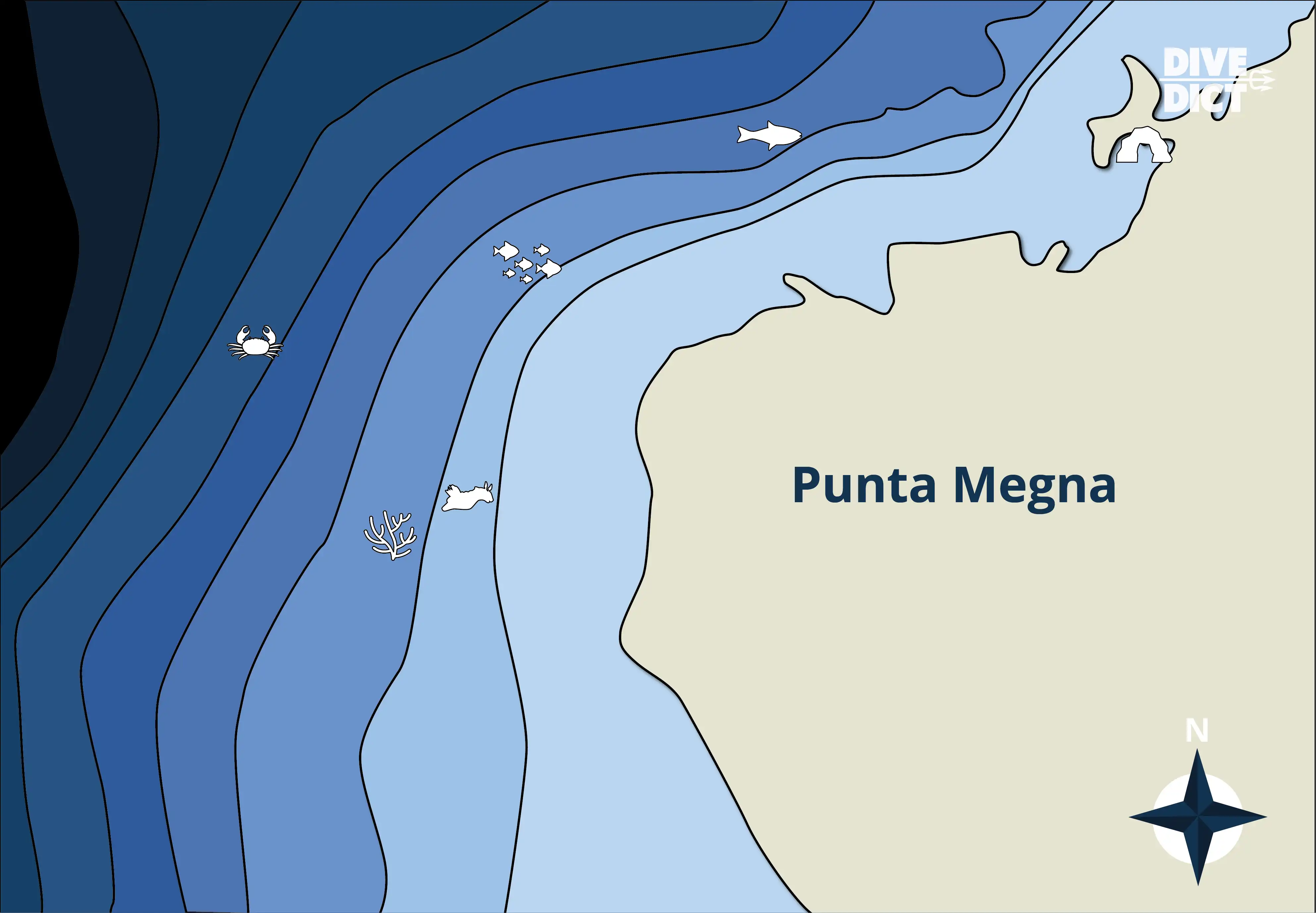

0m
3m
5m
10m
15m
20m
25m
30m
35m
40m
40m+
Entry
The dive site is accessible by boat.
Best Time to Dive
April-November
Recommended Equipment
Sports diving equipment, lamp, camera
Special Features
Various legends surround the name of these dive sites: romantic, poetic, or scientific in nature. What is certain is that it takes several dives to explore the entire splendor of this place.
The rock divides the area into two sections.
The highlight of the south side is the Grotta della Balena. At 14 m, a rather narrow entrance leads into a much wider cave, whose exit resembles the mouth of a whale (balena = whale). Over 60 m, orange cup corals extend inside the cave, and at the entrance and exit, you will be guided by lobsters (Homarus) and spiny lobsters (Palinuridae).
On the north side begins the area. Huge rock formations provide shelter from currents and larger predators for a variety of fish.
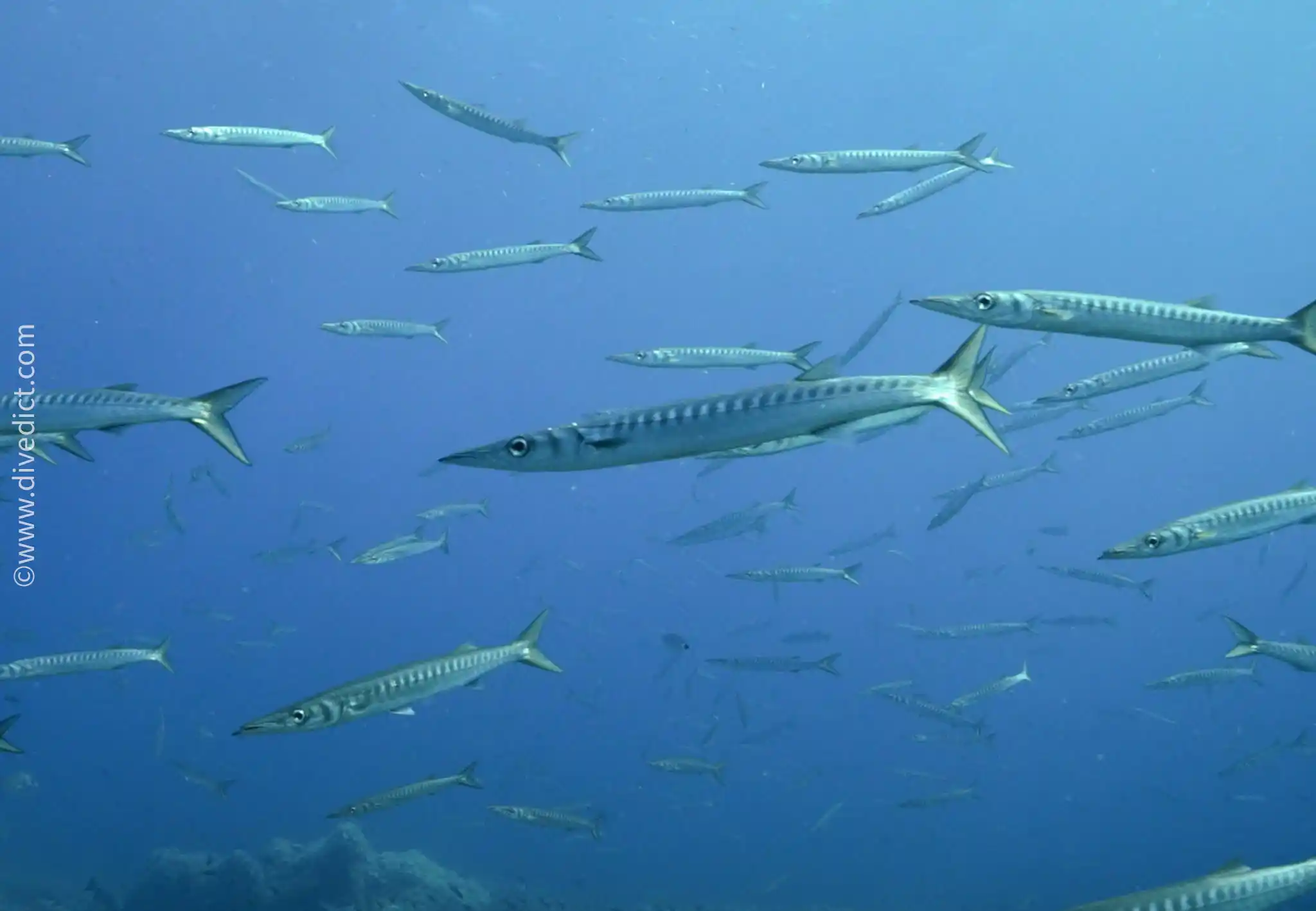
You can get so close to the enormous schools of barracuda (Sphyraenidae) that you could touch them, and the amberjacks (Seriola dumerili) entice with their elegance.
On the east side of the rock, a tunnel about 10 m deep and over 50 m long connects the south side with the north side.
Here, the dive goes through a gigantic gorge and an impressive arch inhabited by colorful nudibranchs (Nudibranchia).
Text: Carolina Leiter
Illustration: Sabine Probst
Pic: Dive Dict