
Punta San Paolo






Large Predators in Blue Expanses
Dive Map


0m
3m
5m
10m
15m
20m
25m
30m
35m
40m
40m+
Entry
The dive site is accessible by boat.
Best Time to Dive
April-November
Recommended Equipment
Sport diving equipment
Special Features
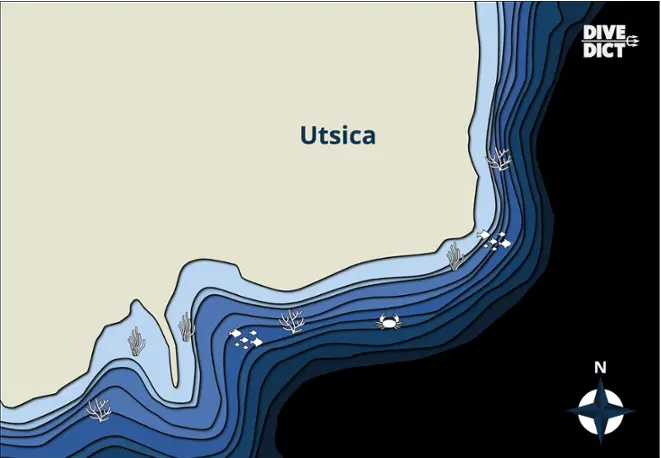
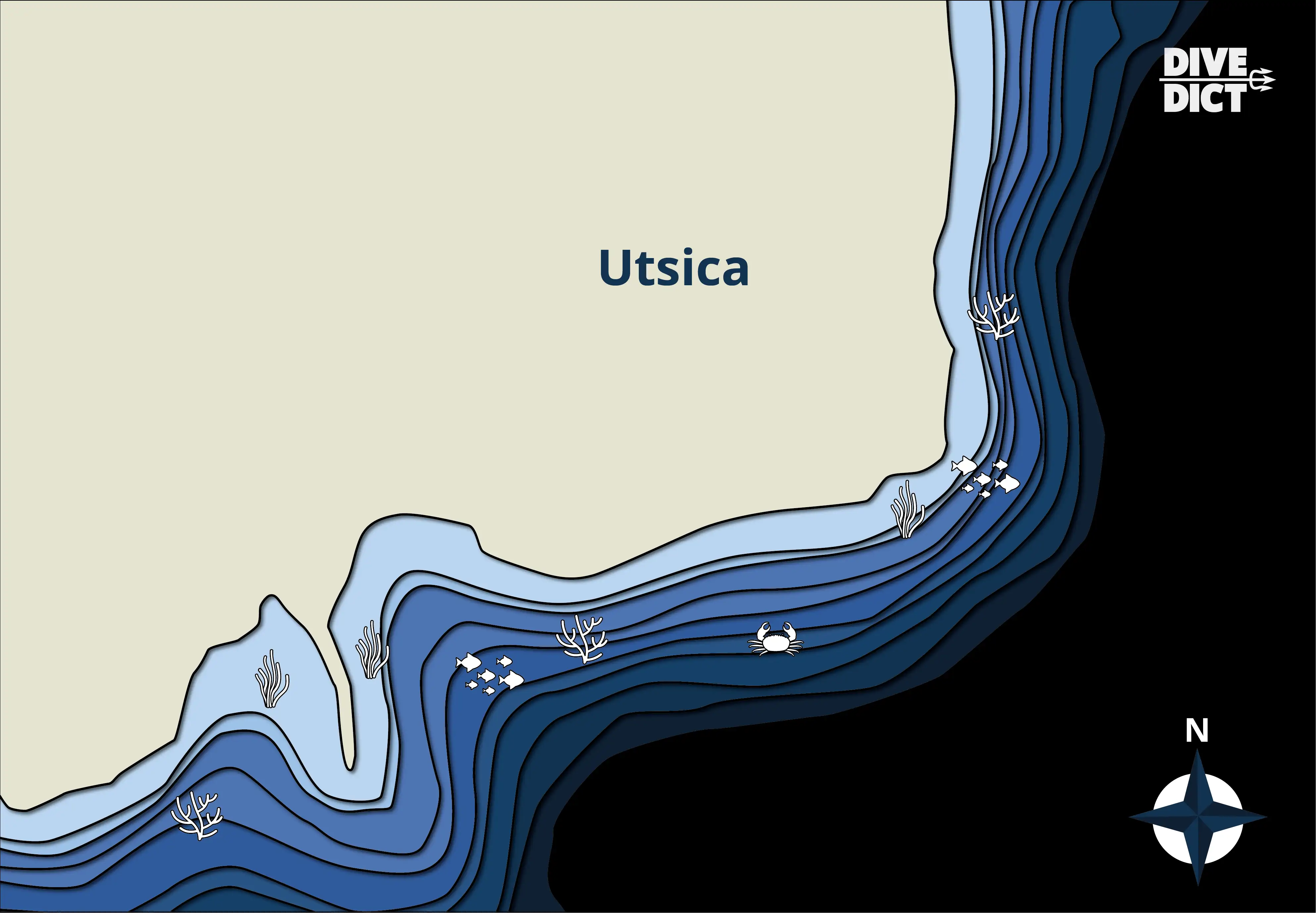
The dive site offers several entry points, 4 buoys within the bay, and 2 buoys at the tip of the peninsula.
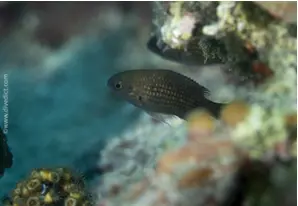
Usually, the dive starts at the outer buoys and goes down to 20 m depth. There, schools of amberjack (Seriola dumerili), jack mackerel (Carangidae), and bream can be seen.
Those who venture into deeper waters will find two rock formations full of red gorgonians, where spiny lobsters (Palinuridae) and even the rare cushion stars (Halityle regularis) make their home.
Following the route westward leads to one of the most impressive gorges in Ustica, known by the locals as “Spaccazza”.
It leads into a small, sandy underwater cove where a school of Mediterranean cardinalfish (Apogon imberbis) is always present.
In the middle of the cove grows a beautiful seagrass meadow (Posidonia), where seahorses (Syngnathidae) like to hide among the grasses.
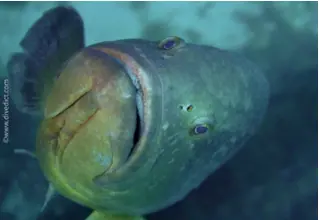
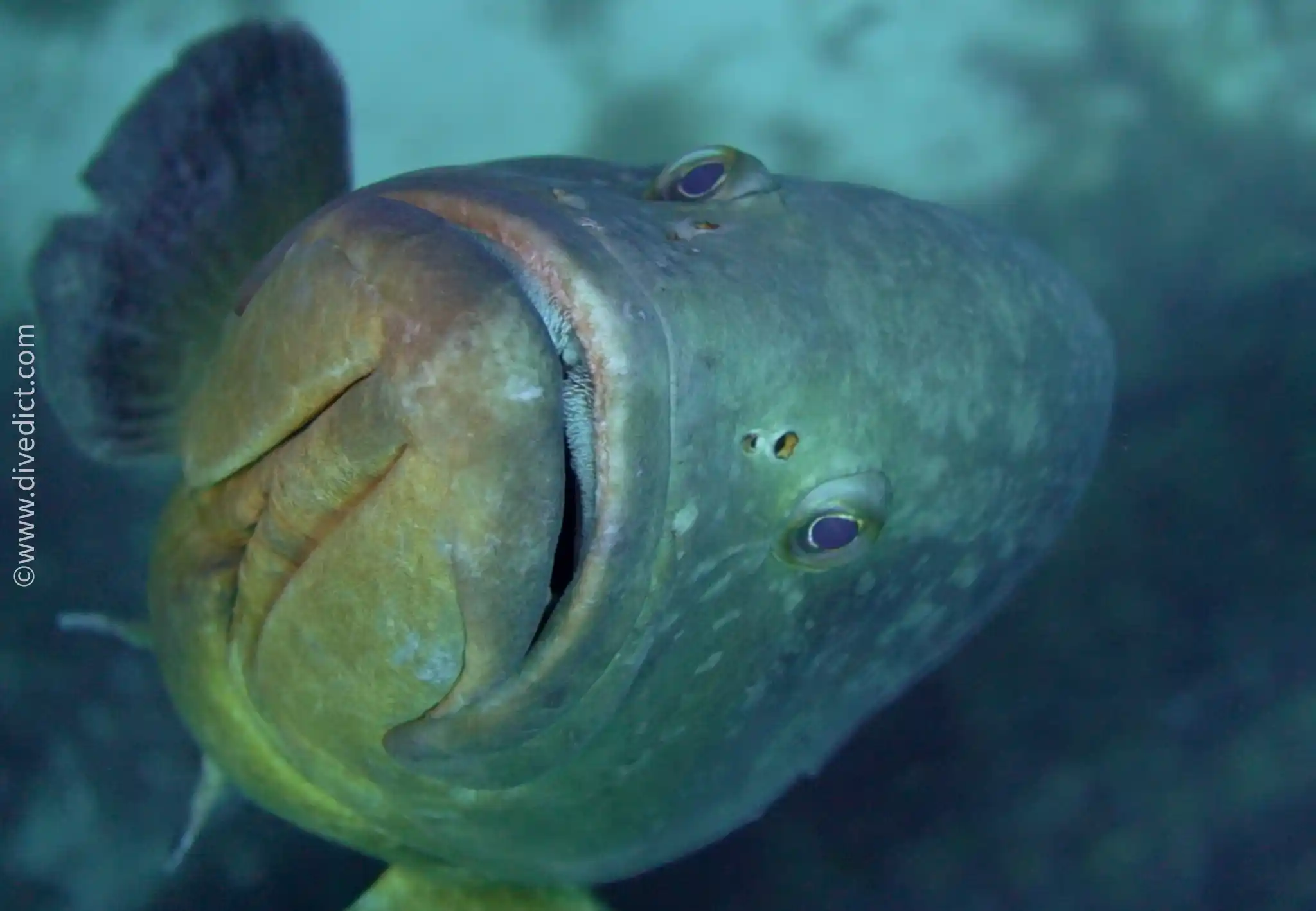
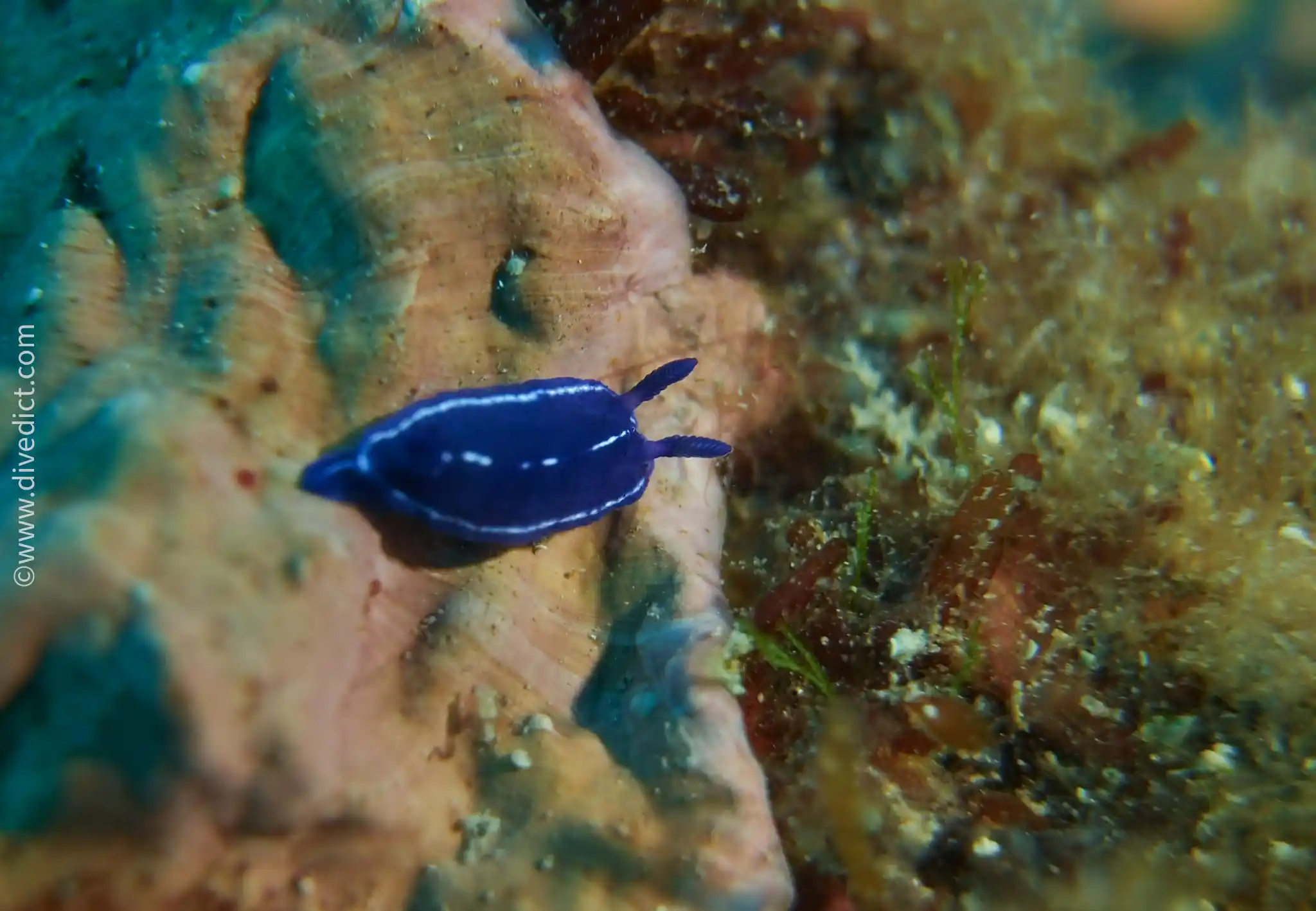
Along the steep wall, countless crustaceans, nudibranchs (Nudibranchia), and groupers can be found; even octopuses like to hide in the small caves.
Text: Carolina Leiter
Illustration: Sabine Probst
Pic: Dive Dict