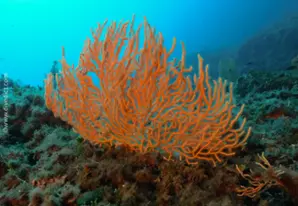
Yellow gorgonian
Monachus monachus




Special features
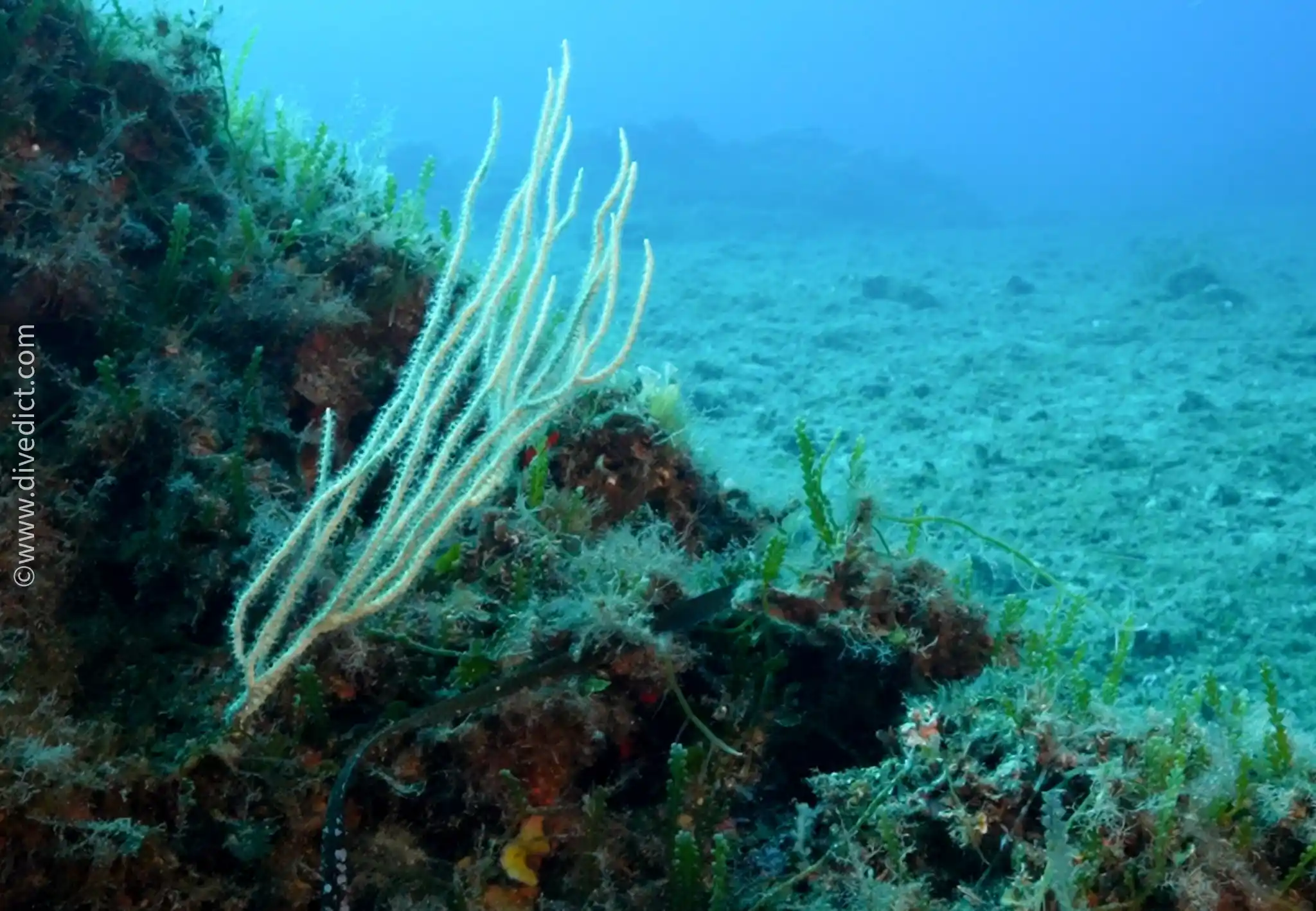
The Yellow gorgonian can proudly claim to be the most common one in the entire Mediterranean.
Appearance
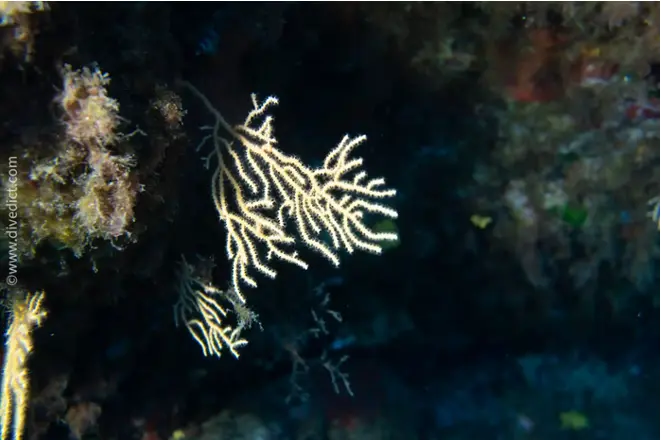
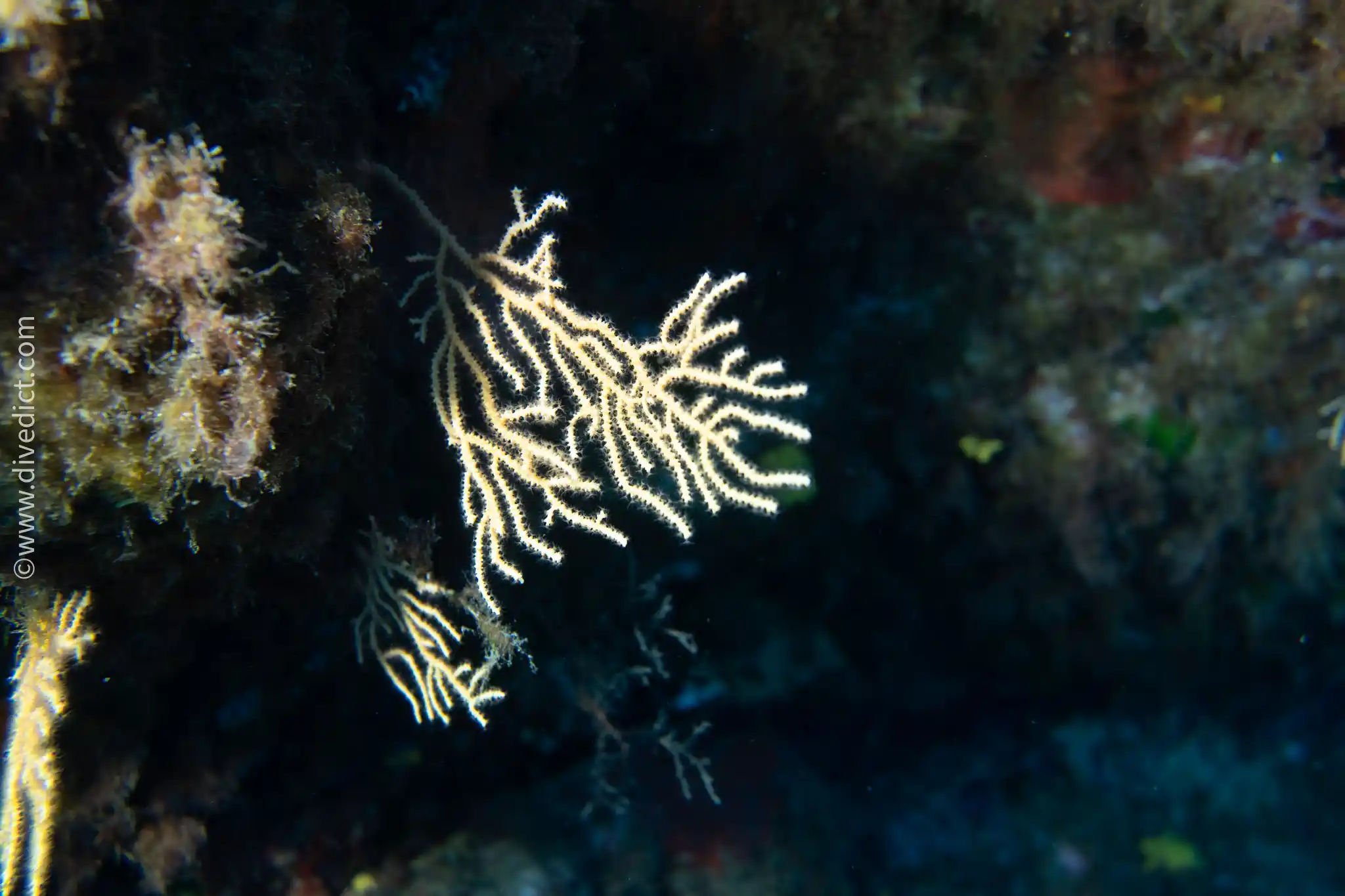
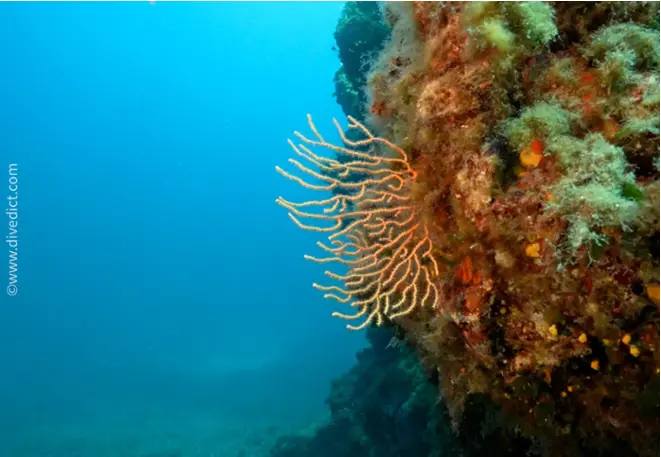
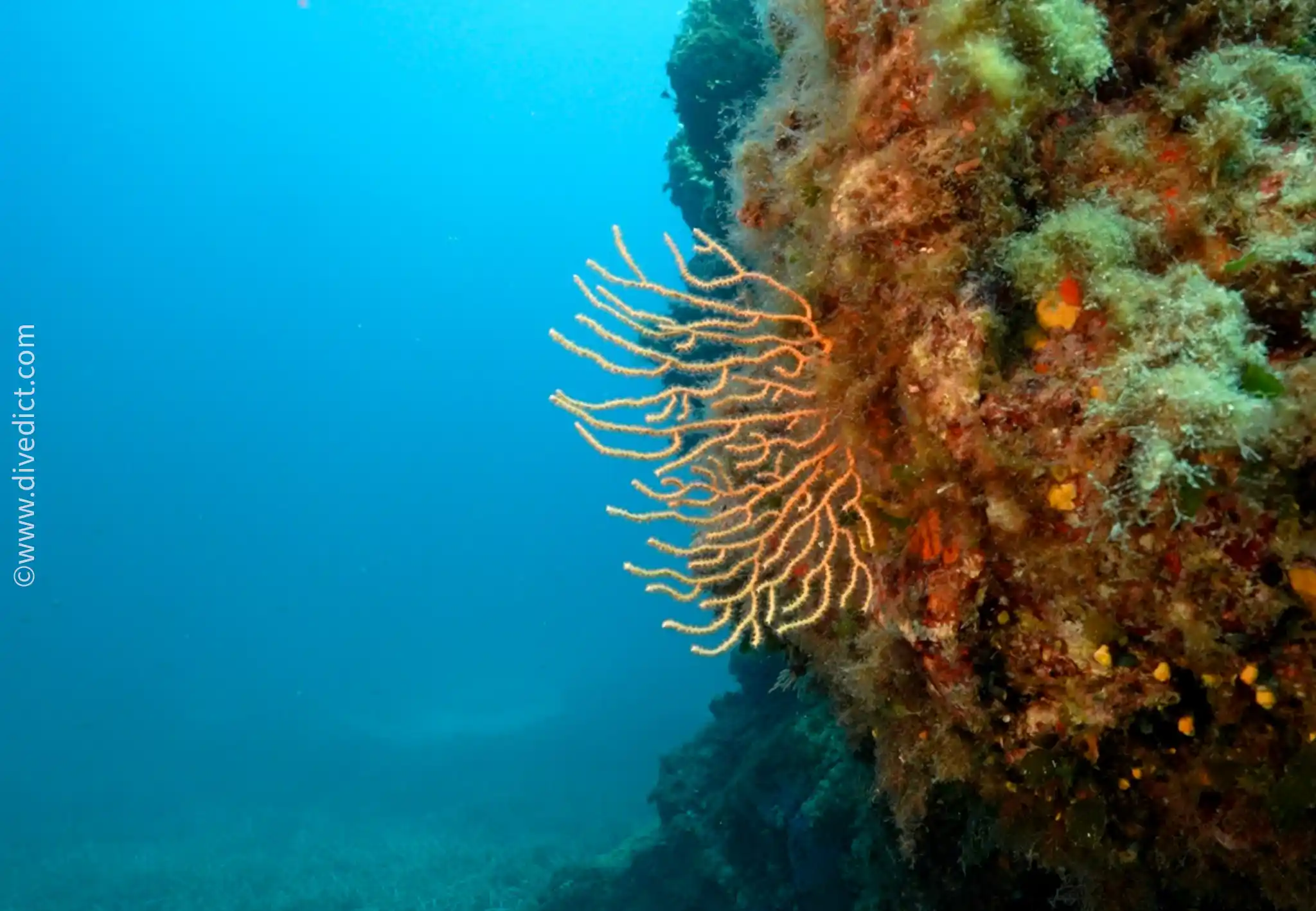
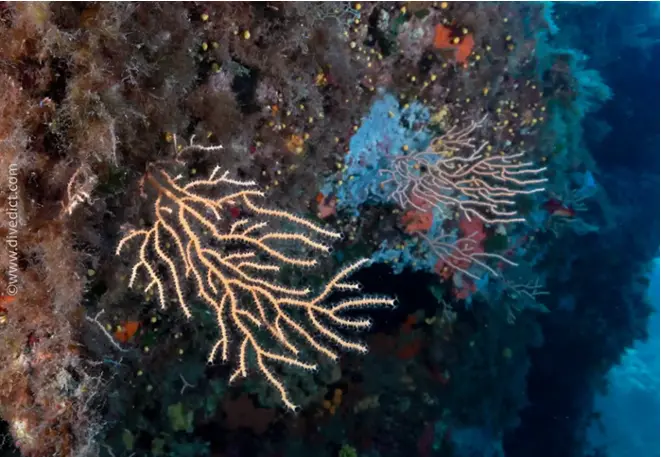
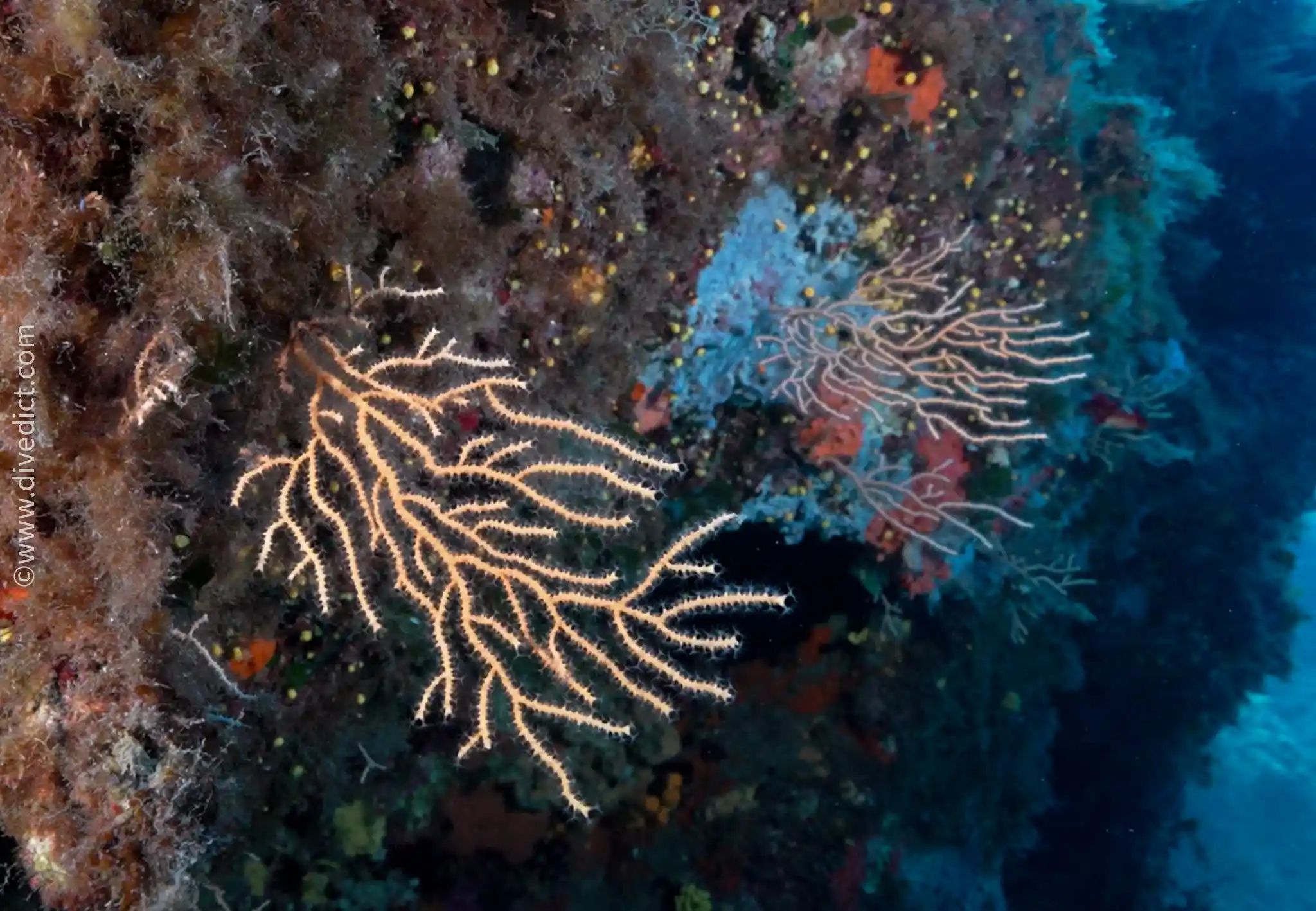
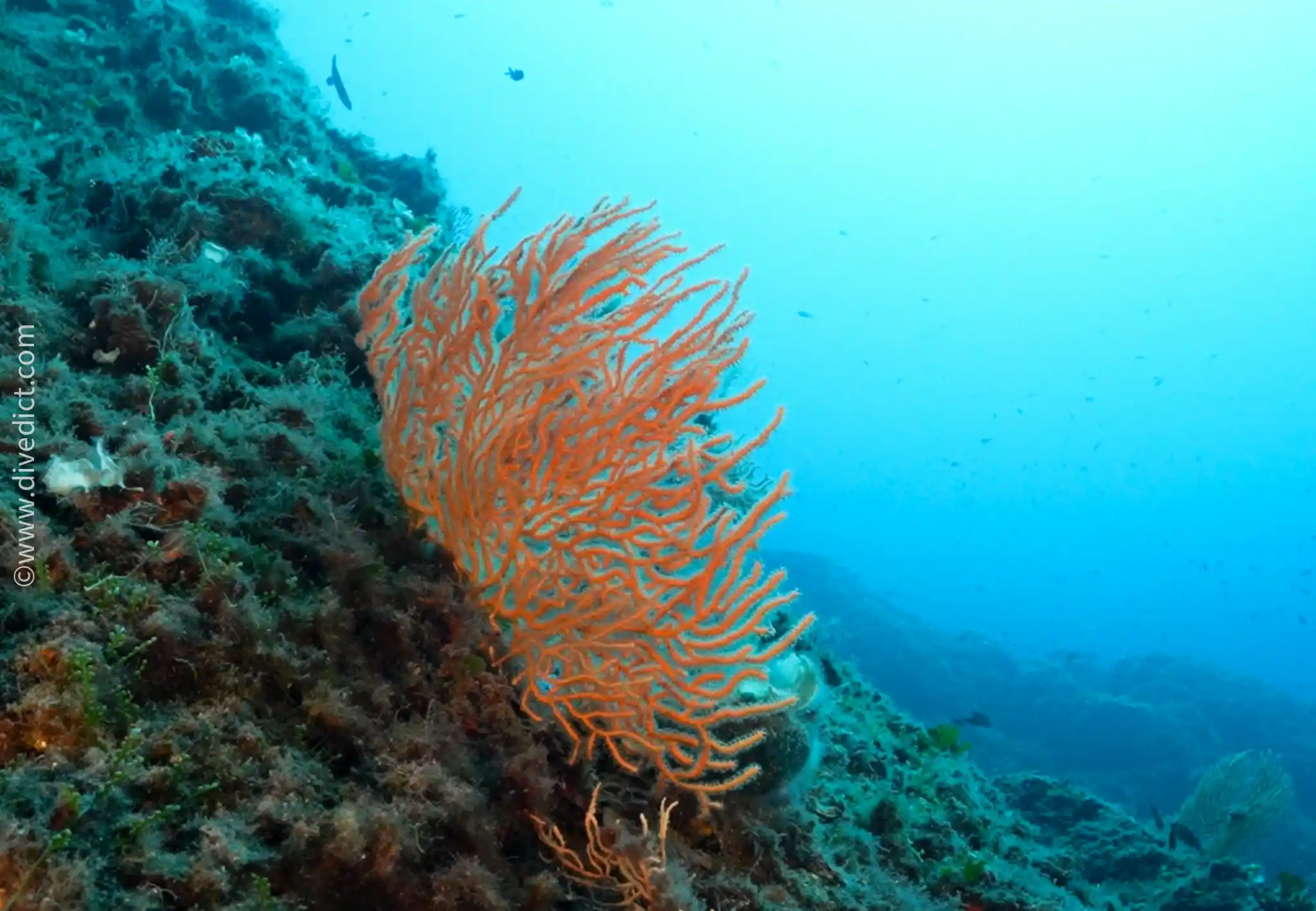
The colonies of Yellow gorgonians shine in beautiful ochre yellow to orange with yellow-white polyps.
Each year, the colonies grow 0.5-2cm and reach impressive heights of 50cm.
Its irregular branches have a diameter of 1-3mm at their ends, the unfolded polyps around 4mm.
Overall, their surface is flat and slender.
Natural enemies
Fish
Dangerous/Venomous
Yellow gorgonians are neither dangerous nor venomous.
Sketch
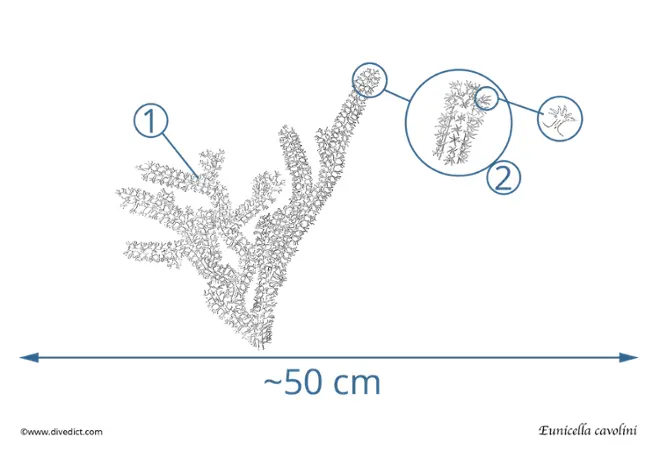
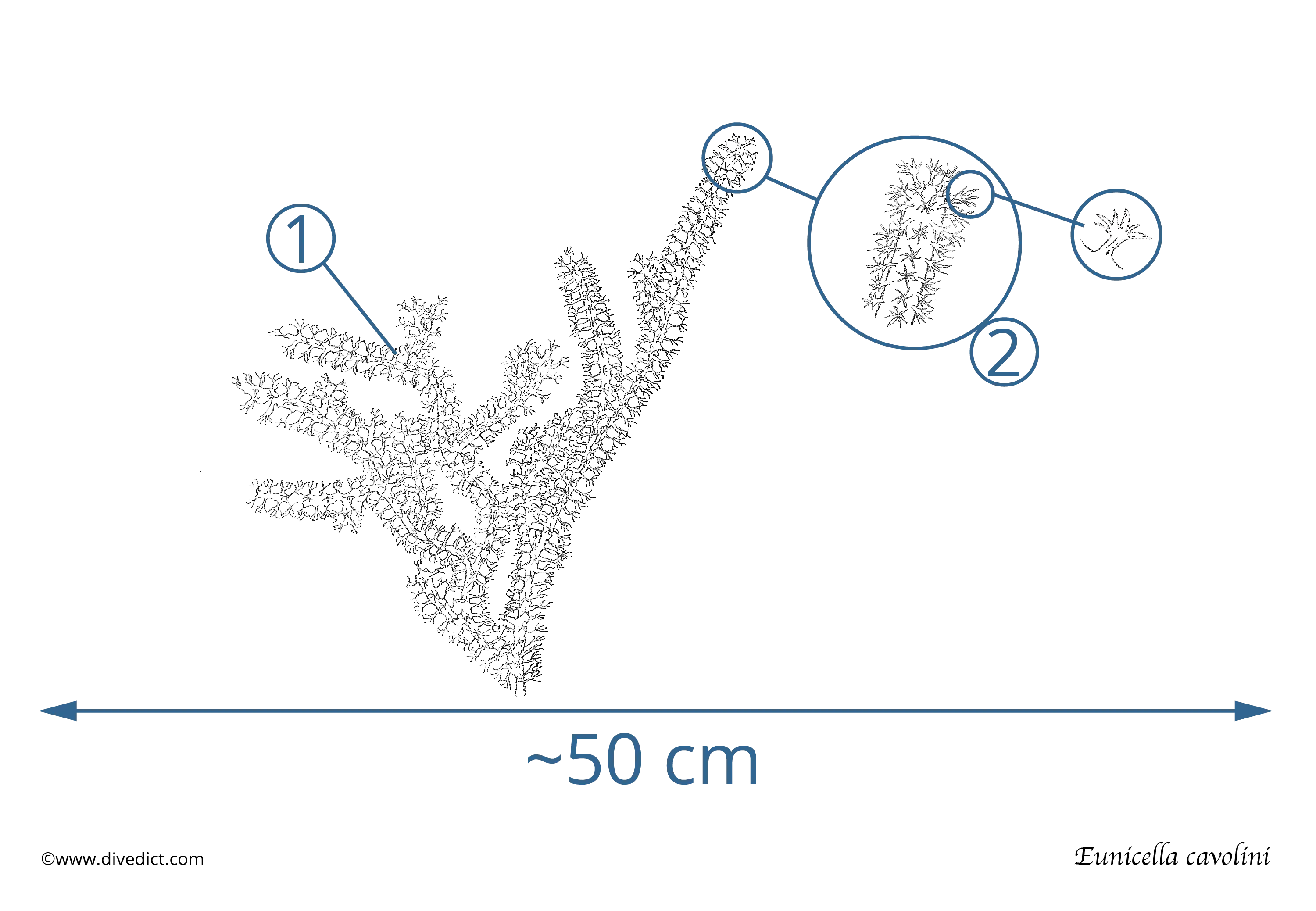
1. Irregularly branches
2. Wrinkled polyps
Pro tips
Yellow gorgonians love shade and steep rocky surfaces, so you are most likely to find them under overhangs and walls.
Did you know that Yellow gorgonians always line up with the current? Why?
So that they can better filter the plankton organisms that are carried along with the flow.
If they settle close to the water's surface (and in the shade, of course), they align themselves parallel to the surface, because here it is not the current but the waves that move the plankton.
Like all horn corals, Yellow gorgonians are also a popular substrate for other sessile organisms.
Unfortunately, the Yellow gorgonians retain their beautiful color even when dried, which is why they end up on the tables of souvenir shops. Buying these natural beauties is strongly discouraged to help protect this species.
Text: Carolina Leiter, Felician Hosp, Pia Balaka
Pic: Felician Hosp, Sabine Probst
Illustration: Dive Dict