
Yellow encrusting anemone
Parazoanthus axinellae




Special features
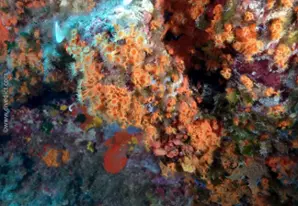
The Yellow encrusting anemone is unique, so to speak, because it is the only species of the genus Parazoanthus in the Mediterranean.
Appearance
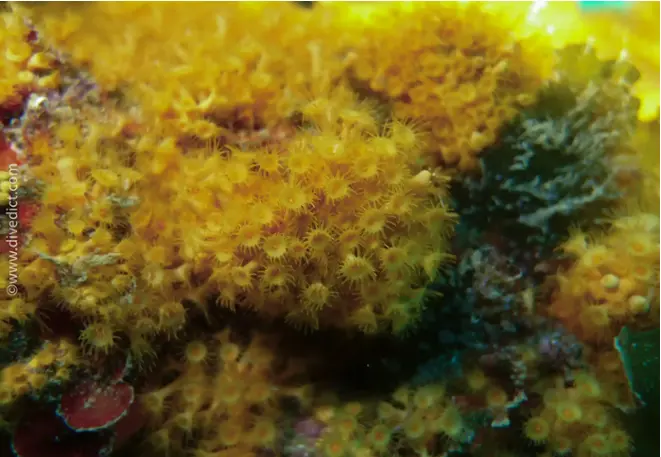
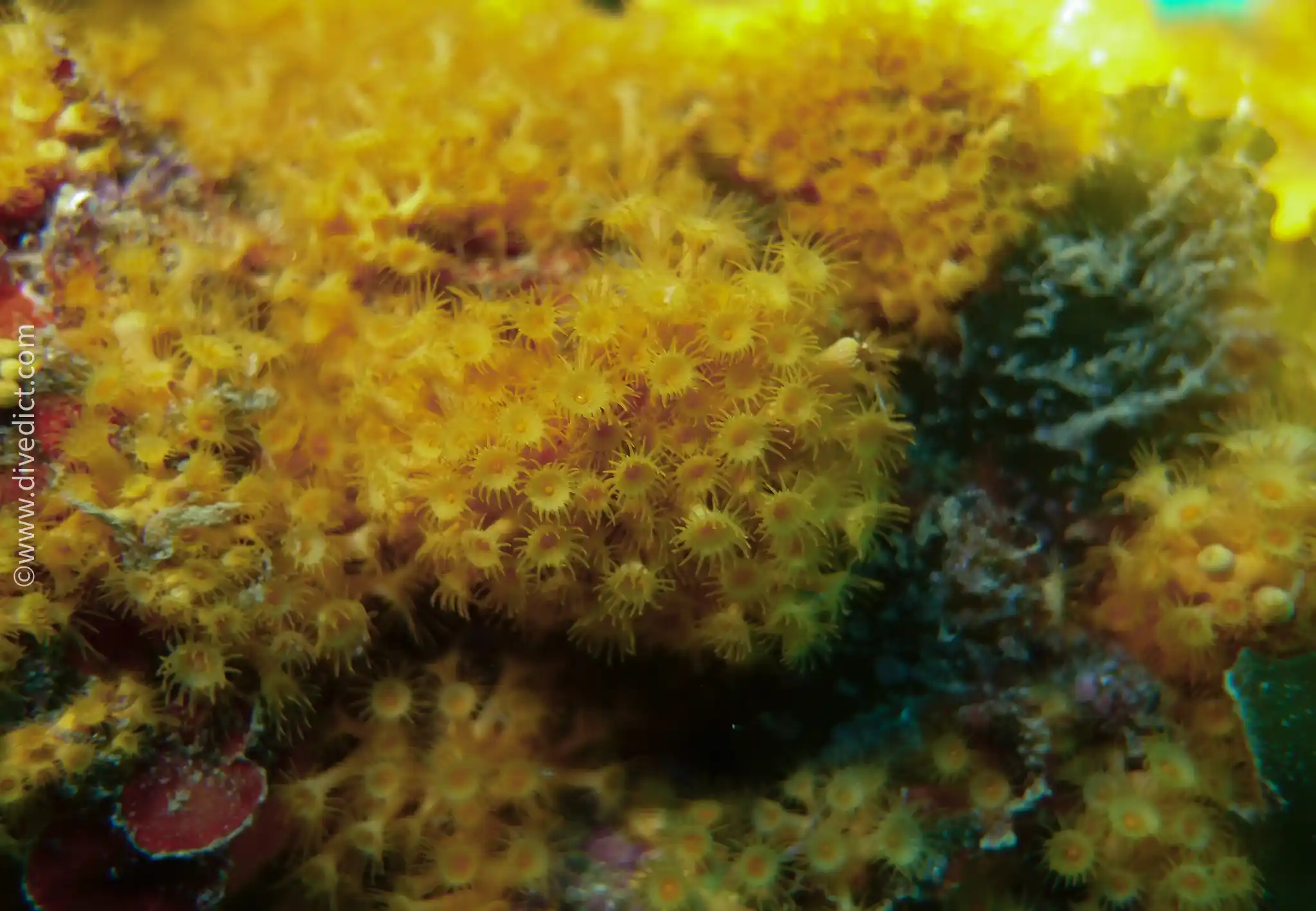
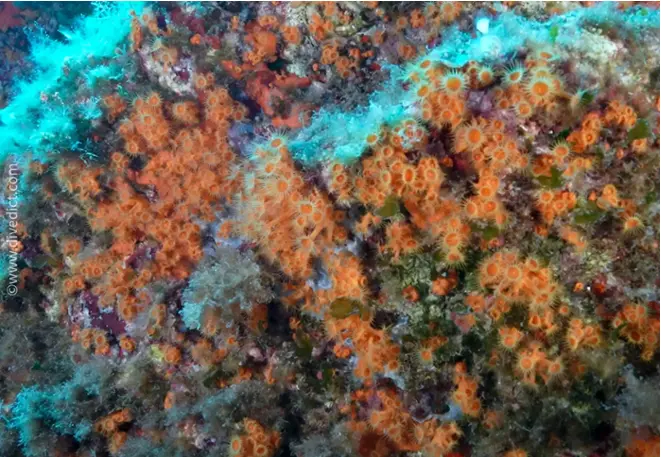
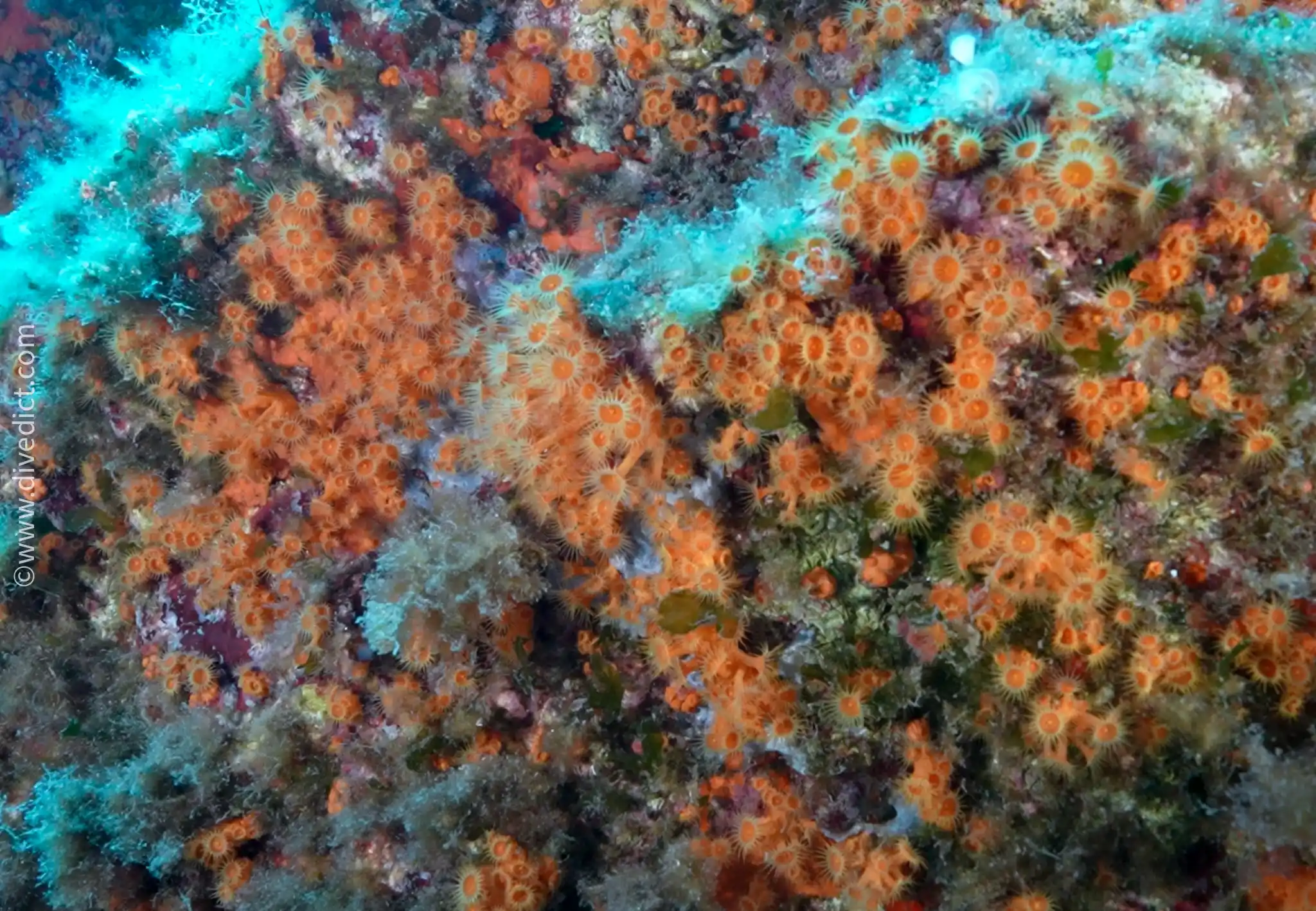
They form dense, strikingly golden yellow to orange colonies. Their pretty polyps are a maximum of 4cm long and are decorated with two circles of tentacles around the mouth opening.
Natural enemies
Fish
Dangerous/Venomous
The Yellow encrusting anemone is neither dangerous nor venomous.
Sketch
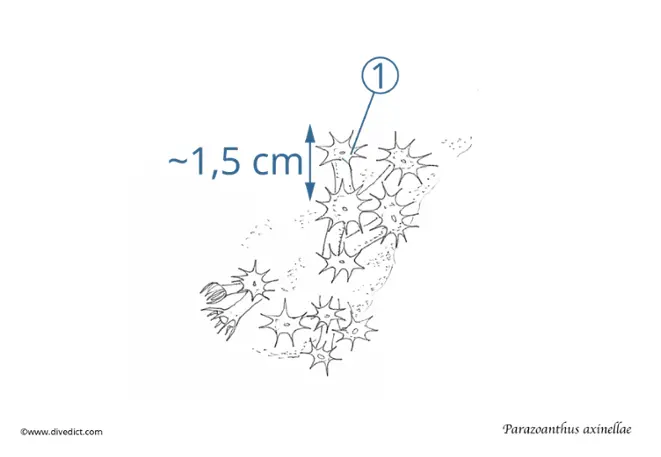
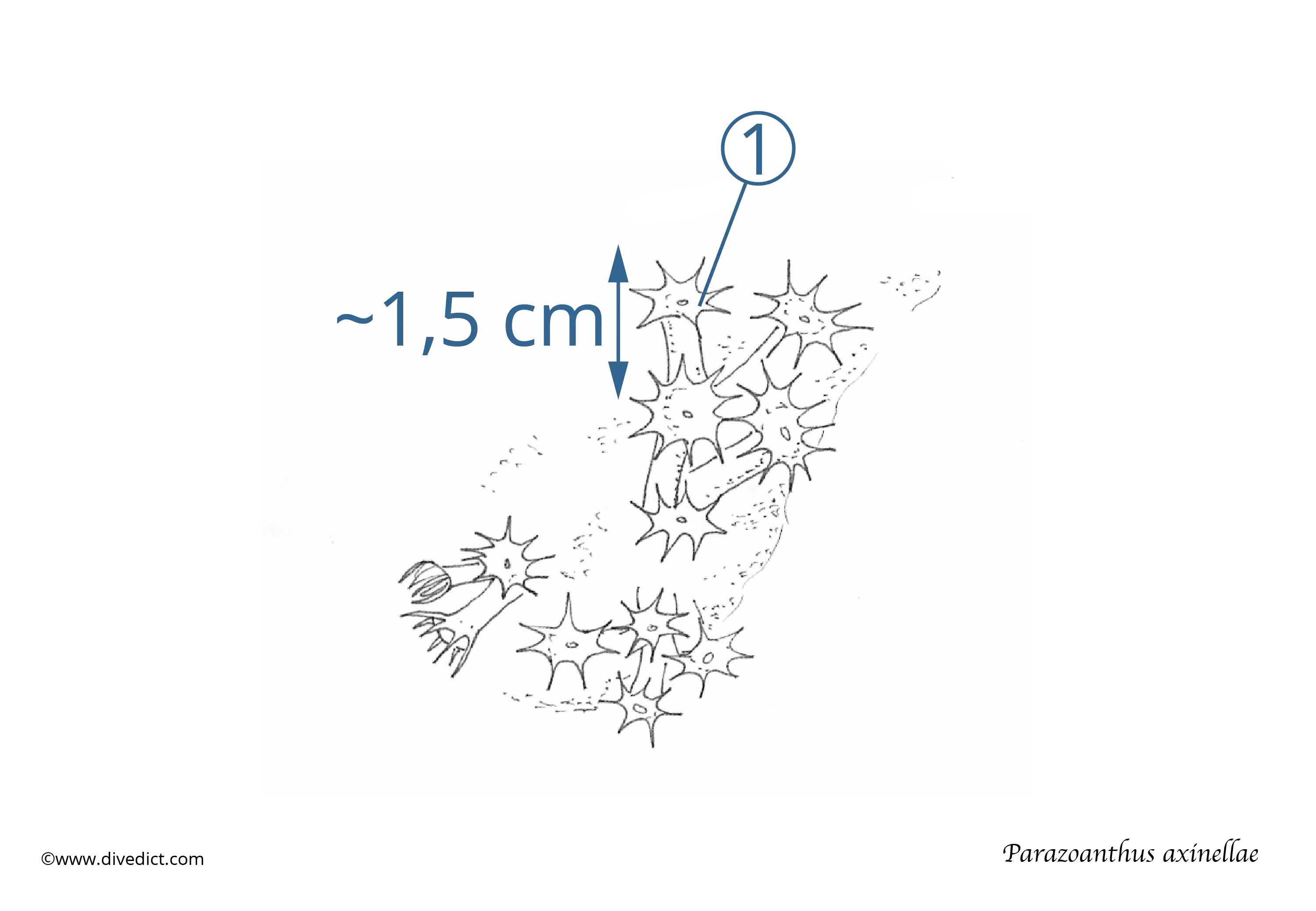
1. Polyps with tentacles
Pro tips
The Yellow encrusting anemone prefers to colonize vertical rock walls, overhangs, or cave entrances. It also prefers areas with a steady flow, which means more food is available.
The more food is available, the more likely you will see them with polyps unfolded to their full glory. This usually happens at night, as there is more plankton floating around in the dark that it can catch.
In general, the Yellow encrusting anemone cannot be seen quite as often in the Mediterranean. But if so, it is usually found on sponges of the genus Axinella or even on sea spikes of the genus Microcosmus.
Their multiplication can occur sexually or asexually. In doing so, they form thread-like, downwardly hanging offshoots, which separate from the mother colony and are carried on with the current until they settle somewhere and form the basis of a new colony.
Text: Carolina Leiter
Pic: Felician Hosp, Sabine Probst
Illustration: Dive Dict