
Plerogyra sinuosa
Plerogyra sinuosa




Special features
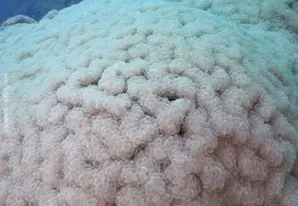
Some colonies can grow to an impressive size of up to 200 cm, with the skeleton only visible when the polyps are retracted.
Appearance
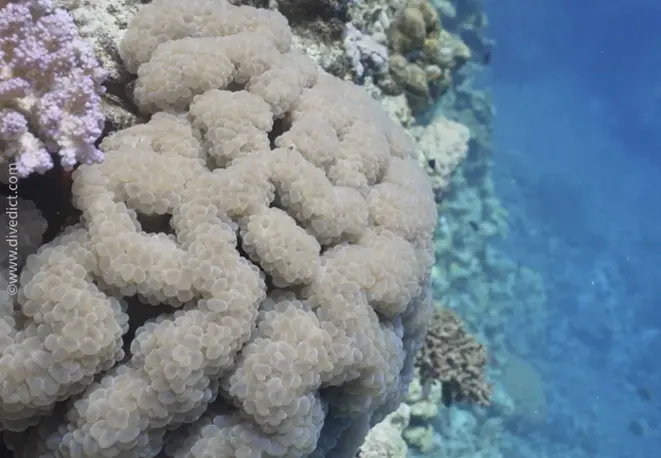
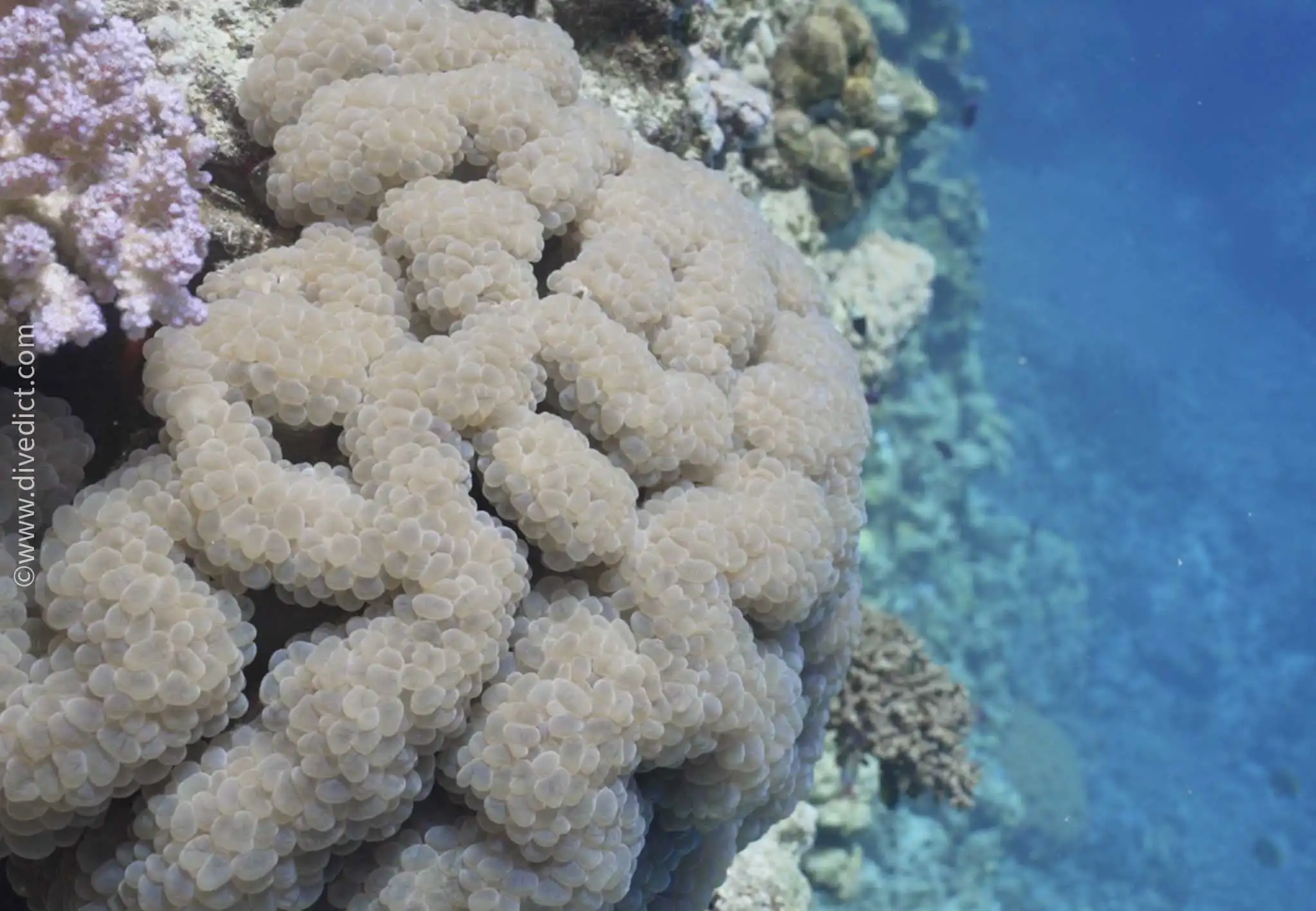
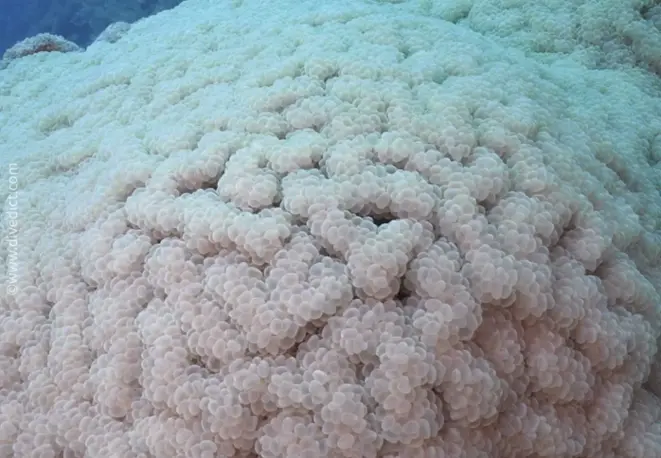
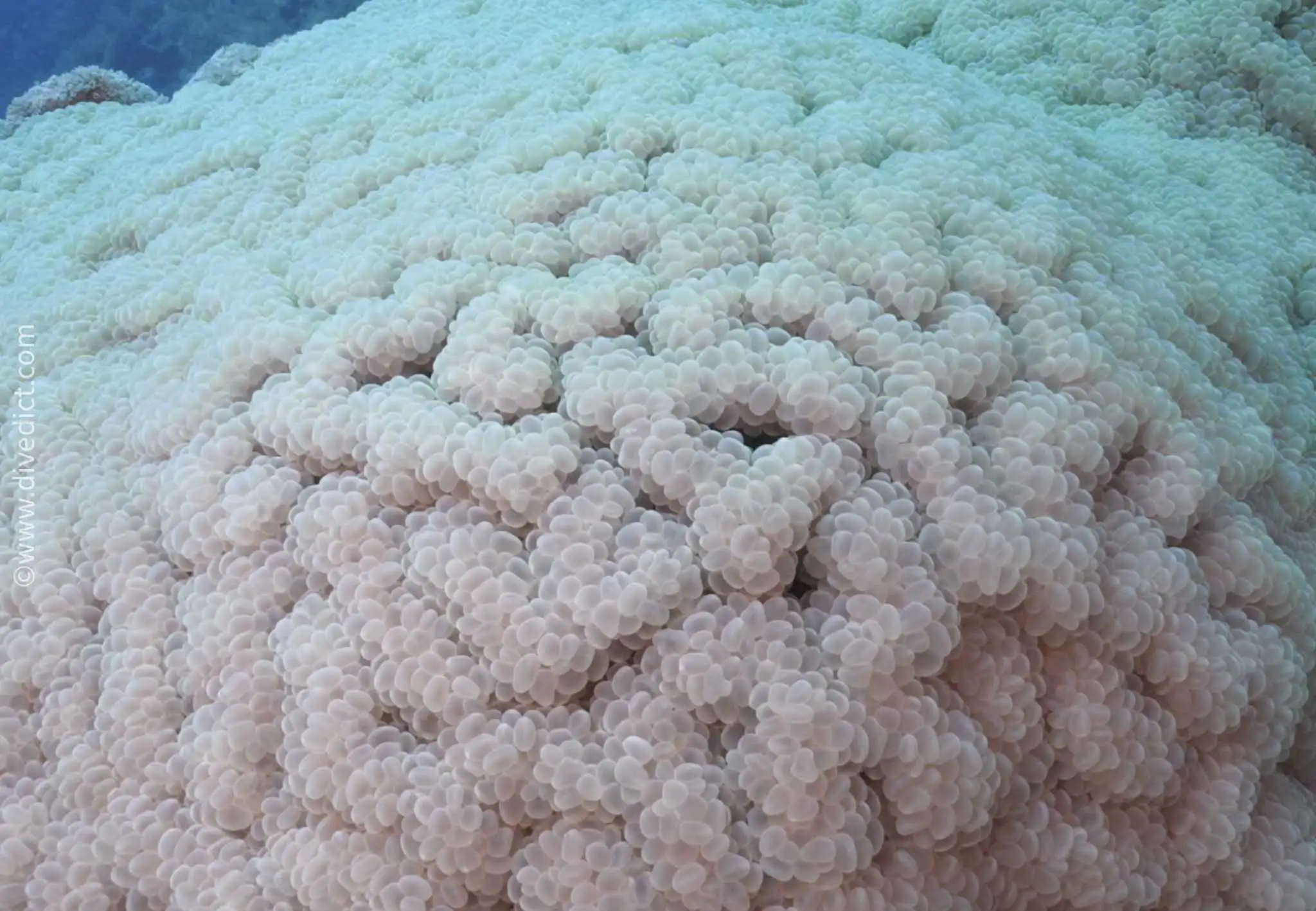
Bubble-like, almost transparent colonies. The polyps can appear in various colors, including gray, bluish, greenish, or brownish-gray.
Natural enemies
Fish
Dangerous/Venomous
Possess stinging cells, which can cause severe burning on human skin.
Sketch
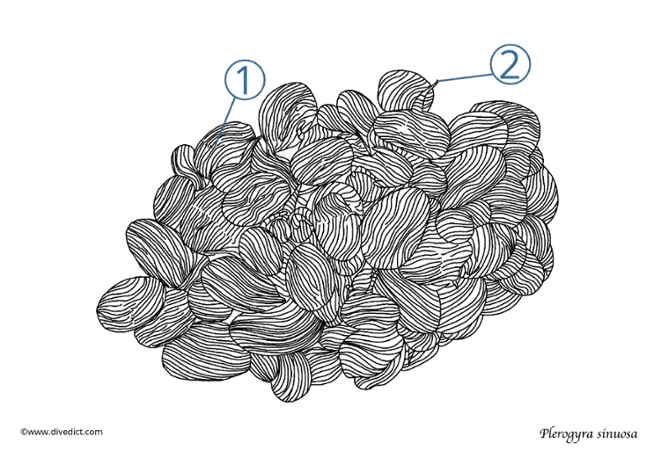
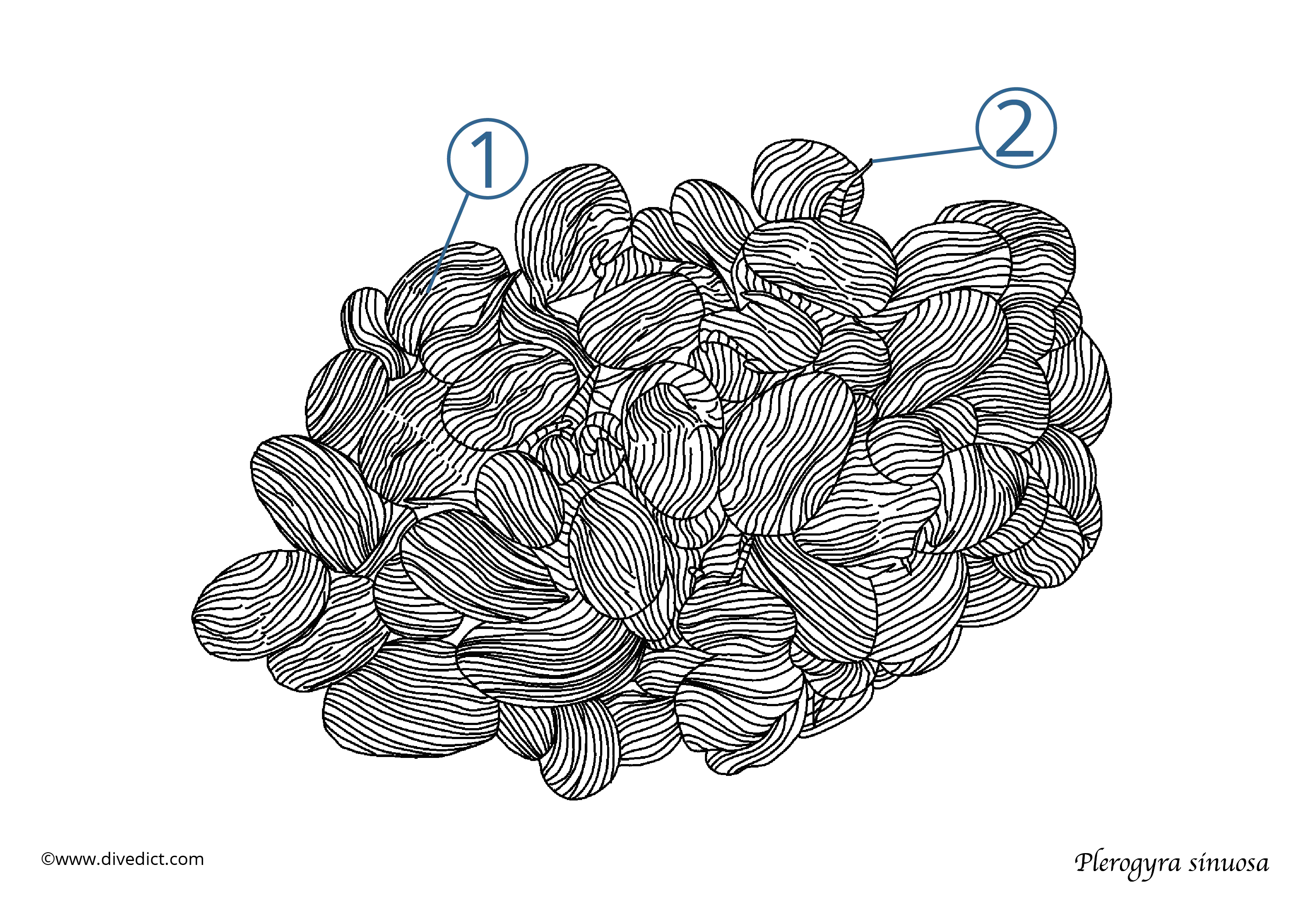
1. Stinging cells
2. Tentacles
Pro tips
During the day, the coral colonies display inflated, nearly 25mm large, grape-like, tubular, branched, and almost transparent vesicles. These specialized polyp formations are filled with symbiotic algae, Zooxanthellae, which provide the colony with essential nutrients through photosynthesis. To absorb the maximum amount of sunlight, the colonies stretch their vesicles upwards during the day. The corals feed on the assimilation products of the algae. In older colonies, distinct light lines can be seen, marking the accumulation of stinging cells, which can penetrate the human skin's outer layers and cause a strong burning sensation. At night, the stinging cells retract, making room for the tentacles, which are then used to capture plankton. The coral's skeleton is made of calcareous ribs, providing a stable structure. These corals thrive in well-circulated reef tops and along the reef slopes. Small, flat, reddish-brown to olive-green coral tube worms of the genus Waminoa often inhabit the vesicles, feeding on the slime on their surface.
Text: Carolina Leiter
Pic: Dive Dict
Illustration: Dive Dict