
Millepora dichotoma
Millepora dichotoma




Special features
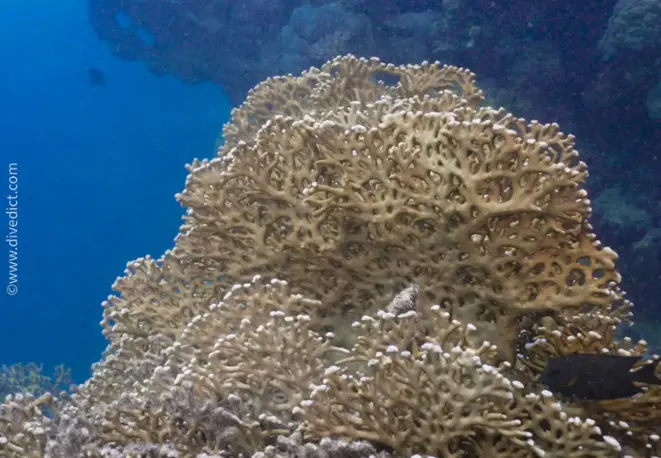
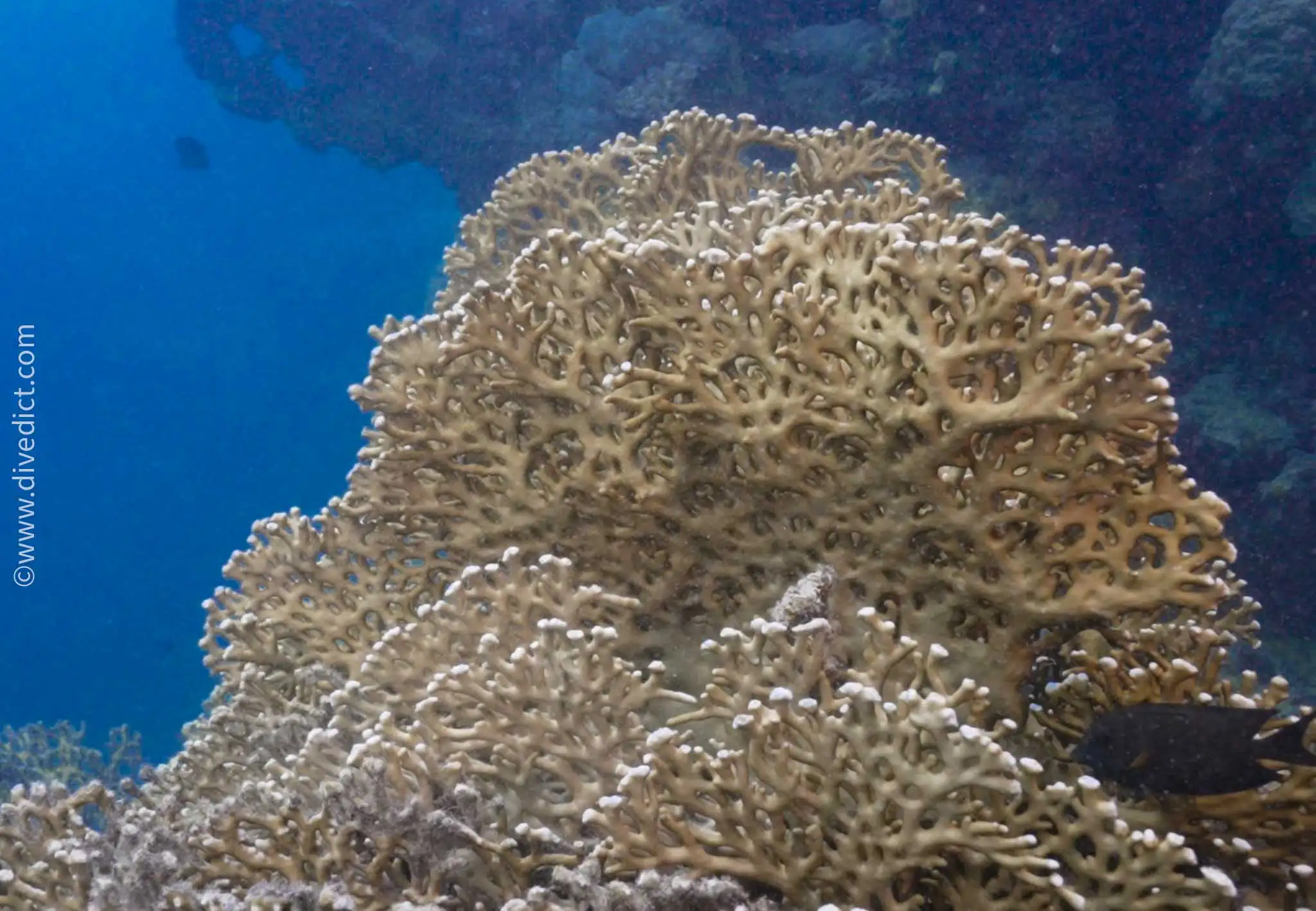
These corals can grow up to an impressive 1 meter in size, developing in a fan-shaped, highly branched structure with numerous interconnected segments. The ends of the branches are forked and brightly colored, ranging from light yellow to olive green, creating a striking and vibrant appearance within the reef.
Appearance
At the center of the colony is a feeding polyp, surrounded by several defensive polyps. This unique arrangement allows the coral to efficiently capture food while simultaneously protecting itself from predators. The defensive polyps help safeguard the colony by deploying their stinging cells against potential threats.
Natural enemies
Fisch
Dangerous/Venomous
They have stinging cells, which can cause severe burns on human skin.
Sketch

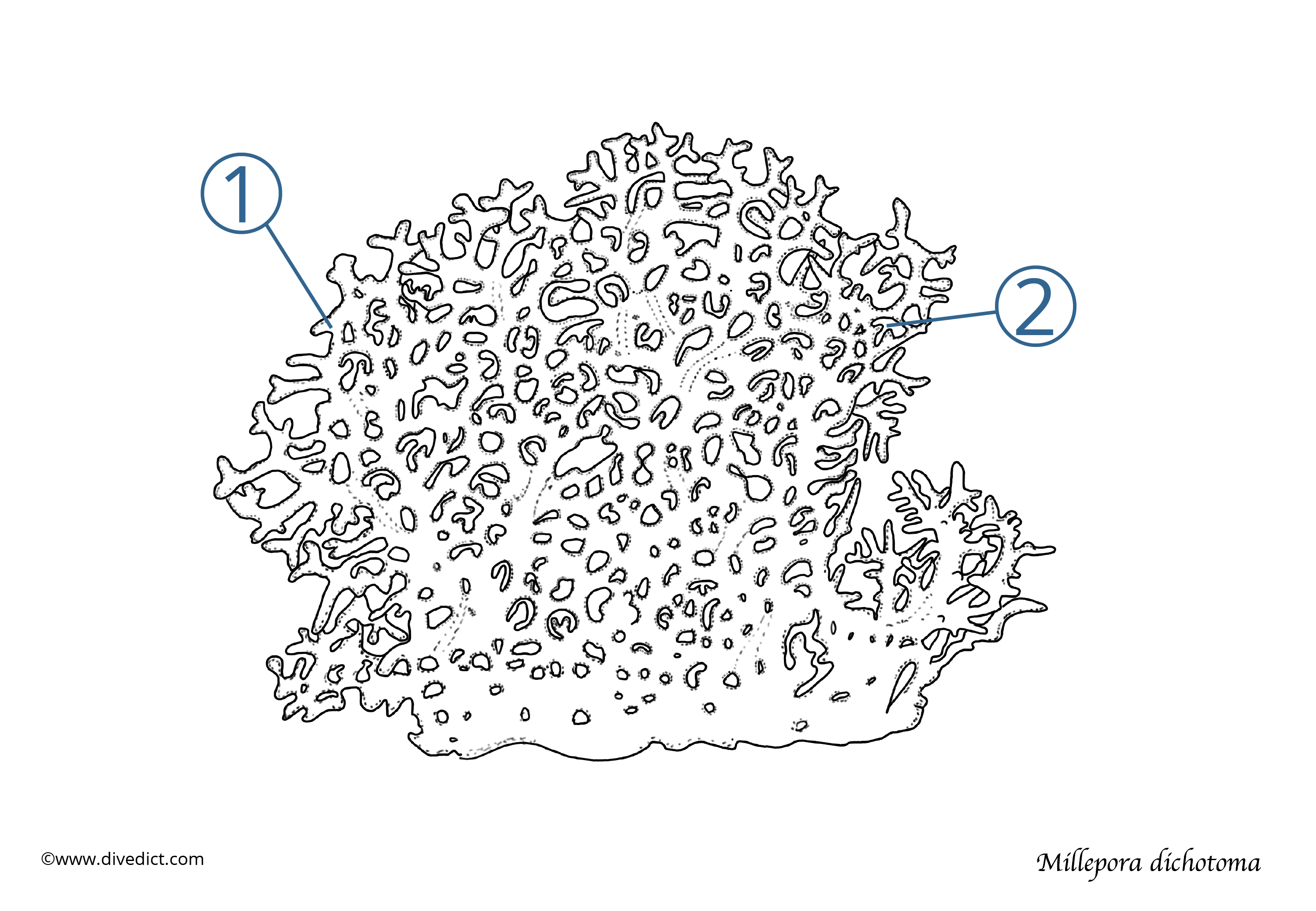
1. polyp
2. branching
Pro tips
These corals are fast secondary settlers and reef builders, thriving along the reef edge and upper reef slopes. Their colonies grow vertically, aligning themselves perpendicular to the prevailing current. The polyps are always fully expanded and can sting upon contact with human skin, causing strong burning sensations. They feed on the products of their symbiotic zooxanthellae as well as plankton, which they capture with their tentacles.
Text: Carolina Leiter
Pic: Felician Hosp
Illustration: Dive Dict