
Feathery xenid
Anthelia glauca




Special features
This delicate underwater snowflake is a true queen of adaptation.
Appearance
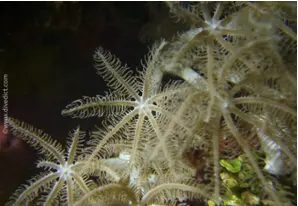
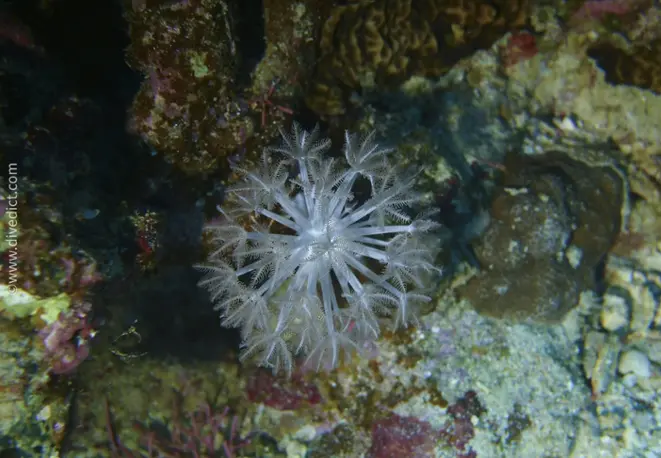
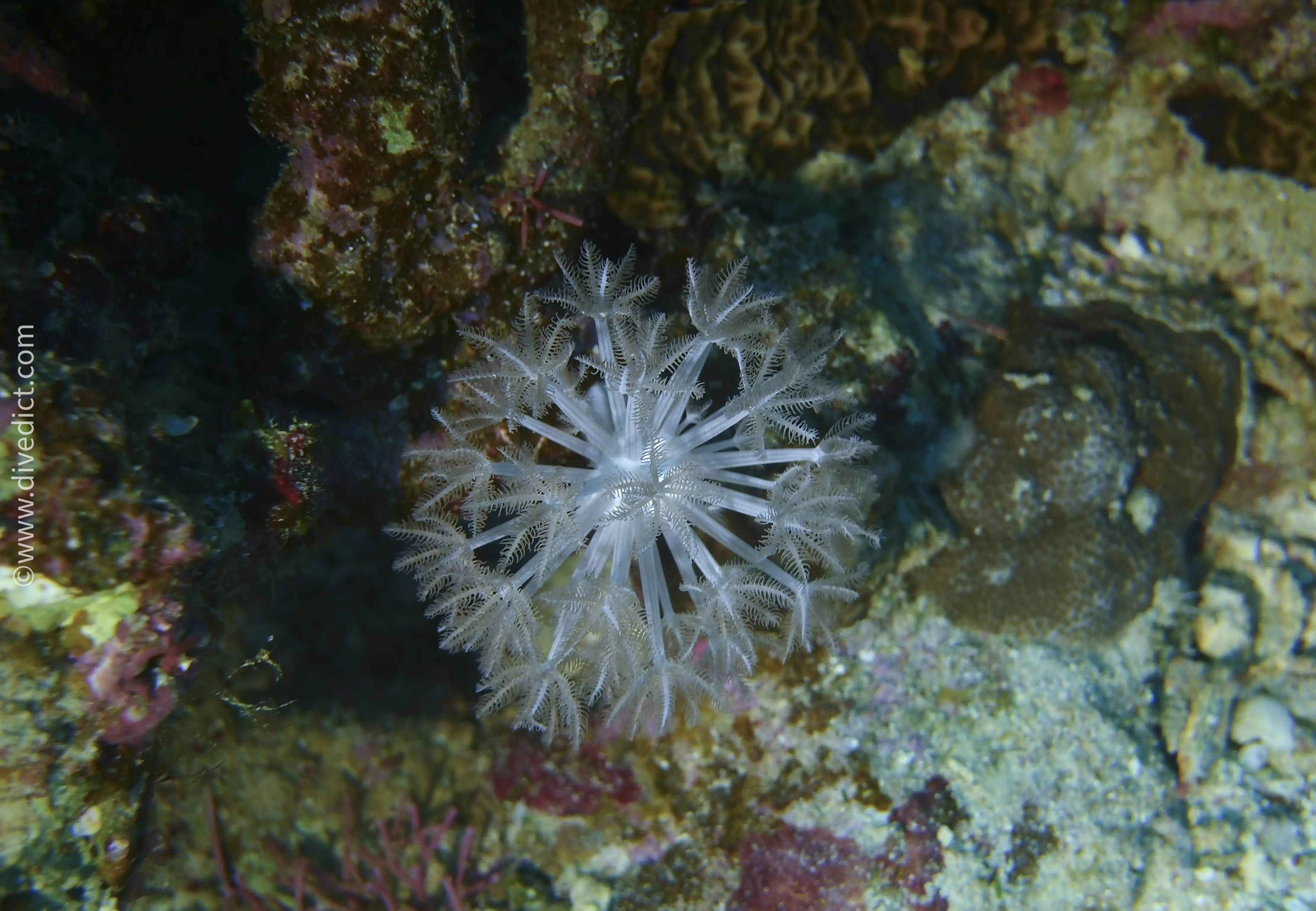
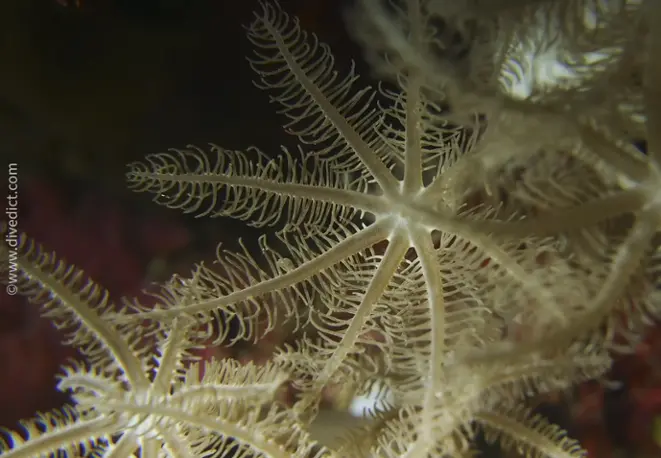
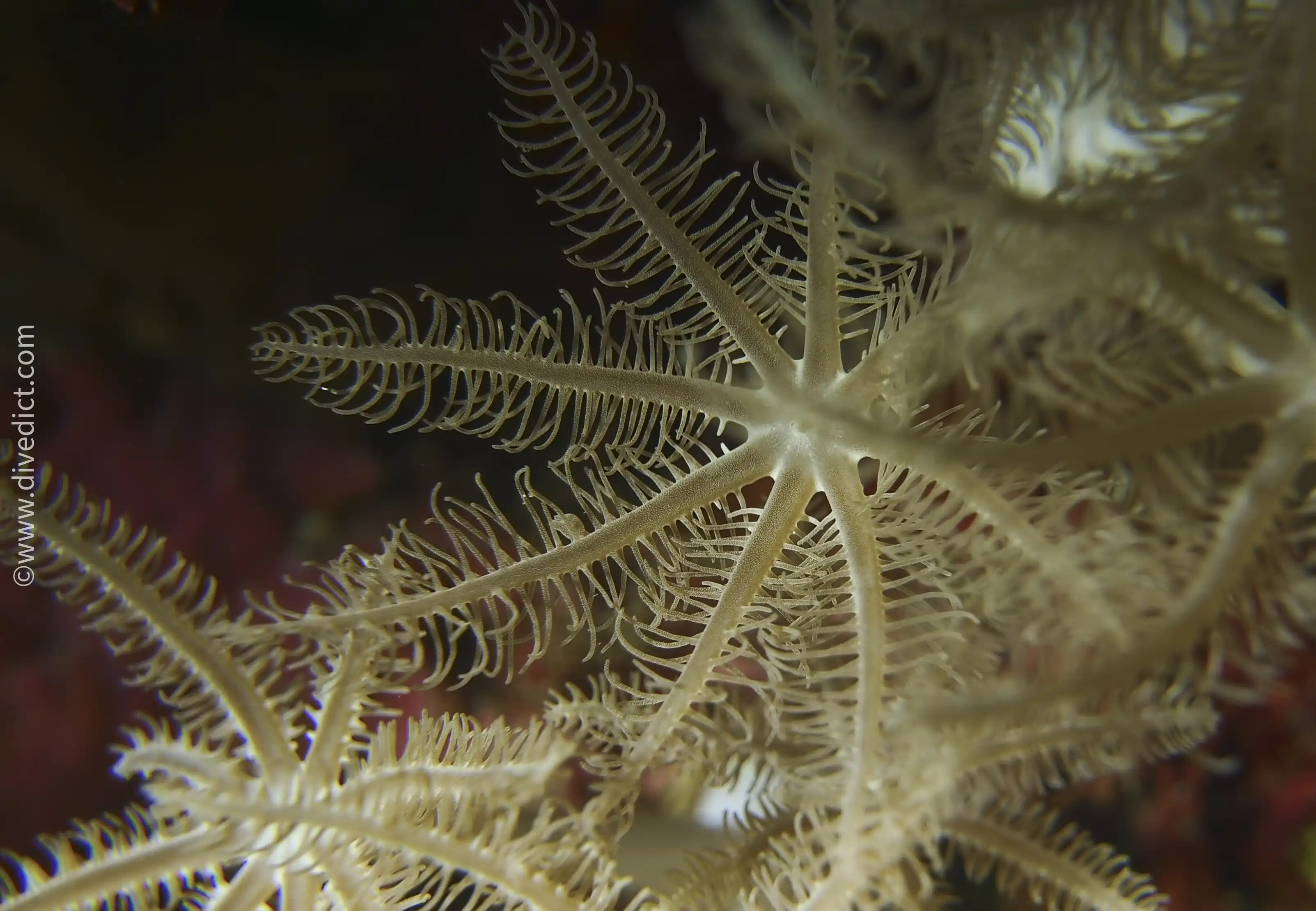
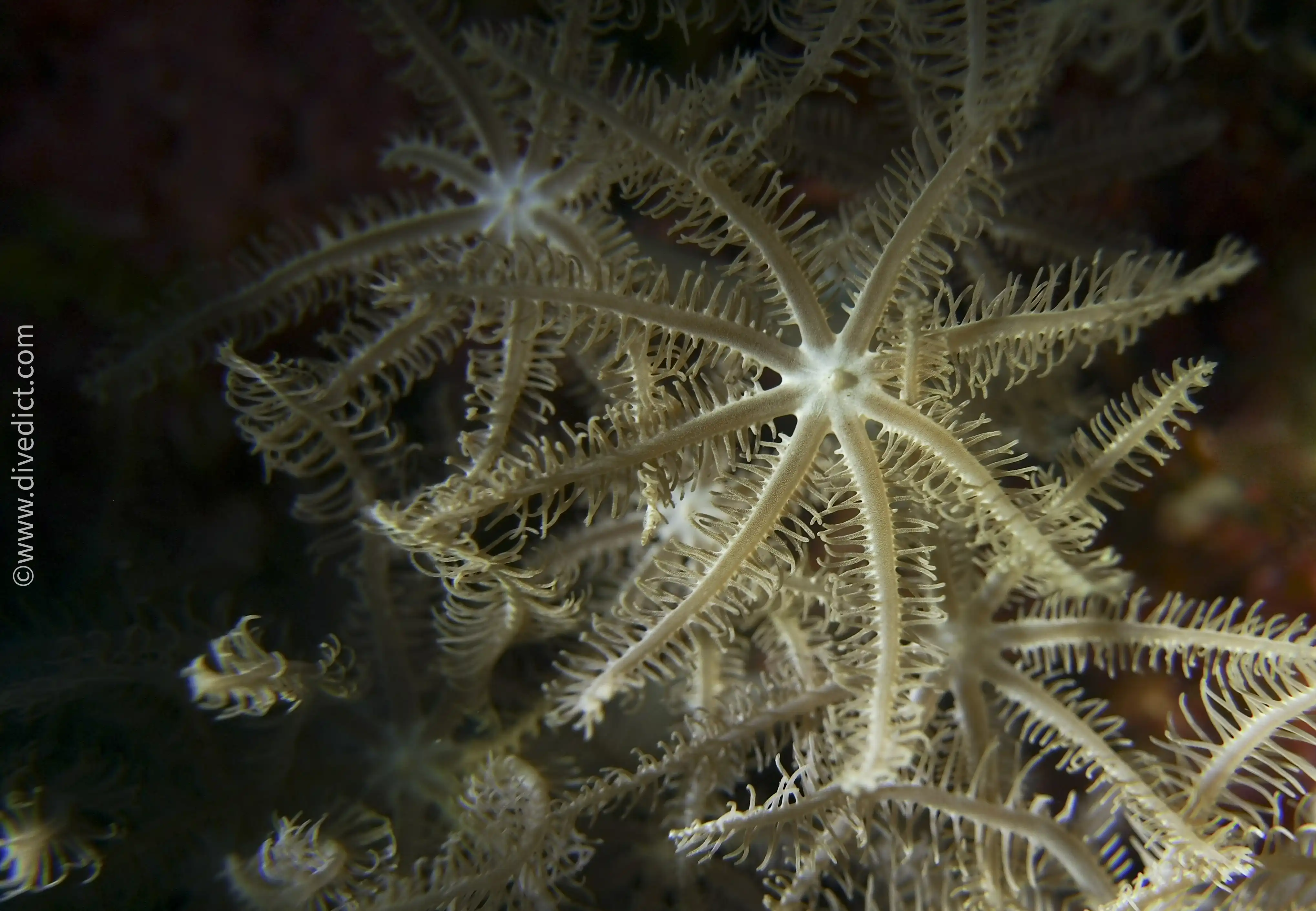
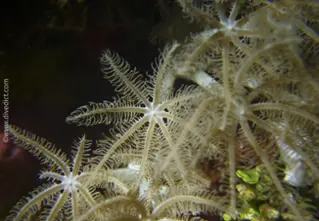
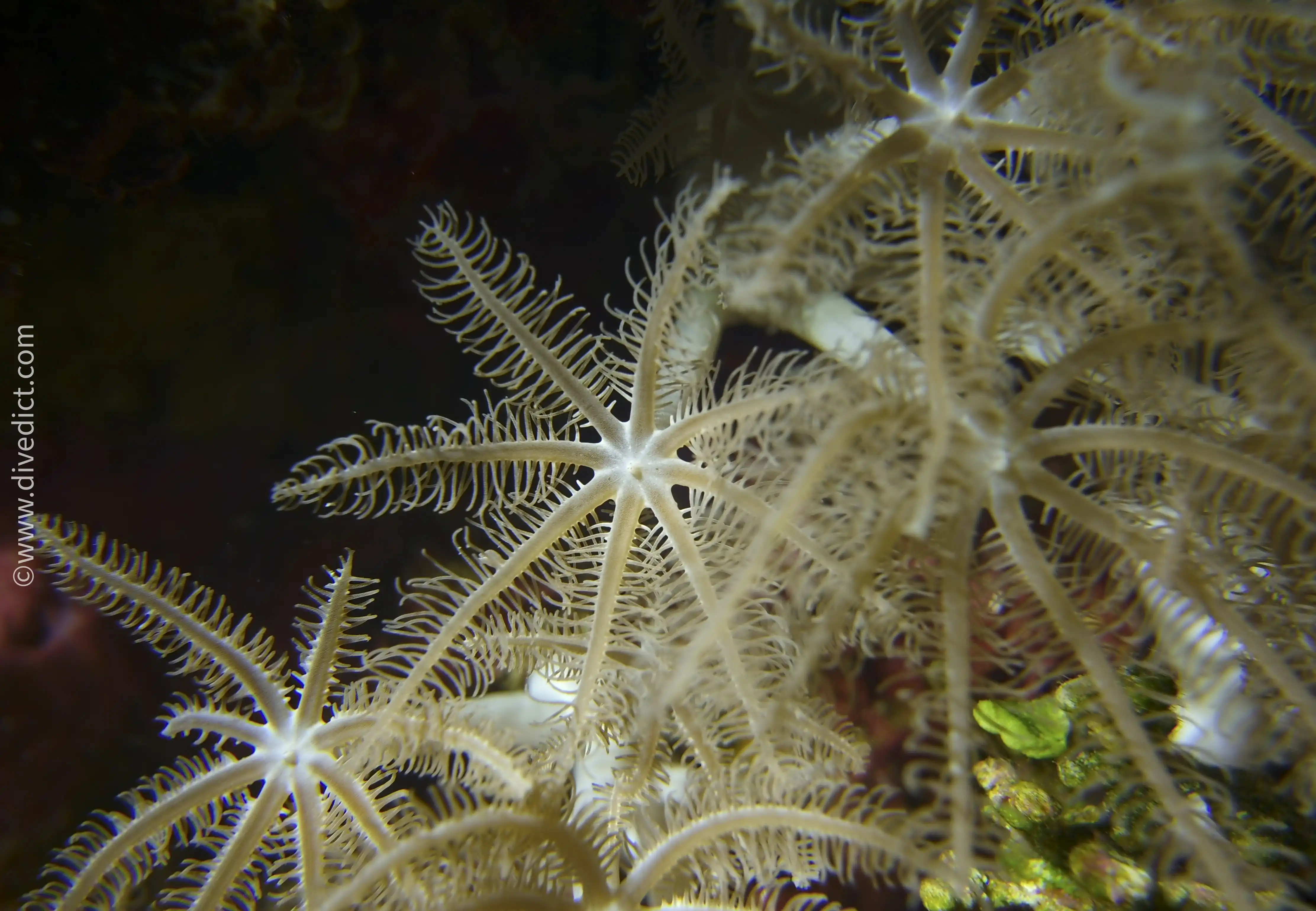
The Feathery xenid is a subtly striking soft coral that forms small colonies on hard substrates. Its tube-shaped polyps grow outward from a flat, barely visible base in all directions. Each polyp bears eight delicate, feathery tentacles that do not perform any pumping movements. The colonies remain small, typically covering only a few square centimeters. In shallow waters exposed to strong currents, they grow compact and close to the substrate—a clear adaptation to turbulent conditions. In deeper, calmer waters, the polyps become longer and more delicate, unfolding into fine, graceful structures. Polyp length increases as water movement decreases. This morphological flexibility makes the Feathery xenid a fascinating example of how sessile reef organisms can adapt to changing environmental conditions.
Natural enemies
Fish
Dangerous/Venomous
The Feathery xenid is neither dangerous nor venomous.
Sketch

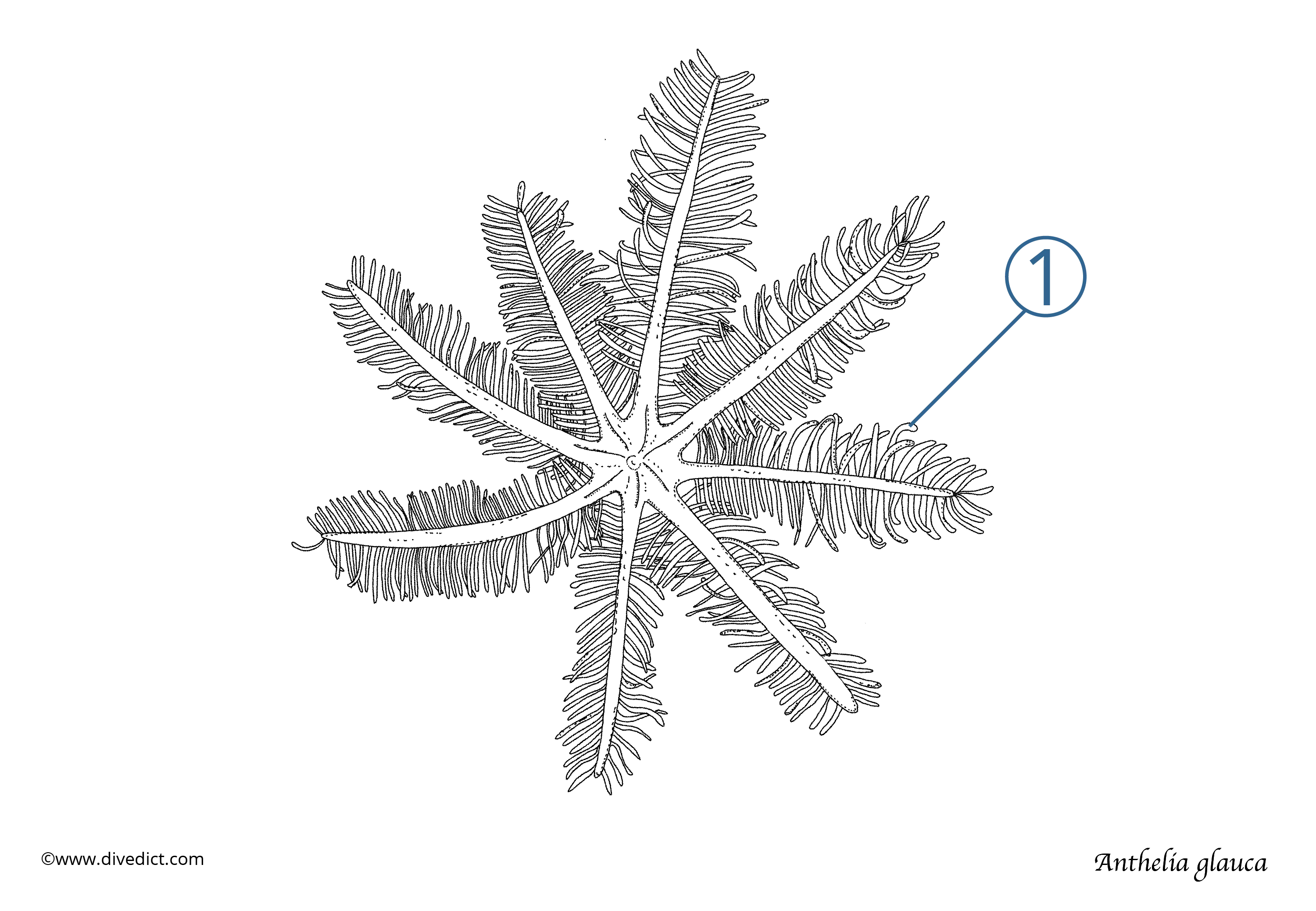
1. Tube-shaped polyps
Pro tips
The Feathery xenid prefers to grow in the upper reef area, where light and water movement are optimal. As a very successful secondary settler, it quickly colonizes open areas — for example after storms, coral bleaching or other disturbances. It thus plays an important role in the early repopulation of damaged reef zones.
Text: Carolina Leiter
Pic: Felician Hosp
Illustration: Dive Dict