
Cladocora caespitosa
Cladocora cespitosa
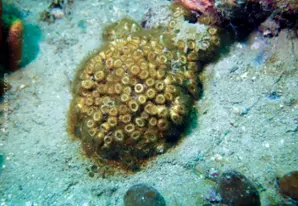




Special features
The largest colony of Cladocora caespitosa grows in a saltwater lake on the Croatian island of Mljet and covers an incredible 650 square meters.
It therefore holds the title of “Largest stone coral in the Mediterranean”.
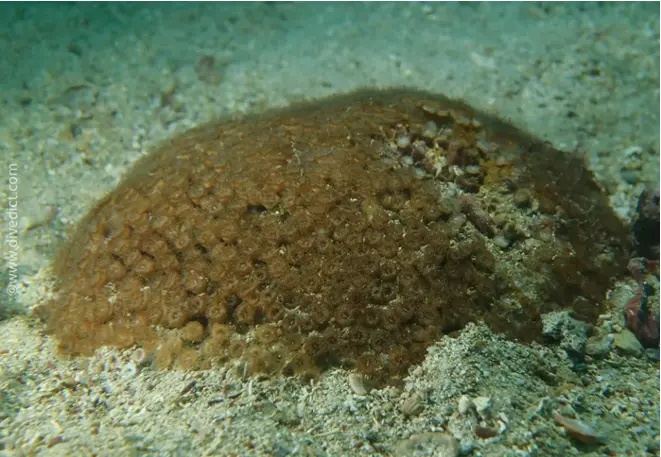
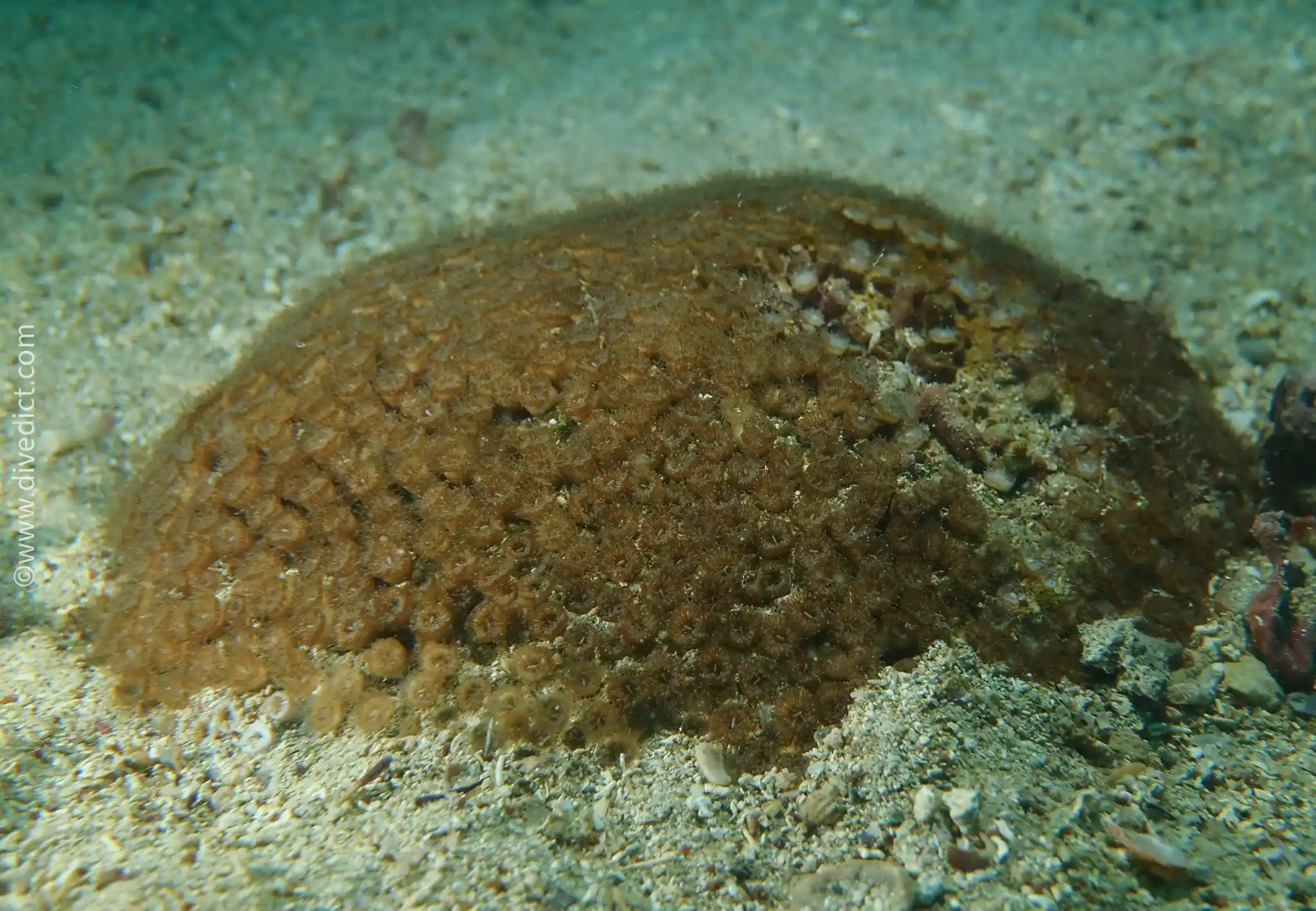
Appearance
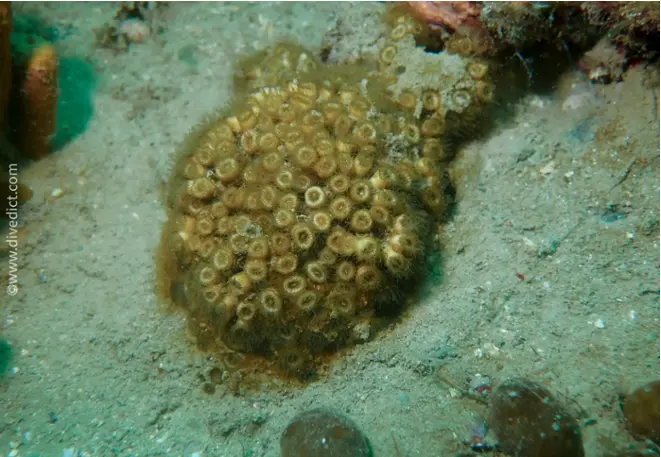
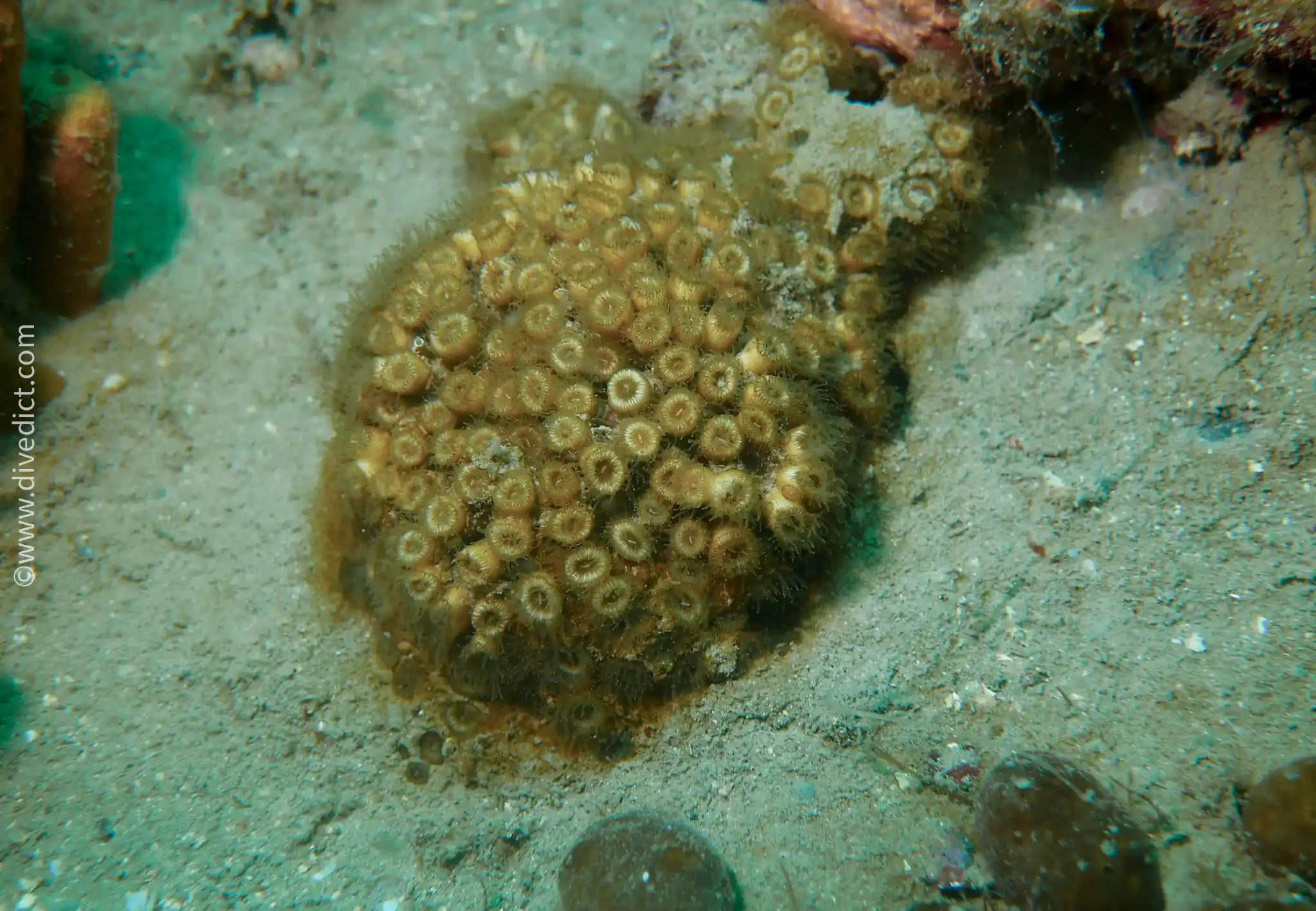
They form hemispherical colonies that can overgrow incredibly large areas.
Their calyxes are tiny, 4-5mm in diameter, and are decorated with parallel longitudinal ribs.
Their polyps are enthroned on it, which, due to their brownish-transparent color, can only be seen on closer inspection.
Natural enemies
Fish
Dangerous/Venomous
Lawn coral is neither dangerous nor venomous.
Sketch
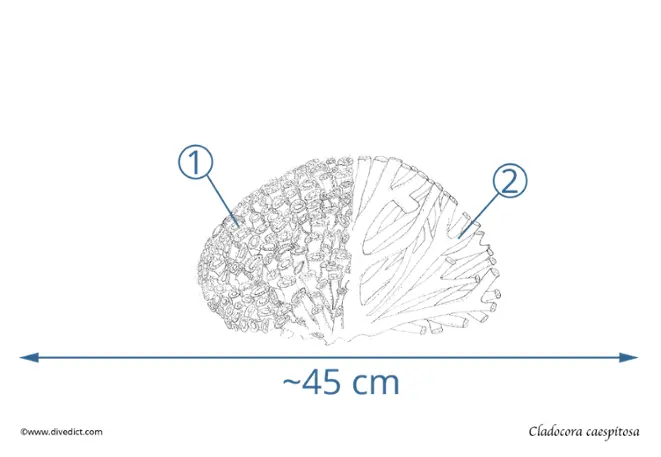
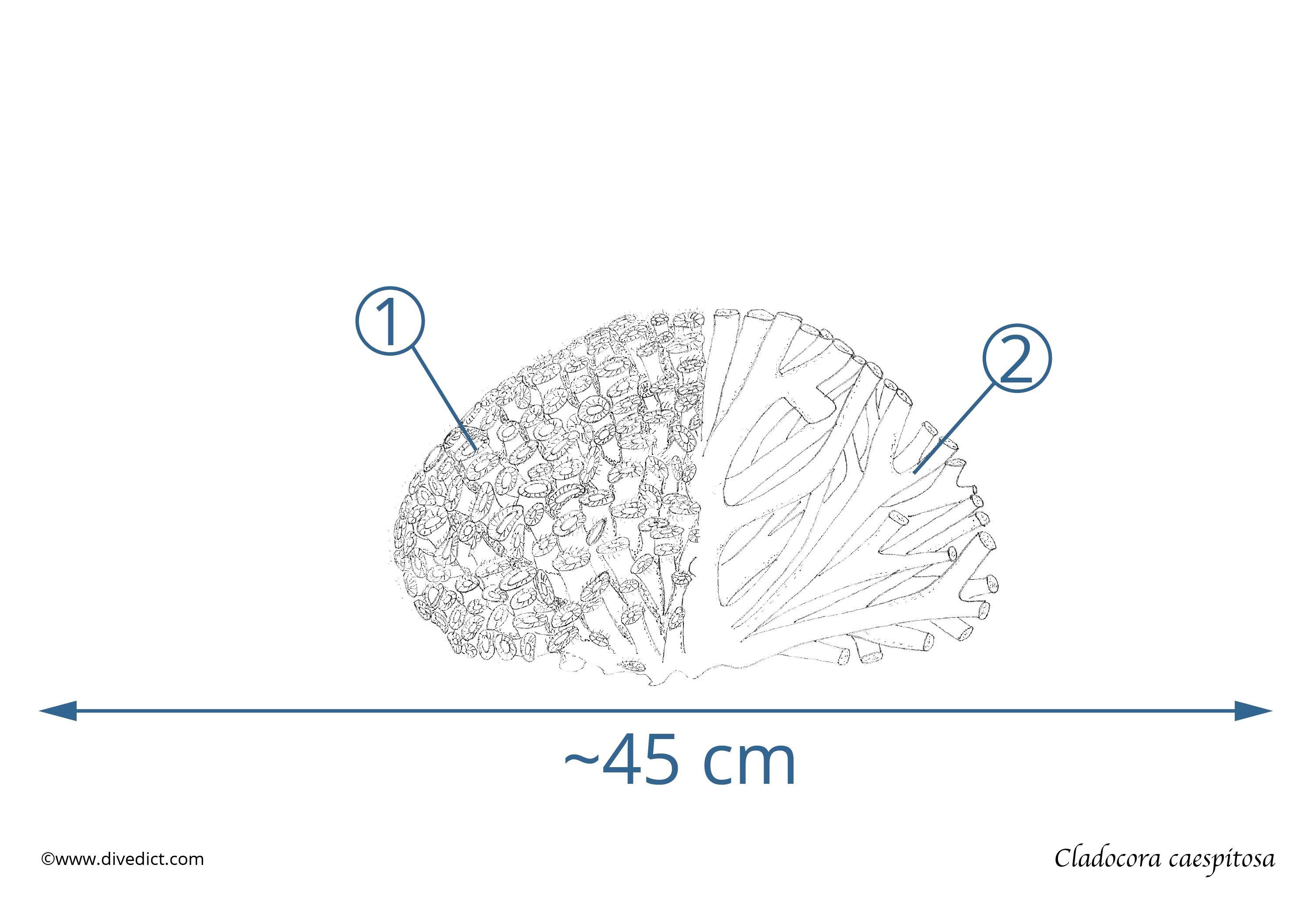
1. Calyces with polyps
2. Skeleton
Pro tips
The growth pattern of Cladocora caespitosa depends on the prevailing water movements. As a result, it grows more loosely in calm waters and below 15m, while it branches more tightly in places with strong currents or in surf zones.
By the way, lawn coral has something in common with coral in the tropics. Namely, it too harbors symbiotic algae (zooxanthella algae), which on the one hand give it its colors, on the other hand, makes it the only colonial stony coral that is potentially capable of reef formation in the Mediterranean.
The colonies are created by the settlement of plankton-like larvae; the resulting colonies grow through cartilage formation.
Text: Carolina Leiter
Pic: Felician Hosp, Sabine Probst
Illustration: Dive Dict