
Account coral
Porites nodifera



Special features
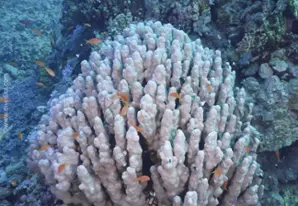
These corals grow slowly over decades, forming massive colonies that can stretch across entire cubic kilometers. They're among the largest and most enduring structures on the reef.
Appearance
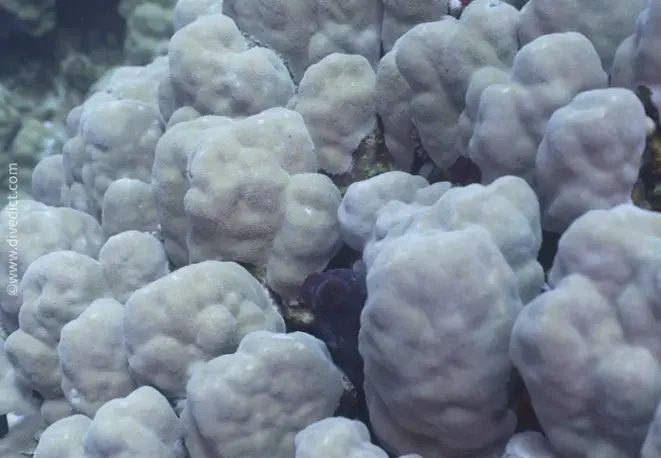
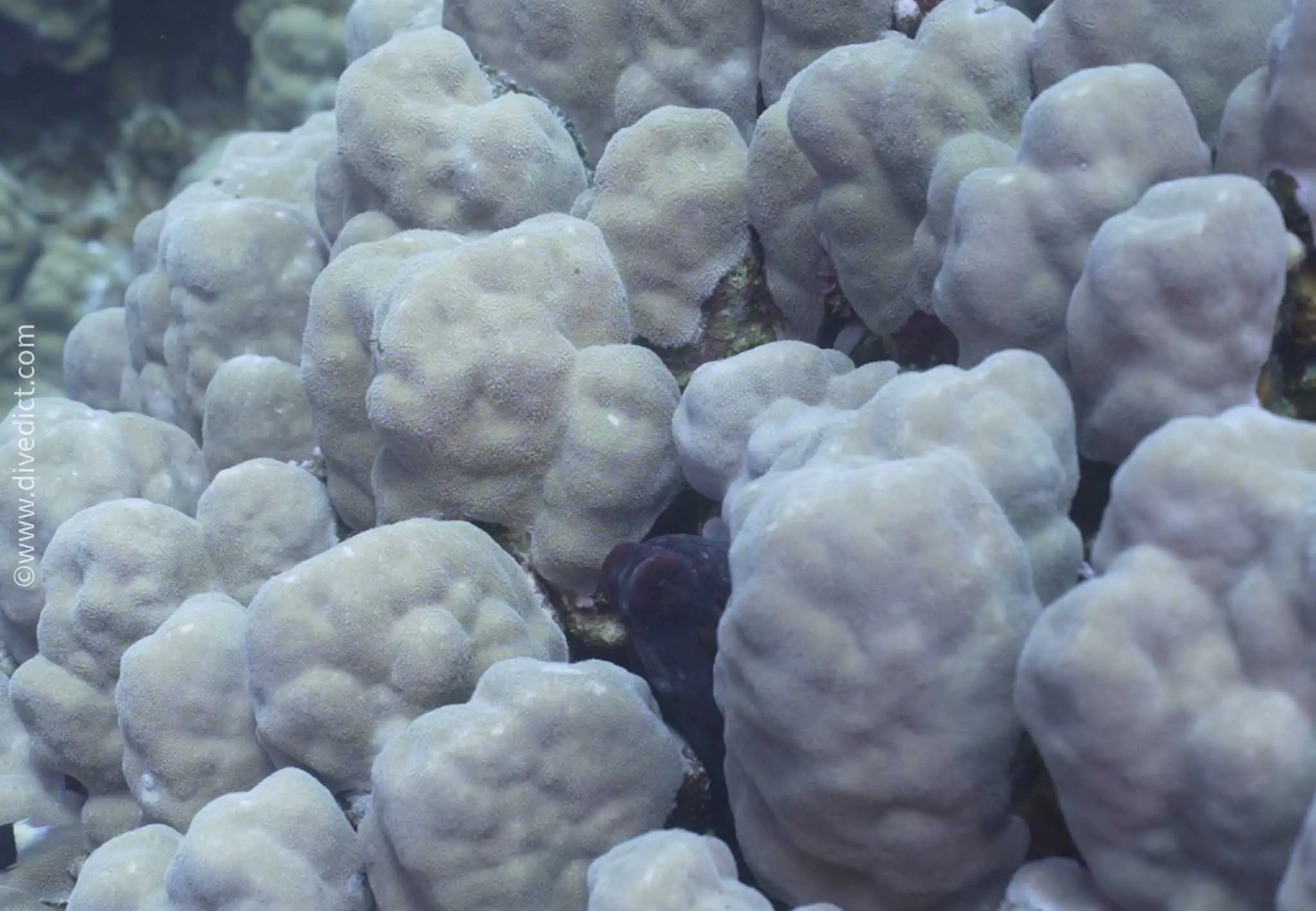
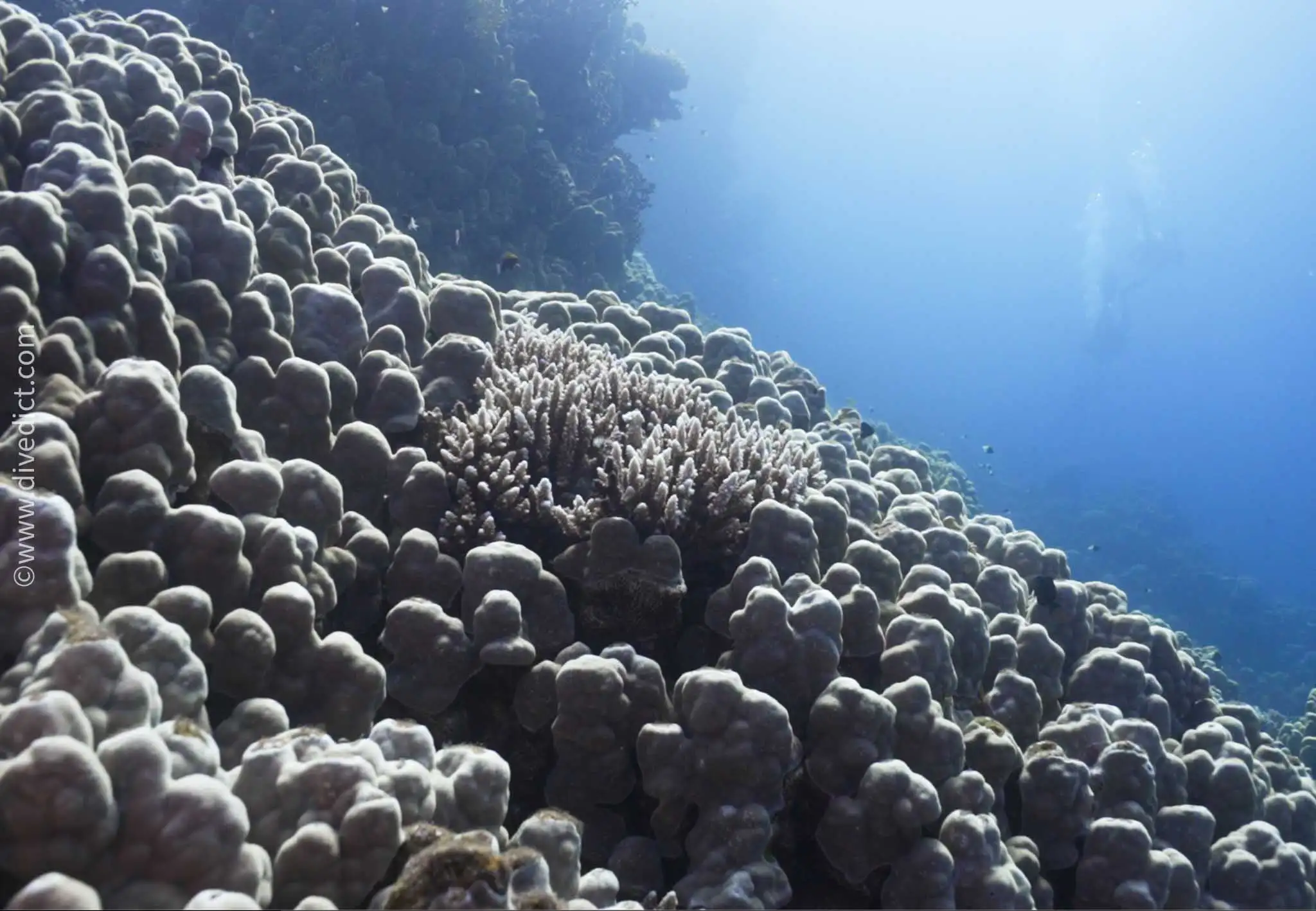
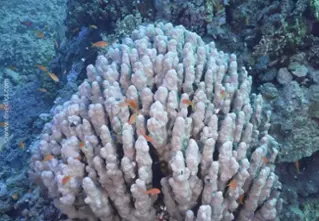
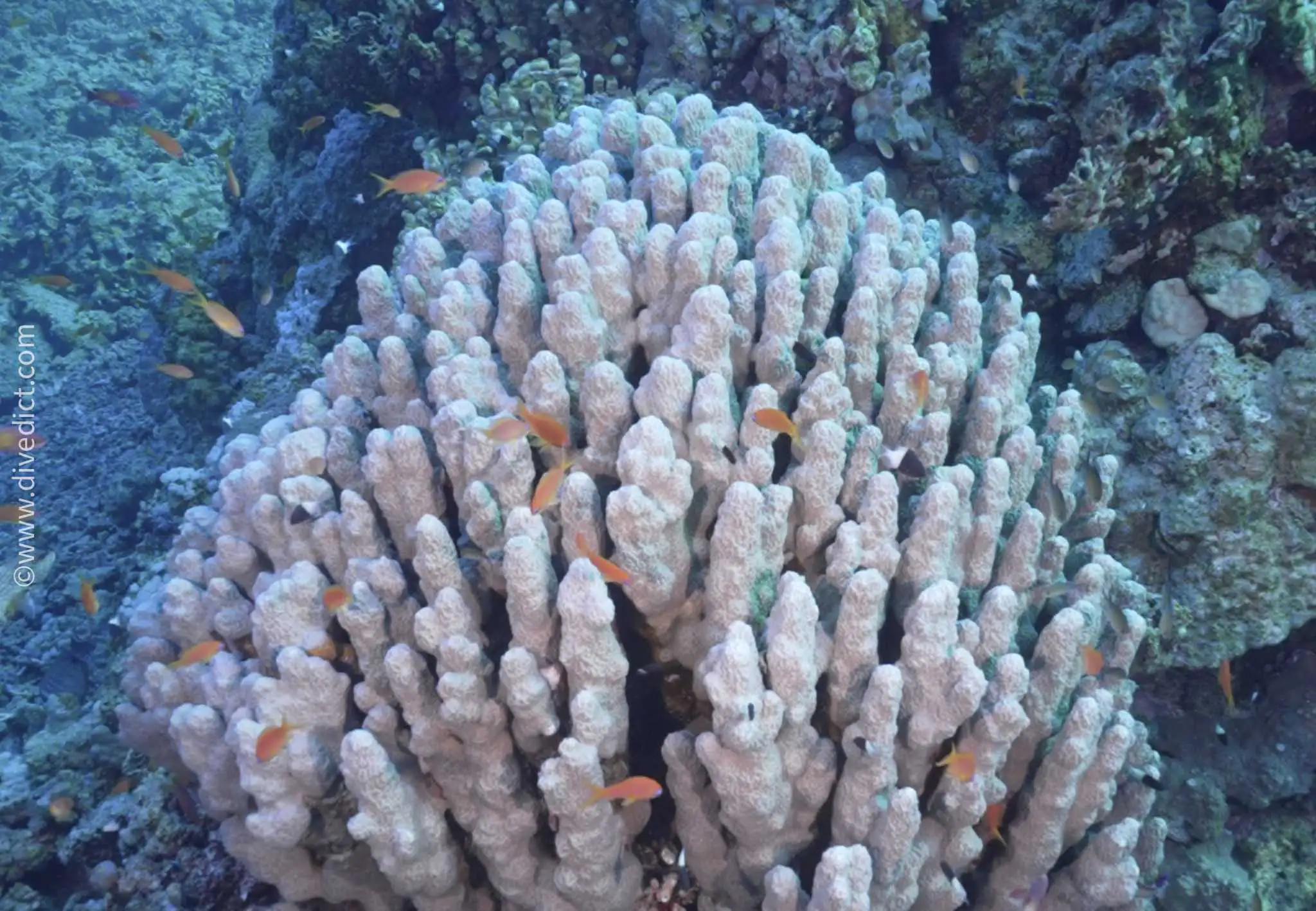
The surface of the colony is marked by distinctive, column-like formations. These grow upward from a broad base attached firmly to the reef. The coralites are small and recessed, with the polyps usually retracted during the day. Their color varies depending on the environment—commonly shades of grey, beige, or pale green.
Natural enemies
Fish
Dangerous/Venomous
The Porites nodifera is neither dangerous nor venomous.
Sketch
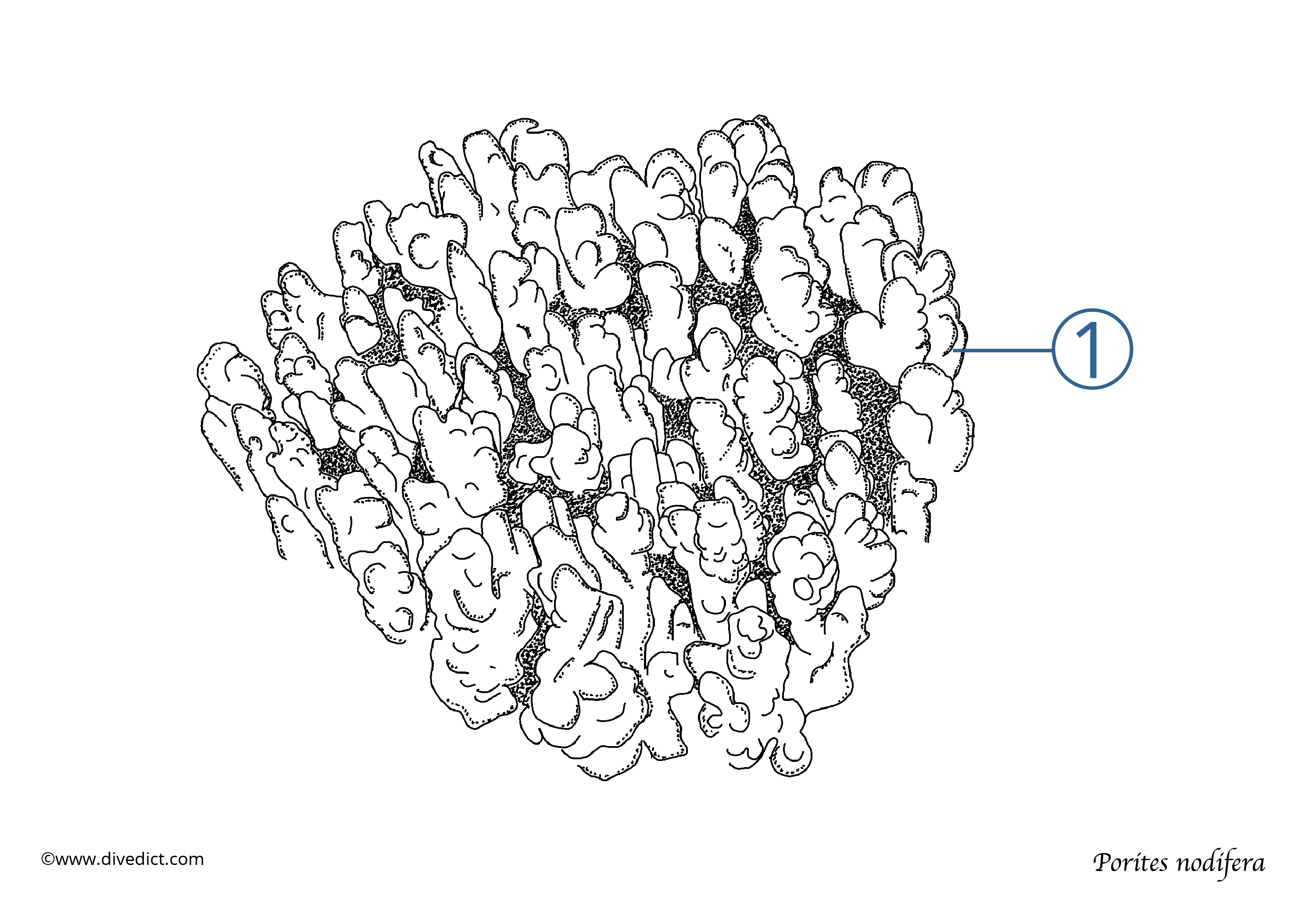
1. Column-shaped structures
Pro tips
Their broad coverage makes them essential reef builders—true architects of the reef ecosystem. Look for them on reef tops and slopes, where they often dominate large areas.
Text: Carolina Leiter
Pic: Felician Hosp
Illustration: Dive Dict