
False coral
Myriapora truncata



Special features
There is one thing this little animal can't deceive us about, namely where its name comes from: In terms of its appearance, you could think that it is a coral, but in fact, it belongs to the moss animals.
Appearance
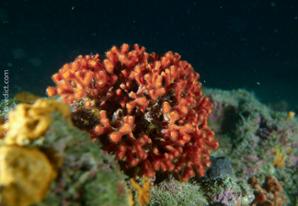
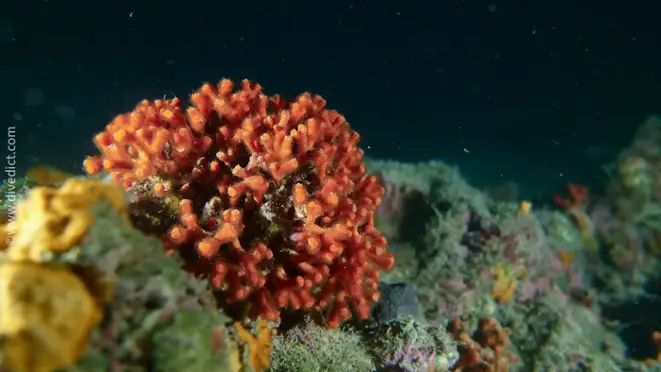
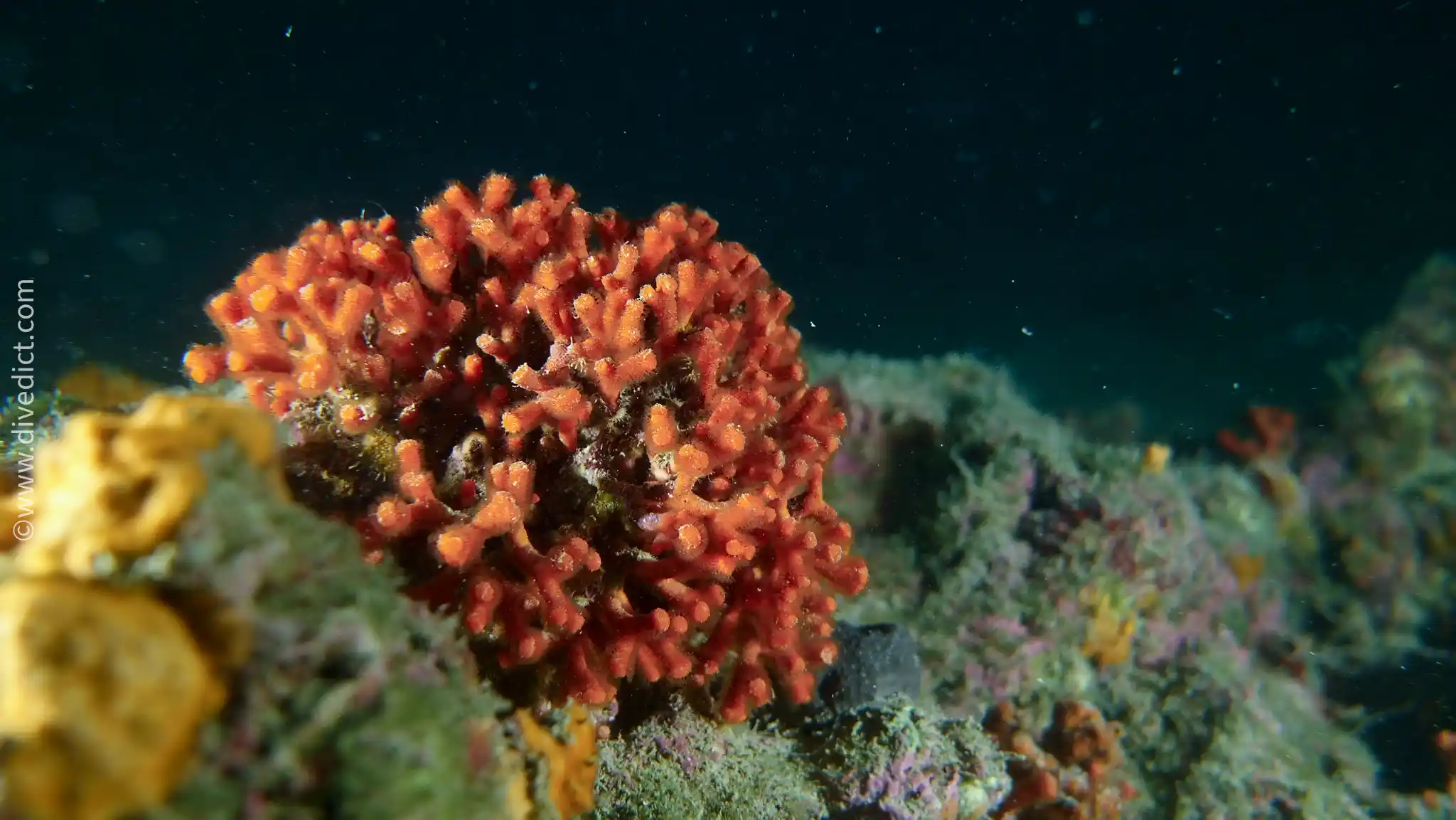
They look cute, the shrubby colonies that form even branches and are wrapped in vivid orange-red.
The colonies reach between 10 and 20cm in diameter and 15cm in height.
The blunt ends, which look as if they were freshly trimmed, are characteristic.
When the colonies die off, they lose their beautiful, bright color and become dirty yellowish to white.
Natural enemies
fish, crabs
Dangerous/Venomous
False coral is neither dangerous nor venomous.
Sketch
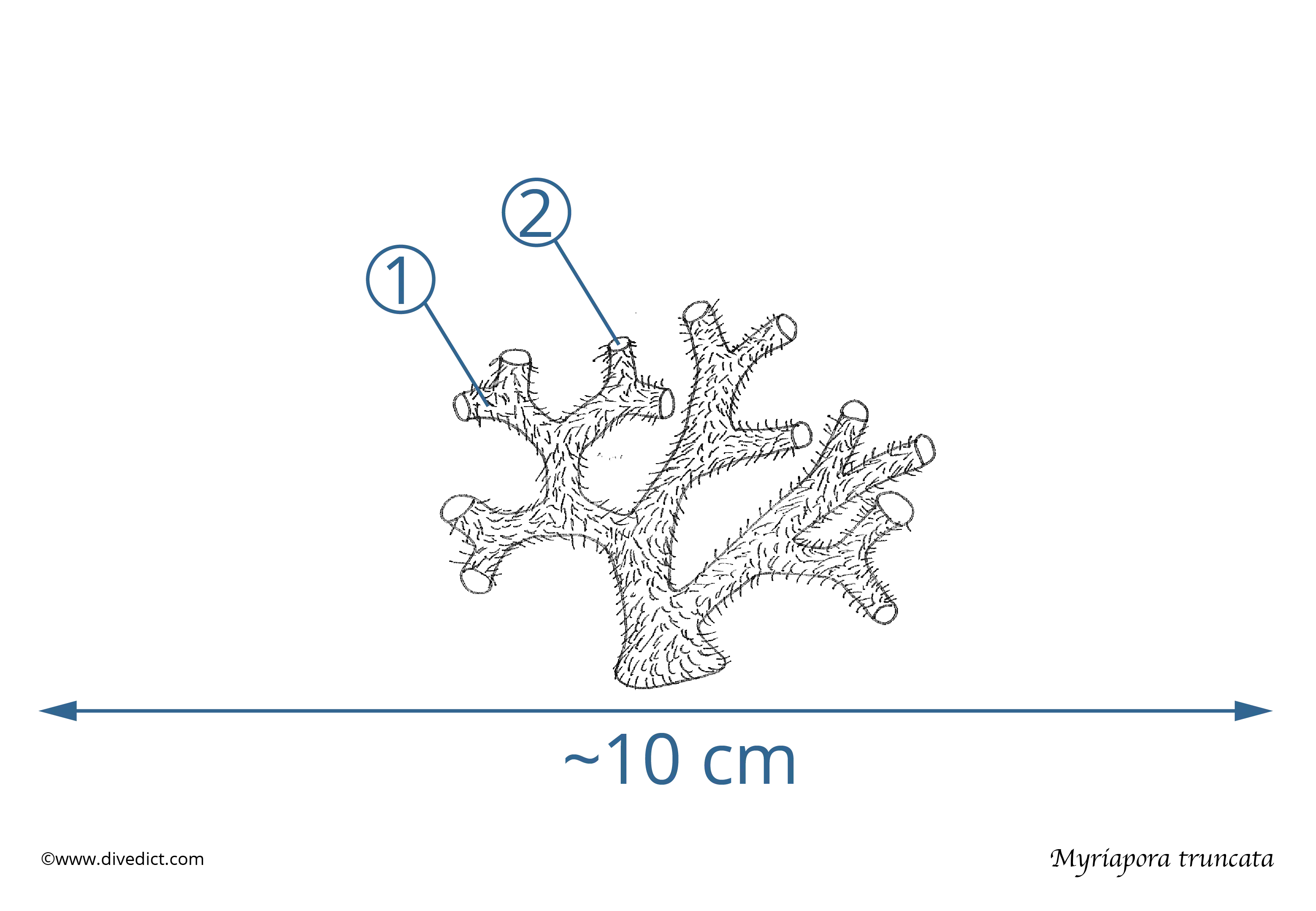
1. Openings of individual animals
2. Blunt ends
Pro Tips
At the beginning of every false coral colony, there is a larva that, once it has settled into a comfortable place, develops into a primary individual (also called Ancestrula). This individual reproduces by budding and produces daughter individuals, which in turn bud and form a whole colony. When the colony is large enough, a new larva is produced by sexual reproduction of hermaphroditic animals.
Text: Carolina Leiter
Pic: Dive Dict
Illustration: Dive Dict