
Dotted sea-slug
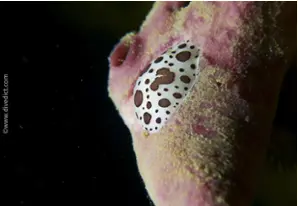
Peltodoris atromaculata



Special features
As is common among snails, the leopard slug has a true "suck-stomach."
It feeds on the toxic fig sponge (Petrosia ficiformis) and the orange cushion sponge (Haliclona fulva).
In its digestive tract, the toxins are processed by cytotoxic (cell-killing) metabolites, and the snail can use them as a chemical defense mechanism.
The leopard slug is the only snail species capable of digesting these specific sponges.
Appearance
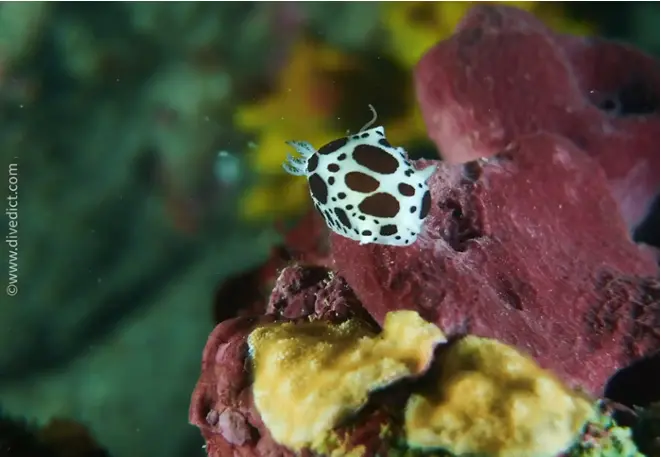
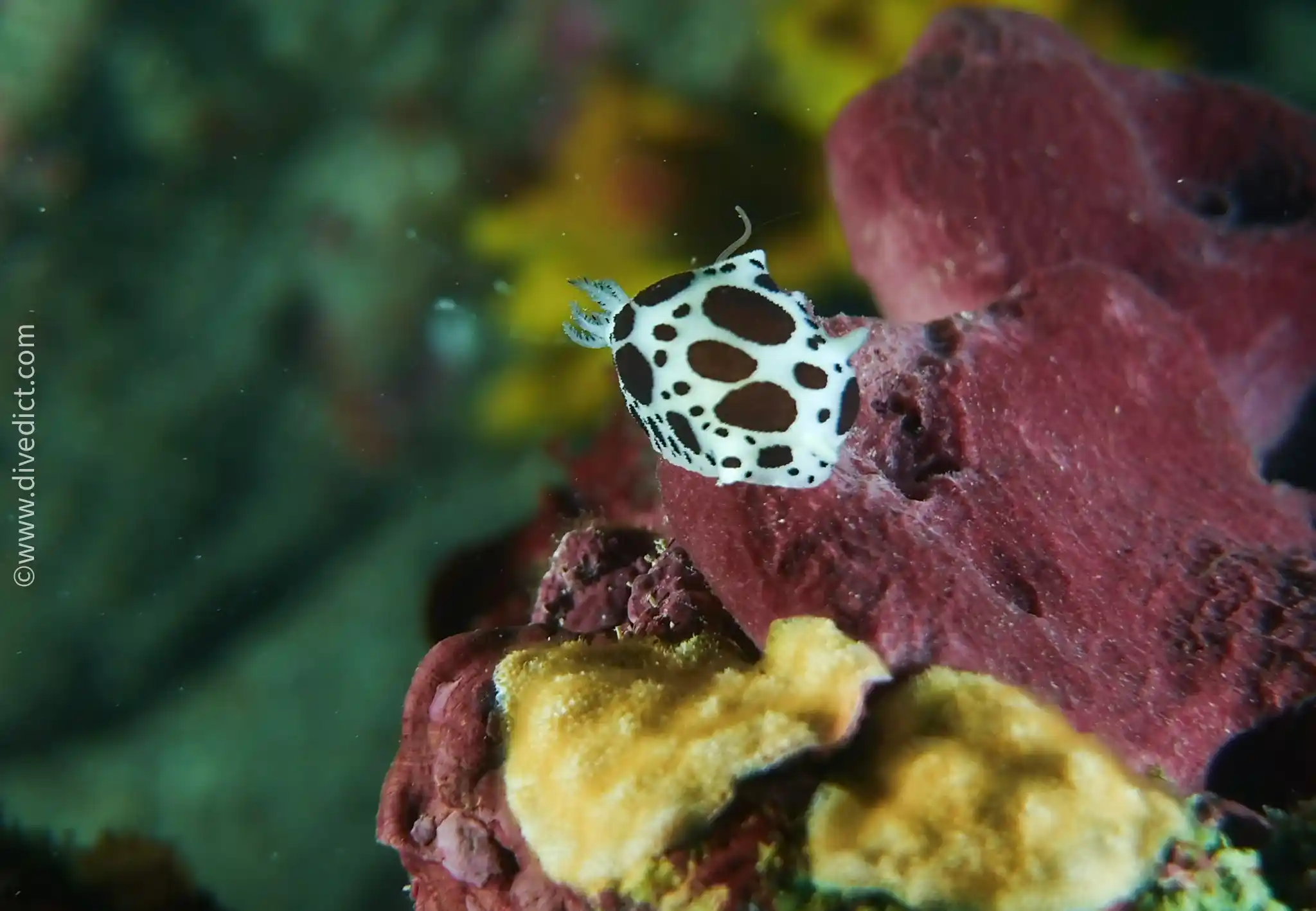
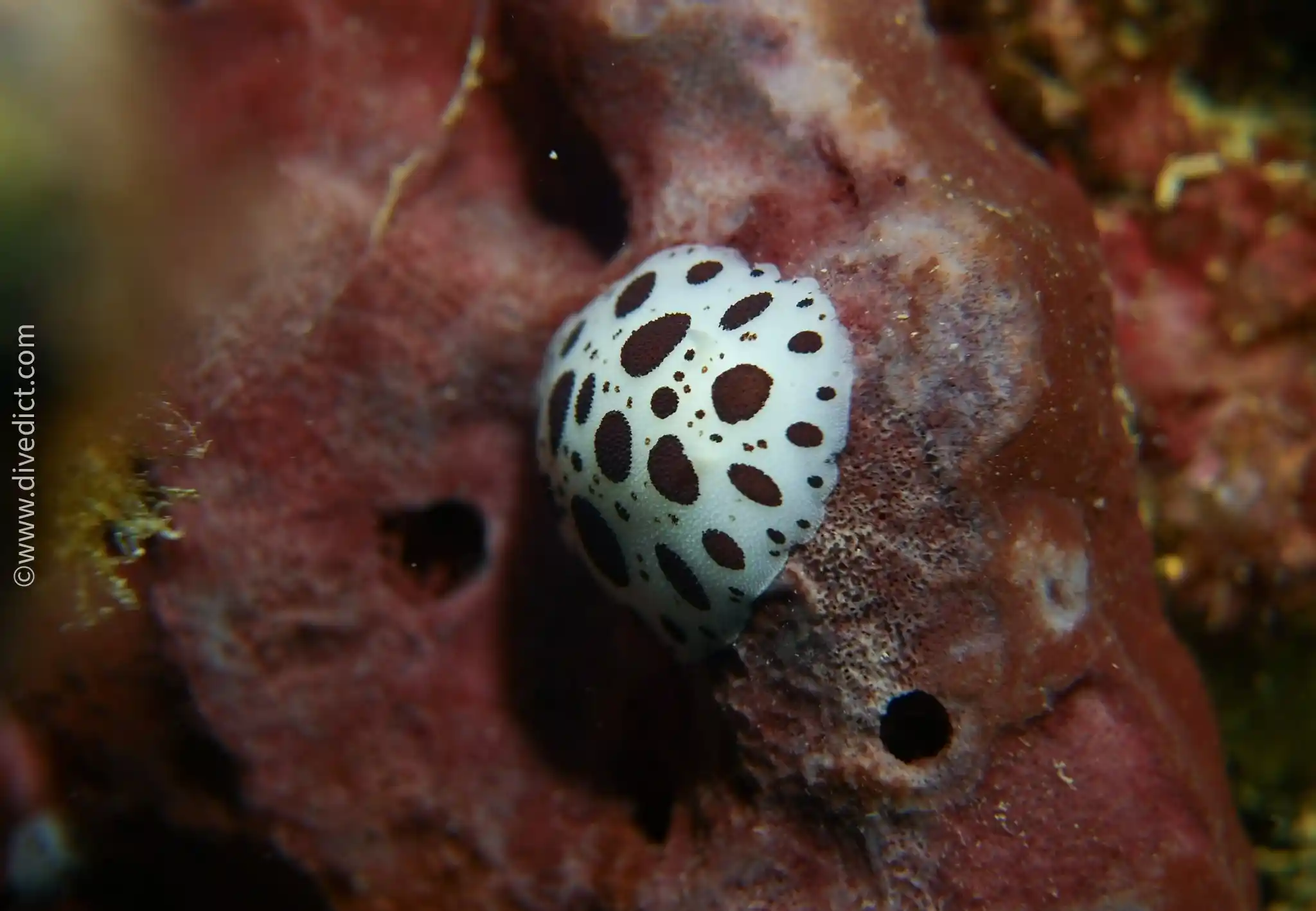
Because of its pattern, it was also nicknamed cow snail.
Brown, randomly arranged spots are emblazoned on her white coat.
Depending on the environment, the animals have a different amount of stains.
According to observations, individuals have fewer spots in the west of the Mediterranean than in the east.
Each individual has their unique patch arrangement, which does not change throughout their life.
Natural enemies
Fish, crustaceans
Dangerous/Venomous
These snails have spines on their mantle, which they use to defend themselves against predators. While they are not venomous, they can sting.
Sketch
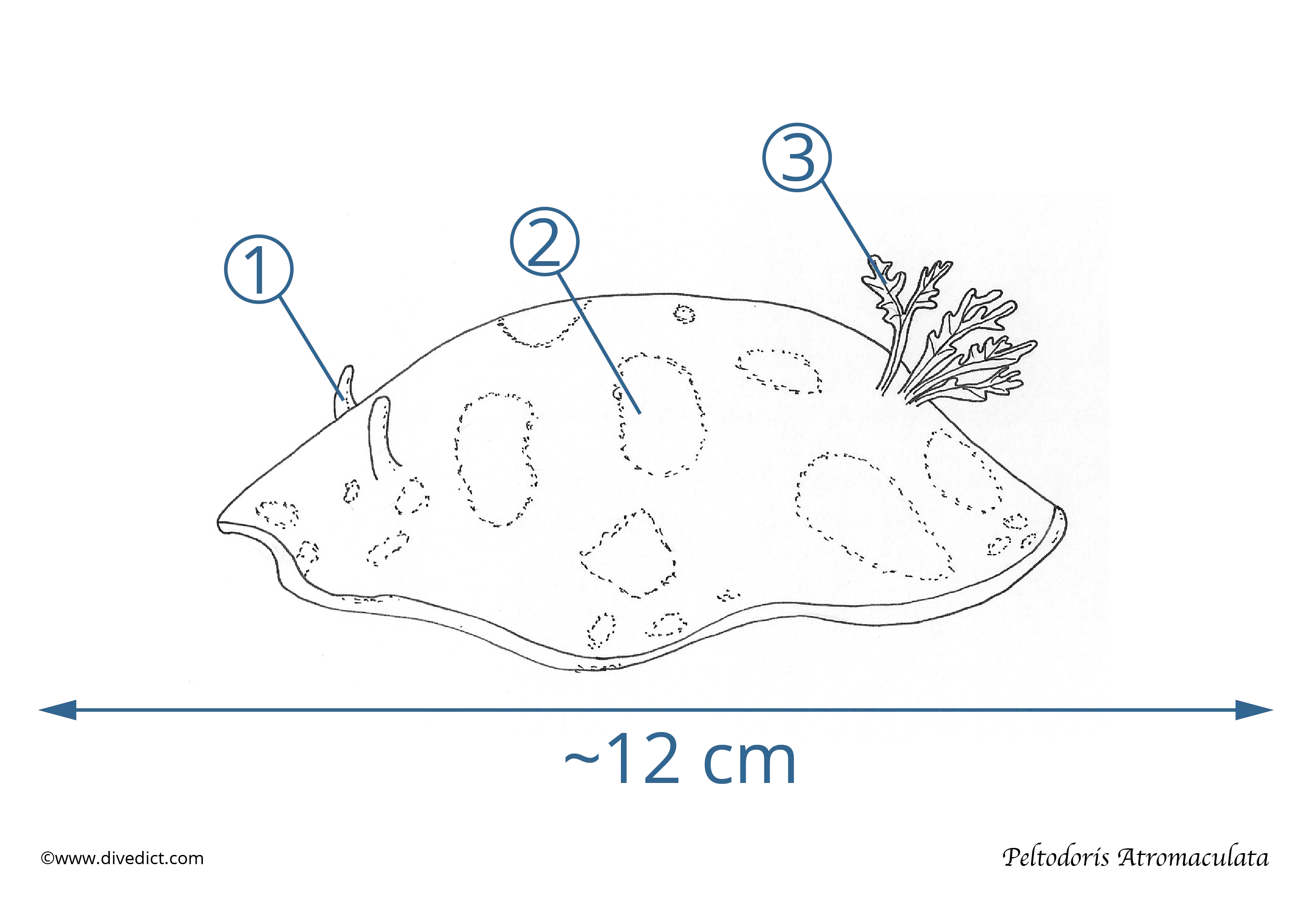
1. Tactile organ, retractable
2. Characteristic spots
3. Organ for filtering plankton, retractable
Pro tips
The best chance of encountering a leopard slug is during night dives.
At that time, you can observe them enjoying their favorite food, the fig sponge.
By the way, it's easy to tell if a leopard slug has been nibbling on a sponge. They only gnaw off the top layer, revealing a yellowish-to-white second layer beneath.
If you find such traces, the culprit—the leopard slug—is likely nearby.
You’re most likely to encounter them between June and September, as that’s their mating season.
All of these snails are hermaphrodites, and they decide who will be the male and who the female. The individual that first penetrates the other with its penis becomes the male.
Unfortunately, most leopard slugs' lives end a few weeks after reproduction.
The eggs are spiral-shaped and pale yellow, and they are typically found not far from the fig sponges.
Text: Carolina Leiter, Felician Hosp, Pia Balaka
Pic: Felician Hosp, Sabine Probst
Illustration: Dive Dict