
Crested aeolis
Janolus cristatus




Special features
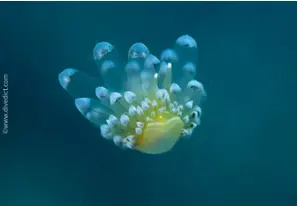
Between the rhinophores (the lamellated projections with white tips), there is a coarse, ribbed, comb-like structure called the carnucle, which is found only in the genera Janolus and Antiopella.
Appearance
The Crested aelois is truly a little beauty.
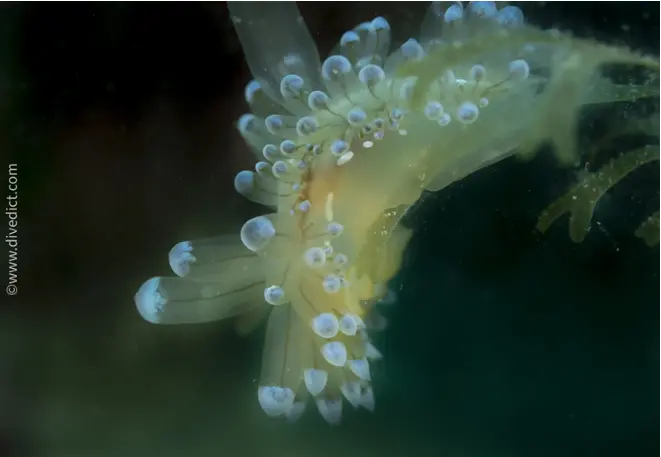
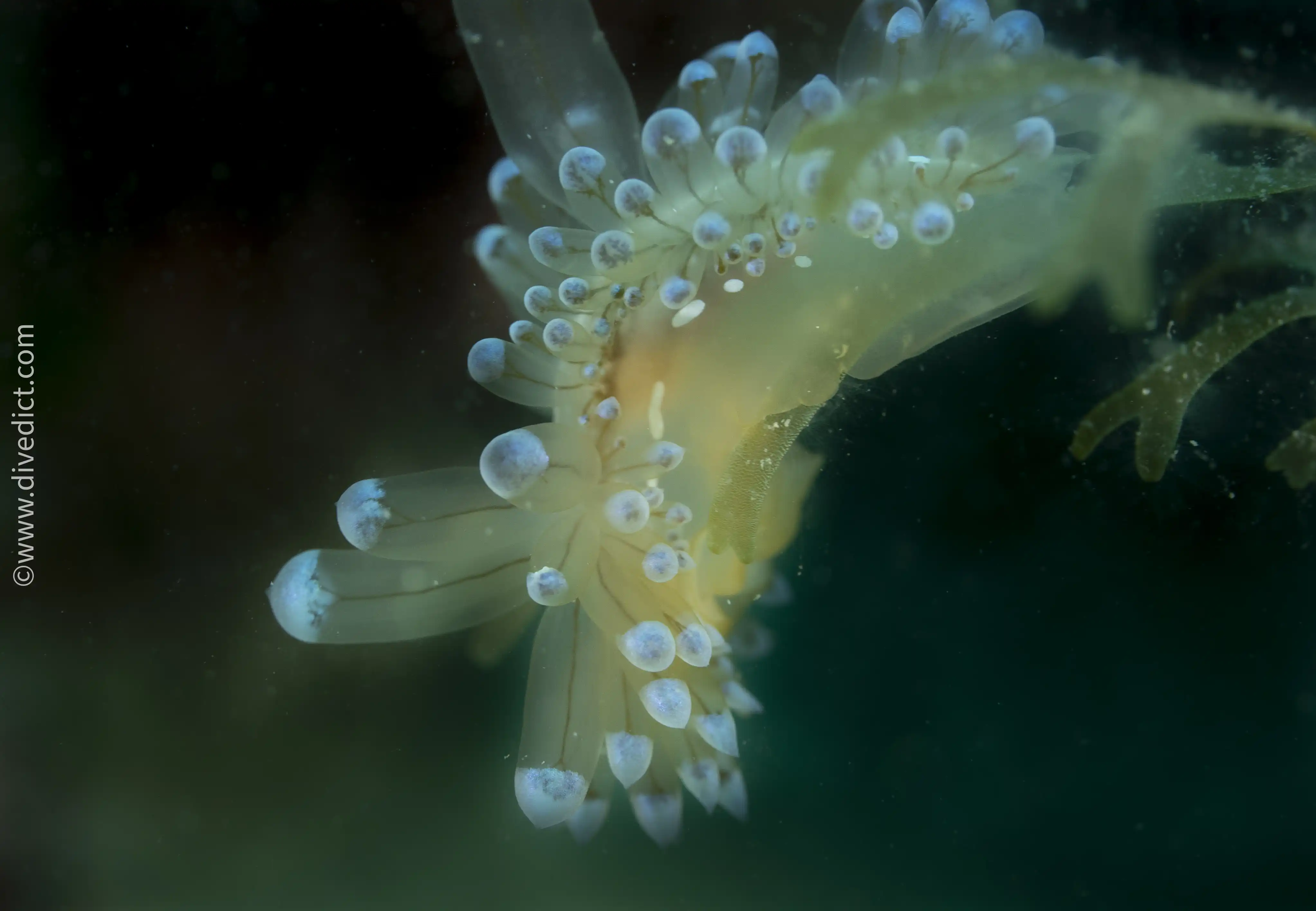
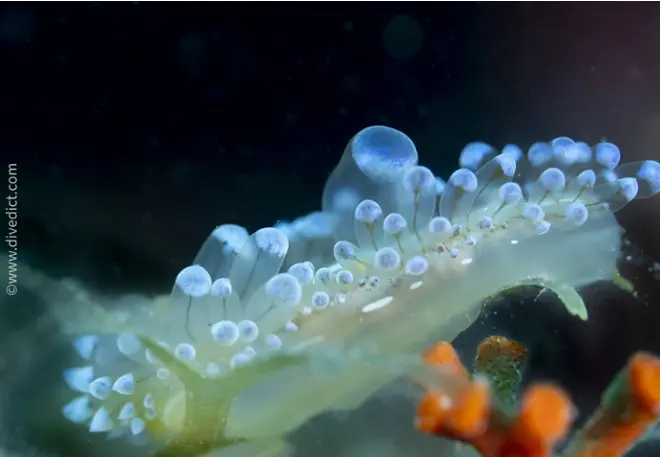
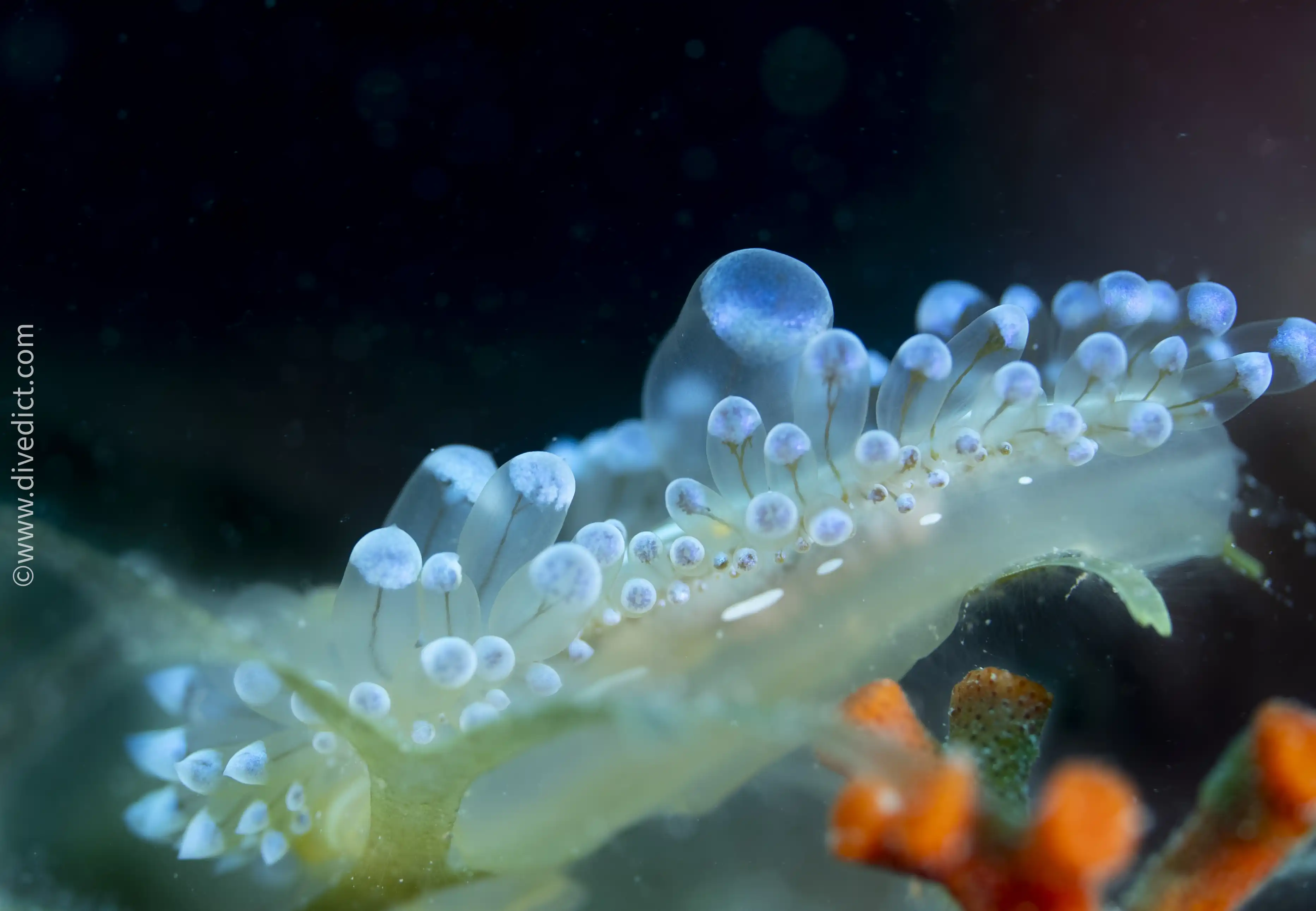
Its semi-transparent body features lamellated or club-shaped rhinophores with rounded tips that shimmer in shades of blue or white.
In these creatures, the rhinophores are particularly large and striking — lacking any protective sheath and unable to retract.
Most individuals have two distinct white stripes running along their back.
The dark lines running through the rhinophores, resembling blood vessels, are actually part of the digestive system.
Natural enemies
None
Dangerous/Venomous
Slugs carry a poison that makes them inedible for other animals.
Crested aeolis are harmless to us humans, unless they end up on our plates, which is when the poison can spread in our bodies and lead to serious problems.
Sketch
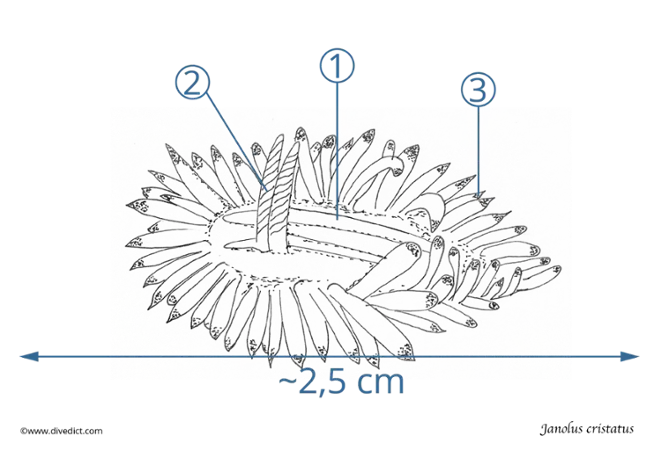
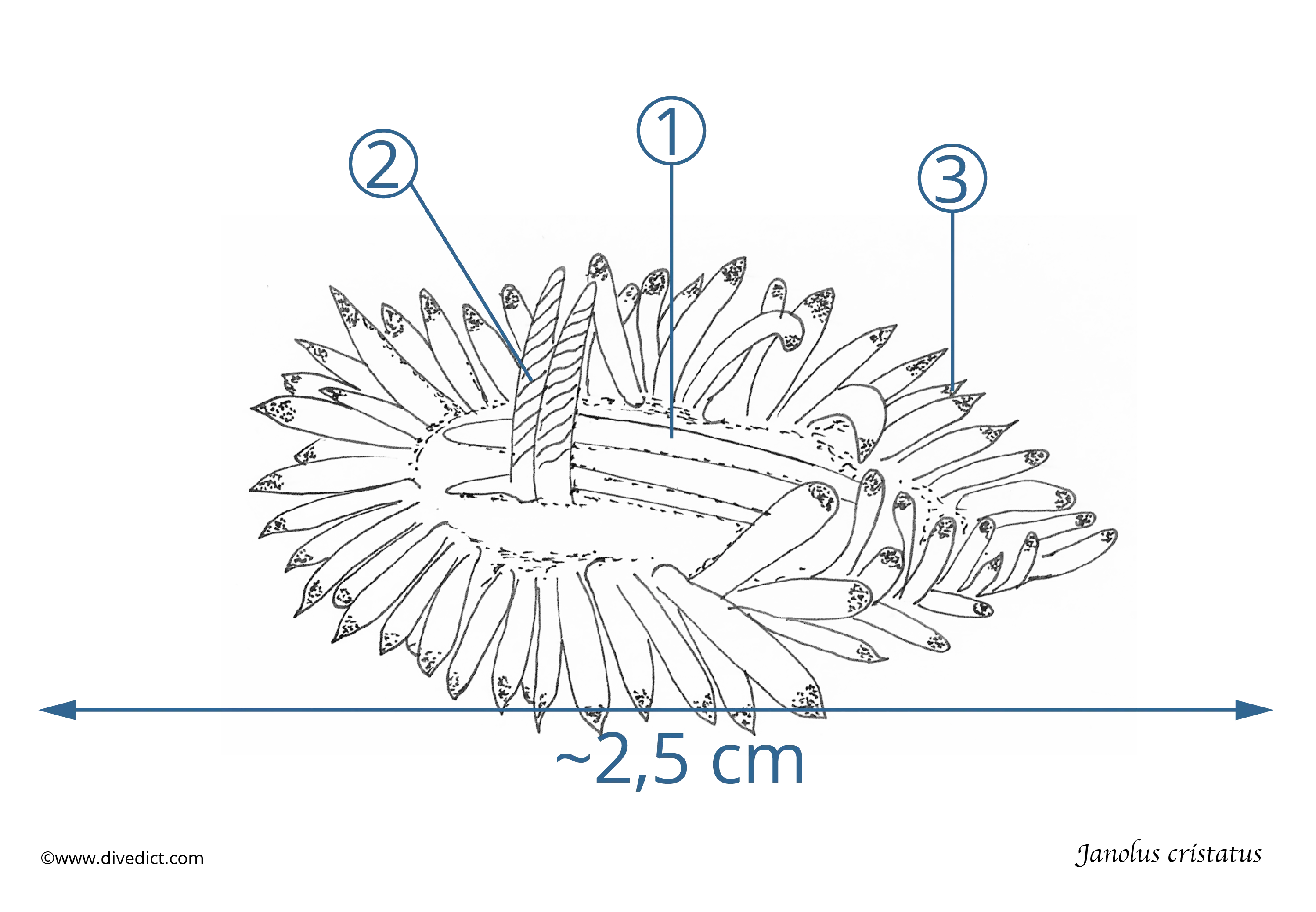
1. Two eye-catching white stripes
2. Carnucles
3. Large rhinophores with whitish shimmering ends
Pro tips
This little creature feeds on bryozoans and sponges, particularly favoring the genera Cellaria and Bugula.
Hardly any animals seek it out as a snack.
All creatures in the order Nudibranchia are hermaphrodites.
During their mating ritual, two individuals meet and compete with their male reproductive organs.
The one that succeeds in penetrating the other's body wall becomes the dominant male. The other creature, which is thus forced to become the female, is then fertilized as usual.
The eggs are laid on a substrate, but not in a row or a pile; instead, they are arranged in spiral chains that resemble a string of pearls.
Each of these "pearls" consists of several eggs.
Text: Carolina Leiter
Pic: Felician Hosp
Illustration: Dive Dict