
Blue mussel
Chamelea gallina



Special features
Due to the high variability of this mussel species, it has been subdivided into numerous different species in the past, but in vain: it is only one species, but a very diverse one, as molecular biological methods have shown.
Appearance
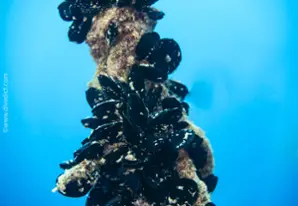
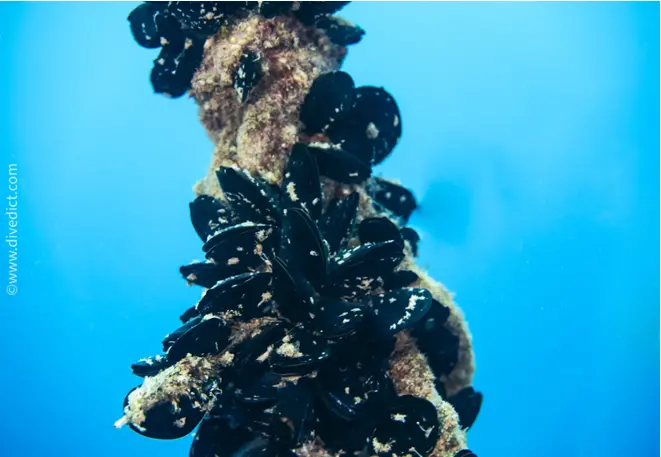
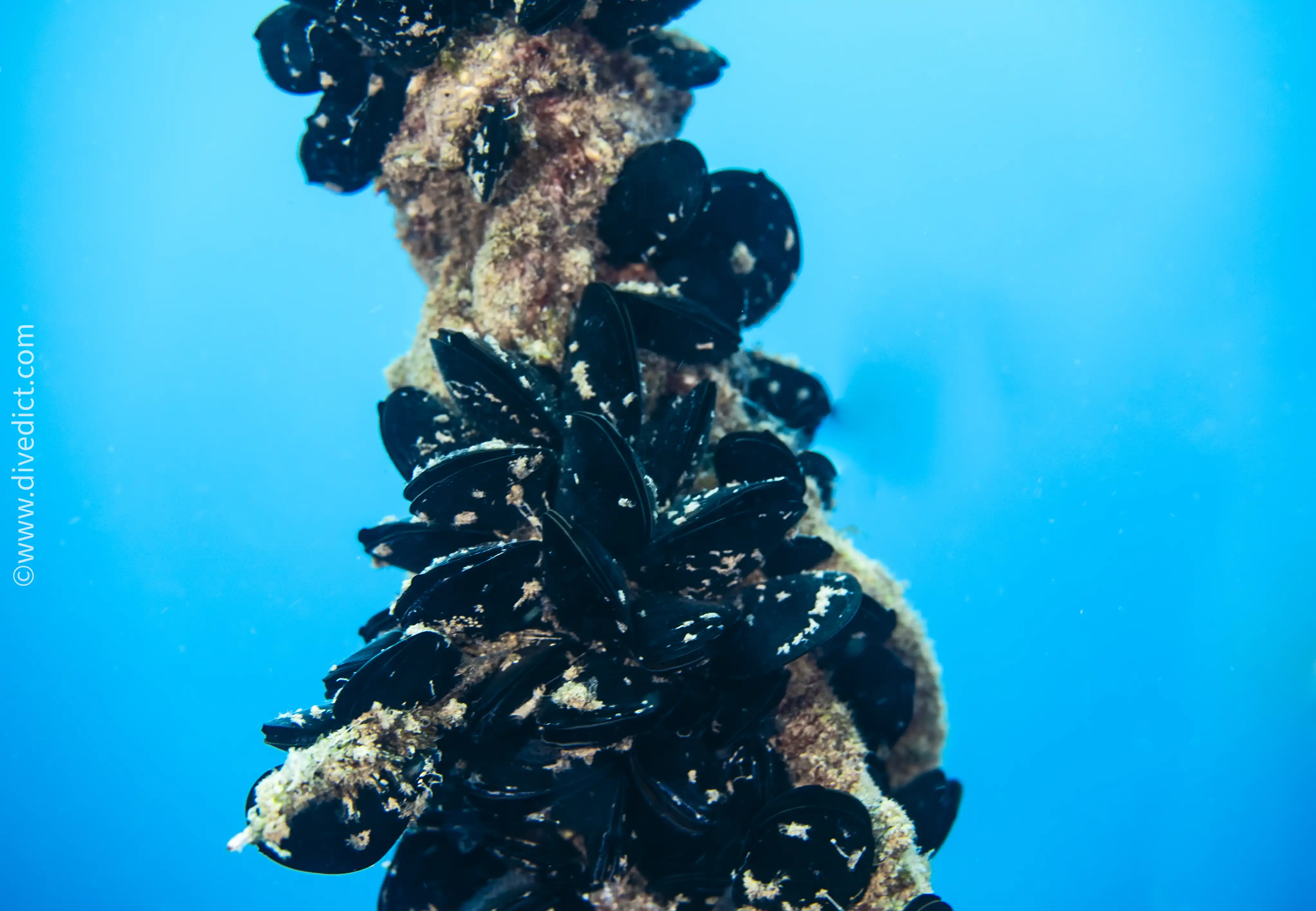
The Blue mussel looks exactly as you imagine it: It has a shiny black-blue to dark brown, uneven shell that tapers at the front and is decorated with fine ribs.
Sometimes other guests grow on their shells, such as barnacles.
It can be up to 15cm long, depending on the environment, the shell also has a wide variety of shapes depending on the circumstances.
Natural enemies
Seabirds, predatory fish, squids
Dangerous/Venomous
The Blue mussel is neither dangerous nor venomous. However, because it also occurs in polluted water and filters it, it can accumulate heavy metals and toxins in its body.
Sketch
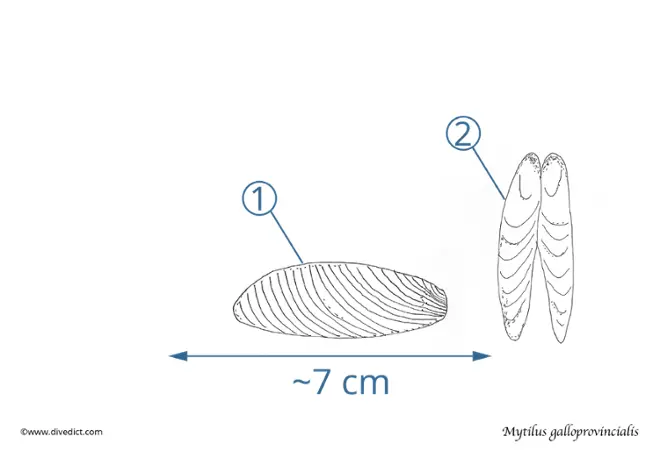
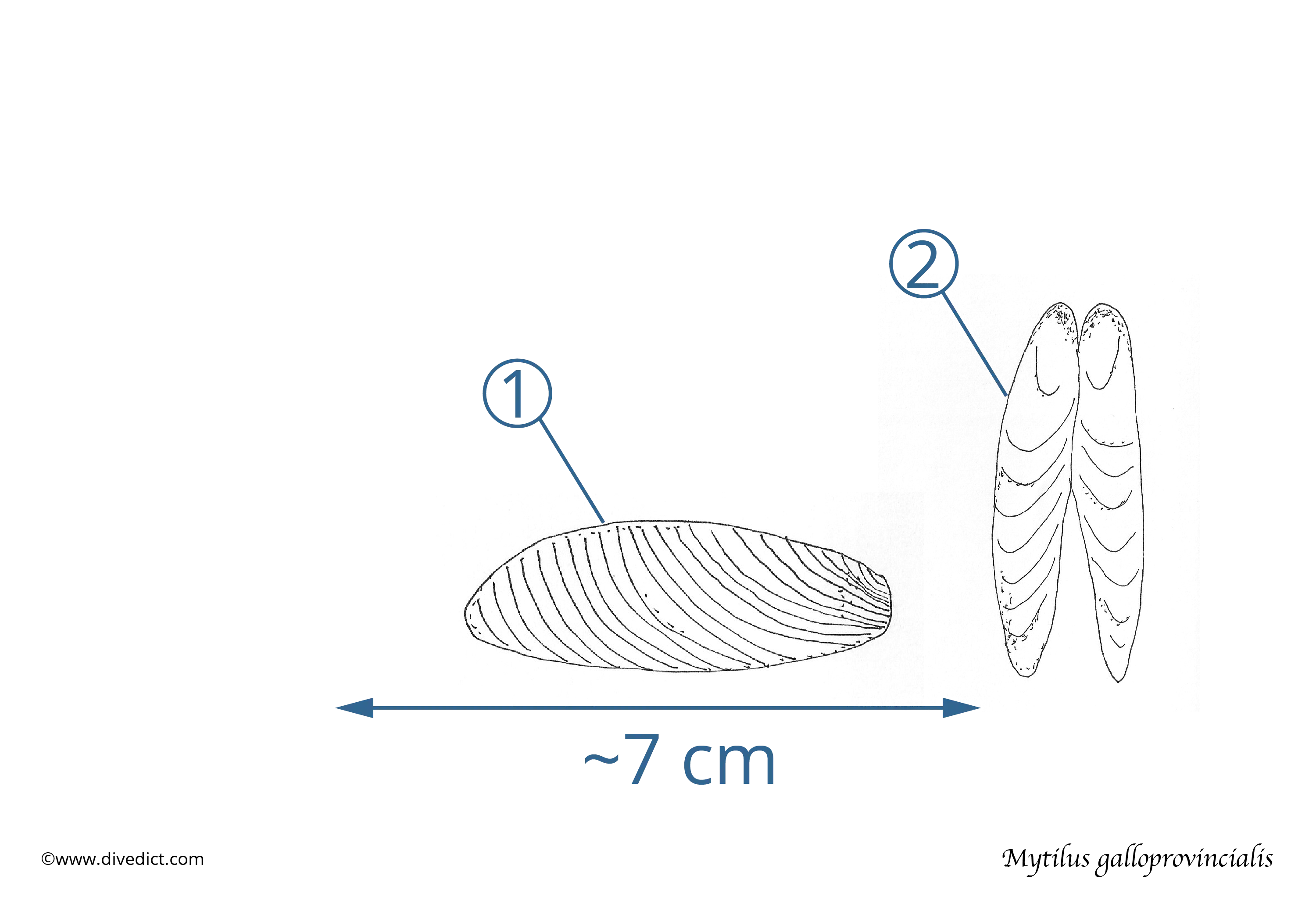
1. Shiny ribbed shell
2. Byssus threads at the tapered end
Pro tips
The Blue mussel is literally looking for humans: With its adhesive threads, the so-called byssus threads, it attaches itself to various buildings at ports and man-made materials. When it is low tide, it can lie dry for hours by closing its flaps firmly. It can occur en masse on rocky coasts.
Text: Carolina Leiter
Illustration: Dive Dict
Pic: Felician Hosp