
Mediterranean Moray eel
Muraena helena




Special features
The Mediterranean Moray eel sits on top of the food chain in rocky reef habitats.
She is a beautiful predator that mauls her victims with her sharp teeth.
There is a second row of teeth in her throat, which she can push forward should there be a need.
Appearance
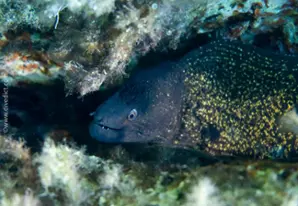
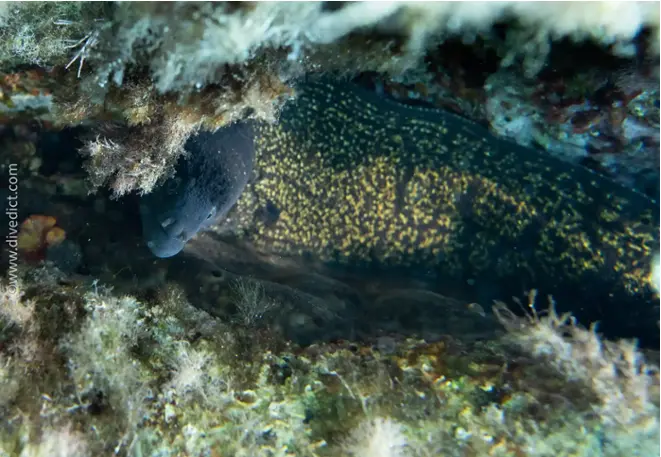
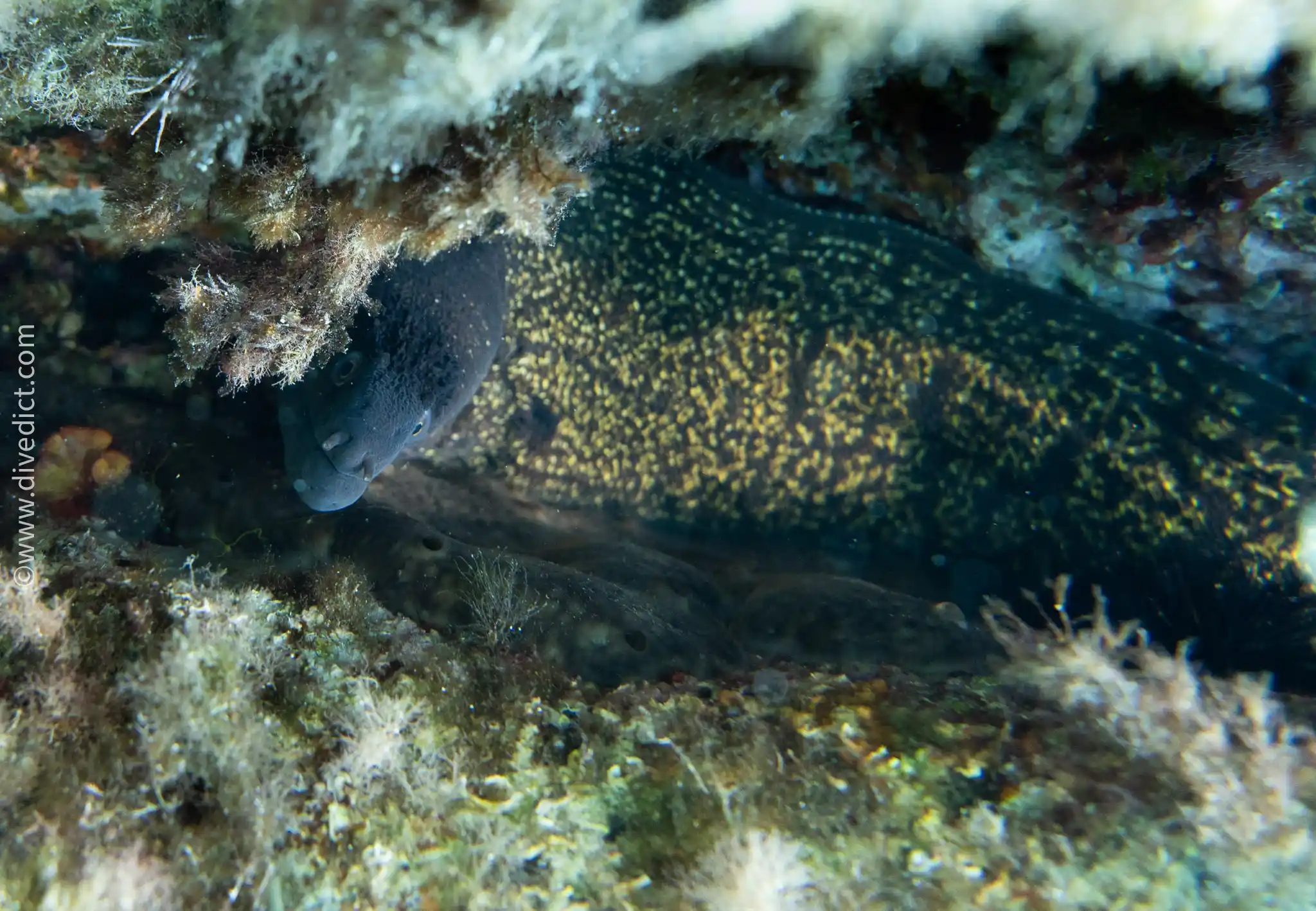
Her base color is dark purple with yellow marbling running across her snake-like, smooth and scaleless body.
On their back, their fins form a long hem.
When fully grown, at 3 - 10 years of age, they are up to 80cm long.
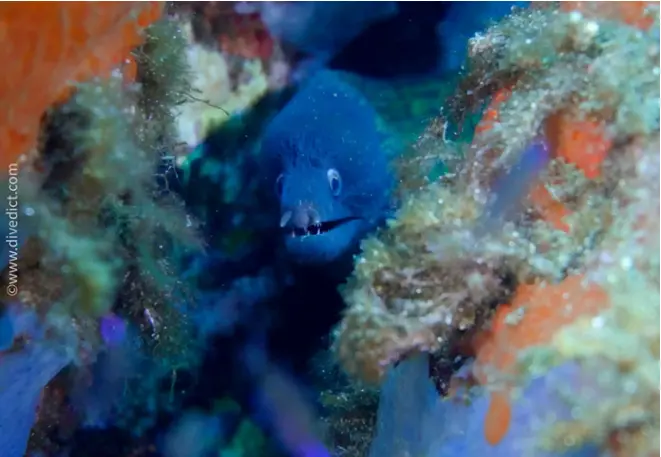
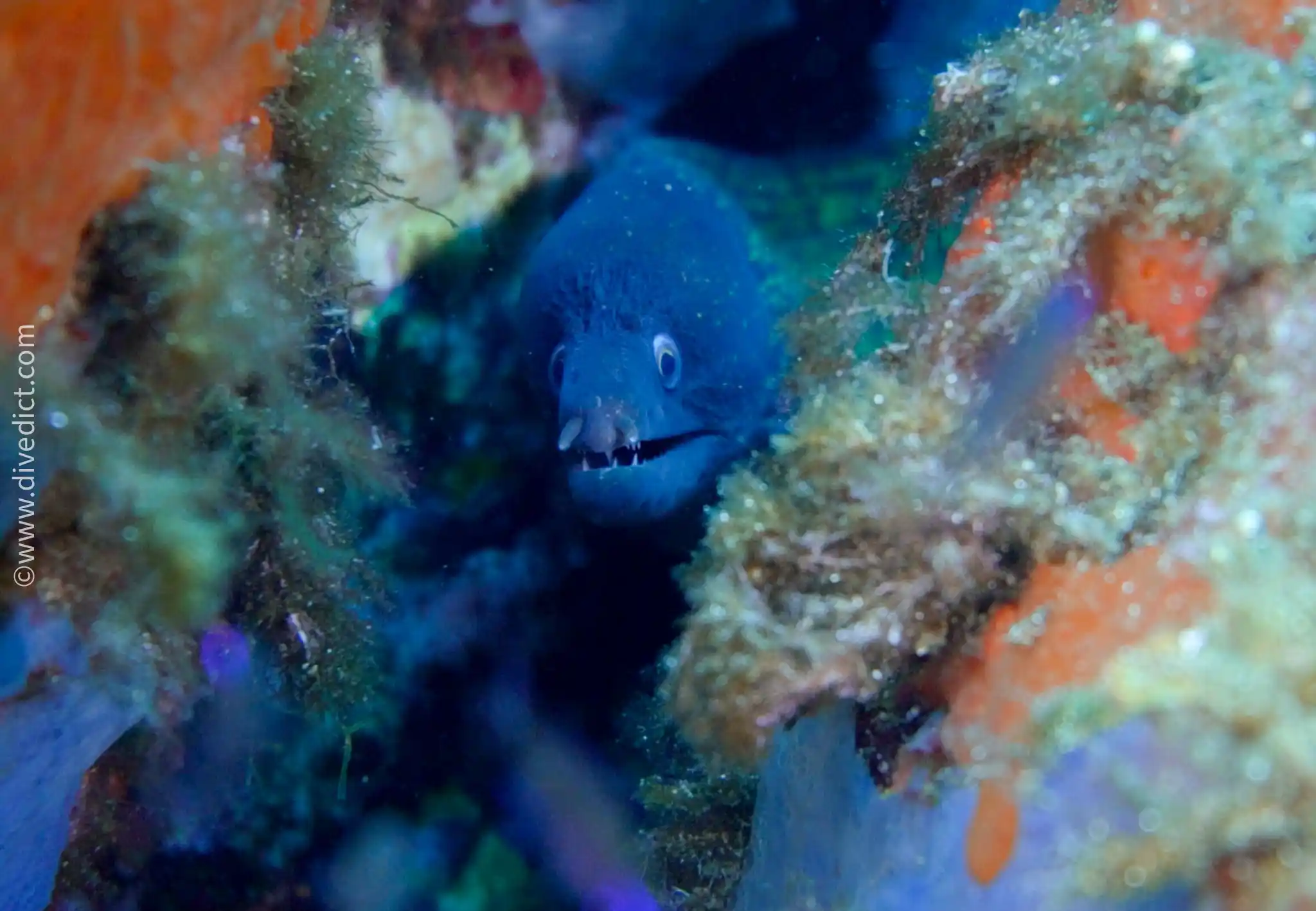
When you meet her, she appears wild and predatory: her white iris gives her a stinging gaze and she usually keeps her big mouth open.
Her gills have been transformed into a hole-like opening and lie laterally behind her head.
Her large nostrils give her an excellent sense of smell.
Natural enemies
Hardly any enemies, except large predatory fish like sharks and whales.
Dangerous/Venomous
The Mediterranean Moray eel can be potentially dangerous to humans.
Her blood is venomous and can cause poisoning in humans if it gets into an open wound.
The venom loses its effect at temperatures above 75°C.
They also bite when they feel extremely threatened or cornered.
Their bite is not venomous, but the bacteria in their saliva can cause infections (sepsis). In this case, you should definitely see a doctor
Without feeling threatened, however, she does not attack humans.
Sketch
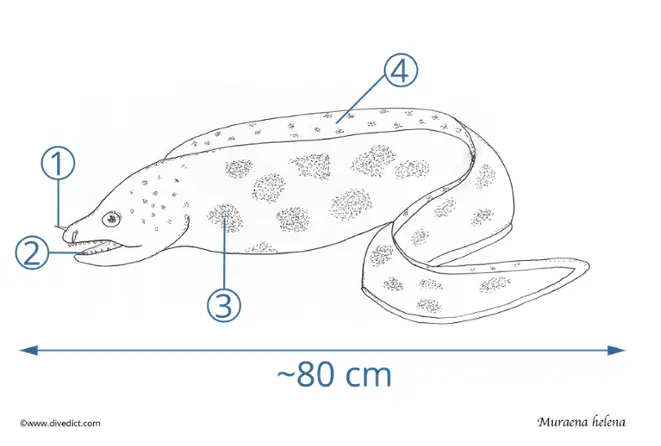
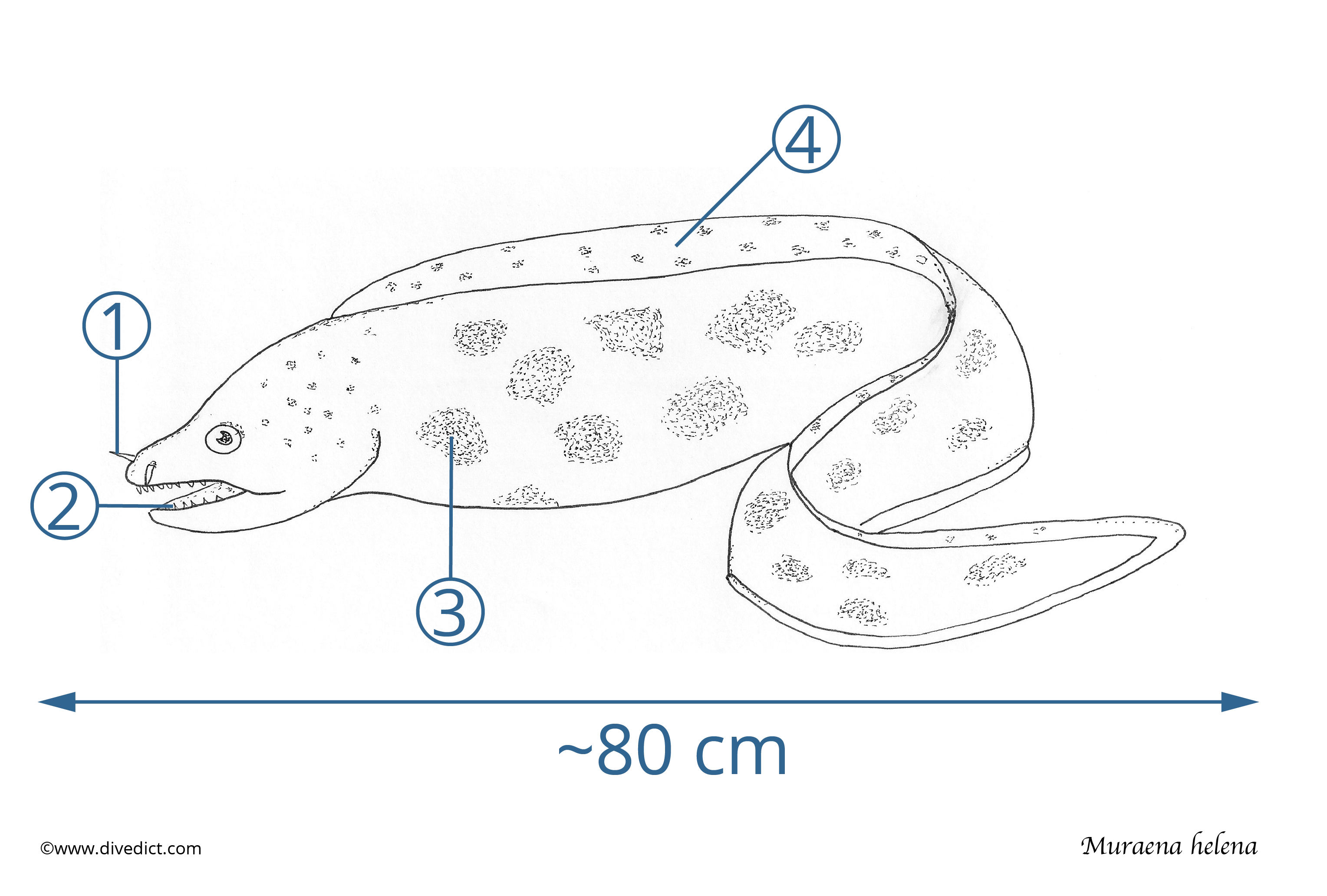
1. Large nostrils
2. Pointed teeth
3. Yellow marbling
Pro tips
The Mediterranean Moray eel looks for her own home, a few square meters in size, to which she returns again and again. They find this in caves and crevices within rock reefs.
She prefers to leave her shelter at night to hunt for fish, crustaceans, and squids, which she tracks down with her keen sense of smell.
From time to time, you can also find them in shallow water from 0.5 - 1m deep.
To have more strength when hunting and mauling her prey, she manages to knot her body or brace herself on the ground.
In the summer months, when the water warms up, they migrate to greater depths (up to 600m) to spawn.
The eggs float in water for a few days until the planktonic larvae hatch.
These are also known as willow leaf larvae because of their appearance, they are transparent and lack red blood cells.
As soon as they are two years old, they too look for their rocky home.
Text: Carolina Leiter, Felician Hosp, Pia Balaka
Pic: Felician Hosp
Illustration: Dive Dict