
Boarfish
Capros Aper




Special features
Interestingly enough, when teeth regrow from juvenile to adult animals, this happens on the outside of the jaw.
The new teeth then replace the “milk teeth” in groups.
Appearance
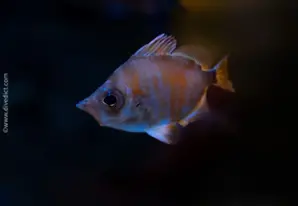
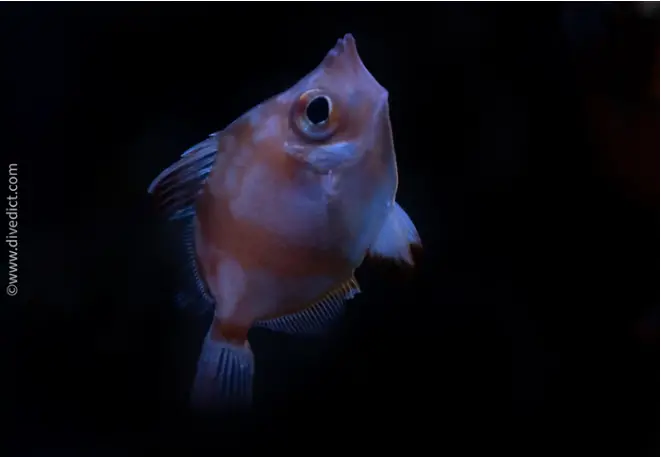
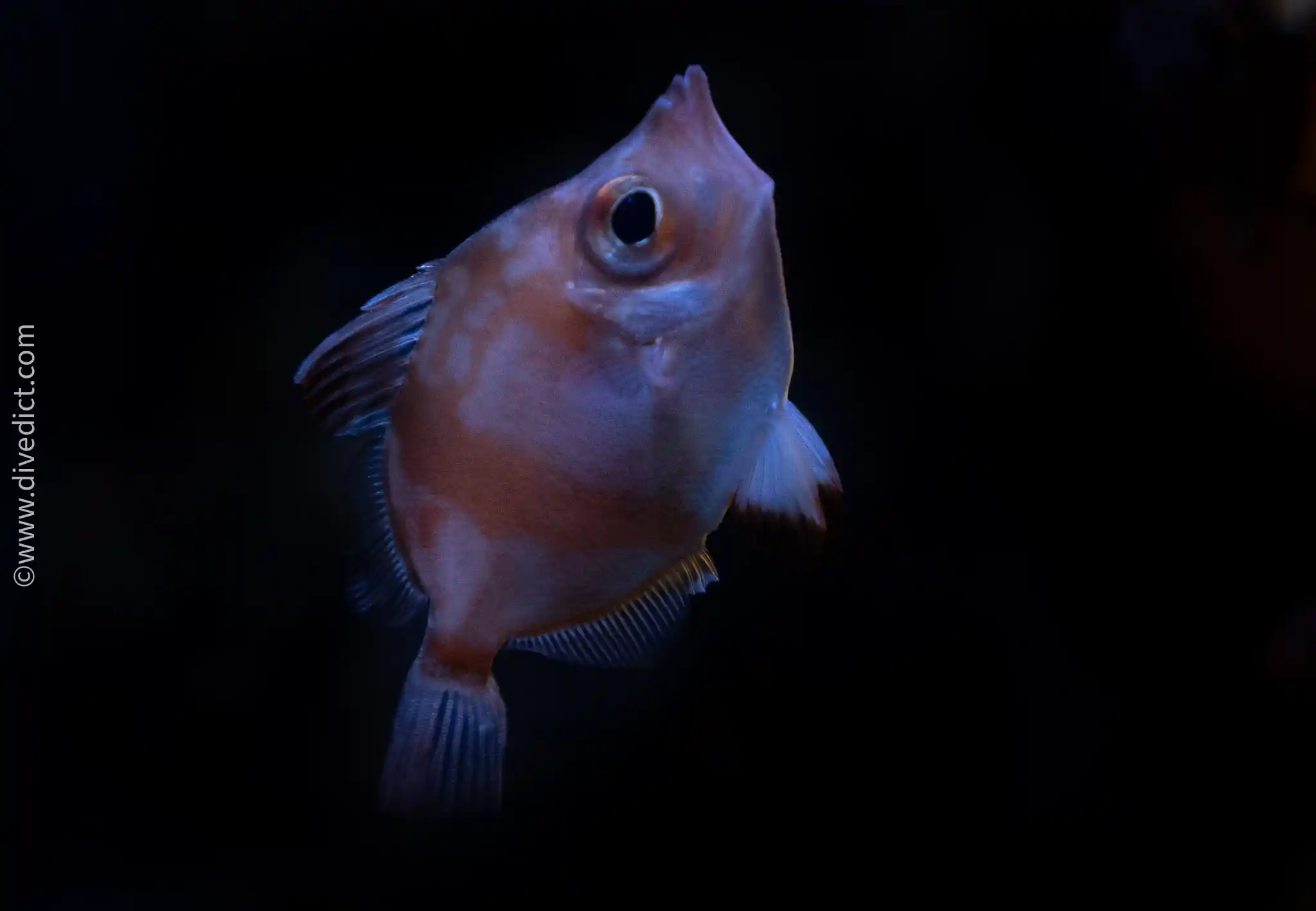
The Boarfish is particularly noticeable with its brick-red base color and its concave dented forehead.
In addition, this little guy is also high-backed, which gives him an odd shape in the overall picture.
Its mouth can be stretched wide and can be shaped into a tube with which it sucks in its prey; tiny crustaceans, and small fish.
A hard-jet and a soft-jet fin adorn his back; his caudal fin consists of both hard and soft rays.
Most specimens are 13 to 15cm long, but also 30cm tall guys have rarely been discovered.
These big individuals are usually females.
Natural enemies
Predatory fish
Dangerous/Venomous
The Boarfish is neither dangerous nor venomous.
Sketch
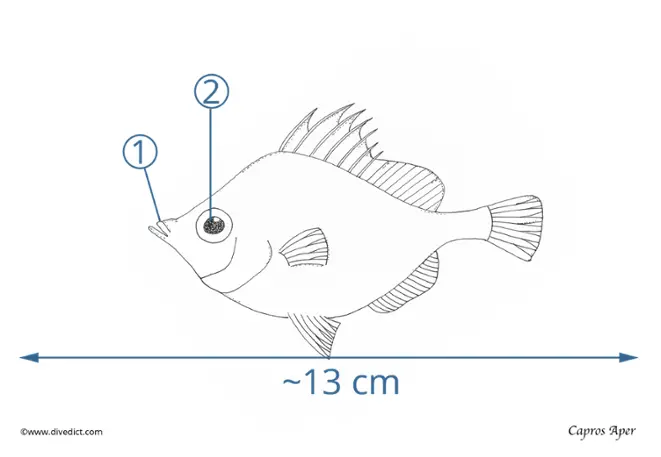
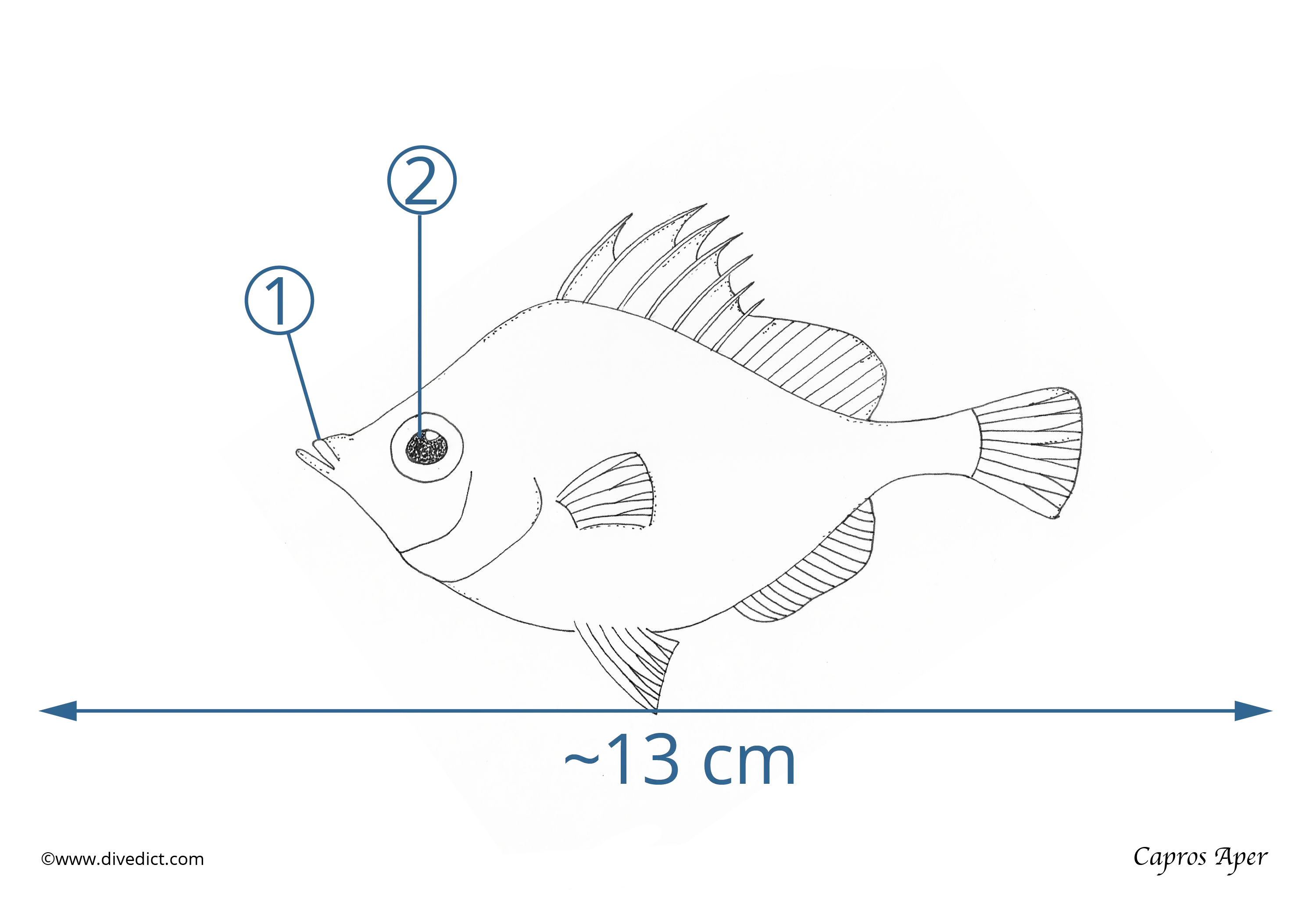
1. Stretchy mouth
2. Huge eyes
Pro tips
The Boarfish are usually found in shoals under ledges or in caves.
Their huge eyes also tell us that they prefer to stay in shady areas.
In deeper regions, however, it is also popular to discover it in coral reefs or sometimes even on sandy bottoms.
It even ventures down to an astonishing 700m depth.
In the Mediterranean, it is mainly found in western areas, especially near the Strait of Gibraltar.
Text: Felician Hosp, Carolina Leiter, Pia Balaka
Pic: Felician Hosp
Illustration: Dive Dict