
Sponge crab
Dromia personata




Special features
The sponge crab is considered a relic of the Tethys Ocean (around 250 million years old).
And that is exactly how it moves as well: with its compact, heavy body it trudges along sluggishly, as if it could endure all the ages of time.
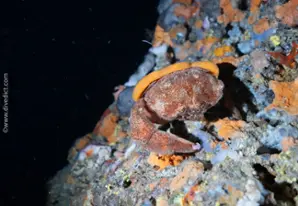
With its bulging claws, it cuts pieces from sponges or colonies of sea squirts and arranges them on its back using its fourth or fifth pair of walking legs.
There, the sponges continue to grow quite happily, although researchers are not entirely sure why the sponge crab camouflages itself in this way.
After all, its main predator—the common octopus—is not fooled by it.
But at least in its favorite habitat, the sea cave, this tactic seems to work well, because its enemies there do not rely on sight but move by touch or taste.
When it holds a sponge out toward them, they turn away in disappointment.
By the way, when it comes to its sponge, the sponge crab does not joke around: if it ever loses it, it is very careful to find the exact same sponge again.
Appearance
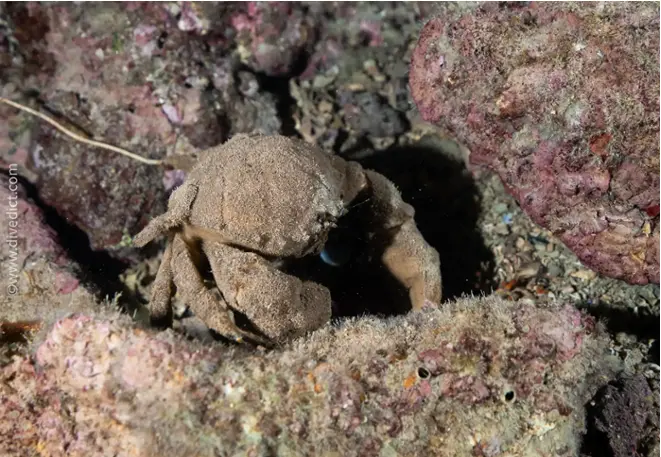
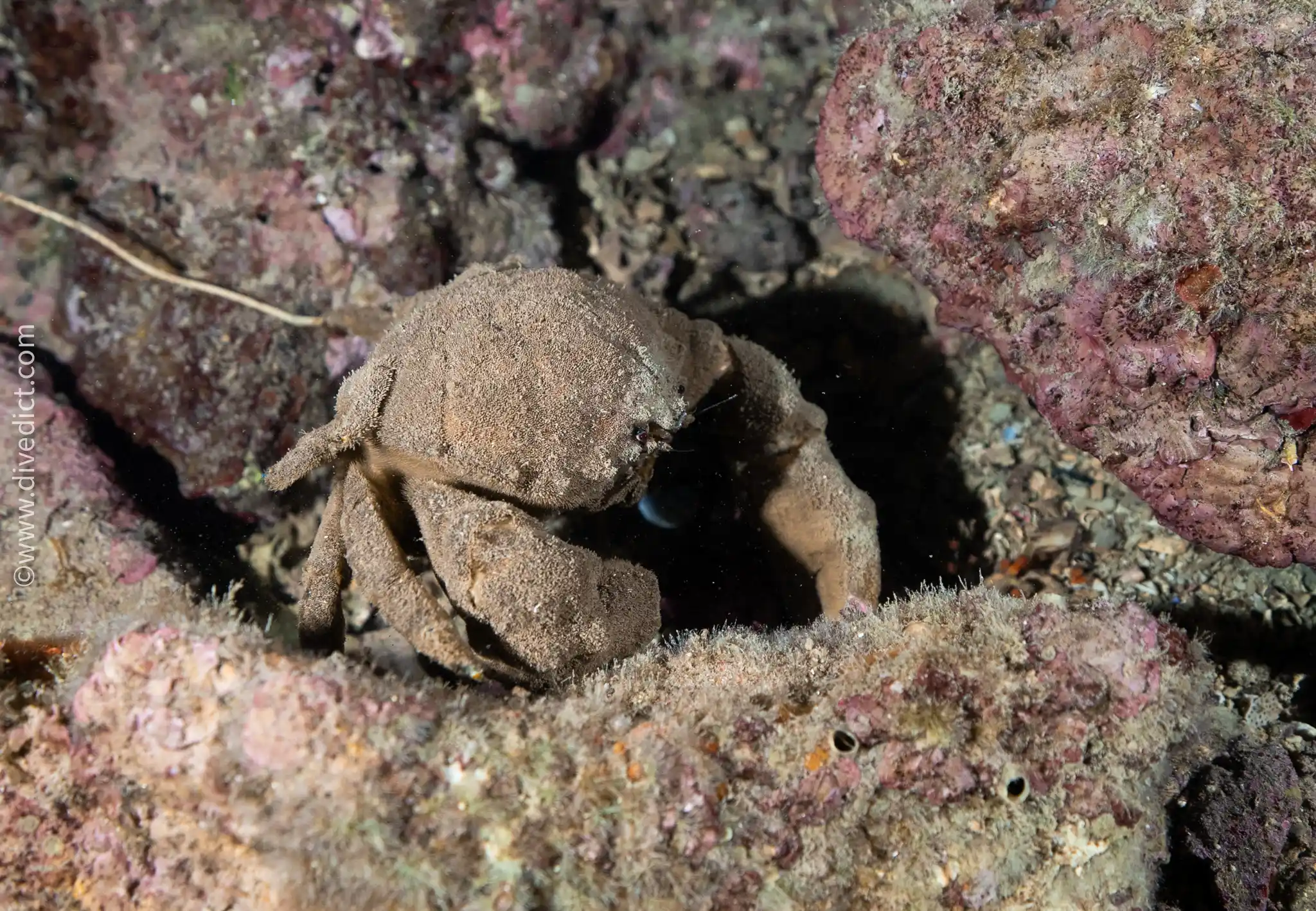
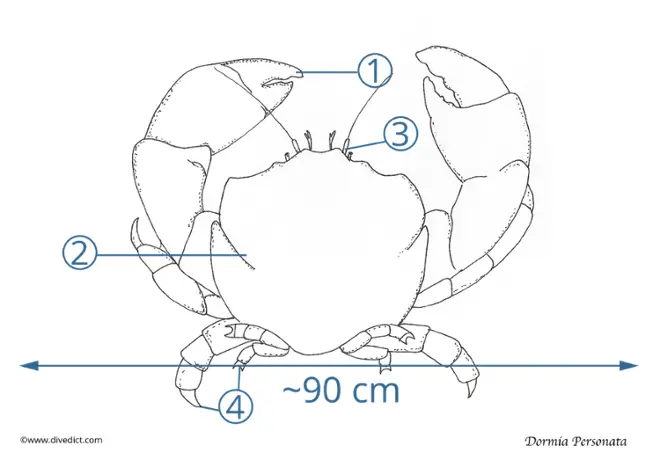
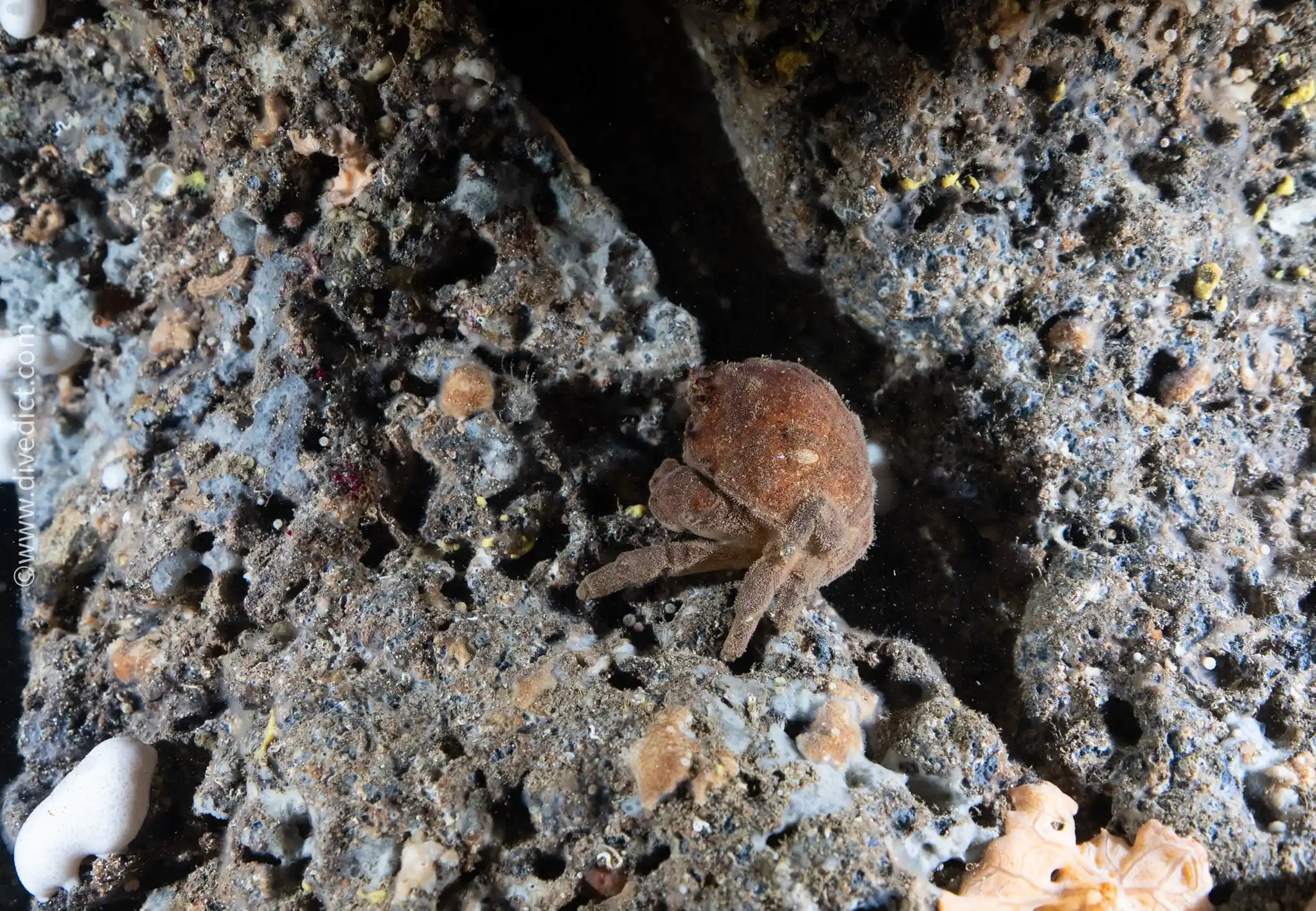
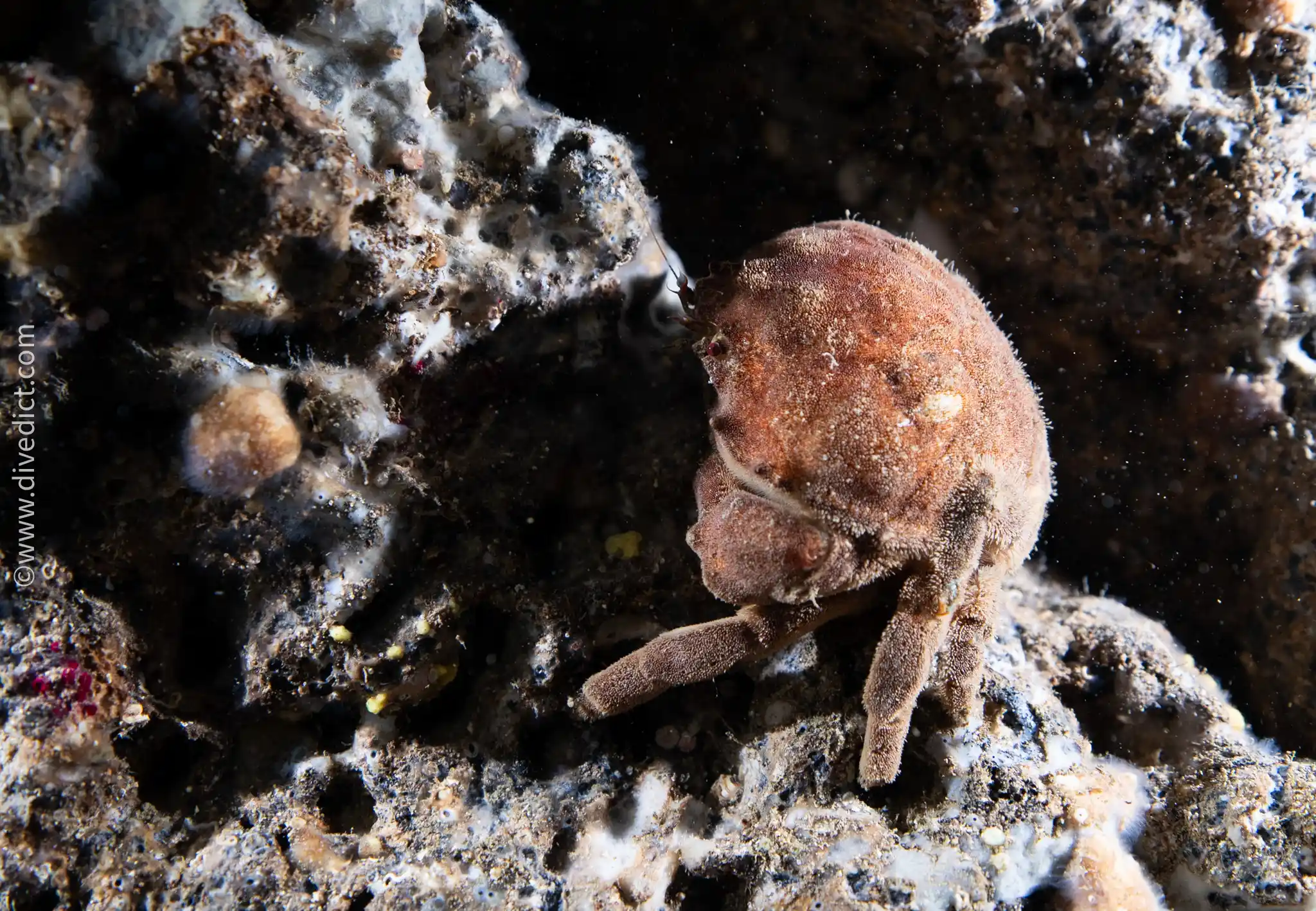
The sponge crab has a rather clumsy, broad body shape, reaching a maximum width of about 9 cm.
Its entire surface is covered with a short, dense, velvety coat, except for the tips of the claw fingers, which are smooth and pink in color.
It is dark to reddish brown, but it is more easily recognized by the sponges or sea squirts on its back than by its own coloration.
Natural enemies
seastar, fish, octopus
Dangerous/venomous
Sponge crabs are neither dangerous nor venomous; they can only give a slight pinch if you get too close.

Pro Tips
Sponge crabs are relatively common in the Mediterranean compared to other species and are often found in dark caves.
However, anyone who really wants to improve their chances should go on a night dive.
If you then spot a colorful, walking sponge, you can be fairly certain that there is a sponge crab underneath.
When it comes to reproduction, timing is everything: females are only receptive immediately after they have freshly molted.
Text: Carolina Leiter
Pic: Felician Hosp, Sabine Probst
Illustration: Dive Dict