
Rockpool shrimp
Palaemon elegans




Special features
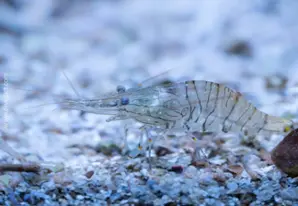
This little beauty prefers to stay very close to the intertidal zone and is therefore perfectly adapted to the strong water movements prevailing there.
Appearance
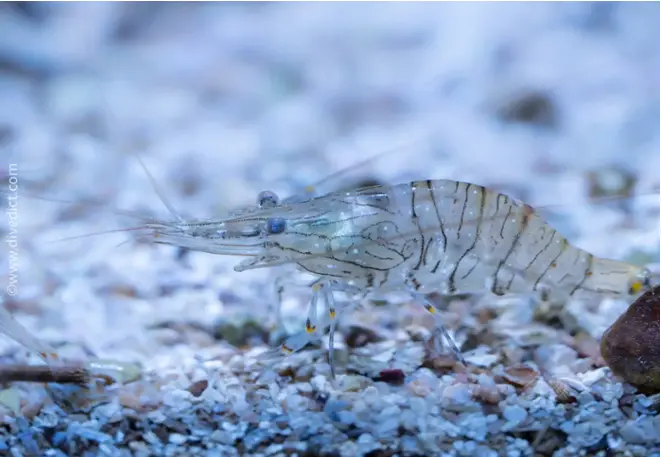
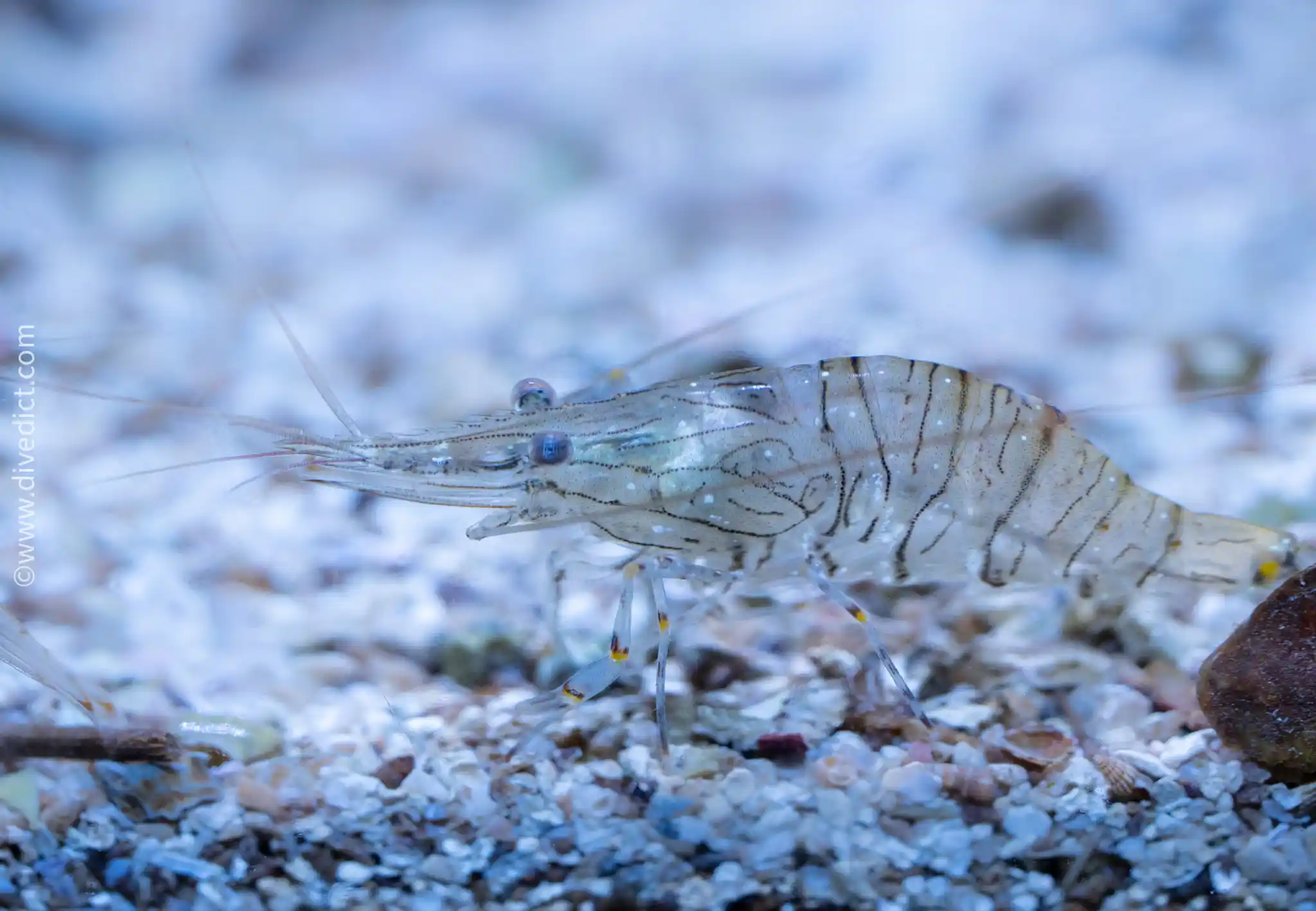
The Rockpool prawn is not easy to spot because it has a transparent body.
It is decorated with dark brown lines along the segment boundaries as well as with narrower brown lines on the back and many bright, iridescent dots.
The joints of the pair of stride legs and the pair of claw legs are ringed yellow and brown. In contrast, its eyes are grey-green.
Their genus characteristic? The long, toothed, and usually erected rostrum.
Natural enemies
Fish, crabs
Dangerous/Venomous
The small rock shrimp is neither dangerous nor venomous.
Sketch
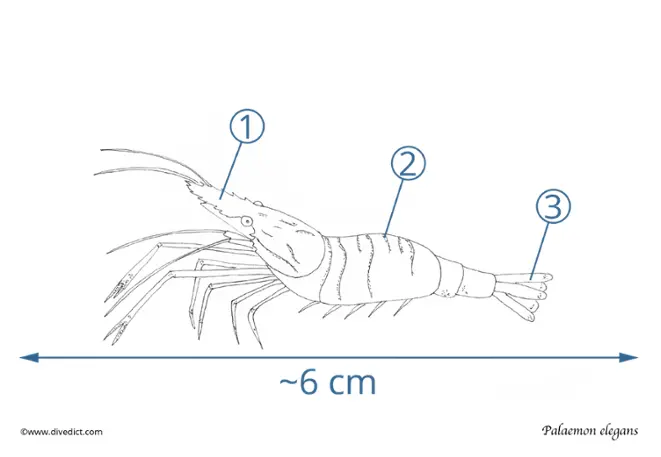
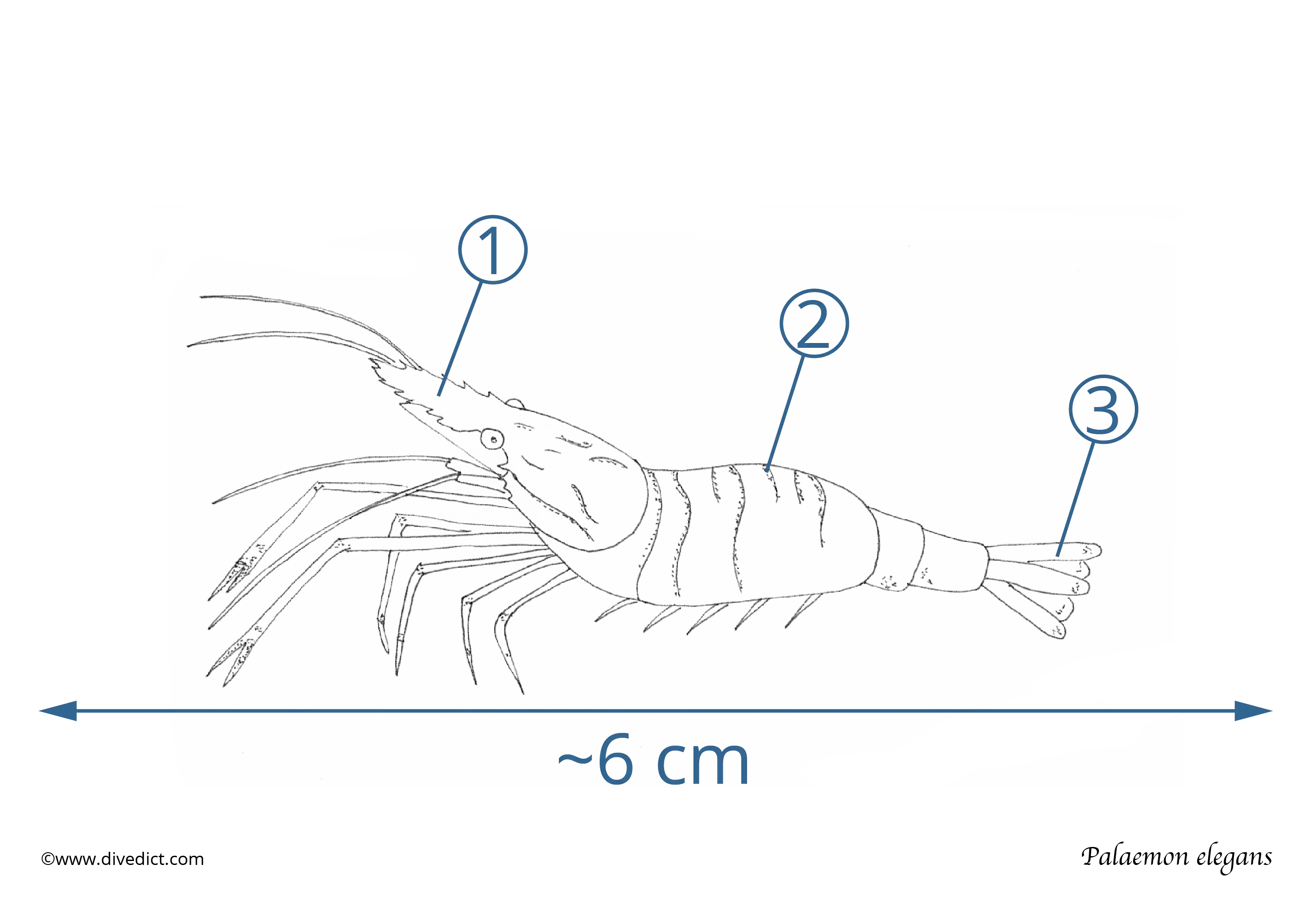
1. Long, toothed, erected rostrum
2. Dark stripes on the back
3. Small last link
Pro tips
Rockpool prawns are often found in the Mediterranean, and when they feel comfortable in one place, they literally frolic there en masse.
They like to live on algae-covered rock bottom, where they feed on anything they can grab with their little claws.
Text: Carolina Leiter
Illustration: Dive Dict
Pic: Sabine Probst