
Small European locust lobster
Scyllarus arctus




Special features
In case of danger, he can put his tail fan under his body in an instant and jump backward into safety.
Appearance
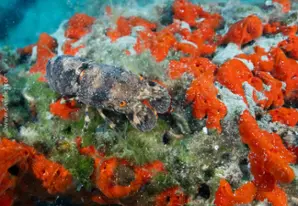
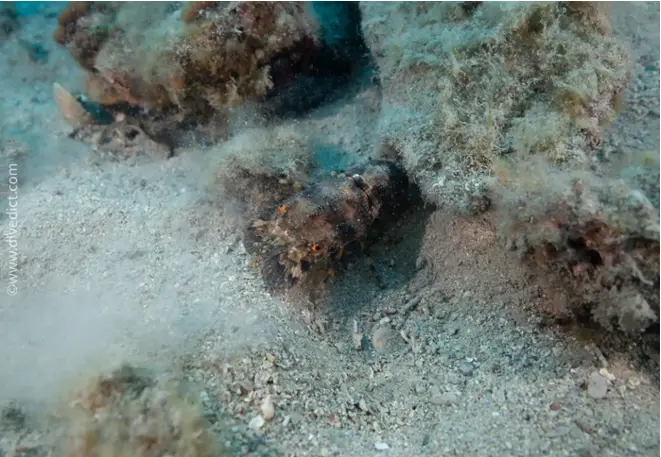
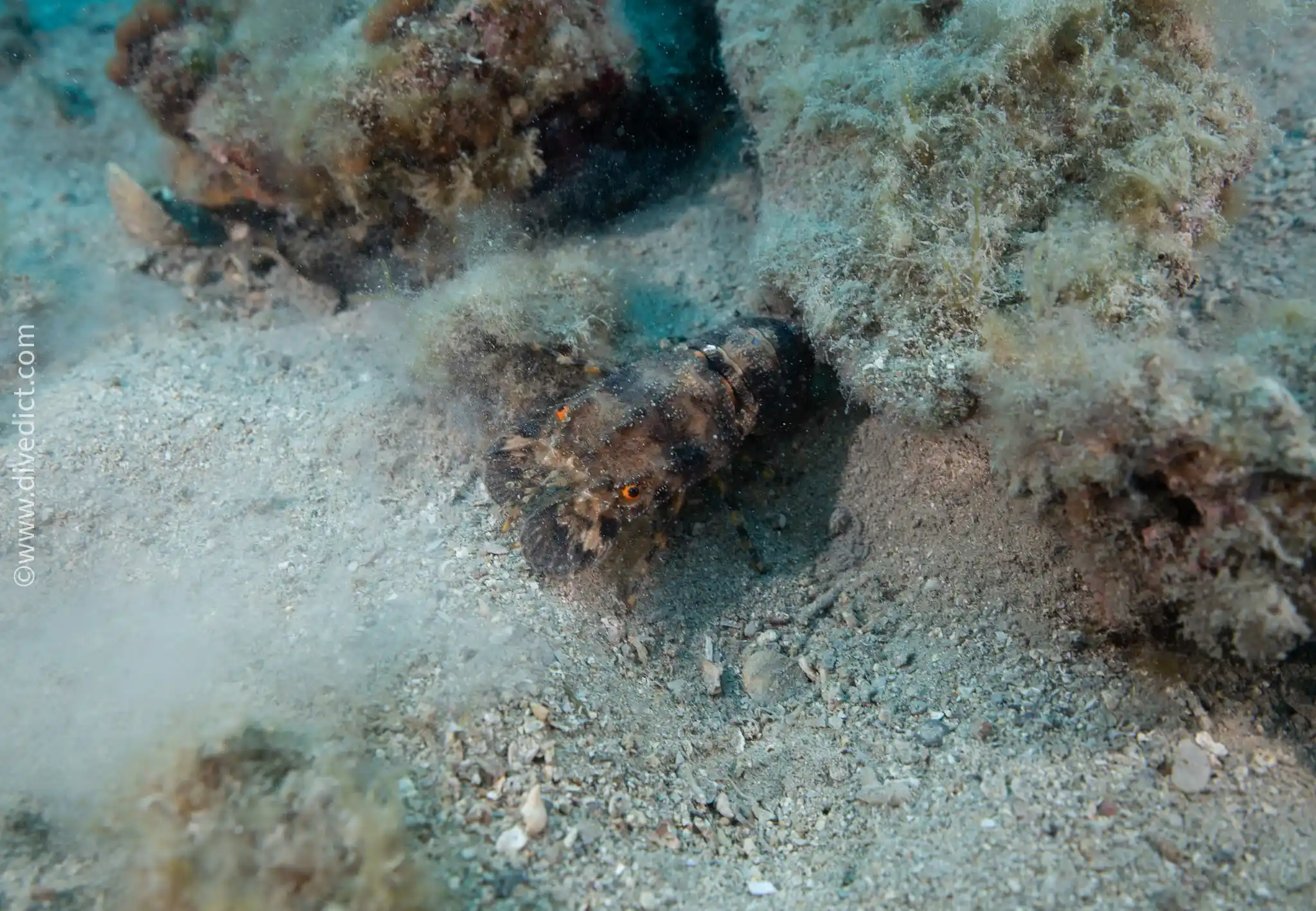
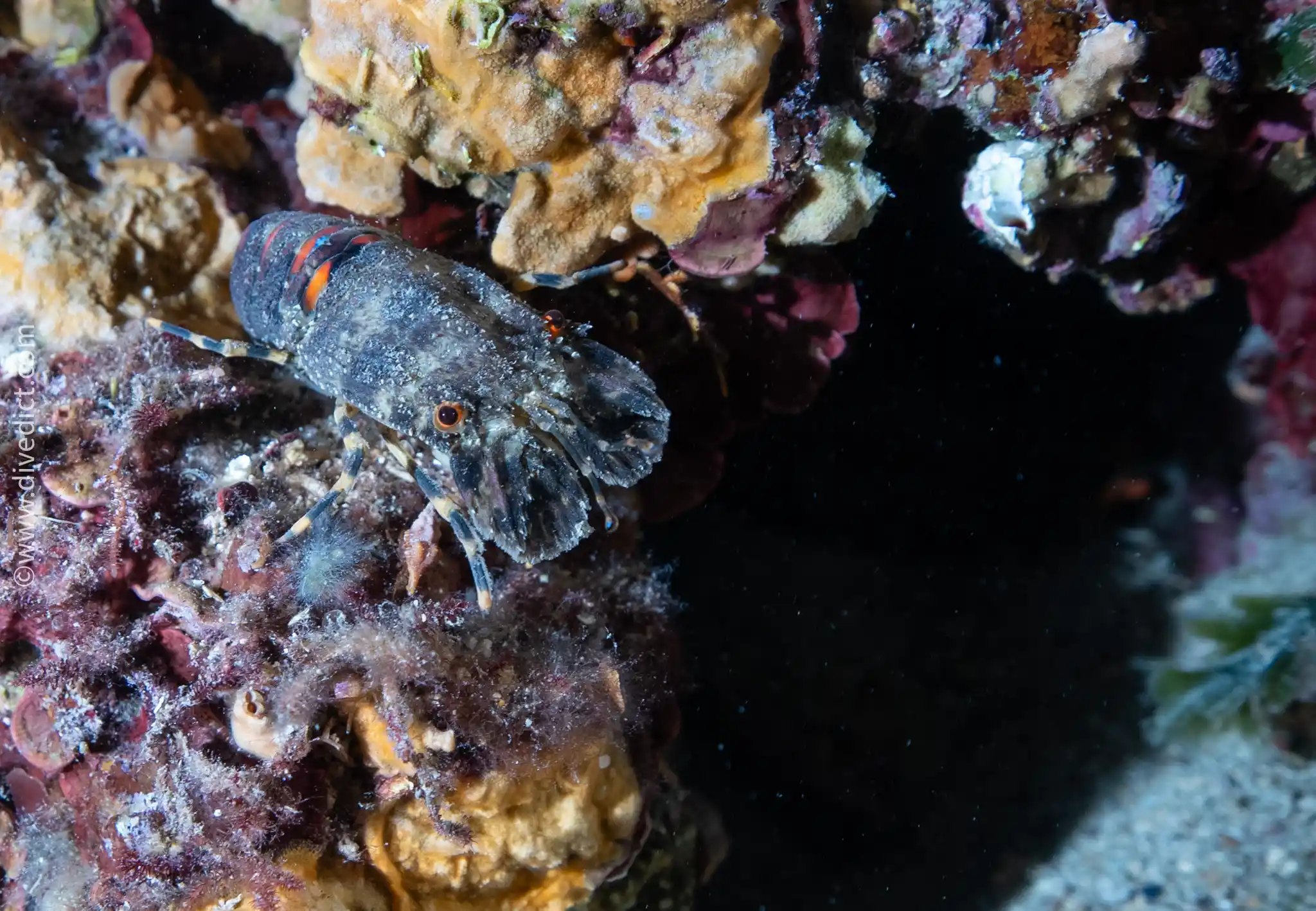
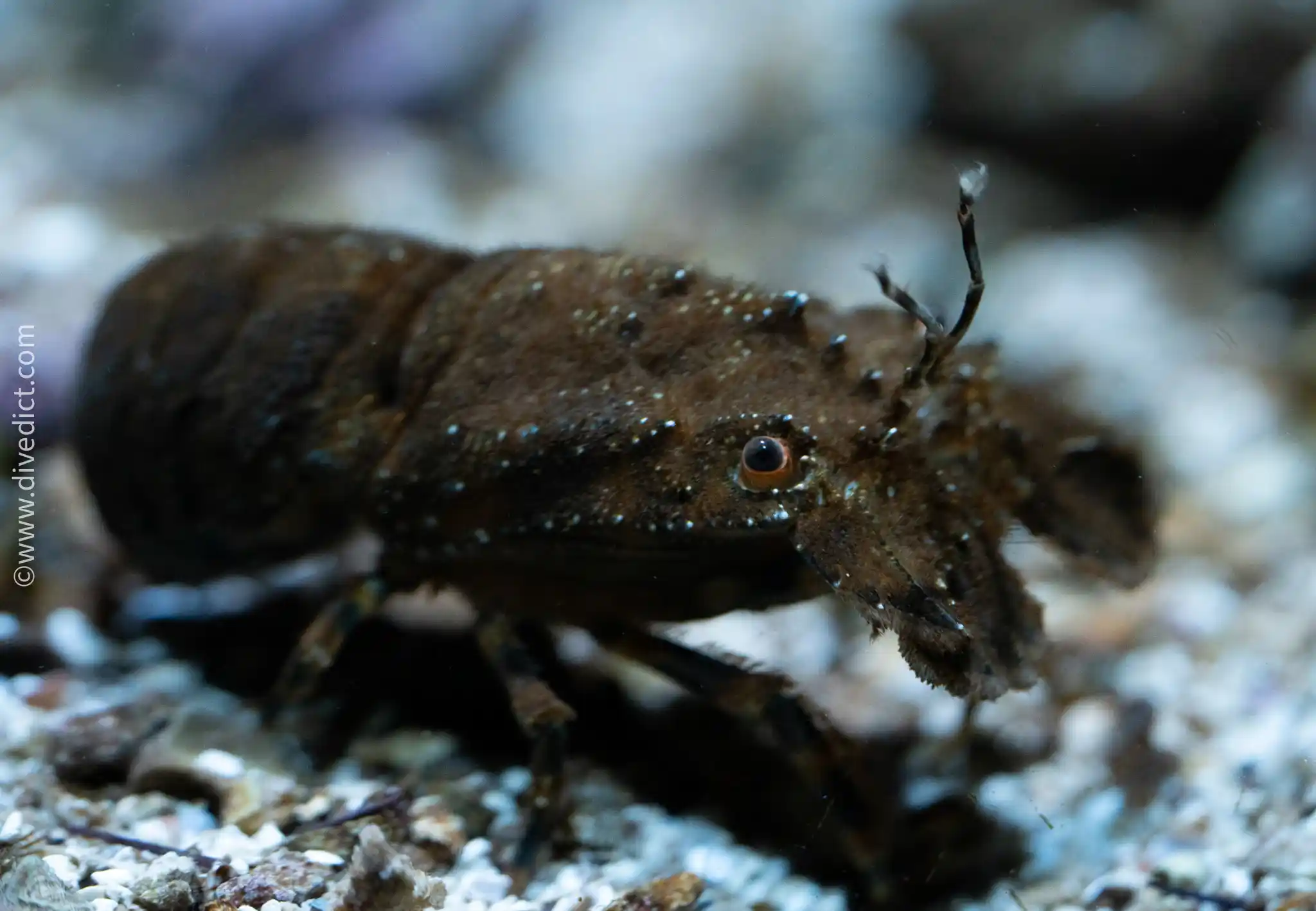
He has a massive and flattened body (hence the bear in the name) with plate-shaped, short, and wide 2nd antennas with serrated ends.
By the way, you can easily distinguish the small European locust lobster from its larger sibling, the Mediterranean locust lobster, by the shape of the antennas: the Small European locus lobster has square antennas, whereas his bigger brother has clearly round antennas.
Apart from that, the Small European locust lobster also clearly stands out from its species and genus with its coloration.
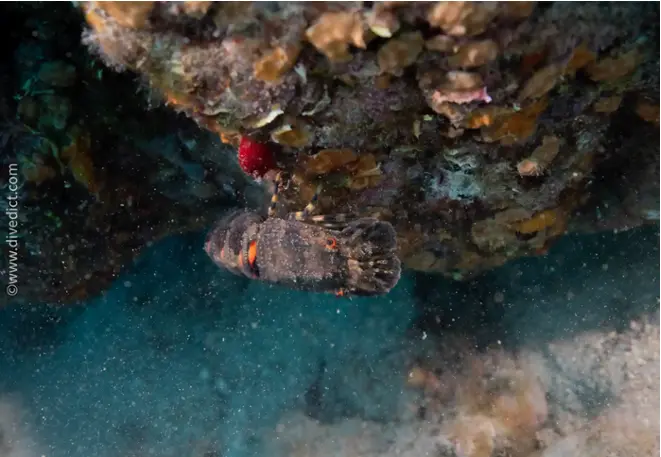
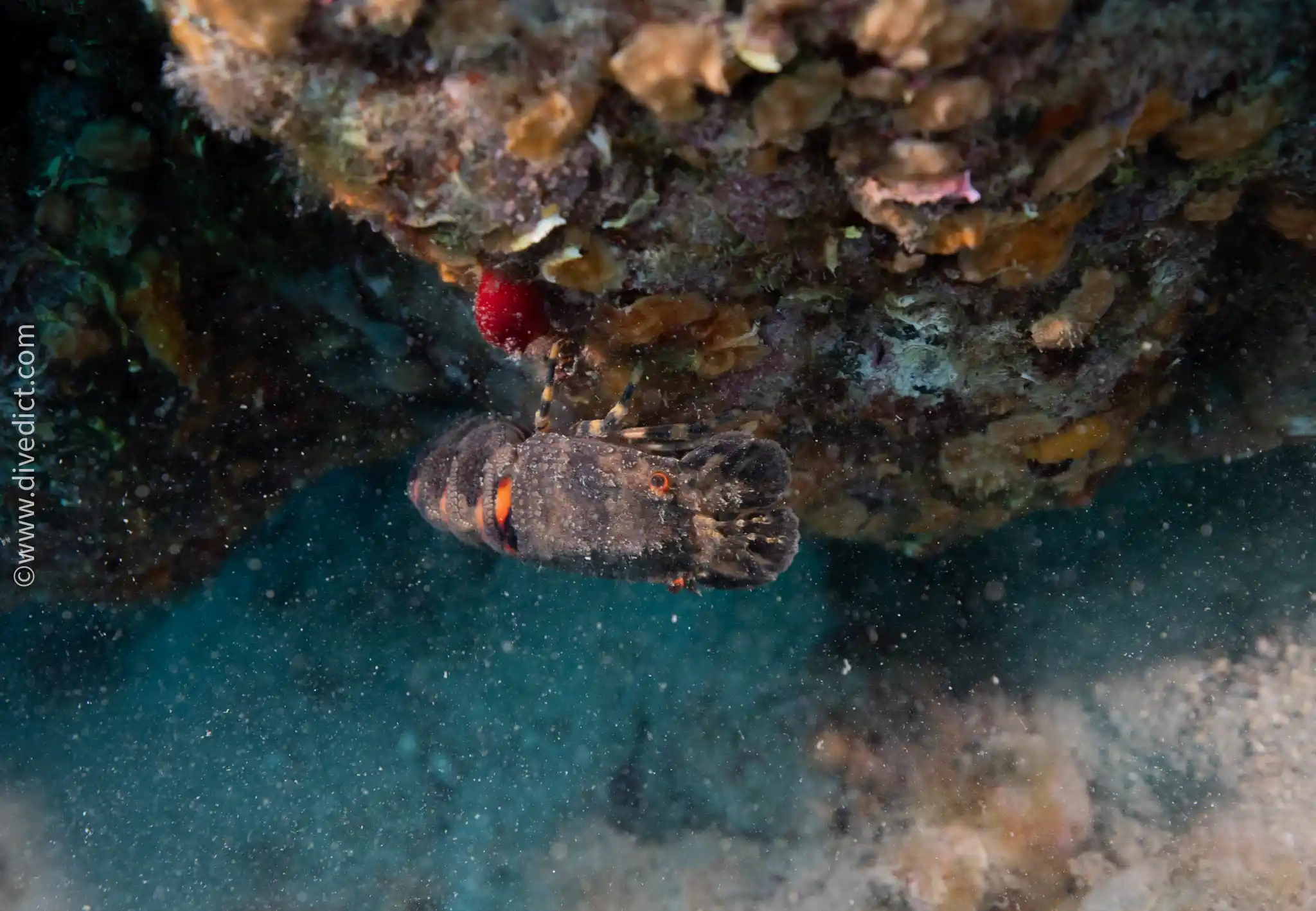
It is beautiful rusty-red with 3 bright red crossbands, sometimes with a few purple or blue spots, while his relatives are rather unspectacularly colored.
The eyes, which are far apart, also glow bright red.
His legs may be striated and the females can be recognized by their incompletely developed claws on the 5th pair of walking legs.
Her abdominal segment is rounded, without thorns and it looks like he's pulled it in all the time, a bit like a scared dog.
Natural enemies
Bonefish, gray triggerfish (Balistes capriscus)
Dangerous/venomous
Bear crabs are neither dangerous nor venomous.
Sketch
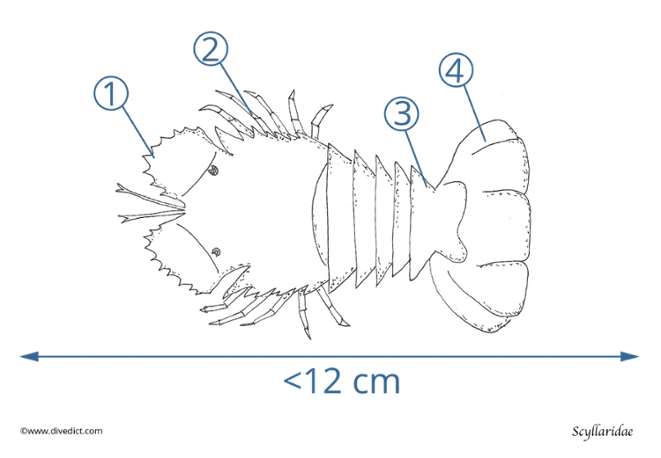
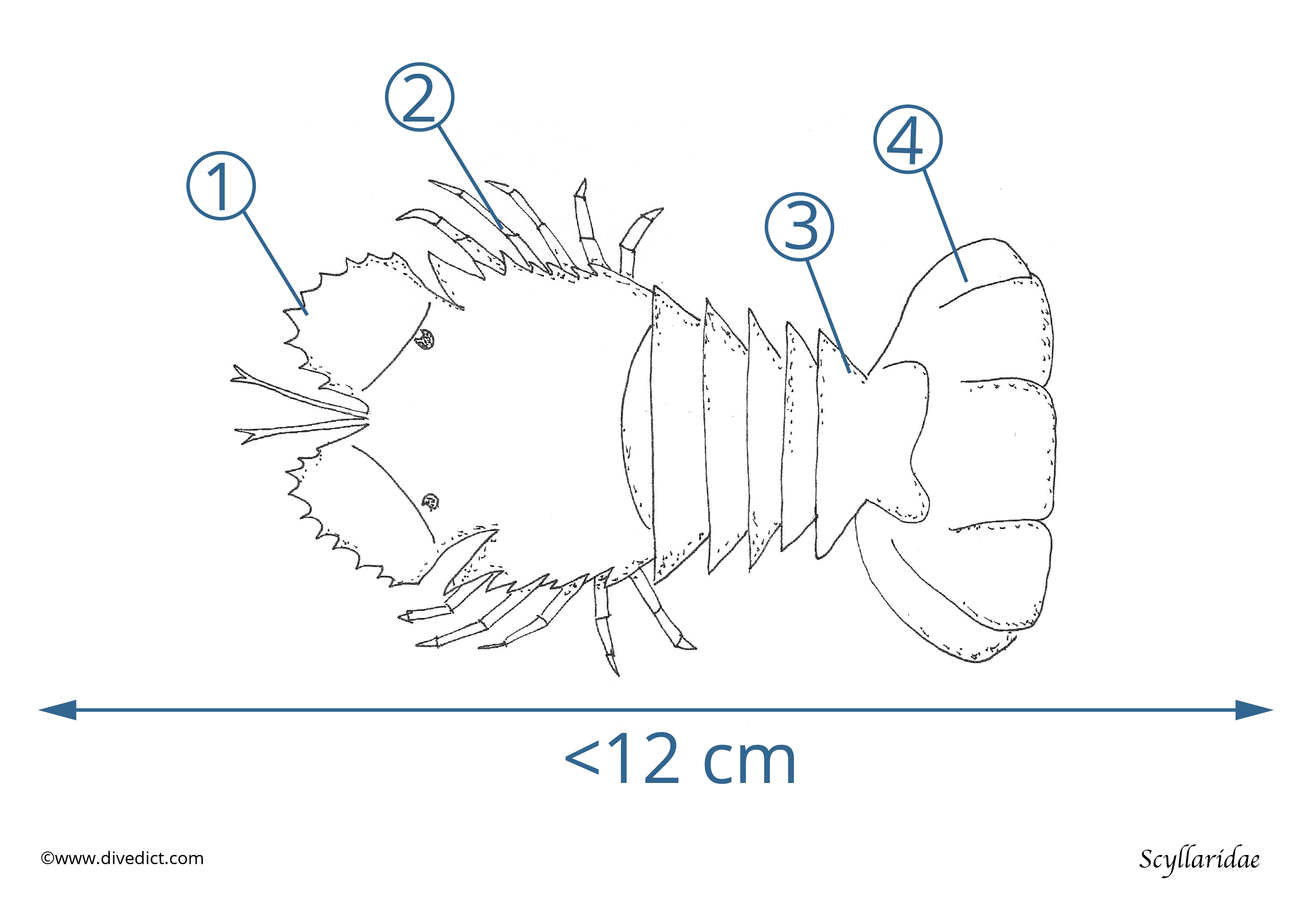
1. Wide 2nd pair of antennas
2. Striped legs
3. Segment that is constantly retracted downwards
4. Rounded abdominal segment
Pro tips
As cute as they look, it is a shame that the Small European locust lobsters are shy creatures and hide in crevices, under overhanging rock formations, or in small caves during the day. But if you have a lot of patience and a close eye, you can definitely spot them within 5-50 m.
At night, they come out of their hiding places to dig in the sediment for worms, snails, and mussels with the help of their 2nd antennae. To be able to eat mussels, they clamp their front treads between the prey's shells like a wedge.
During the mating stage of their reproductive cycle, the females carry the red eggs on their hind legs and take care of them until the free-swimming larvae hatch, the so-called phyllosoma larvae.
In this phase, they travel enormous distances because, like plankton, they are drifted a long way.
It is also quite impressive that the larvae go through 15 different stages and look completely different from the adult animals, namely almost transparent and much flatter and smaller.
They constantly have to row their legs so as not to sink (almost like a beginner diver with his arms).
In the last stages of the phyllosoma larval phase, they particularly like to hook onto jellyfish. In fact, they cling so tight that you would need to force them to let go.
In the next phase, they transform into Puerulus larva, start their soil life, and become the “finished” young animal.
With all these phases that they have to go through, it is not surprising that, depending on the conditions, they can live up to 20 years.
Text: Carolina Leiter, Felician Hosp, Pia Balaka
Pic: Felician Hosp, Sabine Probst
Illustration: Dive Dict