
European lobster
Homarus gammarus




Special features
There is one fact you probably don't know about the Scissor Kings: they live to be 50 years old.
And with age, they apparently mature into attractive silver foxes, because the older they get, the more often they reproduce.
However, they must molt very frequently throughout their long life. This costs them so much effort that they can even die from exhaustion.
Therefore, older animals try to avoid this procedure and then succumb to the fragility of their porous exoskeleton.
Appearance
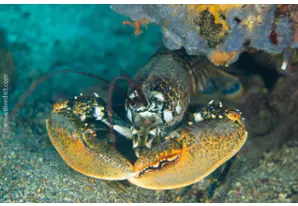
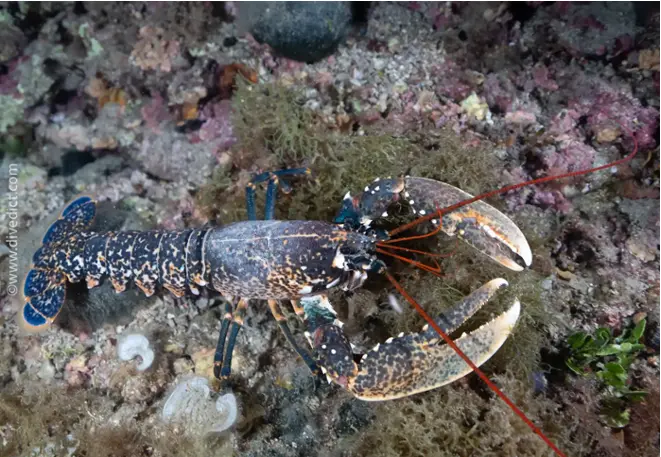
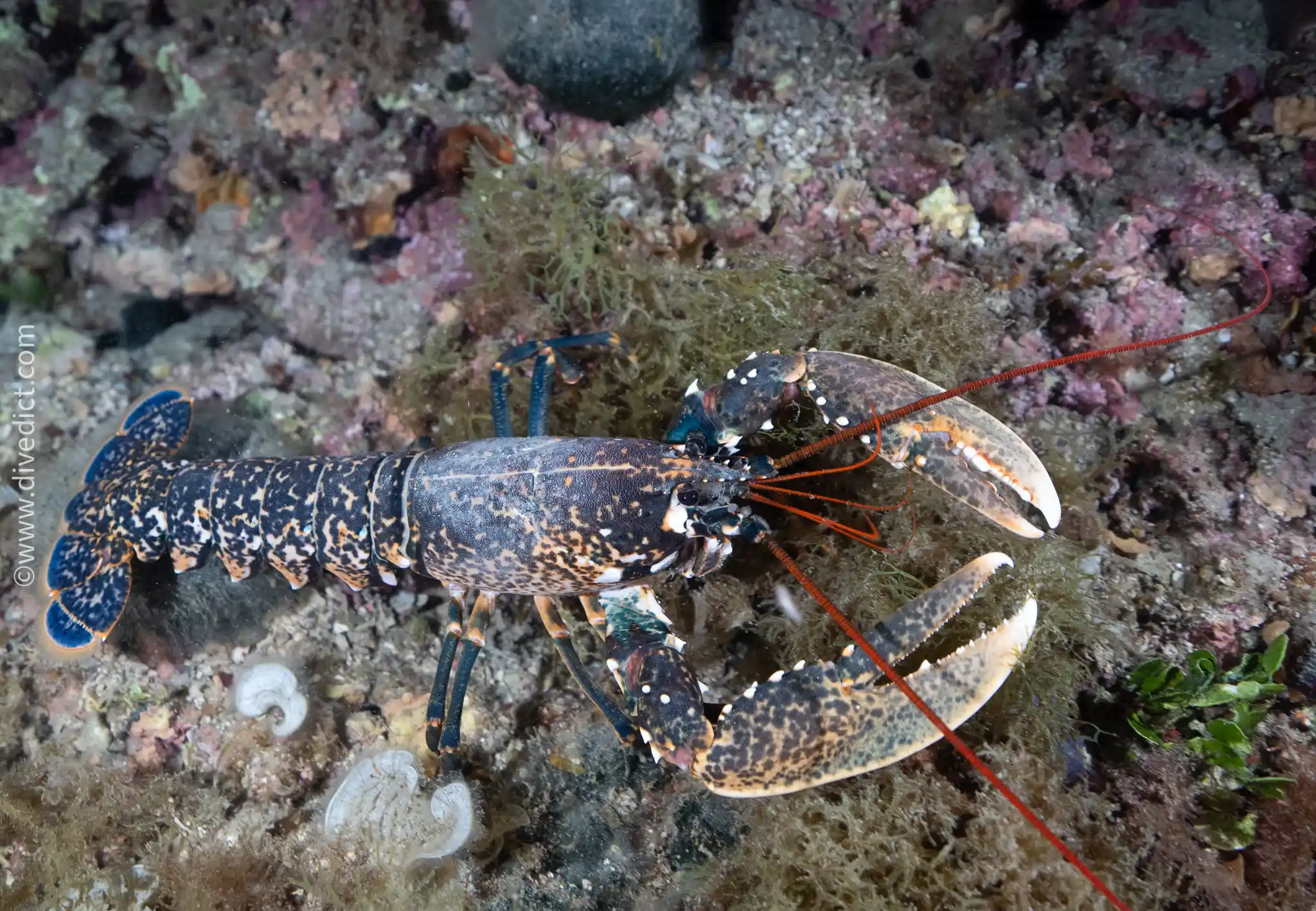
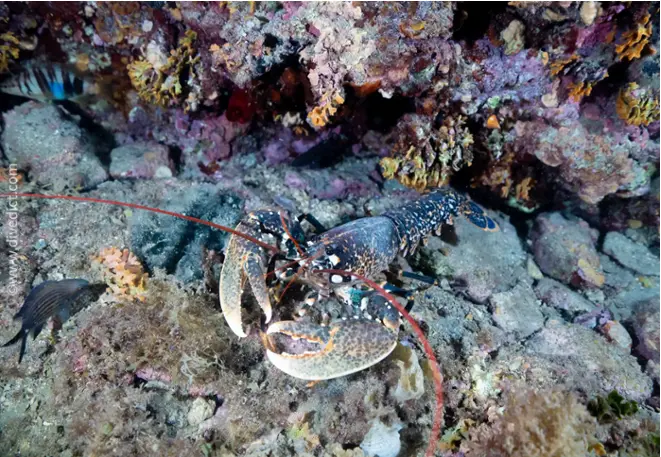
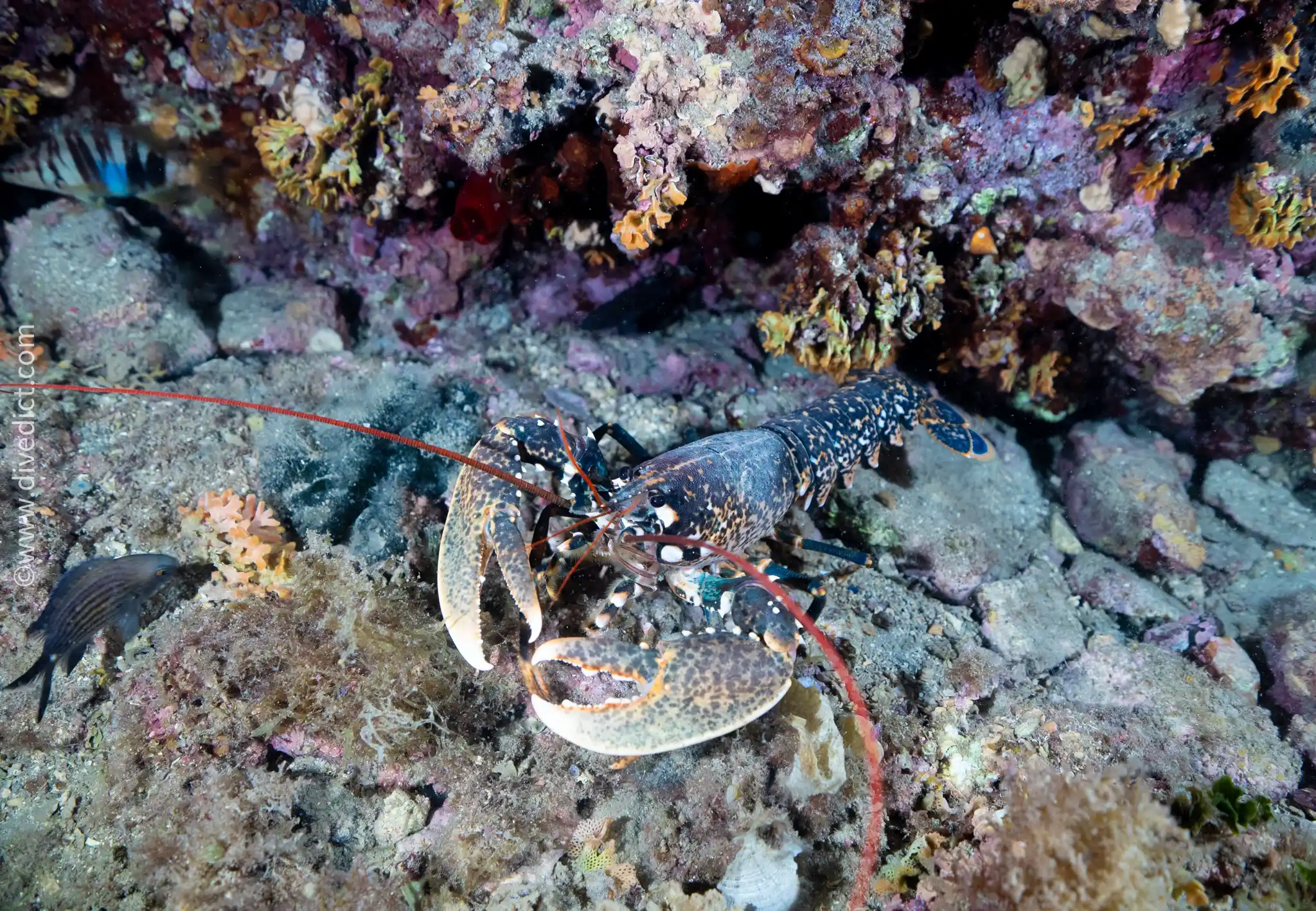
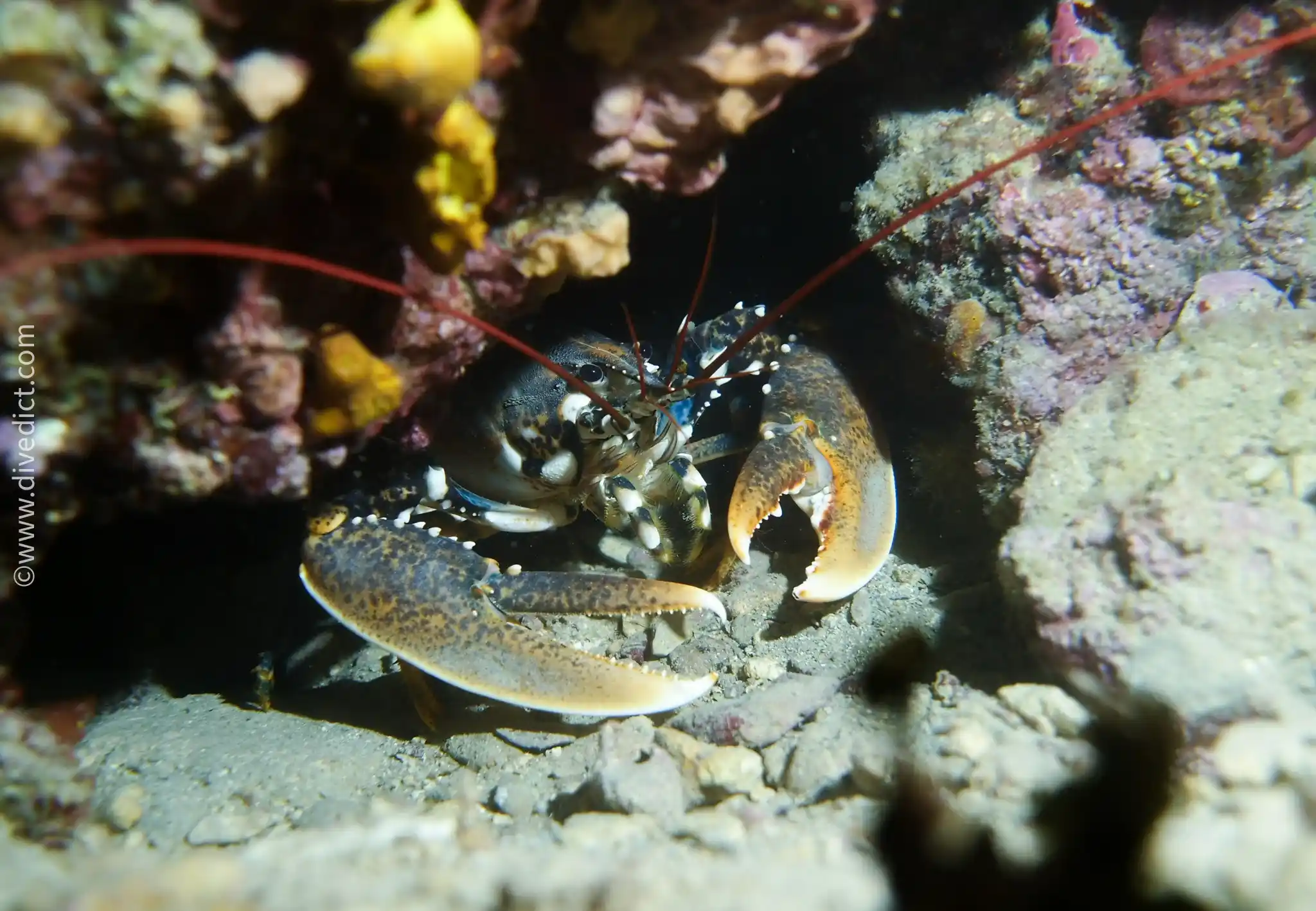
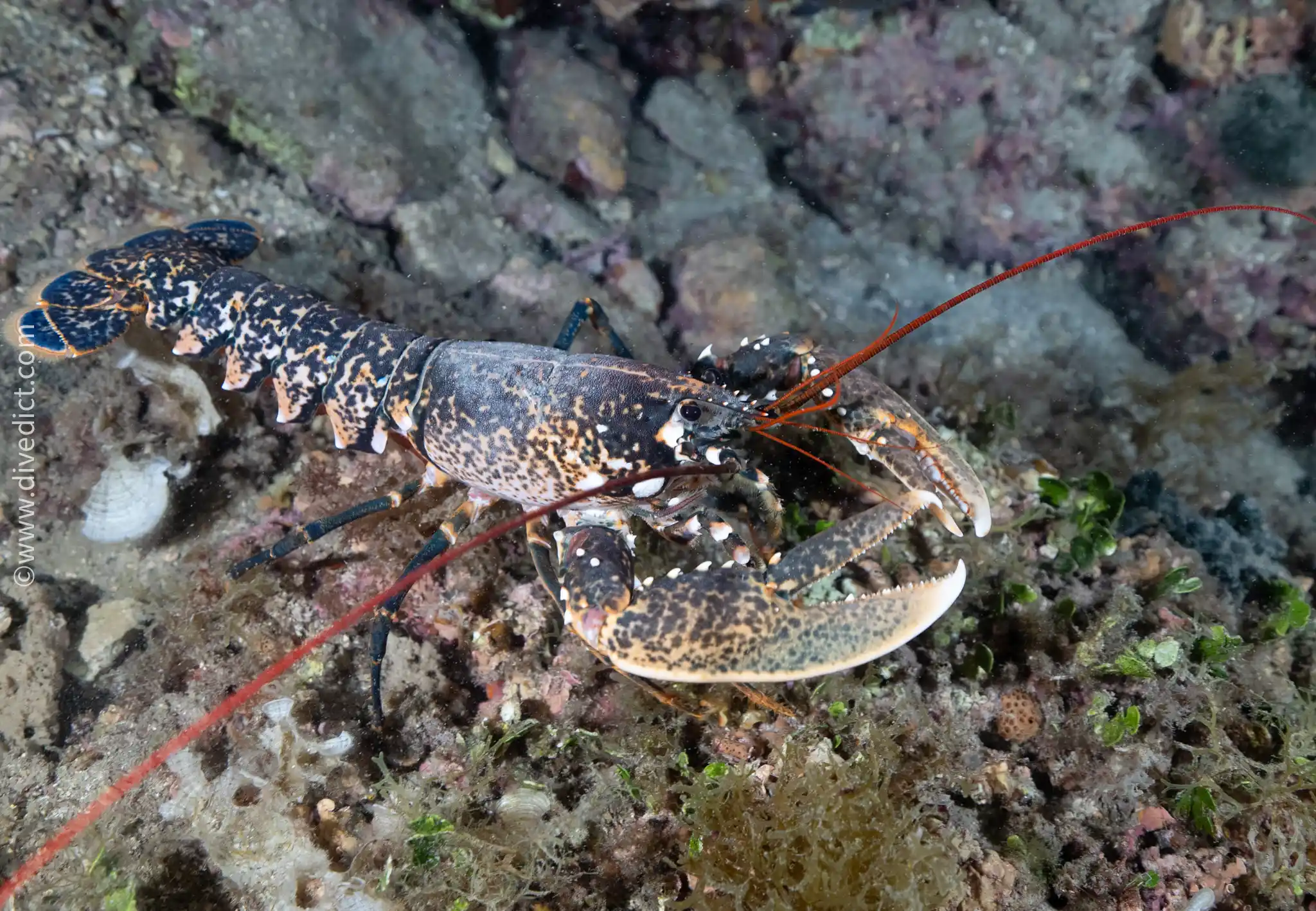
“Scissor King” is truly the correct term, because you can immediately recognize the lobster by its huge pair of claws: a smaller claw for gripping and a massive claw for cracking.
Behind them are two more, less noticeable pairs of scissors.
If he loses his claws, for example in a fight, then the gripping-claw is conveniently converted into the cracking-claw the next time he molts.
Lobsters not only get quite old but also up to 60cm long.
Its massive body is orange, yellow-green, blue-gray, or dark purple in color and individually more or less marbled.
Her abdomen is long and muscular, and her second pair of antennas is almost as long as her body.
Two small pedunculated complex eyes sit on the head, which is fused with the torso.
Natural enemies
Bonefish
Dangerous/venomous
Lobsters' scissors can be quite dangerous: the scissors can sometimes cut through finger bones.
These animals are not venomous.
Sketch
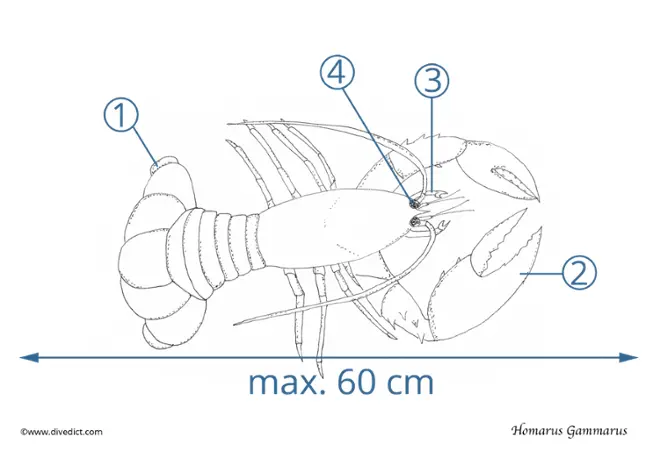
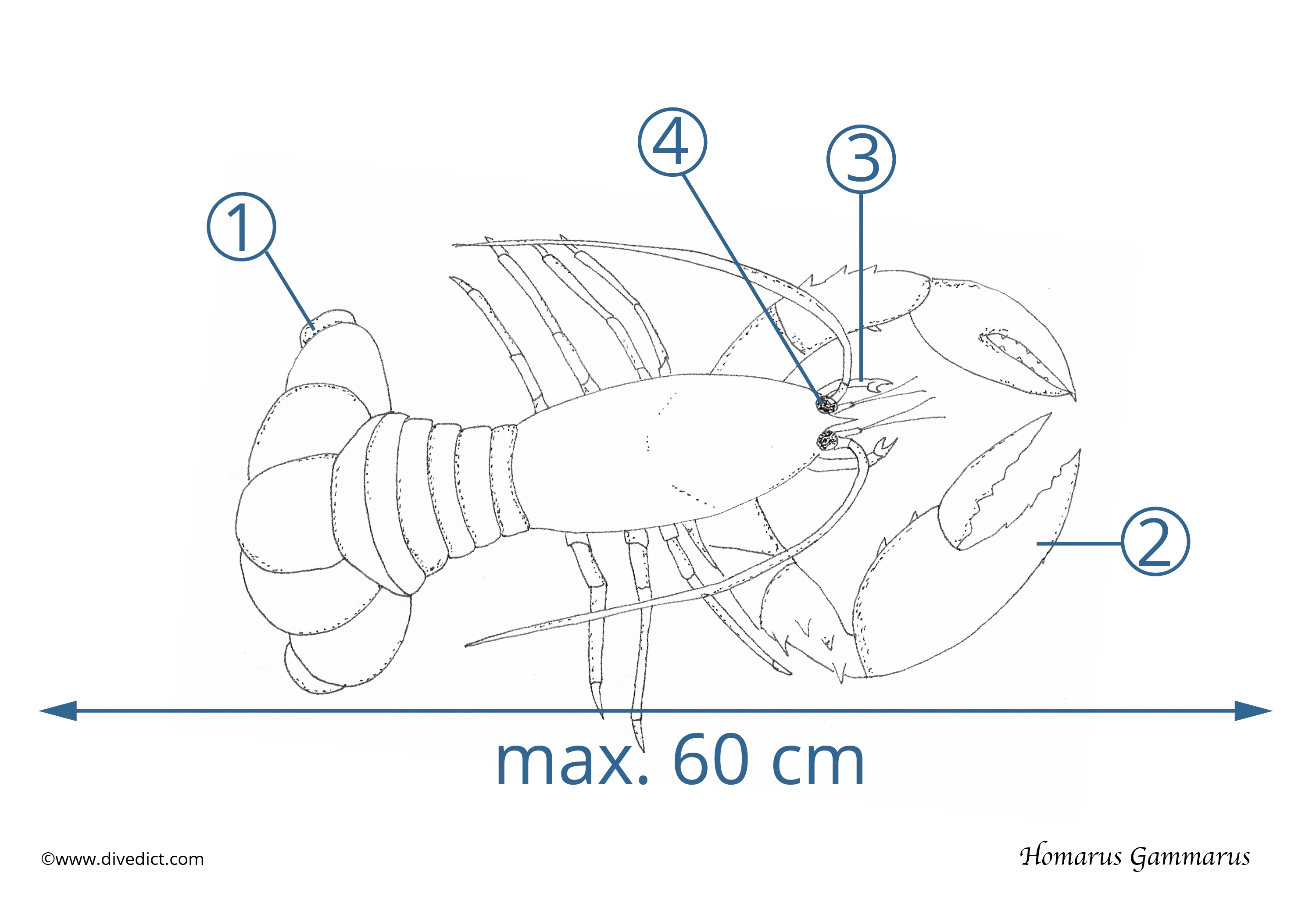
1. Muscular abdomen
2. Cracking claw
3. Small claws for feeding
4. Stalked compound eyes
Pro Tips
He has his own territory, which he cultivates, cherishes and protects.
During the day, he stays in hiding and returns there again after the night raids.
Especially during the molting process, he wants to have his own hiding place.
At this time, his body is not protected by the hard exoskeleton and is therefore particularly vulnerable.
The color often changes with molting and it literally emerges stronger from every molting.
Why? He gets more muscle cells.
Towards the end of the process, they sometimes eat the shed skin.
The European lobster is most likely to be found in lower regions with a diving lamp.
There you can shine into all sorts of caves and shelters and, with a bit of luck, he'll smile at you there.
With his big scissors, he preys on crabs, worms, carrion, and mussels.
Thanks to the cracking scissors, it is easy for him to crack mussels, and with his small scissors, the prey is then cut up and the bite-size pieces are eaten.
Like all crustaceans, the European lobster also has blue blood.
No, that is not because he is called the Scissor King and belongs to the high royalty!
But simply because he has more copper than iron in his blood.
Text: Carolina Leiter
Pic: Felician Hosp
Illustration: Dive Dict