
Common spiny lobster
Palinurus elaphas




Special features
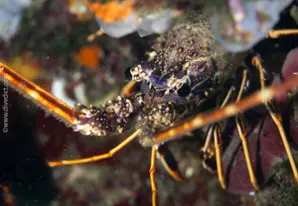
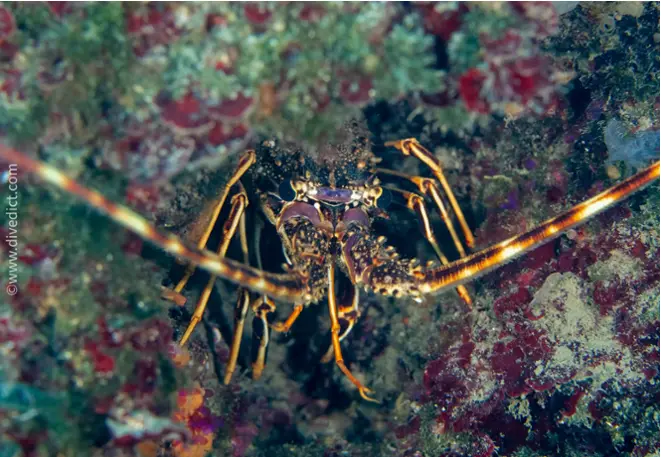
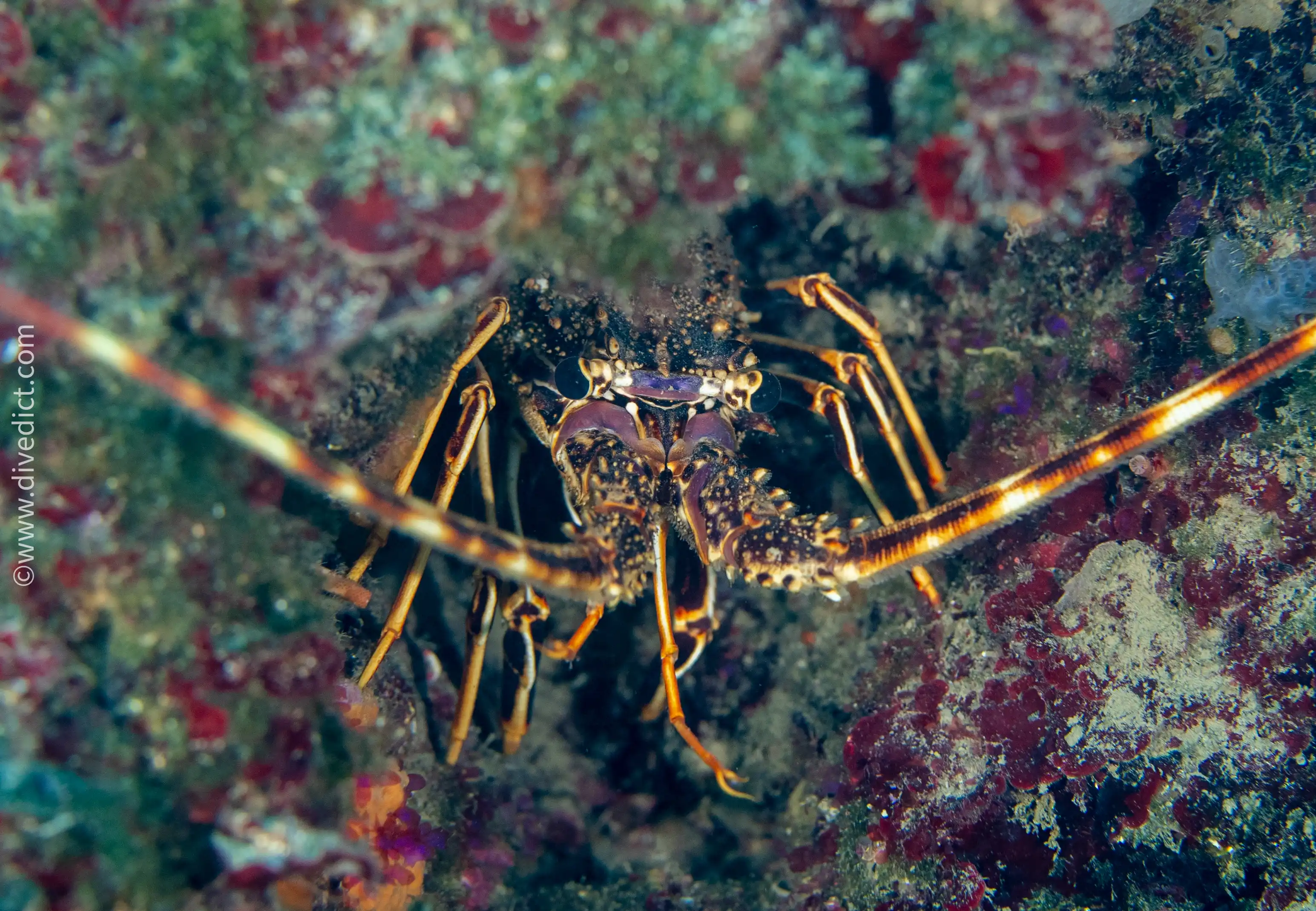
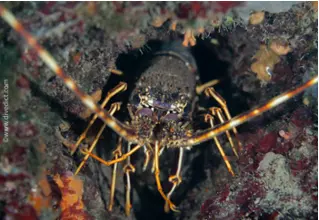
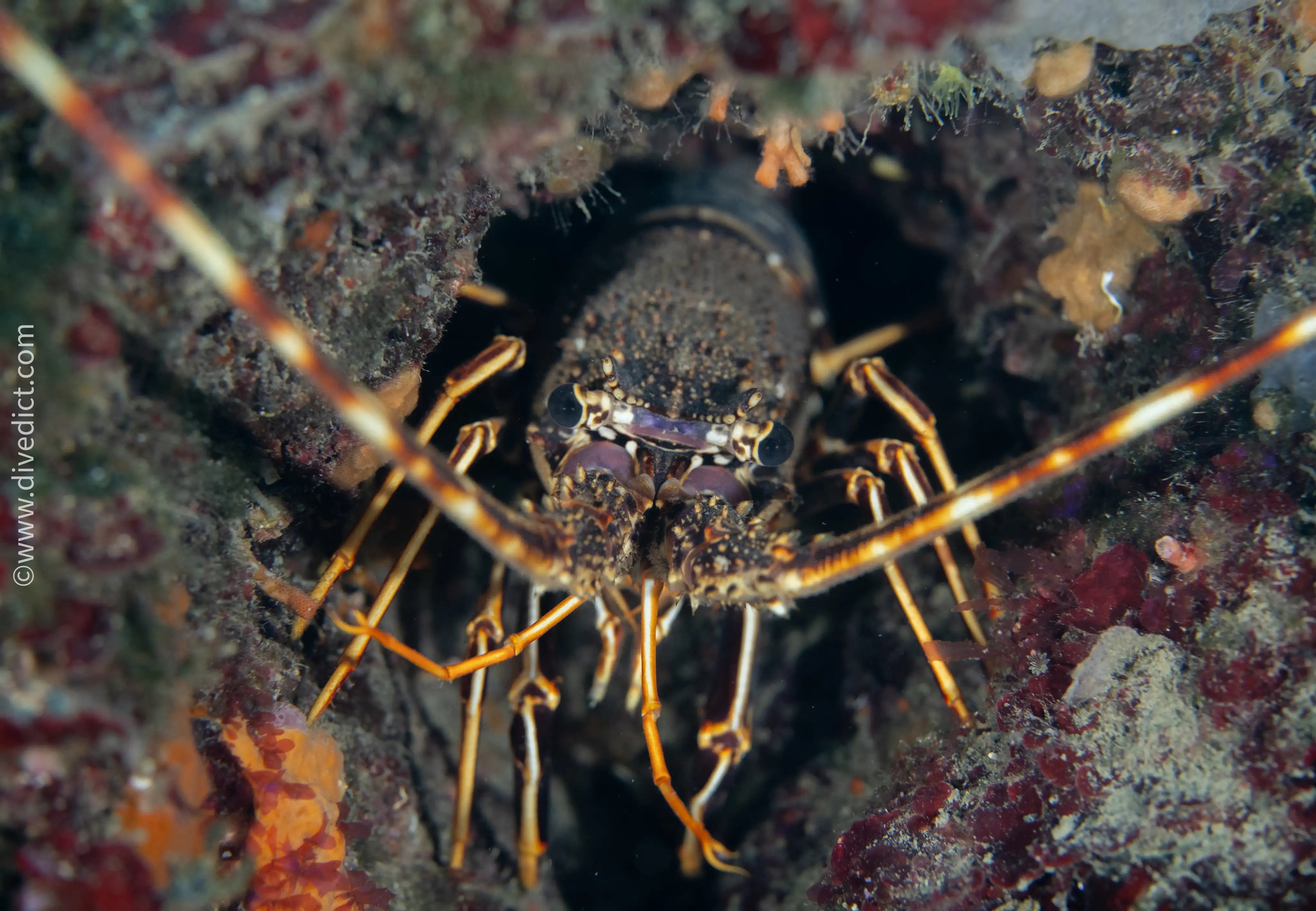
How do you immediately recognize the Common spiny lobster? Definitely on their incredibly long and powerful second pair of antennas.
With these, they can make a snoring sound to ward off enemies, but this melody is not perceptible to us humans.
In contrast to other crabs, common spiny lobsters can't brag about their claws, because they often don't have any at all. Only the females have a very small pair.
Appearance
Numerous myths surrounding the underwater world tell of Common spiny lobsters that are two meters long...in reality, they are no more than 50cm long.
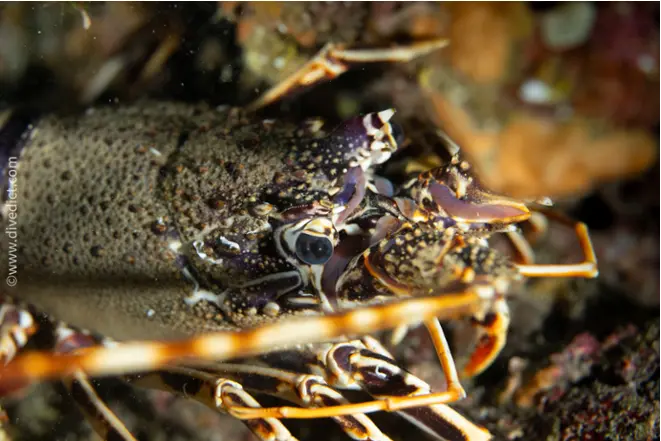
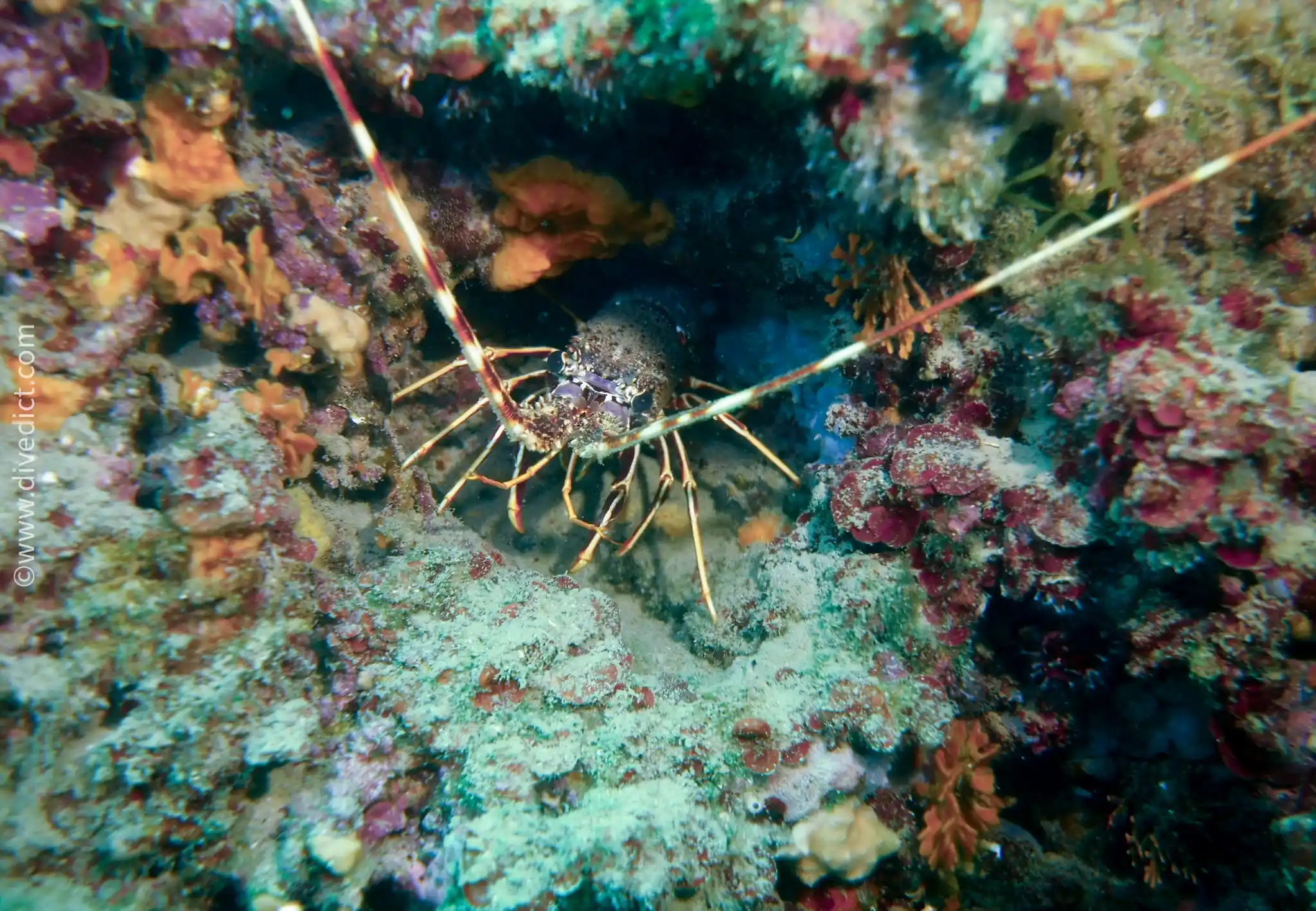
The most noticeable thing about them is their long, sometimes branched, second pair of antennas, which are usually even longer than their body.
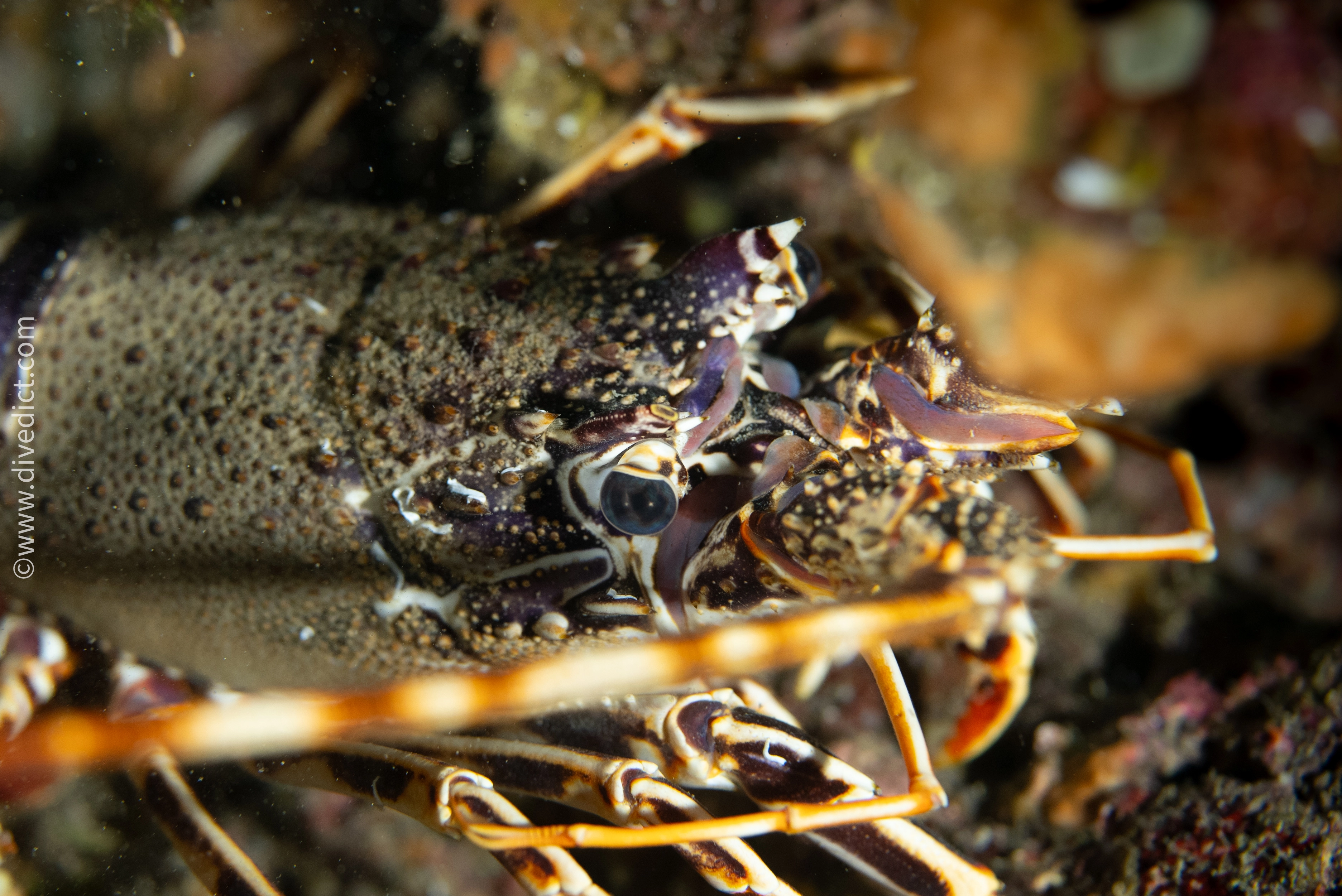
Their base color is reddish brown to purple-brown with yellow-striped legs and antennae; dark ticks can occur on the back body.
The front body and the sides of the back body are covered with a variety of thorns.
Behind them are five pairs of walking legs, and behind them five rows of swimming legs. The females stuff their eggs under these swimming legs and the large tail fan when it is time to hatch them.
You can easily recognize the young animals from a horde of Common spiny lobsters, namely by the yellow longitudinal stripe on their side and the top of the body.
Natural enemies
Dangerous/venomous
Common spiny lobsters are neither dangerous nor venomous. She may be able to pinch with her mini claws if you get too close to her.
Sketch

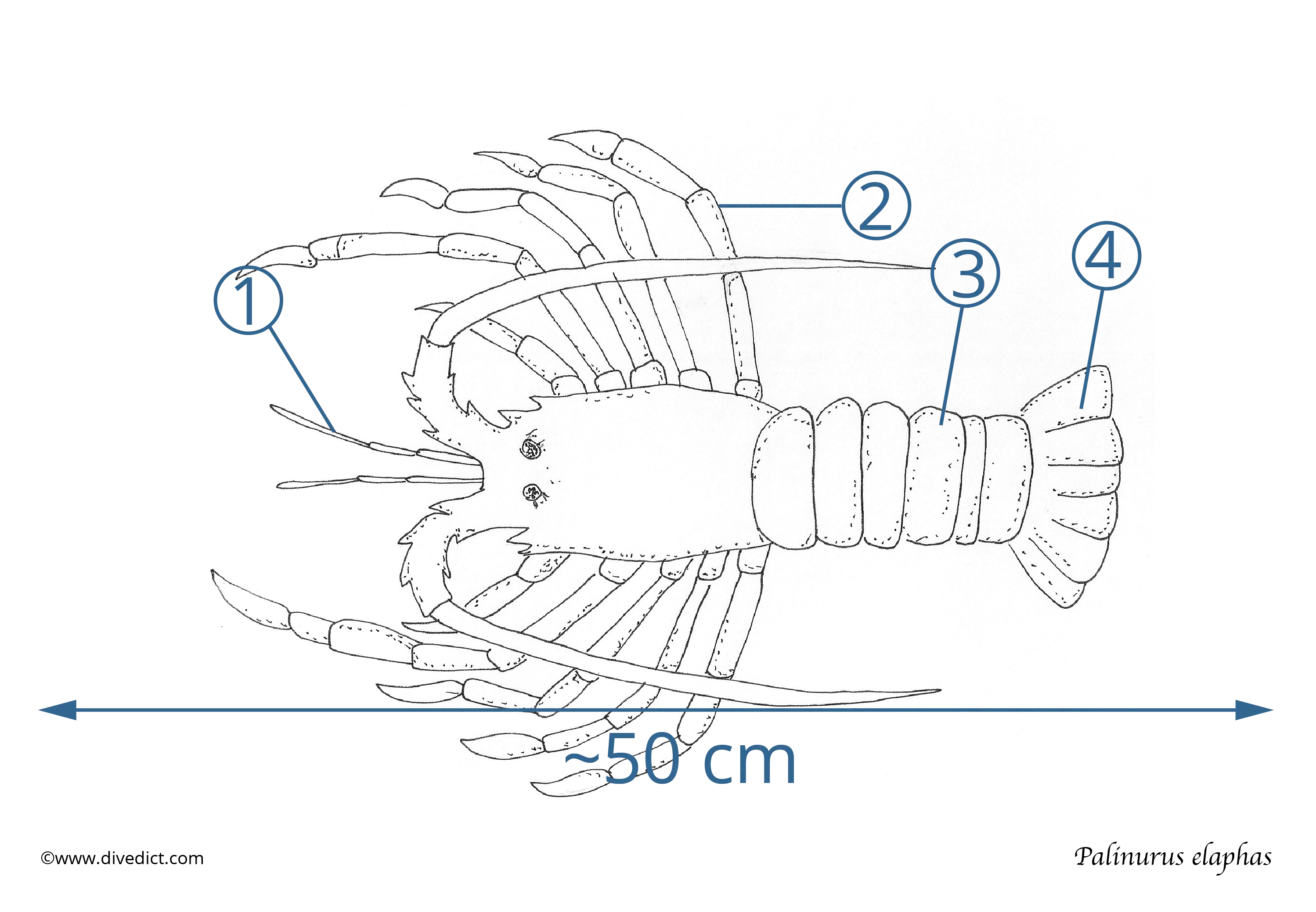
1. Pair of mini claws (females only)
2. Walking foot pairs
3. Back body with thorns
4. Rounded tail fan
Pro tips
Common spiny lobsters enjoy being in groups — at night, they leave their crevices and burrows, where they hide during the day, and search the ground for food while they are constantly in contact with each other via their antennae.
Their menu includes carrion, crabs, and sea urchins.
They orient themselves not only with the help of their senses of taste and smell but also with the earth's magnetic field.
In shallower areas, you can only find these beautiful creatures when the water is correspondingly cool, otherwise, you only have the chance to find the common spiny lobster after about 30 m.
They're not really the best camouflage artists, as their antennas often stick out of their hideout and literally beg to be spotted by an observant diver.
Text: Felician Hosp, Carolina Leiter, Pia Balaka
Illustration: Dive Dict
Pic: Felician Hosp