
Blue striped jumping crab
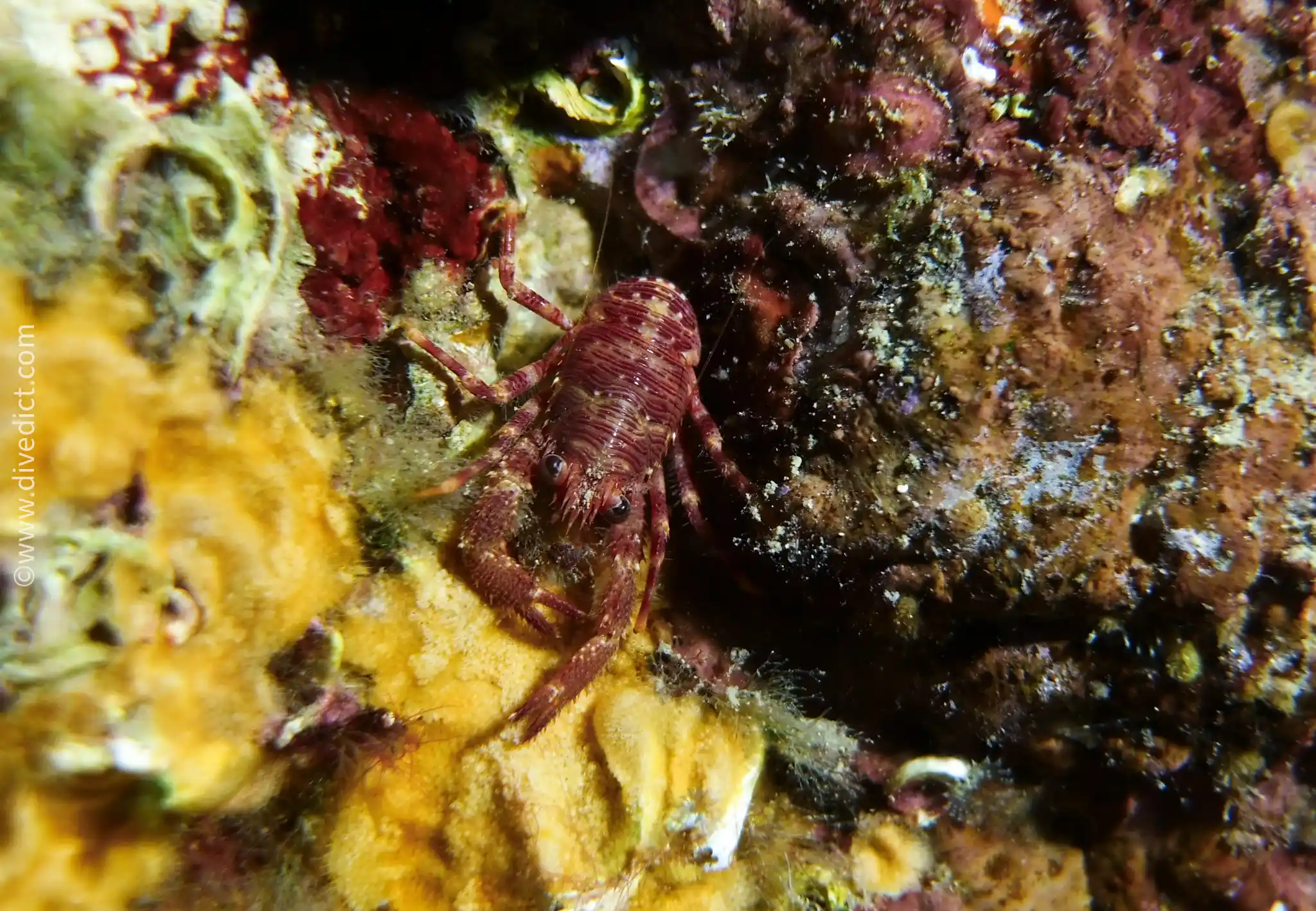
Spinous squat lobster




Special features
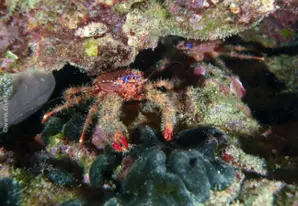
It is not for nothing that this little colleague belongs to the jumping crabs; he has really mastered jumping at the Olympics.
What is special about his behavior, however, is that he is once again looking for crevices and holes in which he can hide himself inside a protective cave.
It's a real shame that you only see this beauty so rarely, or is that exactly why he hides himself...
Appearance
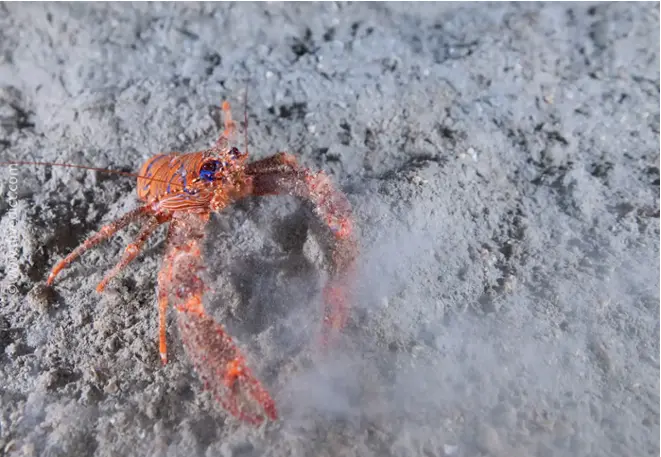
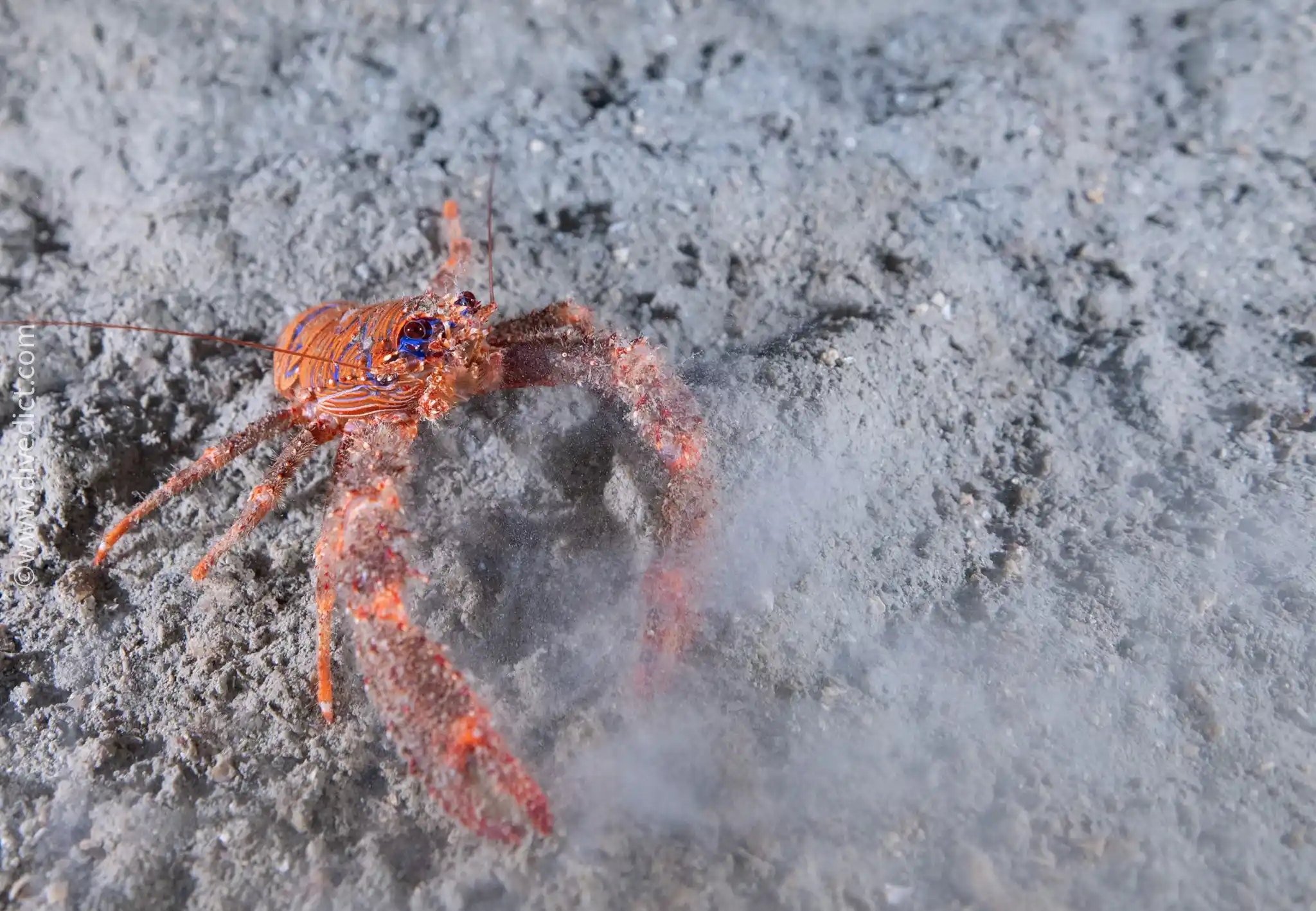
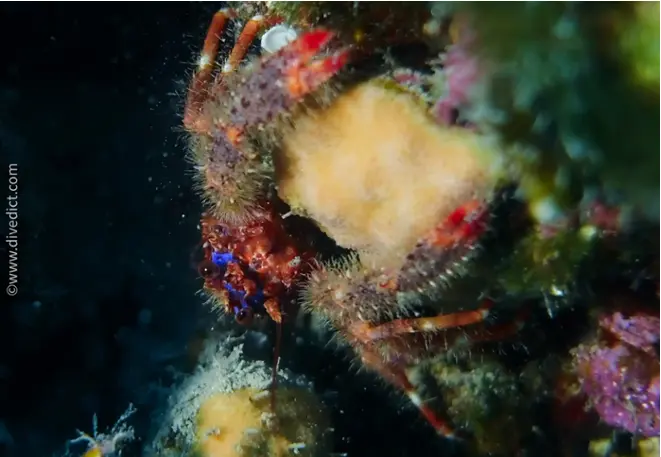
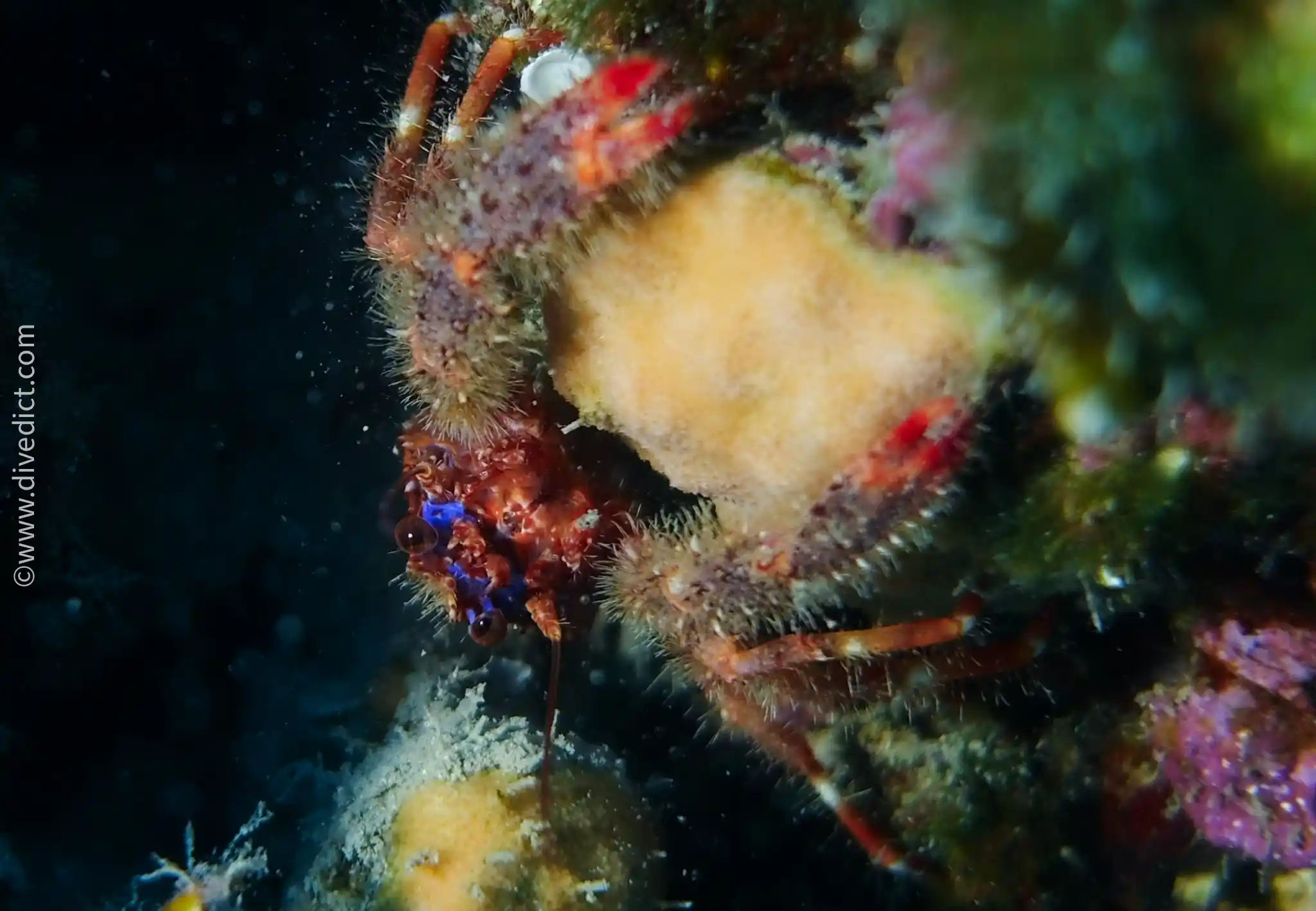
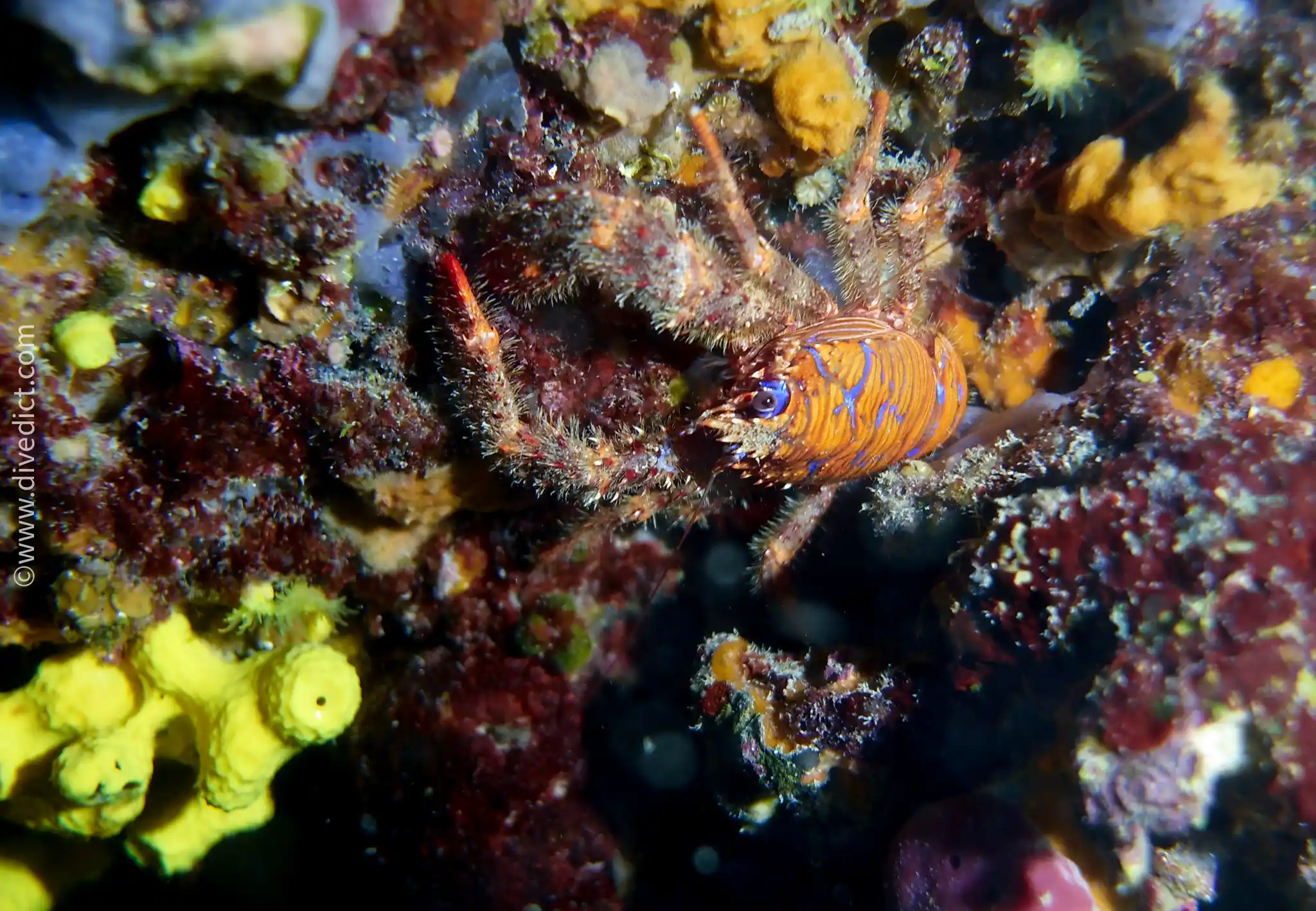
The most striking features are its orange-red base color, its blue-violet eye sockets, and the bright blue-purple stripes across its back.
They typically grow to only about 6 cm in length.
Its abdomen is slightly shortened and constantly curled toward its belly, giving it an almost egg-like appearance.
Natural enemies
Octopuses, predatory fish
Dangerous/venomous
The blue-striped crab is neither dangerous nor poisonous.
Sketch
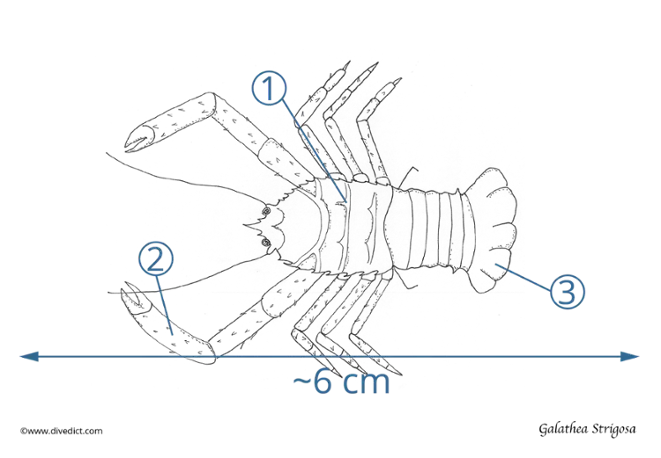
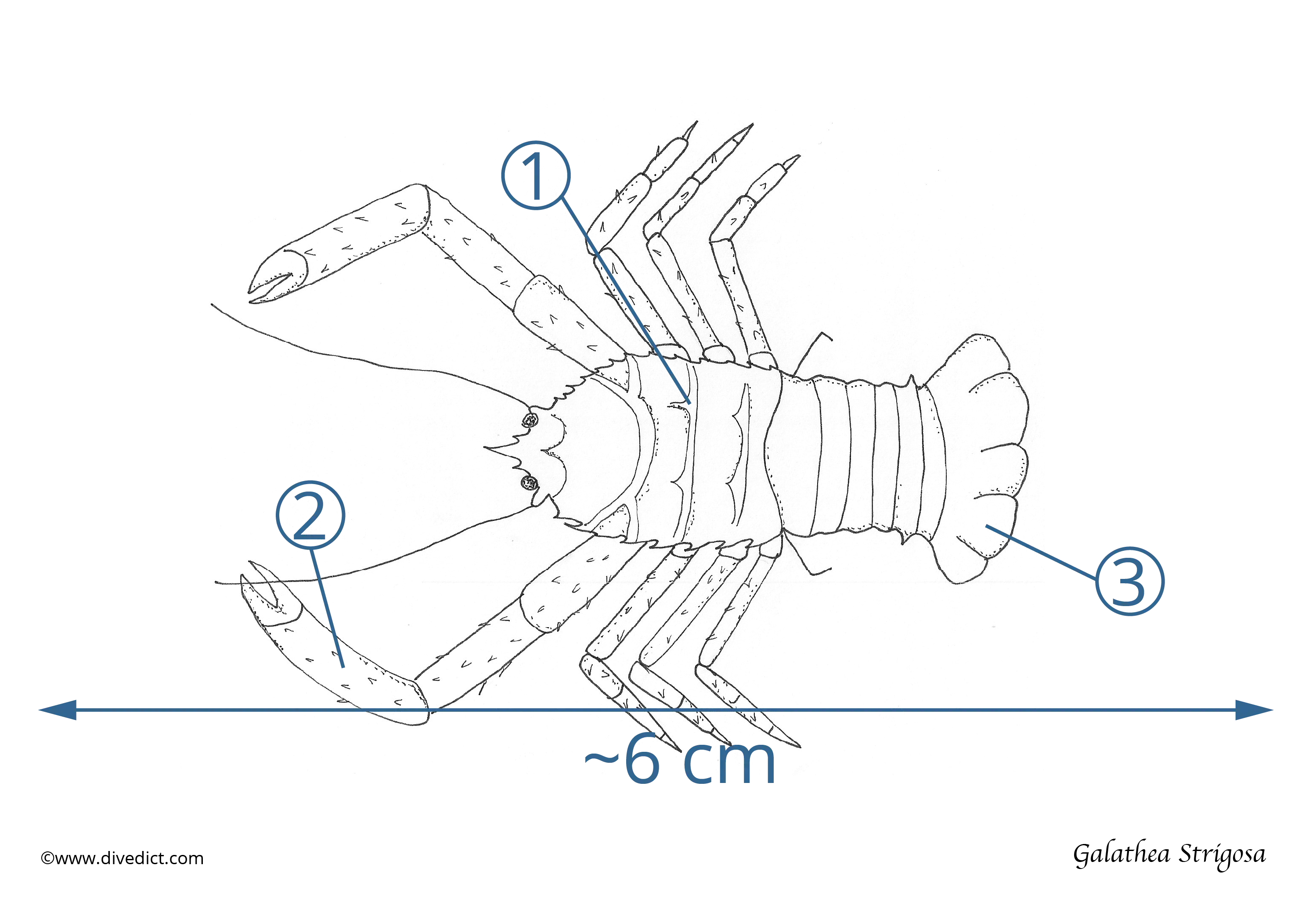
1. Blue-purple horizontal stripes
2. Small, long scissors
3. Roundish tail segment
Pro tips
You rarely see this colorful rascal above the 30m mark.
Only in the dark hours of the night does it venture into shallower areas and carefully leave its hiding place.
It is especially at this time that you can easily watch him, as he does not immediately flee back to his shelter.
Its colors also come out particularly well at night under a diving lamp and its blue stripes literally start to shine.
It feeds on the remains of dead animals and plants (detritus) and, thanks in part to their excretion (fertilizer), becomes a very important part of the ecosystem.
With his third jaw feet, he sweeps across the ground like a broom to eat.
He then pulls them in and uses his second jaw feet to comb out the remaining crumbs from his meal that have stuck there. Nothing is wasted!
Text: Carolina Leiter, Felician Hosp
Pic: Felician Hosp, Sabine Probst
Illustration: Dive Dict