
Tenarea tortuosa
Tenarea tortuosa



Special features
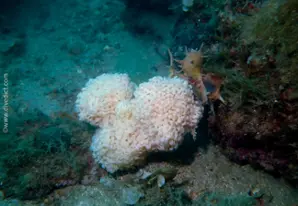
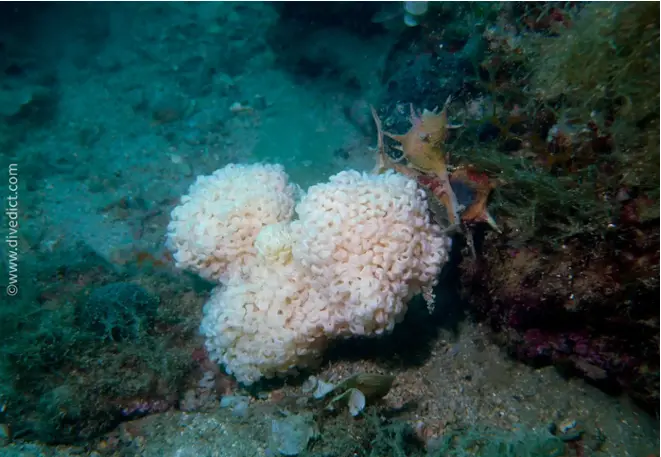
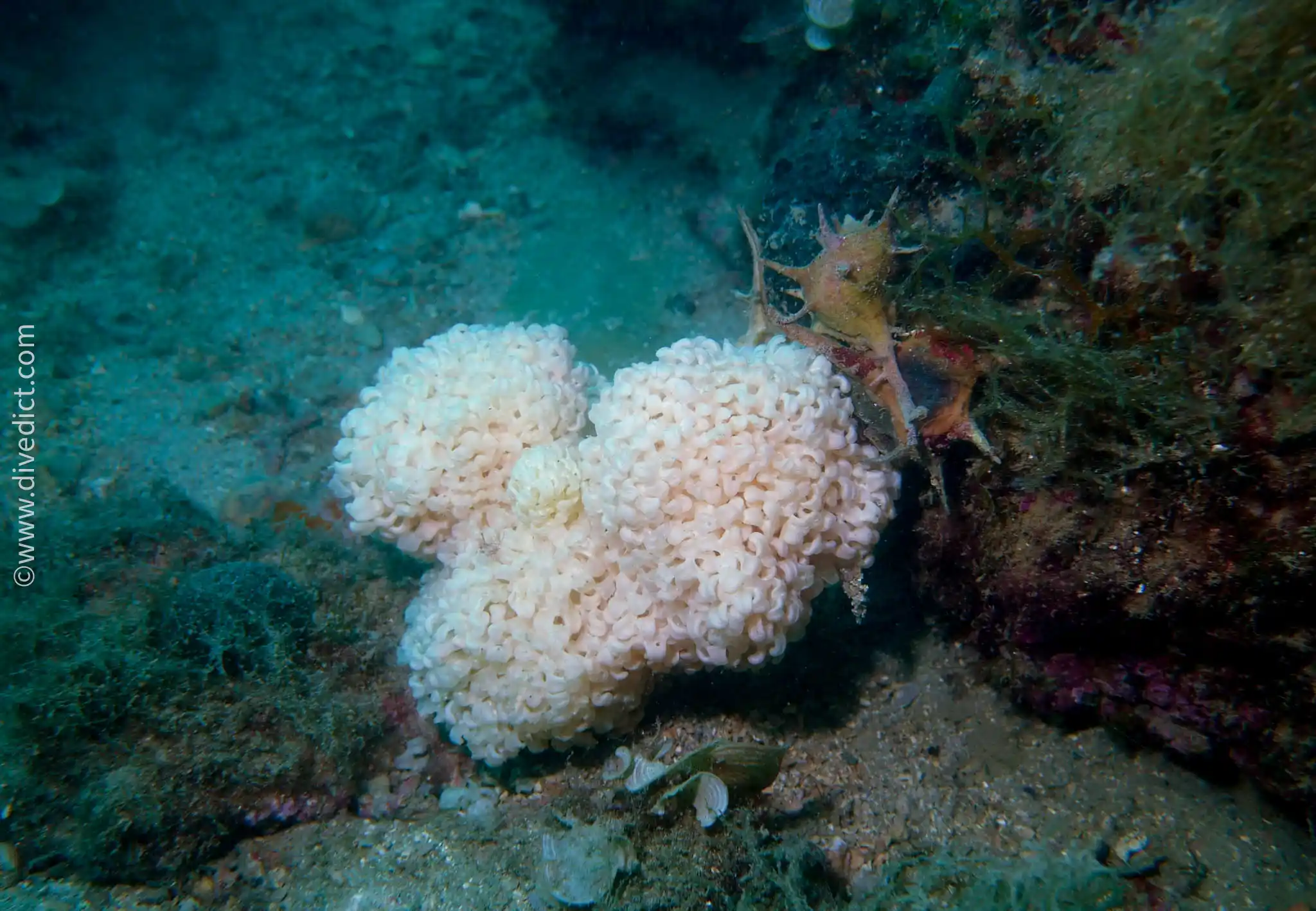
The Tenarea tortuosa is known for its particularly branched and irregular growth pattern.
It has an exceptional ability to settle and thrive in difficult habitats.
The polyps form a dense, often greenish-to-brown tissue that is reminiscent of a land plant.
Appearance
The colonies of Tenarea tortuosa are highly branched and reach a size of up to 20cm in diameter.
The polyps are small, light to dark brown, and are arranged in dense clusters.
Its skeleton is white and prickly.
Natural enemies
Fish, some species of sea snails, sea cucumbers
Dangerous/Toxic
Tenarea tortuosa is not poisonous. However, their spines can be uncomfortable to touch as they can easily penetrate the skin.
Sketch
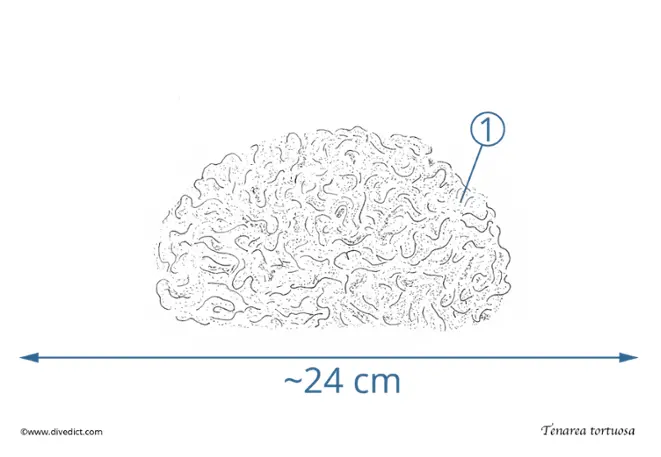
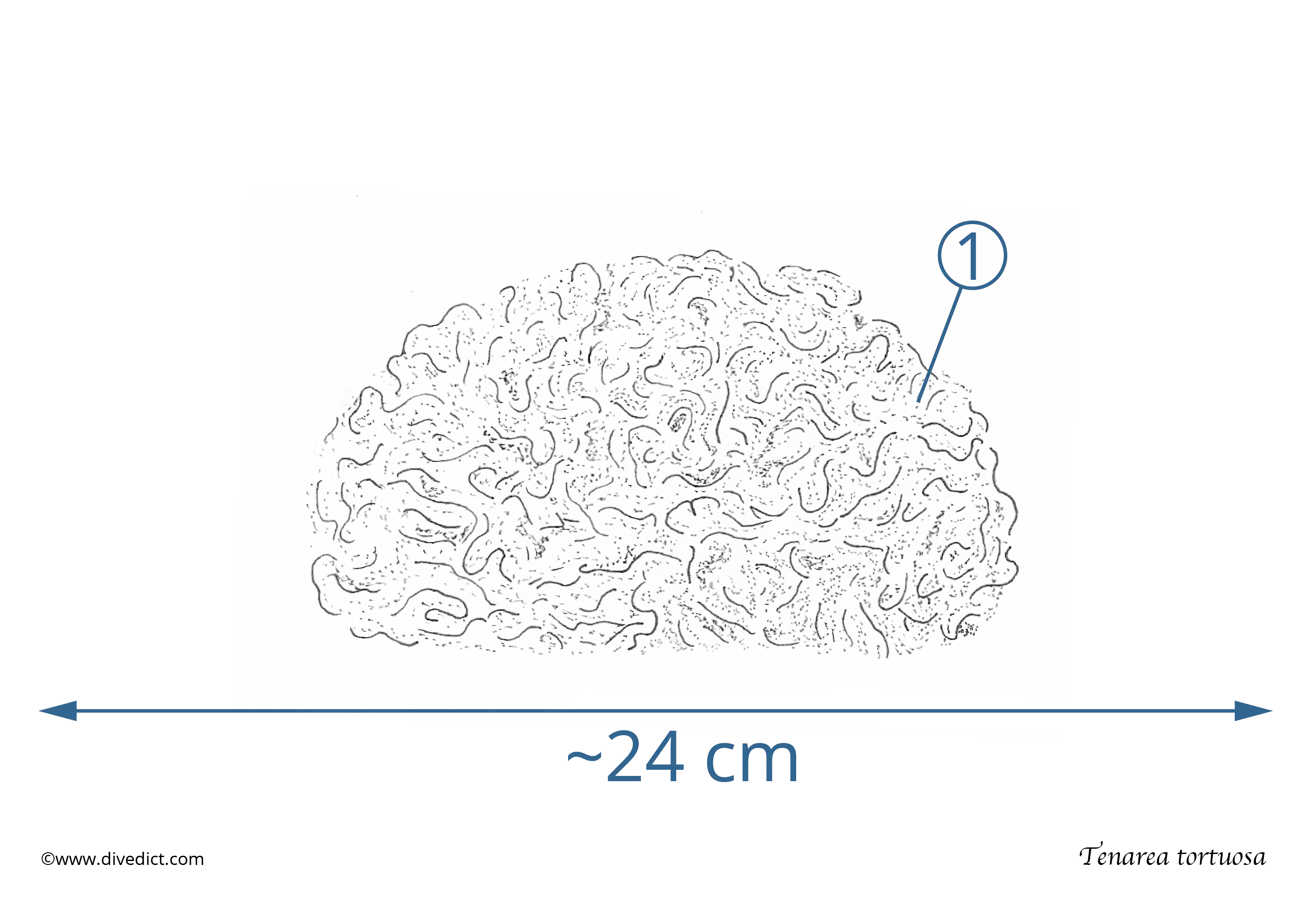
1. Highly branched colonies
Pro Tips
It prefers areas with low currents and a high supply of nutrients. It is bound to the surfaces of rocks, algae, and other underwater structures.
It prefers to live in the coastal regions around Greece, Italy, and the Balearic Islands.
During nighttime dives, you'll see this coral in full bloom.
However, their polyps can retreat when touched or sudden movements, making it harder to watch them.
Text: Carolina Leiter
Pic: Felician Hosp, Sabine Probst
Illustration: Dive Dict