
Penny Alga
Halimeda tuna



Special features
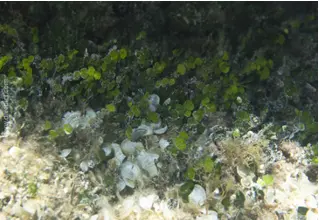
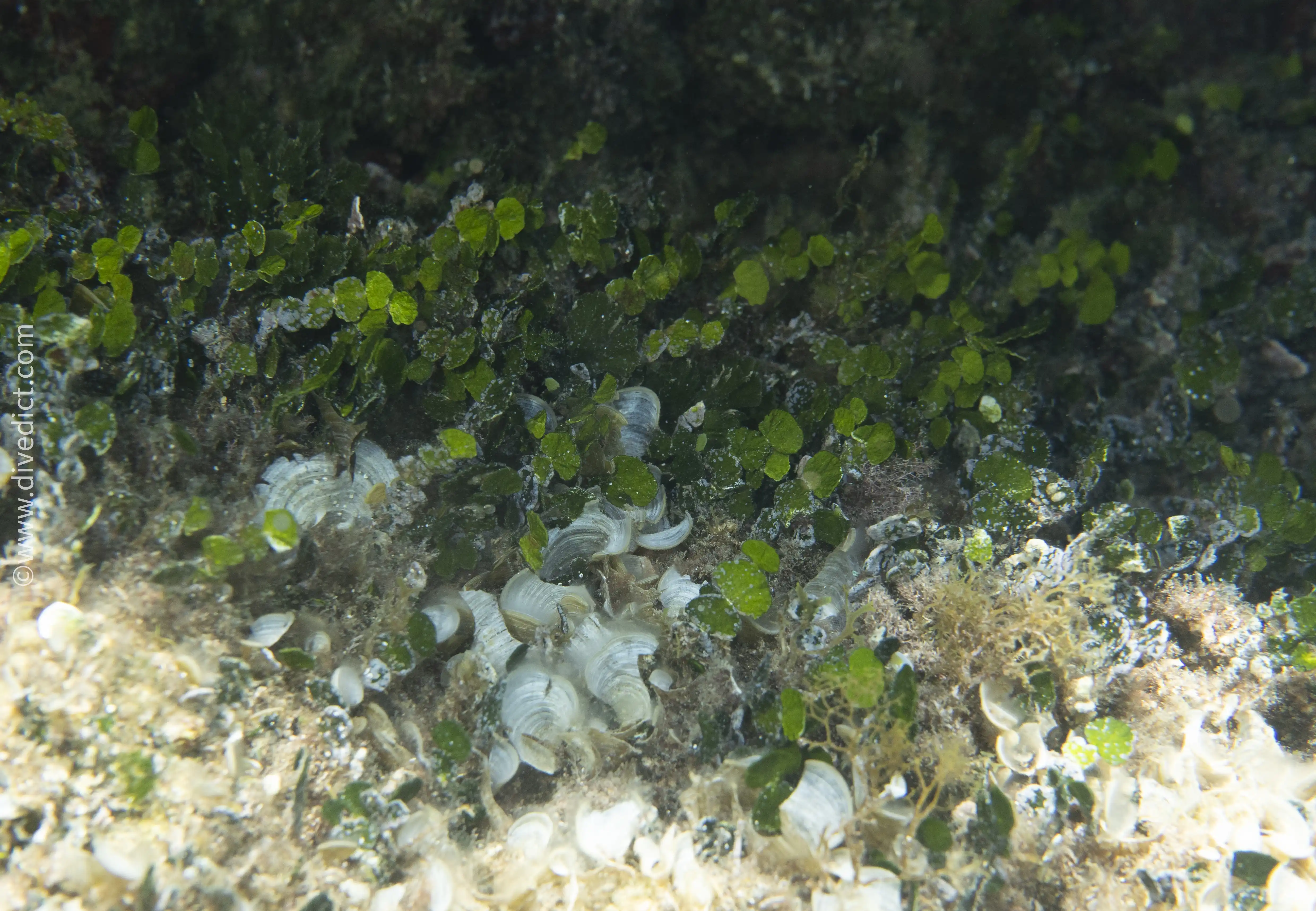
The Penny algae comes in all sorts of shapes and sizes. From rounded to triangular, to kidney-shaped to cylindrical.
Appearance
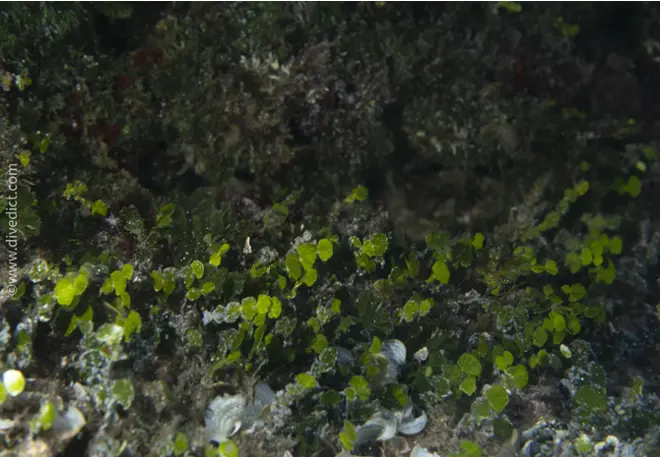
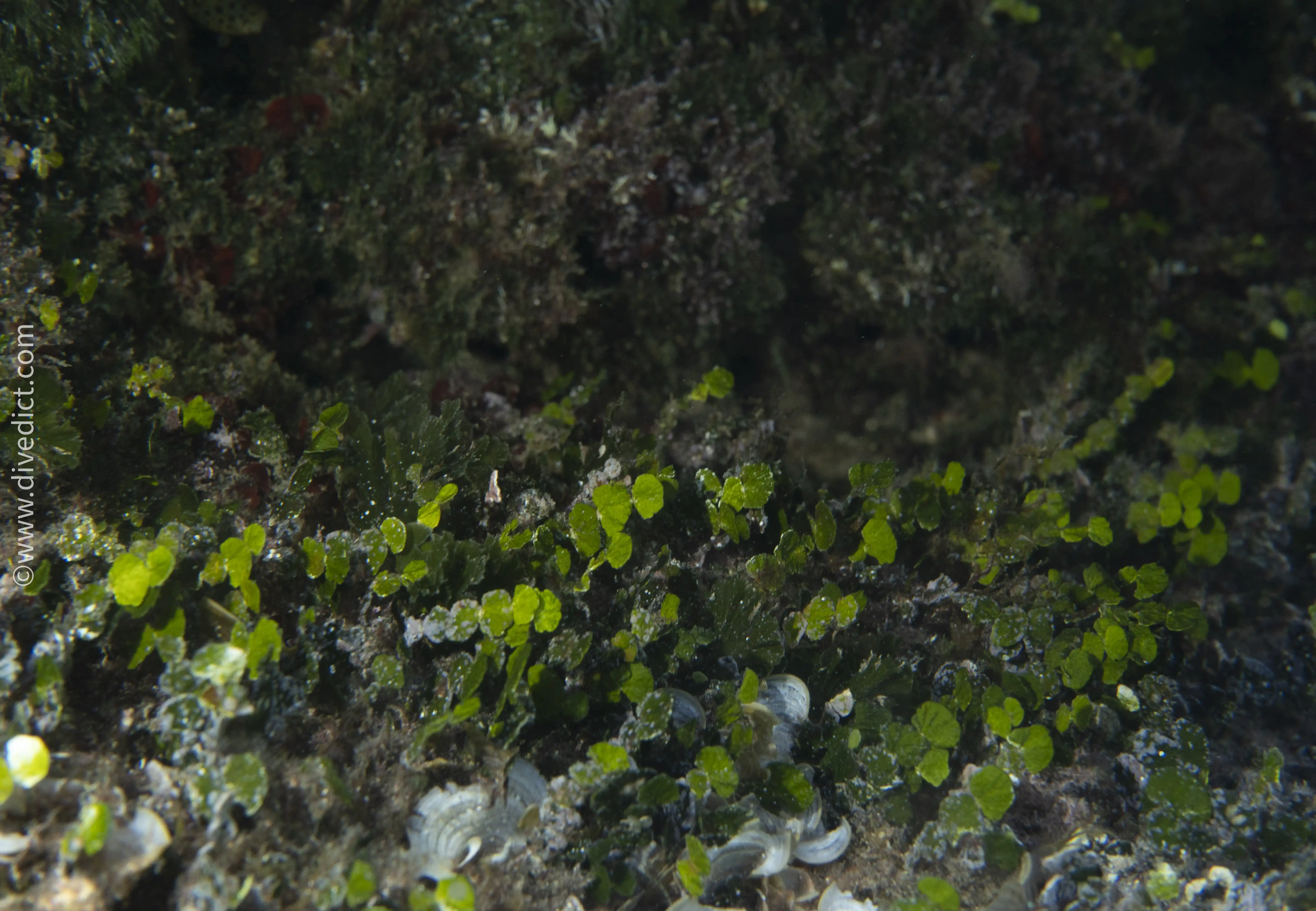
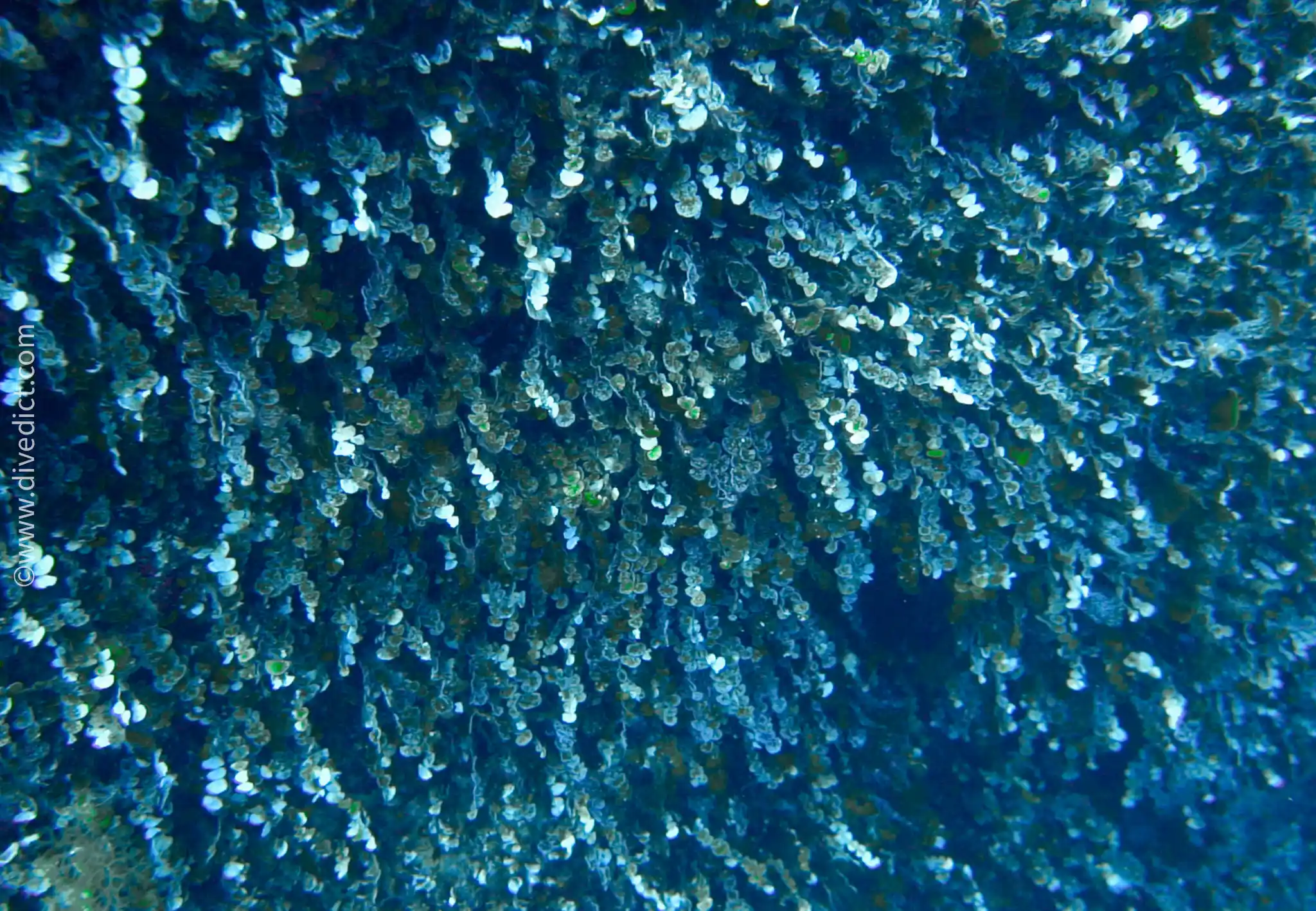
The Penny algae is created from a network of roots and grows in flat, disc-like elements 20 cm in height or flat across the ground in length. Her green disc links are strung together like strings of pearls and coated with lime. The multicellular body of vegetation is also known as thallus in specific terms.
Natural enemies
Fish, crabs
Dangerous/Toxic
The Penny algae is neither dangerous nor poisonous.
Sketch
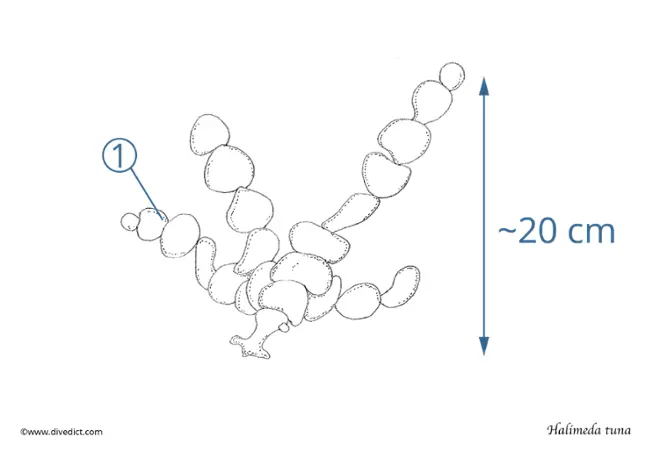
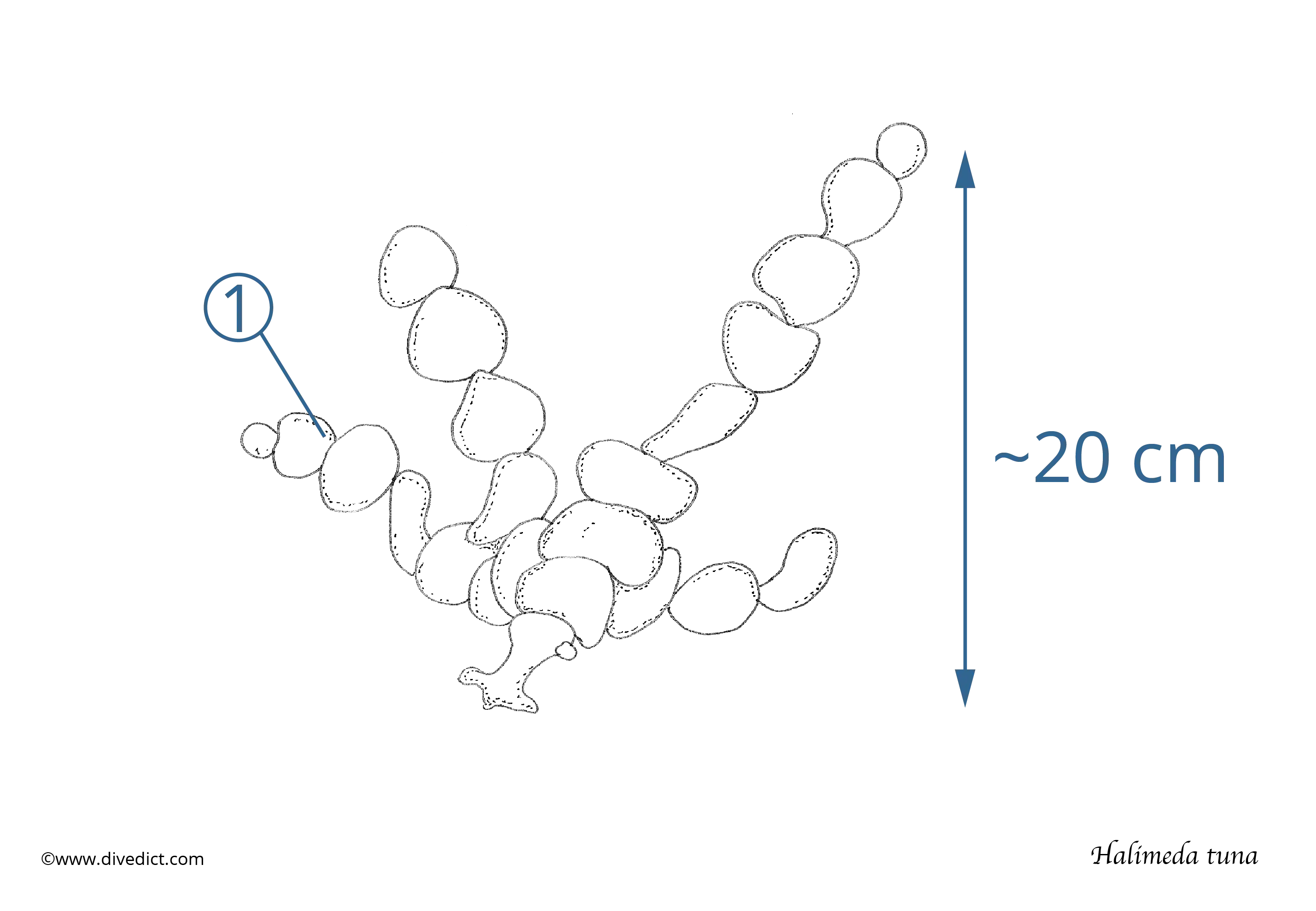
1. Pearl chain-like disc links
Pro Tips
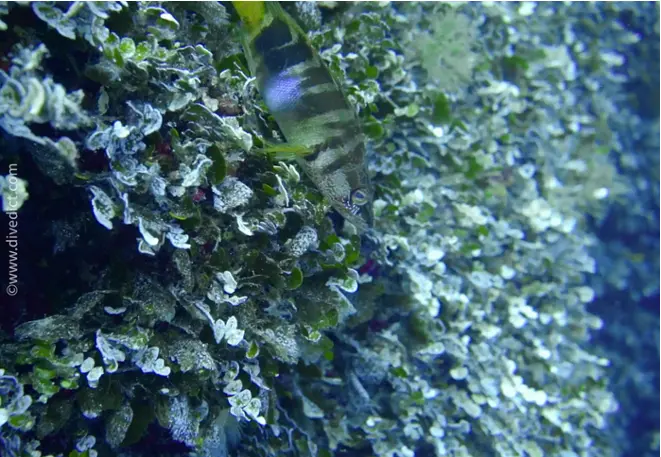
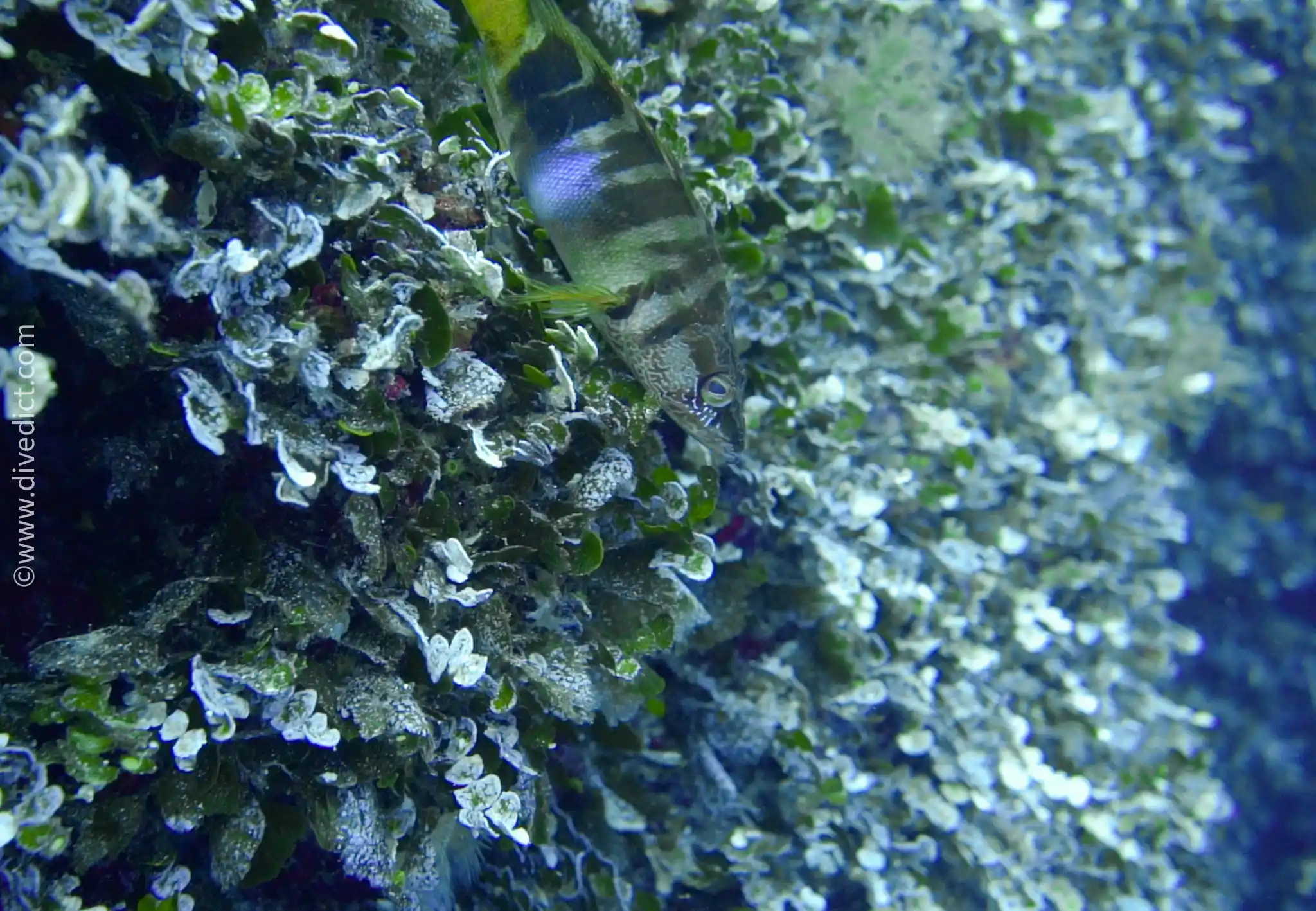
Penny algae are shade-loving plants and often form dense belts.
It is in the northern Adriatic, in the western Mediterranean basin, especially on the Greek coast, North Aegean, Israel, Egypt, and Libya. It also feels like home in the tropical Indo-Pacific and the West and East Atlantic.
Limestone sediments contribute significantly to reef formation and are therefore an indispensable and important element for the health of the seabed.
In Tunisia, the penny alga is collected commercially for animal feed purposes.
Text: Carolina Leiter
Illustration: Dive Dict
Pic: Dive Dict